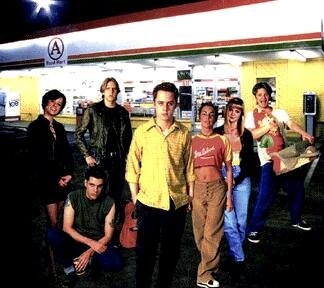

Director John Badham on “Wargames” and more.

Gaspard: So, thank you for talking to me. I could talk about every single movie you've done. But I'm not going to do that. I have focused myself to take principles from the two books, both of which I love, and take some of those principles and see how you applied them in different situations on three different movies. So, just to get some background to make sure I've got the history right, your first TV directing gig was on The Bold Ones, right? The Senator.

Badham: Yes. Yes, that's right.

Gaspard: And then your first TV movie was The Impatient Heart.

Badham: Right, right, yes.

Gaspard: Okay. So, I'm just doing some rough figuring and before you shot Bingo Long, which was your first theatrical feature, you did somewhere between 35 and 50 hours of TV. You had a lot of stuff under your belt before you tackled that theatrical feature, because of all the series you did, and the Made-for-TV movies. So, you were pretty well learned by that point for that first feature. How did that help you on that first one?

Badham: Well, it certainly helped you learn how to prepare things, what you needed to do, and working with actors, getting attuned to working with actors. The mechanical parts of it are fairly easy to learn—

Gaspard: Right.

Badham: —the cameras and lenses and the microphones and the lighting and and stuff like that.

I feel very comfortable just from my years at the Yale Drama School, working in theater where you're doing somewhat analogous things along the way. And then as I was working my way toward directing—once I came to California and was working at Universal—I was able to sneak down to people's sets and meet directors and kind of hang out with them and found an interesting approach. Because, initially, going and hanging out on a set sounds like a lot of fun. And it's good for about 10 minutes and then it is just boring as hell.

And I realized I don't want to, this is boring. What could I do better? And then it came to me: The truck just ran over the director, and I have to do it. What am I gonna do? So I would get hold of the script and try and prepare the day's work roughly, and then come down and be able to watch what the director was doing.

And it didn't matter who was right or wrong. What it did matter was because I had thought it out. I had a basis on which to judge, you know, was it a good idea they were doing, what stuff would I have forgotten? I just learned by watching that that way.

And so, after, four or five years of doing television, I was pretty well versed in a lot of high speed, quick filmmaking for, episodic television in particular. But then the movies of the week, you know, were a nice step in between. There you had a chance, you're still working quickly, but not nearly at the silly lightning pace of the episodic.

Gaspard: So, was the speed at which the features were shot, was that easy to ease into? Or were you always just thinking, why is it going so slowly? Why aren't we going faster? Why, why, why, why?

Badham: Yeah, it seemed to me on, on Bingo Long where they said, well, we're going to shoot this in 38 days. And I thought, 38 days, what am I going to do in the afternoon? Oh my God, I can go home after lunch. We'll get this. Well, little did I know how long camera would take and baseball games to shoot and stuff like that. And the production manager kept telling me, “it's going to be 52 days.” And I said, “No, no, we promised 38, that we would do 38. I'm going to do it.” “No, it's gonna be 52.” Because he was right. It was 52, right on the money.

Gaspard: Yeah.

Badham: He knew it. So, I just had to regear my brain. Same thing on Saturday Night Fever. Same 38 to 52 days, you know, just me getting to understand what that next level up of filmmaking requires. And in terms of the detail of the filmmaking and the careful performances and things like that.

Gaspard: When you look back on, on the hours and hours and hours of, you know, on the job training you had before that first feature … and then you think about directors starting out today, who simply don't have that, getting all that experience is hugely helpful. And I know you've taught for years. What, advice do you have for someone who's diving into a feature for the first time who doesn't have 40 hours, 50 hours of finished TV work under their belt?

Badham: They're in a lot of trouble. That's what the truth is. You know, it's so much harder than it looks. And I see that with my students, with the filmmaking that they come up with. It's really difficult to learn it. And the thing that turned out to be really good in my case and some other friends of mine is that we got a lot of practice and learned how—if we stubbed our toe—it was not the end of the world. That you could get through it, because it is harder than it looks.

And they've got a great, harsh awakening coming for them. You know, I've worked with several cameramen who've become directors. And of that, several, almost all of them, never did it again. It drove 'em crazy, and they were brilliant cameramen. You know, these were top of the line, the best guys in the world. And they said, “oh my God, we're going to get a so-and-so to direct this.” And they hated it, because you had to deal with actors. And they were used to a crew that would just jump: If you, said jump, and you know, how high? Ten feet. They'd jump 10 feet. But the actors are going, “What?” They didn't like that.

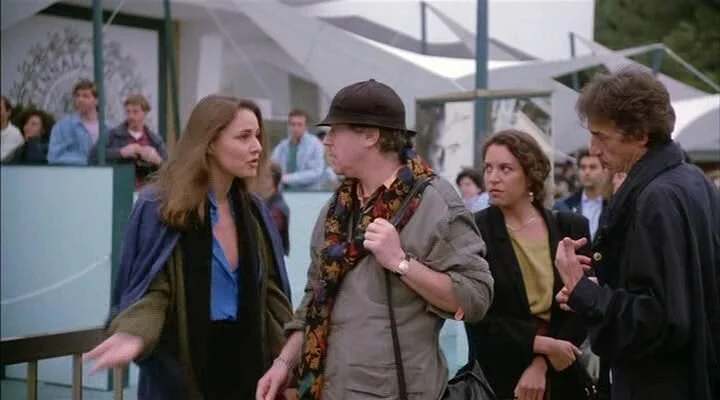
Gaspard: That's your special gift I think. You can direct action like nobody's business, but when it comes to getting an actor where you need them to be, I mean, you, straddle both sides really, really nicely. I do want to talk about Isn't It Shocking? I don't know why I know it as well as I did. It must have aired at least twice when it came out. And that's around 1973.

Badham: Right. Yes.

Gaspard: I know that I was a big Harold and Maude fan, so I wanted to see Ruth Gordon in something. But I was really taken by it, and it stayed with me for years and years. And I found it recently on YouTube. You can see the whole thing on YouTube, not a terrible print of it. And some questions came up. First: one of the first credits on it says David Shire did the music. How did that happen?

Badham: I was at Yale when David was there and worked on two musicals that he and his partner Richard Maltby wrote. And, so we were friends from there and I was, you know, excited to be able to bring on a composer. I think it was the first one that he had ever done, the first film he had ever done. I mean, he might've done some low budget things, but my recollection is, that he had been playing the piano for The Fantasticks off Broadway forever and ever. That was his day job.

Gaspard: How did Isn't It Shocking? come to you?

Badham: I think my agent at the time was able to talk two very young producers into taking a look at work that I did, which was at that point, I think. The Impatient Heart was probably what they might have looked at, at that point.

And, it was just a wonderful script, you know, it was just laugh-out-loud reading and so much fun to do. And we shot it really quickly, like in 12 days up in Mount Angel, Oregon.

Gaspard: The casting of it is so terrific. You know, besides Ruth Gordon, you've got Will Geer, you've got Alan Alda, you've got Louise Lasser, you have Lloyd Nolan. I know you kind of started out in casting and you've consistently had really smart casting on all the movies. Do you remember how that cast came together?

Badham: Well, my producers were New York based and they had a great sensibility for actors, like Louise Lasser, who I didn't know at all. Will Geer I certainly knew, and Lloyd Nolan I had worked with. Alan Alda was, you know, we all admired his work and thought we were really lucky to get him right at the end of the MASH season.

Gaspard: Yeah, it looks like was right at the end of the first year of MASH.

Badham: Right. And we were shooting on the lot at Fox where MASH shot any anyway, so I was able to go over visit with him and talk with him and get to know him. But, as I say, my producers were very helpful because they were just into every detail. They were over my shoulder, breathing down my neck in the middle of closeups, you know, “We need more goop on them. We need, this is not goopy enough. “

Gaspard: Goop is very important in that movie that you needed enough goop, because it gets bad when he runs out of the goop,

Badham: It drove me a little bit crazy. And, at one point, as they're whispering in my hair during a take, I call “cut.” I reached for my wallet, pulled out my Director's Guild card and said, “Here, you fucking do it.”

Gaspard: Oh boy. You know, this is at least two or three years before Mary Hartman. So, at that point Louise Lasser is from Bananas and—

Badham: A couple of Woody Allen movies.

Gaspard: Yeah, a couple Woody Allen movies, but not that famous. It felt to me like this could have been a backdoor pilot, that if MASH didn't go, here we have these two wonderful characters of Louise Lasser and Alan Alda solving crimes every week. With, you know—not that Ruth Gordon wanted to do a TV series—but it would've been a fun way to continue those characters. Because they were really charming together.

Badham: They were wonderful. And we forgot about Eddie O'Brien.

Gaspard: Oh, exactly. He looks so upset in that movie. It's hard to watch him sometimes.

Badham: I had seen him in a pilot that Jack Lord was starring in, and he played a bad guy. He had these thick coke bottle glasses on, and he was quite a treat. He was quite a handful. Because he wasn't always very focused and sometimes getting him off, “Okay, that's that shot, now we're going to focus on this shot.” And he's still back in the earlier shot.

Gaspard: Well, you were juggling so many different kinds of acting styles, and that's one of the things that I want to talk about from the book: When you have, you know, in one scene, an Alan Alda, Louise Lasser and a Lloyd Nolan. I'm guessing they're acting styles were a little different, or their approaches were a little different. How do you juggle different techniques when you need to get everybody on the same page pretty quickly?

Badham: It's a real challenge to do that because you have some people that like to rehearse a lot. Some people that don't like to rehearse very much at all. Some people that are good on take one and other people who don't start to get good till four or five. And you're going to find, every single time, you're always going to run up against these disparate characters.

If they haven't worked together a lot, you're now trying to massage. You know, “Am I going to shoot Will Geer first in this scene? Or am I going to wait because he gets better later on?” And if I shoot over his shoulder, he is kind warming up, so when I'm ready to turn around onto him, he's at that good cooking point. He's simmered, you know, he is done. You can stick a fork in him, and it will be all right.

Gaspard: That's invaluable knowledge to have when it comes to planning out your day and your setups.

Badham: Oh yeah. I mean, once you start to get a fix on how the people like to work. I learned once from Jodie Foster—I worked with her when she was very young and we were kind of become friends—and I was asking her how she likes to work with actors. She said, “The first thing I do, is I go up and I ask them how they like to work?”

You know, do you like notes from the director? Do you like to go first? Do want me to let you move, find your own blocking? And just kind of having these conversations lets you know a ton of stuff. Elia Kazan talks about it all the time in his book, saying actors will tell you anything, you've just met them, and they'll tell you their entire life story in a few minutes. And you can learn so much about their acting style, just from the stories that they tell and their perspective on the world. And you're so smart to be able to go and have dinner with 'em a couple of times, to sit with them and just not talk about the business, but just their life and understand, you know, what you may be able to get from 'em.

Gaspard: That’s so smart. Just that idea of, well just ask him. You don't have to pretend to know everything. And that's one of the things you keep coming back to in both books is: don't pretend to know everything. Ask, ask. And that's so smart to just ask them the way they want to do it.

A friend of mine was one of the editors on Veep. And he said it took them a little while in that show to realize that, you know, most things are shot, you do a master and then a closeup, and a closeup and a closeup. And he said it doesn't work on an improv show. You have to do all your closeups first until everyone's sort of settled into what they're going to do. And then you do the master at the end, because that'll match. He said, you do a master up front, it's not going to match anything you're doing. And it's like, well, duh, obviously. But we're so attuned to this idea of, well, you know, you start out and then you move in and move in. They just turned it on its head and went, no, it's got to go the other way. Or the master is just useless.

Badham: Right. Well, those are outrageously funny.

Gaspard: So. speaking of improv, you mentioned I think in one of the books, one of my favorite Ruth Gordon stories. I was lucky enough to meet her when she came through town here in Minneapolis, Harold and Maude played for two and a half years, when I was a teenager. And I got to meet her and Bud Cort and hang out with them a little bit during that time. And in one of the books you talk about, where she came up to you and said, “This line isn't working for me.” And you said something along the lines of, “Well just, you know, say what you want.” And do you remember what her response was?

Badham: Oh yes, absolutely. I said, “Well, Ruth, what would you say?” And she looked me right in the eye, kind of waggled her finger and said, “Oh no. I get paid for that.”

Gaspard: Yeah.

Badham: And she went ahead and said the line as written, the one that she started out complaining about.

Gaspard: A couple more things on Isn't It Shocking? There's one point in it where Alan Alda is walking through, I believe it's Ruth Gordon's home. And you did—for that movie—a pretty long continuous shot. Now you said you shot in, was it 12 days?

Badham: Right.

Gaspard: How risky did you think it was? Maybe you did do coverage on it, we just didn't see it. But when it comes down to setting up shots like that, what are you weighing in your mind when it comes to how much time I have and what I need to get done today, and continuous shots versus a lot of coverage?

Badham: Well, you know, usually the continuous shots, you can get several bits of coverage in the shot itself. And so if you write down the amount of time it takes to do a continuous moving master versus a lot of separate shots, it works out about the same.

Gaspard: Okay.

Badham: It's just a different way. And in that particular shot, if I remember it right, we pick up Alan Alda coming in the front door and then as he's walking through, there are cats hanging everywhere and cats dropping down out of the ceiling onto him. And you could see them hanging on light fixtures. They're all over the place. And I,remember our production manager had an arm full of kittens and he's walking behind the camera, putting them up in all these places and you could see them kind of hanging on by the front paws or whatever it was. It was very funny.

Gaspard: It's a delightful movie. It was crafted in such a way that at least it seemed to me like you had very cleverly gone, “Well, I can get name people because they're only going to be here for a couple days. It's not a big deal.” You know, “I only need Will Geer for a few days,” if you're shooting it that way. “I only need Ruth Gordon for a couple days. I only need Lloyd Nolan for a couple days.” So, it's kind of fun for them, but it's not a huge commitment.

I think a lot of filmmakers don't think that through when it comes to, you know, you might be able—if you're making a low budget, no budget movie—you might be able to get somebody to come in for very little if they like the script. And if it's only going to take a couple days. If they're going to be sitting around for three weeks, well that's a whole different consideration. But if they can have fun for a couple days, that's just a really smart way to write it, I think.

Badham: Yeah, it was nice. It was easy to get to, because we fly 'em up to Salem, Oregon. I think everybody was from LA. I forget where Ruth Gordon was coming from, but that was not bad. And it's a very pleasant area there in Oregon. The air is just fabulous compared to LA air, especially at that time. And, you know, just really, really pleasant. 

Gaspard: Well, if you haven't seen it for a while, it is on YouTube. Give it look. And I think should talk to the producers about getting it out on Blu-ray and you should do a commentary on it. It's just a little lost gem. Okay. Enough on that. We'll move on now to probably my favorite John Badham movie, and that's WarGames. What I was surprised to learn, was that you came into the movie when it was already up and running. Some stuff had already been shot, right?

Badham: Yes. They had shot for maybe a week and a half, I'm guessing.

Gaspard: Okay. And that was Marty Brest who started it and then went away?

Badham: Right. Yes.

Gaspard: Another terrific director, with Midnight Run being one of the best comedies, maybe of all time. So, what do you do in a case like that, when they say, you know, the phone rings and they say, “This movie's up and running. Get up to speed as quick as you can.” What does that mean? How quickly can you get up to speed?

Badham: Well, my agent calls me and says, “There's a picture that they would like you to take over, and I don't think you should do it.” “Why is that?” “Well, it's always when they're in trouble and they have to replace the director, there's, going to be real trouble there in River City, so stay away.”

I said, “But what if it's any good?” And he said, “Well, I don't know.” I said, “Well, I think we should read it.” So, I read it and I said, “This is really wonderful.” And I go in to meet with Paula Weinstein, who was running UA at that time. And after we talked for a while, she said, “When could you start shooting on this?”

And it was about two in the afternoon. I said, “I can walk over there and start shooting right now.” She went, “What?”

I said, “The trouble is, it won't be any good.” She said, “Why not?” I said, “Because I barely read the script. I needed time to, you know, kind of absorb it and get my head wrapped around the thing. I think it's a wonderful script and, and I could do it, but the shots I would be doing would be pretty generic. And that's not what you want. You need something, you know, that is not as dark as Marty was bringing.”

Because I did have a chance to look at the dailies that he had shot and was watching the scene where Matthew Broderick first takes Ally Sheedy up to his bedroom and shows her how he can change her grade on the computer.

And I'm looking at this scene and I'm kind of thinking, “The actors are good. I don't know who these kids are. Photography's wonderful. What's the problem here? Why is it not working?” And then it came to me, they're not having any fun. If I could change a girl's grade on the computer and I was that age of 15, 16, I would be peeing in my pants with excitement, you know? I would not be treating it like we were sixties rebels on the dark web—if there had been such a thing at the time. It's not that at all. It's a kid who's into games and playing. So that was the first thing that I re-shot—I took them right back to that bedroom on the stage.

And it took us, oh my gosh, several takes before we could even get them warmed up. Because Matthew and Ally figured that they were going to get fired any minute too. So, they were terrified of me. And as we kept doing takes, I would just run in there and tell jokes and tickle 'em and do anything to make it, ‘this is light and breezy and we can have fun.’

And so around take 12 or 13—I never do that many takes, but I figured I can't turn in dailies, that look only a little bit better. They've got to be a hundred percent better for the studio to have gone to all this trouble. So, I said to them, I said, “Okay, we're going to have a little break here. We're going to take 10 minutes for coffee. Matthew and Ally, you and I are going to have a race around the outside of the stage, and we'll race around here, and the last person back has to sing a song for the crew.

Gaspard: That was going to be you,

Badham: I knew who that per person was. You know, I'm like 20 years older than them already at that point. I know who's going to lose. And as we get back to the stage, of course I'm last. And I remember this old song that we used to sing in Glee Club in high school called The Happy Wanderer, where a guy yodels. And that just kind of helped break the ice and, loosen them up so that they started to get more playful with it.

Gaspard: How did the bit of business where she traps him between her legs come about? Was that a rehearsal thing? Was that you? Was that them?

Badham: Oh, I think it was something Ally just did.  It was very, very erotic in its own little way.

Gaspard: And his reaction is great too. because he doesn't know what to do.

Badham: Yeah. Yeah. That's right. I forgot, totally forgot about that, but I do remember it happening.

Gaspard: You know, if in a parallel universe I'd be interested in seeing what a finished WarGames by Martin Brest would look like, but I'm glad we got your version, because I think that's the one that's more of a crowd pleaser.

By the time you were pulled in, was the NORAD set already designed and built?

Badham: It was. Yeah, pretty much built, they were already shooting tests in there to see how to sell the thing the best. And Billy Fraker, the cinematographer and myself, went over there and spent a lot of time walking around saying, you know, “how would we shoot this?” You know, how was I thinking about shooting it versus whatever Marty had in mind.

Gaspard: Right. Was all the casting done at that point? Was Dabney Coleman already cast and John Wood?

Badham: Dabney Coleman was cast. John Wood. I recast, Matthew's father.

Gaspard: Okay.

Badham: I didn't care for the father they had. And I recast the general, who they had. He was okay, but it needed a bigger personality.

Gaspard: The visuals on the Crystal Palace set on those screens, were those already in production when you came on? Because there's a lot going on on those screens and that's all happening live while you're doing it, right? This is not today. This is back then, and everything that happens happens right in front of the camera. Were those all ready to go when you came on, or were you part of getting that ready? Because there's so much stuff going on in those screens.

Badham: This movie, as far as that concerned, was brilliantly prepared. I mean, they were creating film that would take you several minutes per frame in the optical printer to create. And that had been going on for quite a long time because they had six front projectors, four rear projectors, and 82 video monitors. All of these hundred and whatever had to work in sync with each other, which had never been done before.

Nobody had ever tried to gang that much equipment together to run. And the Hollywood family that did this for years, the Hansards, were able to solve the problem, so you had all these projectors running in sync and you could photograph from any angle which, you know, you maybe might have trouble doing if you were doing blue screen. It used to be with front projection, rear projection, you didn't want to move the camera because you didn't want to get off the hotspot of the arc light. If you got off to the side, it would fade out. But the film had gotten a lot faster. And Fraker was just the best at making all this stuff go together.

Gaspard: The sequence at the end when everything's blowing up, you get so much bang for your editing buck and you're shooting it all live. That's what just kills me. I mean, nowadays they would just, “okay, we'll deal with all that in post.” But you had to go into the edit suite with all those shots of all those screens, doing all those different things for that last big, WOPR explosion thing. For the time, it's really incredible.

Badham: Well, I much prefer it that way. You know, Jim Cameron in the latest film of Avatar, he is managed to get it so what he sees through the camera is what you're going to see on the screen. He is not waiting for stuff to come back from some horrendously tedious project. And so, we are doing a much cruder version of that than what Jim was able to accomplish. But it's, you know exactly what you've got at that time, and you're not suddenly stuck with bad exposures and nasty looking bad blue screen work.

Gaspard: That's the balance that I think is so amazing in your career. Great performances, highly entertaining stories, but my goodness, the action and getting all the pieces you need. Just an education in itself.

John Wood. I'm a huge fan of John Wood. He wasn't in enough movies. What was it like working with him?

Badham: This was an absolute lovely English pro of the first order. You know, English actors are so disciplined and so together, compared to our American actors who tend to be a little loosey goosey. So, I had somebody who was just totally focused on doing the best job that he possibly could.

And he was so humble, maybe falsely humble. I used to think that. But he would come up and say, “Oh, dear boy, I'm ruining your movie.” And I'd say, “Oh, John, that's bullshit. Just shut up. You're doing great, it's just lovely.”

And he was at that point just starting rehearsal for Amadeus, to play the Salieri part on the road. And he was asking me, he said, “They've got us on a raked stage, for this, which is fine,” he said. “But my back is killing me. I can't be on this raked stage with the high heel shoes of the period.” And I sent him to my chiropractor, in Culver City. And he came down to where they were rehearsing and managed to completely solve his back problem with different kinds of shoes and stuff like that. So, John was just, you know, so, grateful for that, because he was miserable.

Gaspard: In WarGames he is the center of one of my favorite shots of yours in the war room, when he first enters, and he comes down the stairs and crosses the entire room.

Badham: Mm-hmm.

Gaspard: Do you remember how you did that shot?

Badham: Oh yeah. Well, we did it with a crane that was designed to work inside and was one of the first cranes that would extend out and pull back through the space that he was going through.

Gaspard: Was that the Luma Crane?

Badham: Yes, it was, thank you.

Gaspard: I remember that from Polanski's Tenant film. He had it where it snaked up through a stairway, but it's such a lovely shot.

Badham: It did work out really nicely. The war room was stepped up as you went toward the back of it, it went up, you know, four or five steps. So, it wasn't a matter of being able to dolly straight back, because you couldn't do that. But the Luma Crane was better than your average Chapman Crane because it had this extender on it. The mechanics of it were very difficult, however, and it slowed you down to a crawl because it took so long to get it set up, rigged and = right. And now, there's better equipment, so I'm sure nobody except Mr. Luma uses it anymore.

Gaspard: Right, but at, but at the time it was—

Badham: —oh. It's great.

Gaspard: An audience member watching the movie is unconsciously aware of the fact that this room has steps and goes up because you've seen people coming down the steps, going up the steps, even to the stairs on the side. But I mean, the room is just tiered. And so, when you see John Wood come down the stairs, cross the room and go up and up and up and the cameras with him the whole time, you mentally go, “how were they following him? They're going up steps.” And it's not steadycam, because I don't think steadycam came about till maybe—

Badham: Steadycam was around since 74.

Gaspard: Anyway, it's just a fabulous shot. Two more things on WarGames. The opening scene, with the two guys who are in the bunker, is such a great tension scene. It's beautifully staged, but it also sets up the theme of the movie so perfectly. Was that always the opening of the script?

Badham: As long as I worked on it, it was always the opening.

Gaspard: Did you make any changes or go back to previous drafts when you came on board?

Badham: I did. I asked them to send me every draft that they had, and they had taken the original writers Lasker and Parks and had replaced them with a couple of other writers, and they had changed the script quite a bit. And I went back and read Lasker and Parks and said, “this is the one that we need. I'm throwing these other ones out.” And I called the guys up and I said, “Come back. Help me out here. You know, we can tidy up the script the way you like it, the way it should be.” So, we were able to do that and to finetune it to where I think it was doing the right thing or doing the best job.

Gaspard: Okay. One more WarGames question. In the I'll Be In My Trailer book—and in both books—you talk about being totally honest with actors. But you are occasionally willing to keep them in the dark, or I wouldn't say trick them, but not necessarily tell them everything is going to happen, just to see what they do. The example in WarGames is when Matthew Broderick tussles, Dabney Coleman's hair, after his hair has been tussled by Dabney Coleman. And I believe that that was something you told Matthew to do, but you didn't tell Dabney. How often does that come up, and how often should you use that sort of technique of surprising people on camera?

Badham: Well, I think it can be fun. You get a spontaneous reaction from them and if it works, that's great. If not, you've always got what was scripted.

Gaspard: Right. 

Badham: And sometimes you just get an idea watching it. For example, the Dabney Coleman/Matthew Broderick example that you give: they had to kind of shake hands or hug or whatever, and in the excitement of it, Dabney rubs Matthew's hair in the rehearsal. And so, I went over and told Matthew on the quiet, “Hey, you do it to him, you know, to surprise him.” Because Dabney has a temper and he kind of reacts and I knew he was not going to just take it lying down. And yet he's like, you know, six or eight inches taller than Matthew. So Whatcha gonna do You gonna hit the kid?

Gaspard: It's a lovely moment. And what I love about that ending of WarGames is that when the movie's over, it ends. You don't drag stuff out, the movie’s over and we're done. I wish more films did that. Is that just a built-in barometer with you that you just know when it's time to just put up The End?

Badham: To get out. I mean, I hate watching movies where you just have one ending after another and you've gotta wrap up every single character. And I understand why people do that, but it just bores me silly. And that's probably coming from working in television where they always have to have—at the end of an episode—an epilogue. You know, we've convicted the murderer, we've gotten the bad guy, you know, and then they go to commercial and they can come back and they have a two minute scene. And usually it's just deadly stuff. There's nothing, much fun about it.

I did a lot of episodes of Supernatural and they had hit on a formula that actually worked great. Which was, you went to commercial, when you came back, you'd always have a scene with the two brothers that was sort of off topic from what the rest of the thing had been. And it was just great fun. And you hung in there to watch it. because it was a delightful addition. It was not some, you know, millstone hung around the series neck.

Gaspard: It's not literally filler where you're trying to fill those two minutes. You've actually come up with something fun. Do you have a couple more minutes? Just talk about Dracula very quickly.

Badham: Yeah. Let's do that.

Gaspard: What a great version of Dracula. I believe in one of the two books, one of the things you said was, “Don't be afraid to say, ‘I don't know, let's figure it out.’” And I got the sense you did that a lot on Dracula. There was a lot of, how do we do this? I don't know, let's figure it out.

And you had some of the best people. One of them I want to ask about is working with Albert Whitlock and matte paintings, which are beautiful in that movie. And, of course, seamless, because his stuff was seamless. I should know how this is done. I don't. Is he painting the painting and you're bringing it live to the location and setting it in front of the camera with the part open that you need for the live thing? Or is that all placed on in post?

Badham: The old-fashioned way to do it is you would set a frame up in front of the camera and, now let's say you were extending a building up, so you would literally stand there and paint it on the spot.

Gaspard: Okay.

Badham: That was the first way that they did it. So that when you shot the film, you had a combined matte painting: it was all together as one piece. Albert, what he did was, he would block off in black all the parts where he's going to paint and just leave open the parts that we're going to photograph and make it so that none of that black part was exposed to anything. He would make you put down a platform that was rigid, it would take an earthquake to move, because nothing could move, everything had to be absolutely stone rigid and you would shoot two or three takes of whatever it was, the castle, Dracula’s castle was one that we did, you know, several of.

And now take that film back to his studio and put it in the refrigerator. Do not develop it. Now he would go in and clip off a few frames from the unexposed negative and develop that. And now create a matte where he painted in everything. And he could now take the original film out of the refrigerator and he would run that through the camera again, not exposing the part that had already been exposed, but now just exposing the top. And so, it was all original negative. That was his whole feeling, that he was not working with dupe negative at all.

Gaspard: That's why it so great.

Badham: And it is absolutely perfect. By that point in England, the guys had kind of tried to go beyond that and figuring—with new film stocks—they could make dupe negatives. Albert only gave us 10 shots, and other ones that we had were done in a newer style, where they didn't have original negative and they don't look as good as what he did.

Gaspard: One last question about actors, because you had a great example in Dracula of dealing with an actor who was sort of playing with you to get more time on camera. And that was Donald Pleasance and his bag of candy. At what point did you realize that he was doing that, and what advice do you give to someone who has an actor who's playing games to be on camera?

Badham: When you realize what's going on, you have to decide how are you going to deal with this? I had a similar situation with James Woods in a movie called The Hard Way, and he's the same kind of same kind of guy. Exactly. Always looking to kind of sneak more time on camera, how to upstage other people.

Donald is the genius at up staging other people. And I would just call him on it and say, “Donald, let's give Lord Olivier his close up here. Let's give Larry his closeup.” I never called him Lord Olivier. If you called Olivier ‘Lord Olivier,’ he’d say “Larry, dear boy. Larry.”
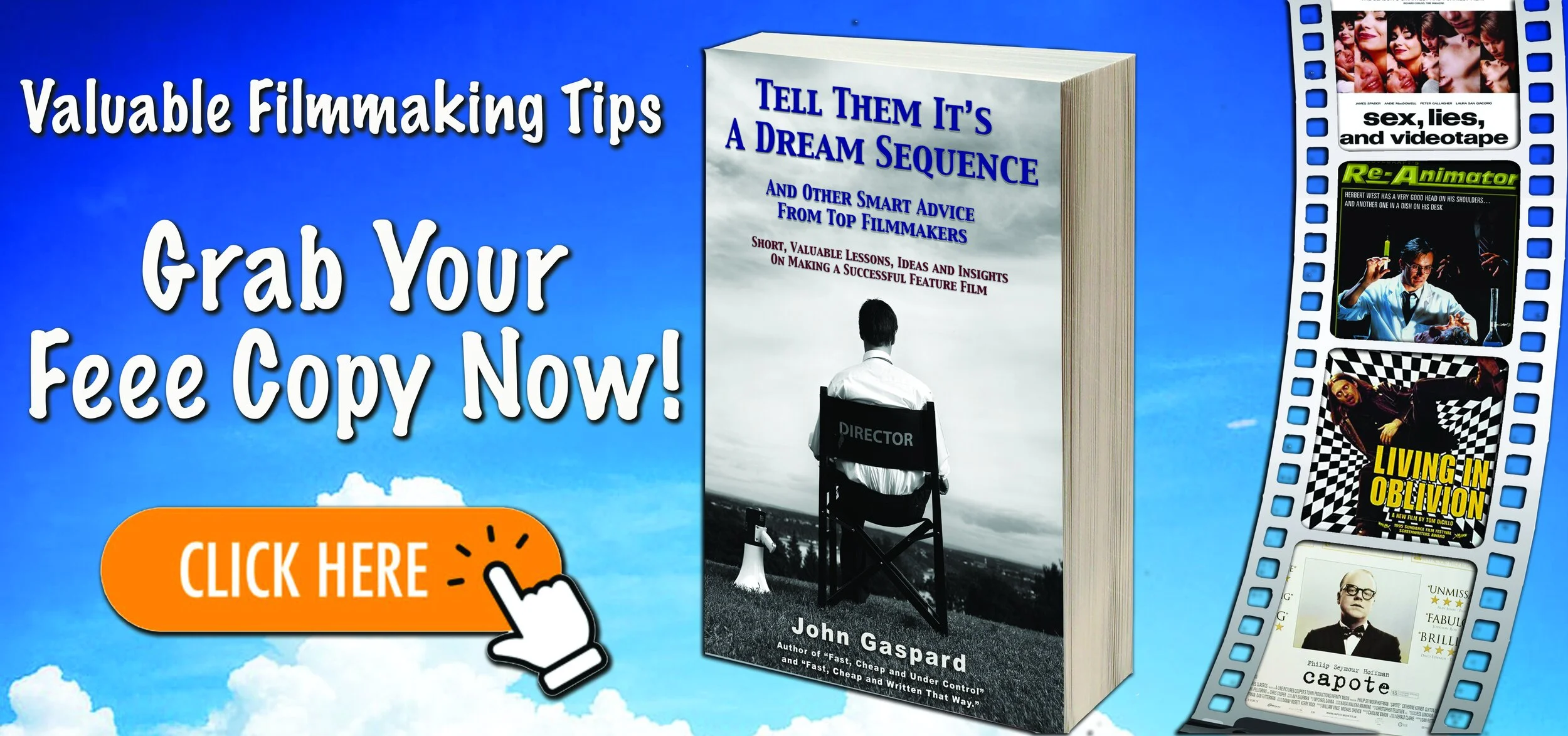
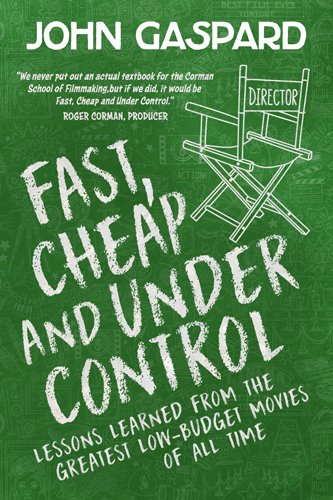
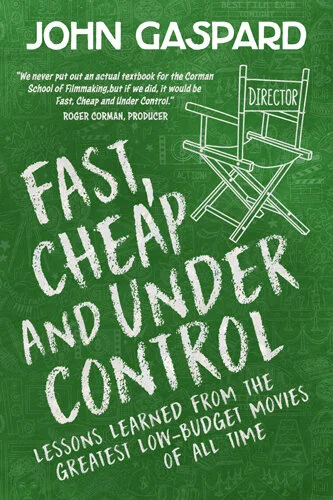
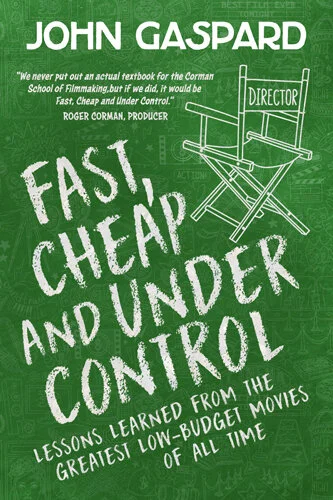
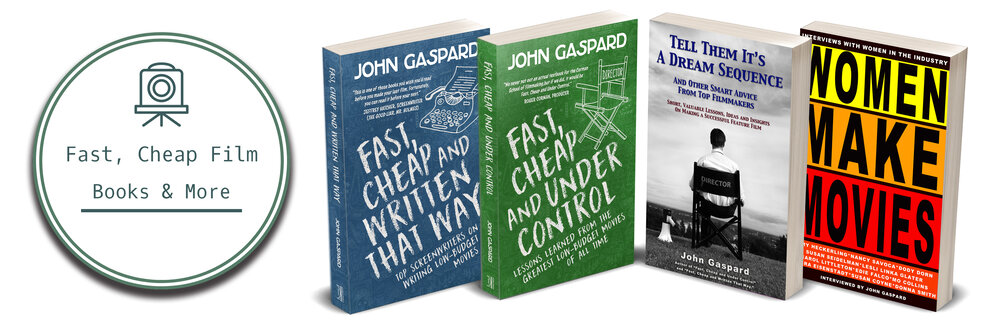
Dying to make a feature? Learn from the pros!

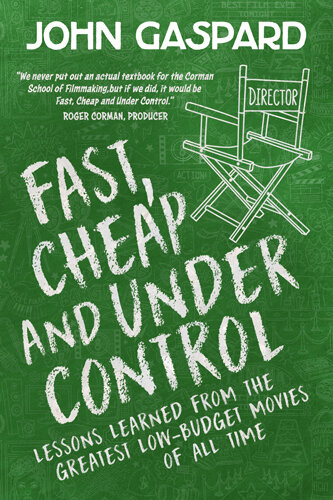
"We never put out an actual textbook for the Corman School of Filmmaking, but if we did, it would be Fast, Cheap and Under Control." 
Roger Corman, Producer

★★★★★

It’s like taking a Master Class in moviemaking…all in one book!

  • Jonathan Demme: The value of cameos

  • John Sayles: Writing to your resources

  • Peter Bogdanovich: Long, continuous takes

  • John Cassavetes: Re-Shoots

  • Steven Soderbergh: Rehearsals

  • George Romero: Casting

  • Kevin Smith: Skipping film school

  • Jon Favreau: Creating an emotional connection

  • Richard Linklater: Poverty breeds creativity

  • David Lynch: Kill your darlings

  • Ron Howard: Pre-production planning

  • John Carpenter: Going low-tech

  • Robert Rodriguez: Sound thinking

And more!
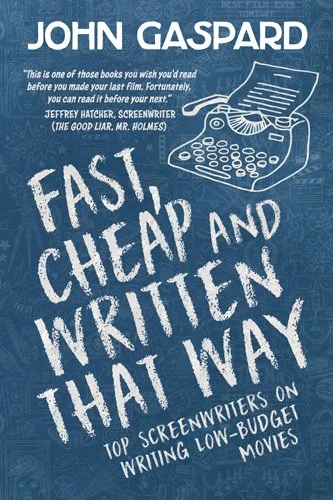
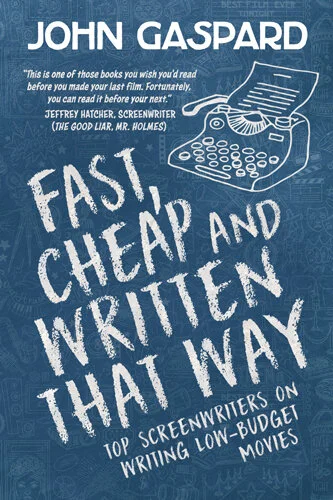
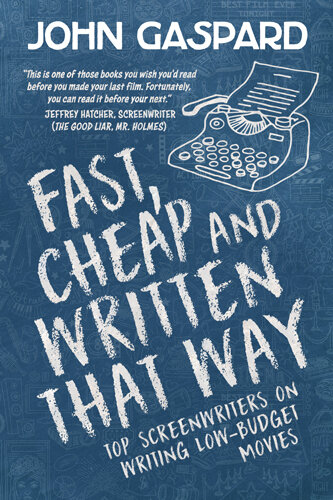
Write Your Screenplay with the Help of Top Screenwriters!

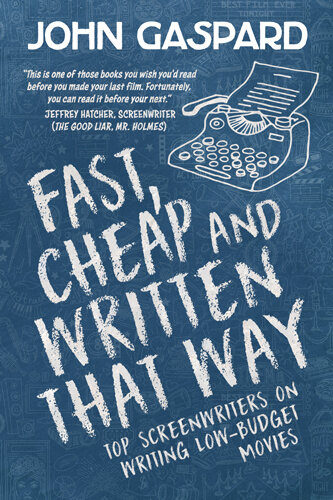
It’s like taking a Master Class in screenwriting … all in one book!

Discover the pitfalls of writing to fit a budget from screenwriters who have successfully navigated these waters already. Learn from their mistakes and improve your script with their expert advice.

"I wish I'd read this book before I made Re-Animator."
Stuart Gordon, Director, Re-Animator, Castle Freak, From Beyond

John Gaspard has directed half a dozen low-budget features, as well as written for TV, movies, novels and the stage.

The book covers (among other topics):

  • Academy-Award Winner Dan Futterman (“Capote”) on writing real stories

  • Tom DiCillio (“Living In Oblivion”) on turning a short into a feature

  • Kasi Lemmons (“Eve’s Bayou”) on writing for a different time period

  • George Romero (“Martin”) on writing horror on a budget

  • Rebecca Miller (“Personal Velocity”) on adapting short stories

  • Stuart Gordon (“Re-Animator”) on adaptations

  • Academy-Award Nominee Whit Stillman (“Metropolitan”) on cheap ways to make it look expensive

  • Miranda July (“Me and You and Everyone We Know”) on making your writing spontaneous

  • Alex Cox (“Repo Man”) on scaling the script to meet a budget

  • Joan Micklin Silver (“Hester Street”) on writing history on a budget

  • Bob Clark (“Children Shouldn’t Play with Dead Things”) on mixing humor and horror

  • Amy Holden Jones (“Love Letters”) on writing romance on a budget

  • Henry Jaglom (“Venice/Venice”) on mixing improvisation with scripting

  • L.M. Kit Carson (“Paris, Texas”) on re-writing while shooting

  • Academy-Award Winner Kenneth Lonergan (“You Can Count on Me”) on script editing

  • Roger Nygard (“Suckers”) on mixing genres

This is the book for anyone who’s serious about writing a screenplay that can get produced! 
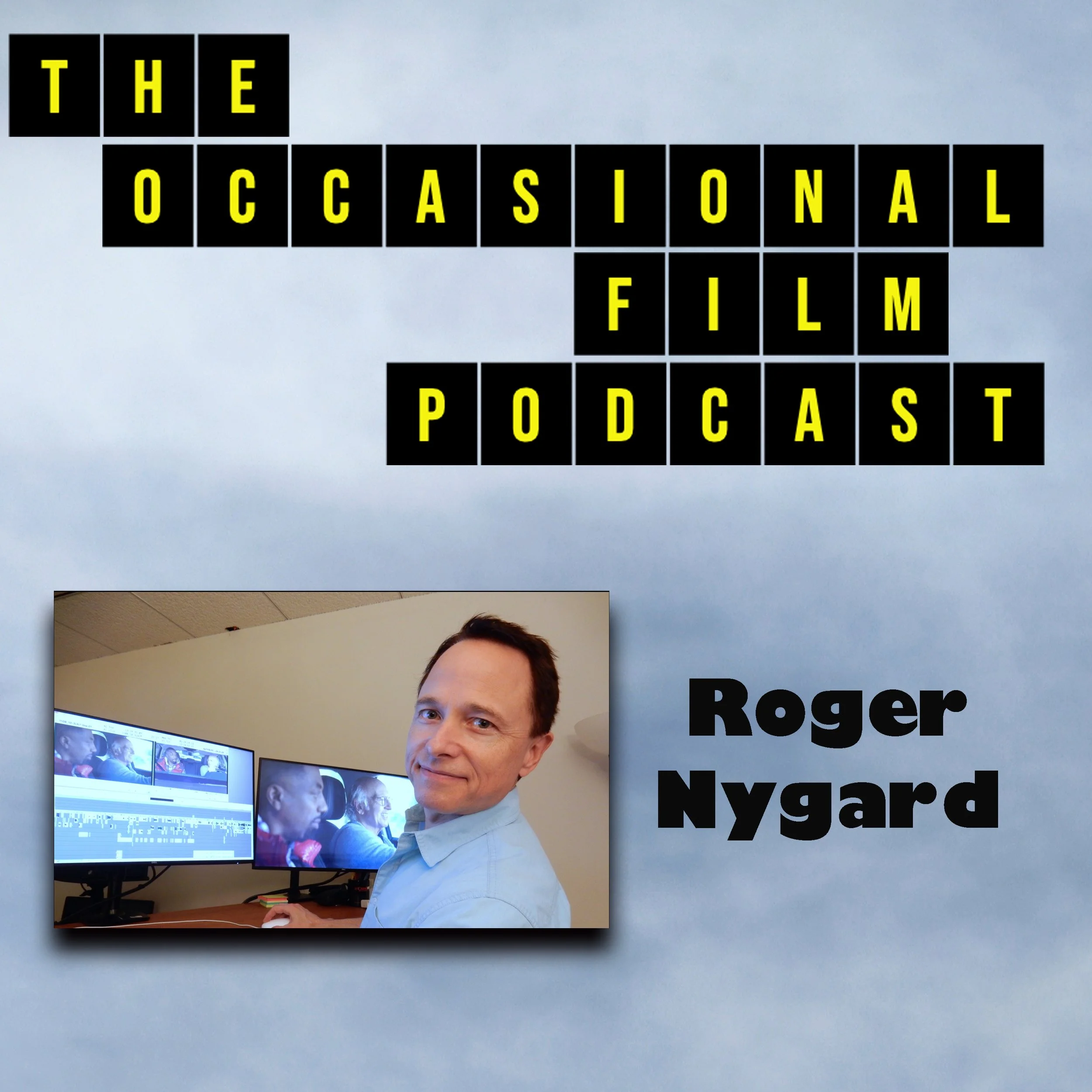
Roger Nygard on "The Documentarian," Trekkies, fishing and more ...

Where did you first get the documentary bug?

Roger Nygard: It was a big mistake. I didn't plan for it. It is sort of like, “Oh, I'll try one bump of heroin. What could hurt, right? Just once.”

I made a documentary called Trekkies because an actress I met named Denise Crosby (who was in my first feature film), we had lunch a few years later and she pitched the idea to me. “Hey, someone should make a documentary about these Star Trek fans.” Because she'd been going to conventions as an actor and said these people are entertaining and we couldn't believe no one had done it yet. It seems so obvious and “Yes, of course.”

So, we brainstormed a little bit. We’d never done this before. How do you, uh, we have no idea how to make a documentary. But, you know, as the naive often say, how hard can it be? And then you dive in and it's really hard, especially if you don't know what you're doing.

And we just stumbled into it, watched a bunch of documentaries, absorbed what we could, made a lot of mistakes, which I learned from, and then put in a book about how to make documentaries, I made the mistakes, so you don't have to. So, I just kind of stumbled into it.

What was the biggest challenge you faced on that one, looking back on it?

Roger Nygard: It's always, the biggest challenge is always finding the money to pay for it. Every time. Even for Ken Burns, he said it was a challenge raising money. You’d think a guy like, in, in his career at this point, with dozens of films, they'd be writing him checks, but he says he still has to go searching for the finishing funds on every project.

One of the things when I saw Trekkies for the first time I was really impressed with--well, first the humanity that you treated every subject in it with. But also, your balance of the humorous and the serious elements within it. I imagine you found that in the editing, am I right?

Roger Nygard: I guess so. I mean, it's something innate. I don't really consciously set out to be, “I'm going to be balanced,” or “I'm going to be funny.” It's what I look for in my own viewing. I look for films where the filmmaker is not lying to me. I want a genuine take on something. They can take a position. In fact, it's better when you take a position with a documentary. You should have a point of view. If you are just presenting both sides equally, you're much less likely to have an audience than if you take a stand, make a position and lay out the evidence and let the audience decide.

But I look for that in a film, and so my films, I guess, are an embodiment of me. I'm the filmmaker. You're getting my perspective on the world. Any piece of art is the artist's perspective on the world. They're saying, “here's how I see the world.” And my documentary is me looking at people. I'm amused and I'm obsessed and I'm interested in human behavior.

I find it fascinating and really funny. And so that's what happens when I process what I'm making. And then, of course, then in the editing, that's where I'm refining that point of view.

So, when you sit down with someone, what techniques do you use to make your interview subjects comfortable and willing to open up to get the sort of responses you need?

Roger Nygard: First, you want to start off with some flattery. Obviously. “Thank you for being here. I loved your book. It's such a good book. I loved your movie. I loved your acting. I loved whatever. I love that broach.” You, find something to compliment.

And people love it. You bond with someone who likes you. We like people who like us. And so that interview is going to be a connection between two people and it's nice when it's like a friendly connection where they're not hiding their true selves. So, you want someone to feel comfortable enough so that they'll open up and give you the real stuff and not try to present, to pre edit their image. Those interviews don't work so well when someone's trying to make sure that they're going to come off a certain way. They need to be open and you're gonna take what they give you and edit it and make them look good, ideally, or at least give them a genuine, honest portrayal. But you want them to feel comfortable.

Another way to do that is to share something about yourself, before you start. Maybe a tragedy you experienced, if you're talking about their tragedy. Or a funny event that happened to you. But keep it short, because they are there to talk, you're there to listen.

So, mainly, you ask a question and then just shut up and let them fill the space.

How long did it take you to learn to shut up? Because I'm not sure I've learned that yet.

Roger Nygard: It's so hard. Especially for men. Men are the worst. I mean, I made a documentary about relationships, and that's almost the number one thing I learned from marriage therapists is that your partner needs to be heard. And men typically try to fix things, because that's what we do, right? But your partner doesn't need you to fix them usually when they're telling you something. Let’s say you've got a wife, she's complaining about her boss, she doesn't want you to, to say, “Oh, why don't you quit? Why don't you do this? Why don't you do that?”

That's going to make her feel worse. She wants you to just, just show empathy. And so in an interview, you want to do the same thing—show empathy—but don't intrude, just nod, “hmm, hmm, yeah, oh that's, that must have been awful, tell me more about how that felt.”

Instead of interrupting and trying to guide them, just ask the question, leave the space, provide silent empathy, because you don't want your voice all over their soundtrack.

How much pre-interviewing do you do and do you like that or not?

Roger Nygard: I used to do a lot of pre interviewing. On Trekkies, we did a lot because it was expensive to shoot film. We made that in 16mm film. Oftentimes, we would rehearse what they're going to say and get the soundbite we needed kind of ready. And then say “action,” have them say it, and then cut, and then move on. Or maybe say it in a couple different ways. But now, it’s much more typical to just let the camera roll, because we're shooting video, with maybe multiple cameras.

And I think that's a better way generally, because you might get things you didn't expect. I'd rather have a lot of extra footage that I can't use and yet get that moment that I wouldn't have had otherwise, than if I'm trying to save video.

But that said, you want to know what you're going there to get. You don't want to shoot a bunch of things that are useless, because you've got to sit in the editing room, or your poor editor has to go through all of this stuff. So, you do need to plan it out, and there's nothing wrong with preparing the person, pre interviewing them.

You know, early in my career, I was a PA on a documentary that HBO was doing here in the Twin Cities. It was about hockey goalies, I think, and suicide. And I'd never been on a documentary set like that. And the director of it literally would say, “when we talked on the phone, you said the following sentence, would you say that again?” Which appalled me at the time, because I thought, “let him really talk.” But then like you say, he was shooting 16 and he had to get what he had to get. But now, a million years later, having done hundreds of corporate interviews, while I'm absolutely on your side of let the camera run, you also need to know what it is you want to get.

But also, I remember, we were wrapping up an interview with a father of someone who, I think she had become ill, but she was fine now. And I said, “OK, well, that's just been great, Dave. Thank you for talking to me.” And the sound man—I was about to say cut—and the sound man said, “John, um, I just feel like Dave wants to say something else.” And I said, “well, yeah, we're still rolling. Go ahead, Dave.” And then he said the sentence that we needed for the whole video.

And the sound man had seen that because he was paying attention to the person that I was interviewing. I had not seen it. And I got better later on at seeing that, but it's finding that balance between we're done and we're almost done, but you're about to do something brilliant that I guess you can only get from having done it.

Roger Nygard: I agree. Yes, I've oftentimes said to someone, “That was a great story or a great thing you just said. Could you say it again? Because it's so important, I want to have you try again. And maybe we'll get it a little more concise this time?” Or if in your mind, you're thinking they didn't quite deliver it the way you wanted.

I might even suggest, “Why don't you start by saying ‘That time I was riding my bike …’ and finished the sentence.” I'll guide them, because I'm editing, I'm pre editing in my head. How am I going to use this soundbite? Can I use it? Is it usable? Or should we try again?

That's very common and they like that, because they want to come off well and they want a second chance to say the thing better. So, everybody wins. And by the way, did you meet Gump Worsley?

I did not. This was a high school hockey thing, it wasn't a professional hockey video. But I was surprised that at the end of the day they gave me all the film to take over to the lab. I'm just a PA. You're giving me everything to take to the place? It seemed like they were giving an awful lot of trust to this kid who didn't know what he was doing.

But you raise an interesting point, because as you're interviewing, you are both directing and editing at the same time. I think if you're good at it, you're figuring out, yes, no, yeah, I can use, no, I can't. And that's a weird dichotomy. How do you balance both those things? Be in the moment, but also be in the editing suite at the same time in your head?

Roger Nygard: That's the hardest thing, especially if you're a one-man band, or a one-person band, or maybe it's you and a sound person. But often, it's been just me with the person that I'm interviewing. And so I've got to make sure it's in focus, I have to remember to turn off the autofocus, I've got to ride the levels, ride the volume, I've got to remember to ask the question, and I have to listen to what they're saying, in case I want to go with a follow up. Doing all these things at once. I've got to remember that—if the lighting changes during the shot—I've got to fix the lighting because the sun moved.

So many things are happening. And so, you just practice. You get better every time you do another one, and it starts to become second nature. But the most important thing, after making sure it's in focus and the sound is good quality, is to listen to what they say, exactly like your sound person. What a great advantage to have someone who is paying attention like that and a good team member to remind you.

Every interview should end with, “Is there anything else you'd like to add? Is there anything that we missed or is there anything else you'd like to say?” Many of the best soundbites I've collected came in those moments when it was unprompted by me. They gave me what they needed to give me.

I remember being on one shoot for an NCAA athlete. She was a basketball point guard, I think. And we're about halfway through the interview and I asked a question and her response was this. She said, “Well as I said before, oh wait, I shouldn't say ‘as I said before,’ because I bet you're going to cut this up. Let me redo that and I won't say ‘as I said before.’” And then she said the statement.

She finished the statement, and I turned to the crew and said, “You guys do this much more than I do. Has a subject ever said that? And they said, “No, no subject has ever been that aware of the process that they were in that they fixed on the fly what they're saying, because they knew you couldn't use it.”

Roger Nygard: Those interview subjects are rare.

One technique you talk about in the book is something that started with Errol Morris and ended up being used in corporate America, corporate videos quite a bit. We called it The Interrogator, but that's not quite the word that he used. What did he call it?

Roger Nygard: Oh, the Interitron.

We call it just the Interrogator, and it's where you've set up a system wherein they're not looking at the camera, they're looking basically at a screen, which is in front of the camera, and they see your face, and so it is a conversation. And with many subjects, I found that that really helped break down any sort of barrier, because it's really hard to talk to a camera, it's much easier to talk to someone sitting next to the camera, and the closer they are to the camera, the better your shot's going to be. But having them look right at your face was hugely helpful.

Roger Nygard: There is a connection that happens, according to Errol Morris, that brings unexpected, well, I don't know, what do you want to call it, electricity between you and your subject. Maybe that you might not have when the camera's intruding on the relationship.

Have you ever run into situations where there wasn't a pre-interview and it becomes very apparent very quickly that this isn't going to go anywhere? If you have, what's your response to that and how do you handle that?

Roger Nygard: Oh, yeah, there are many times. Especially when I was shooting The Nature of Existence. I had 450 hours of footage. I interviewed 170 people. Something like that. Because I was fishing, I don't know what I'm going to get. And everyone is qualified to have an opinion on why do we exist. So, it's worth casting my lure into that part of the lake, even though I'm not sure that there's fish there, I didn't pre fish it. And when that happens, I just do the interview, and then I thank them and tell them it was great. And then I just don't use it, because there's nothing usable in there and it's part of fishing, right? Not every cast brings in a fish. Your Minnesota viewers are going to understand this metaphor.

Well, I think fishing's internationally understood. I've never seen anyone do it outside of Minnesota, but I've seen pictures. So, you mentioned, The Nature of Existence. We've talked about Trekkies, you've talked about the relationship documentary. Where do you get your ideas for what to follow? What's going to be your next project? Where does that come from? And how do you know when you, when you have a good fish on the line?

Roger Nygard: When you become obsessed with an idea, you have a message that is bursting to get out of you, and so you are compelled to see this through to the bitter end. Because it might take two years, or four years, or seven years.

The Truth About Marriage took seven years. Trekkies took one year. Trekkies 2 took 18 months. The Nature of Existence took four years. The idea has to captivate me enough, and obsess me enough, get me there. And then I'm hoping the audience will be just as interested in what I'm obsessed with as I present it to them. That's probably the most important ingredient to the success of a documentary, is your choice of subject matter.

What do you mean?

Roger Nygard: Because otherwise you might be making a whole movie that’s something no one else is gonna be interested in. Or you're doing it for some reason other than you are captivated by it. Because you're the filmmaker, you're the artist. It's your enthusiasm, your excitement that's going to come through and be felt by the audience.
But while you're doing that, in your case, you are producing, directing, and editing your projects. When do you know that it's done? I mean, on The Nature of Existence, you said you interviewed, what, 170? How do you know, “Well, that's it, I've got all the pieces?” How do you make that decision?

Roger Nygard: Yeah, it's hard sometimes because I had no idea where I was going to end up in with some of these films. I'm sort of like an investigator setting out to solve a crime, and so once I solved the crime, then I know where my ending is and I know how to get there, where to get to. I just have to answer the question.

For example, The Truth About Marriage. My question was, Why are relationships so hard for people? That's the mystery I solved. And once I had solved it for myself, by talking to enough marriage therapists, and couples, and married people, and divorced people, a divorce attorney, etc. I had settled in on an answer. And so that's what I present at the end of the film, is what I learned while seeking out that question.

That’s a concept documentary. With a narrative documentary, it is easier to know your ending because it's a story of someone's life, probably, or a slice of someone's life. Or a trial with a verdict. Okay, the verdict is the ending. Or, maybe it's basketball. And so, do they win or do they lose at the end? That's your ending, and you're working backward from that. If it's a biography, if they've lived a good three act structure in their lives, you've probably got a good documentary there.

If they haven't, you either have to manufacture it or find a way to present it. And many documentaries have succeeded despite a lack of a story structure and despite a lack of a solid core question. It's better to have the insurance of a solid story structure, but if you don't have it, you might yet still succeed.

Like, I think Trekkies is an example of this. It's a flawed documentary, which does not have a narrative structure. And there's no solid core question asked at the beginning. But it was a grand slam as a documentary because it was so funny. And it had a core group of people that were going to automatically be interested in the film. So, we had those two high cards despite the fact that we didn't have what typically a great documentary has, which is a narrative structure just the same as a screenplay has.

It feels like sometimes you're just rolling the dice, not you, but a documentary filmmaker, that you're gonna go into something and something's gonna happen and you're gonna end up with either The Jinx, where he confesses on tape at the end of your documentary, which you certainly could not have put in your pitch if you're that director. Or the folks who were working on the Alec Baldwin documentary about his trial, where the judge threw it out on the first or second day. At that point, you no longer have a documentary.

What would you recommend someone do when they're going out to pitch a documentary to investors or the network or whatever on the idea of something? How do you sell something that doesn't exist yet, even in anything more than like a one page document?

Roger Nygard: The best way to sell it is to make them feel the story in the room. You act it out and you bring the excitement because you're excited by it. And maybe you've done one interview already as a test. That's often where I get the feel when I'm interviewing that person. I feel it. I feel like I've got something here or I feel like it's not going anywhere.

I started a documentary about Scott Hanson, local Minneapolis comedian, and we did one interview, and I just didn't feel it, because I think he was trying to present an image of himself. He wasn't willing to be open. And so I didn't get excited, and we didn't really keep going.

The first interview, the first footage we shot of Trekkies, we felt it. We knew we had something. The first interview I did about this existentialist question, Why do we exist? I loved talking to people about this the way you do in a dorm room in college when you're talking about the big questions Why are we here? And what's our purpose? And what am I supposed to do with my life? That gets me excited. It gets people excited in life and death talking about death. What happens when you die? Does the soul exist? If so, where is it lodged inside your brain? Is there a compartment? You know, just fun, fun questions So, I knew, I had a sense that that was going to turn out okay, even though I didn't know my ending when I started because the idea was so gripping.

I mean, it's gripped people, existentialist philosophers, for centuries. I'm not the first person to ask this question or try to figure it. I'm just one of thousands or millions, who knows? So, I was tapping into something I thought, it felt like to me. I felt it.

But when you're in a pitch meeting, as you're asking, you have to make them feel the excitement either through your core question or the character description. If it's a character piece, then you are going to tell a story about this person. Who is this documentary about?

I asked Ken Burns about that. How do you make a documentary about things like a bridge? His first film was about the building of the Brooklyn Bridge. And he said, “You can't. You cannot make documentaries about things. It has to be about people.” And so that documentary is about the family, the Roebling family, that built that bridge and their struggle to complete the job through difficulties and challenges and near death experiences. That makes it interesting and exciting.

If you love the film— like a film about an octopus, right? It's not as exciting unless you learn about the person who gets infatuated with a particular octopus, and it's his life. Or a documentary about a TV show. It's going to have a limited interest to fans of the TV show. But if you want a wider audience, you do a film about the fans themselves, about the people.

The stories are about the people involved. Someone who collects owl figurines like my aunt did. She would have been a great subject. The owl figurines, who cares? You know, it's a five-minute short. Look, a bunch of owl figurines. But the person, the mindset behind someone who thinks they have to fill their house with owls. That's interesting.

And it gives you lots of cutaway shots, too, which is nice.

Roger Nygard: Always get your cutaways. Yes.

For your documentaries, you're directing and editing, but in the case of the Comedy Store series, you were just, I don't mean to say just an editor on it, but you weren't directing it. What is that process like? I dealt with in corporate all the time. I would go out and interview the subjects and I'd bring it back to my editor and say, “Hey, here's my notes, here's the best stuff, have at it.” And he would create something great that wasn't what I had necessarily intended, but he found the best stuff in the footage and turned it into a five minute story.

In the case of The Comedy Store, you're probably handed hundreds of hours of interviews with very interesting people and very funny people. What was your process for creating all those segments and deciding, this goes this stays? Because I'm guessing you could probably have done a couple more hours of just stuff that's funny.

Roger Nygard: Sure, we could have done more episodes. There was plenty of footage. I was hired by Mike Binder, who I had worked with before. I had edited his feature films in the past. And he had never made a documentary.

So, when he first asked me, I was busy. I was cutting Curb Your Enthusiasm. And I said, “I can't do it. But if, you know, if you can wait 11 months, I'll be free.” So, he hired another editor and started on the footage. And when that eleven months was over, they had crap. They had nothing. They had the beginnings of an episode, but he was flailing around trying to figure out what to do.

So, I said, “I'm available now, let's do it.” So, I jumped in, and the first thing I showed Mike was my rules for doing interviews. I said, “Mike, you gotta just shut up. Ask the question and shut up. Let them fill the space. Especially when it's awkward. That's great. They'll come up with things they wouldn't have said if you had just been quiet.” That's number one.

Number two, each episode needs a theme. And this is the biggest problem that I've seen, the biggest mistake that documentary filmmakers will make, is they don't know what their theme is. What is a theme? It's the idea or the premise behind the moral of the story. It's the idea you're trying to express.

And each of the five episodes has a different theme. One is called The Wild Bunch. And it was about the wildest comedians who ever performed at The Comedy Store. And we used some footage from the movie The Wild Bunch. Once it had a theme, then I knew what to cut, and how to link things together.

And once Mike started revising his outlines with that in mind, they started to take shape. And cutting the episodes made sense. You need to know your theme. I would write it down on a piece of paper, put it on the wall, because that's your roadmap. That's where you're going, and every scene should be connected to that theme in some way. Or if it doesn't, it probably doesn't belong in that episode or in the movie.

And it actually probably made it a whole lot easier to edit, because you could just immediately go, nope, nope, yep, nope, nope, nope, nope, yep.

Roger Nygard: It's your road map. Otherwise, you're just surrounded by a forest of footage and what do you do? I mean, there are tricks, like you start putting like with like and grouping them in your bins. And eventually you might start connecting like segments with like segments as you're building scenes.

But when there's a narrative, it's easiest. There's an episode that's about the comedy strike, which happened. And so that gave us a very specific timeline of what's happening and who caused the strike and what they were asking for. Now we've got protagonists and antagonists. The antagonist is the owner of the store, Mitzi Shore, who doesn't want to pay them what they want as comedians. And that makes it easier from a narrative perspective, because what is a narrative, right? You have a protagonist, or a small group of protagonists, and an antagonist, or a small group, and a goal.

The protagonists have a goal, and there's obstacles to that goal. Now we watch to see how they succeed or fail. That made that episode much clearer.

One part of the book that I found just fascinating and I'm wondering if the publisher gave you any pushback on it, because it is sort of its own mini book right in the book. Which is the whole process of coming up with a distribution deal for Trekkies. It's a long segment, but it disabuses you of any glamour of Hollywood of, “Oh, we went to Sundance and they loved the film, and we signed it, and two months later it was in theaters. This is pages and pages and pages of the process of taking what you know to be a valuable asset and getting it to the right people and getting it out. So, first question is, did the publisher push back on that at all?

Roger Nygard: No, they were remarkably compliant, helpful.  Because I'd done one book with them already, and they felt pretty happy about me doing a second one in a similar vein, and I had case studies in that book also.

But not like this, this is four chapters.

Roger Nygard: You're right, the four chapters after, I say at one point, at the end of chapter 10 or whatever it was, “Okay, the how to make a documentary part of the book is over. The next four chapters are, once you have finished, here's a case study in trying to sell your documentary.” Because it took us nine months. From our first distributor screening to sign a contract. There is no immediate, you know. I mean, Sundance turned us down.

And so, you have to persevere despite these problems toward a sale. The Sundance mega sale is like winning the lottery. And you're not likely to win the lottery. So you need backup strategies and backup plans. And we had tried lots of things, and it took us a long time and a lot of difficulties in fighting amongst ourselves to finally get to a point where we succeeded and got such a successful sale.

Those chapters—I mean, the whole book is great for anyone who wants to make a documentary—but it's also really good for anyone who wants to make a thing. Particularly a film or a TV show or something.You're trying to make a pilot, you're trying to do something. It's unvarnished as to what it takes to do these things, and then you get to those four chapters, you realize this is for anybody who's got a film under their arm, whether it's a short or a feature, here's what you need to be prepared to face.

I've always said that the problem with independent filmmaking is that we only see the successes. It's like having a cancer study where they don't tell you about the ones who died. We only tell you about the ones who lived. And this is a great, because look at this: this is what they did and they all lived, but there's so many that died because people don't understand the process. And that's what I love about that section of the book: it really just says this is not easy and you need good people on your side.

Roger Nygard: And persistence. It’s a marathon. You need to make sure your film sells. No one else is going to have the motivation to push your film over the finish line more than you. You gotta be in training to be that strong. You gotta make your short films, you gotta suffer a little bit, and that just makes you stronger.

We were motivated to succeed. Despite being turned down by Sundance and Telluride and Toronto and the New York Film Festival—all the big ones at the beginning of the season turned us down. We finally got some success with the Hamptons Film Festival and the AFI Los Angeles Film Festival, and we were able to use those to help us get where we wanted to go. But boy, it would have been so much nicer if we got into Sundance, and it was the rave of Sundance, and it was easy.

But here's a plan for those where that doesn't happen: There's a film agent I interview in the book, Glenn Reynolds, who said, “I don't need film festivals to sell your movie. Filmmakers like to go to film festivals, but there's just buyers, and it comes down to the product.

Is it good? Who's in it? What's their social media reach now? And, oh, okay, you did a film festival. That's great. That doesn't hurt necessarily, but these first three, and the poster. What's the hook? What's the marketing going to do? Those are more important than how many film festivals.”

We did 50 film festivals. The buyers don't really care. But if you picked up some rave reviews, and won some awards, that shows that someone else has validated your work. And so that's what you're hoping for.

And you're not doing that in a vacuum. If I remember the timeline, you're working on your feature Suckers in there somewhere as well, that's happening at the same time.

You once said to me something like, “It's good to have a lot of irons in the fire, you just don't want to have too many because you'll put the fire out.” You don't remember saying that?

Roger Nygard: I do, yes. That sounds like me.

Yeah, it is you. It was you. And I've remembered that ever since. And have tried to have a number of irons in the fire, but not too many. I think you sort of just say it in passing, in that section, that you’re also working on Suckers, and that's happening. But you've always had sort of multi paths happening at the same time. How has that helped your career as both a documentary filmmaker, and a TV director, and a TV editor, and now an author?

Roger Nygard: Yeah, you need to continually reinvent yourself and be trying new things and have multiple projects and have the stamina to, to work on them all and push them forward. Because that's who you're competing with. You're competing with people who are like that. They're working just as hard as you are.

I mean, a workaholic is just someone who works harder than you do, right? If you accuse someone of being a workaholic, that means you're probably a little lazier than they are. Okay, that's fine. Maybe you can make what you need out of life, not working as hard, and my hat goes off to you. But that doesn't work for me. What works for me is—maybe it's that Scandinavian work ethic I picked up growing up in Minnesota—I feel like a complete loser if I haven't put in my work during the day. By the end of the day, I better have pushed that ball down the field some more, or I'll feel, you know, guilty.

And so that helps motivate me. So, I work every day on something. Whether it's writing the book, or making a documentary, or editing a feature, or editing—right now I'm editing a Netflix series. Doing all those things. And my delayed gratification carrot is hanging there for me: Once I finish, I'm gonna go to Bali. So, I go to Bali every year once I've earned it.

And now you might say, “Oh, you're crazy! No one should work that hard. I'm tired.” Well, it's a very competitive world, and so you need to work just a little bit harder than the one you're competing against.

Yes. I believe it was William Goldman who quoted a basketball coach saying to their player, “Anytime you're not practicing, the guy you're going to go up against is, so you need to get out there and practice.”

Roger Nygard: It’s no different in the film business. Film business is the same, if not even more cutthroat.

Okay, two last questions on this, and then I'm going to let you go. So, what's the biggest mistake that you think someone starting out as a documentary filmmaker is likely to make?

Roger Nygard: One of them is to give up your ownership. You should always keep, if you can, own your projects. Own your product. Because it's a property. And if you own it, then you can continually relicense it over your lifetime.

I know a filmmaker who made the biggest mistake you can make, which is he sold his movie in perpetuity to a distributor. Now it's gone. He'll never get it back again. So you want to license whatever you've made to a distributor for two years, four years, five years, seven years. With Trekkies, we had a 20 year license, 25 if unrecouped. But that's because they paid us so much money, they bought that many years, but it was still a license.

And so Trekies came back to us a few years ago and so we restored it to HD. It had never been released in HD yet, and we’ve licensed it to a new company for another period of time.

You did the same thing with Suckers, didn't you?

Roger Nygard: I did it, I bought it, yes. The company, the same company that I made Trekkies with made Suckers with me. And they set up a corporation to own the film, which is typically what they do, every film has a corporation that owns that film. And that's where the money from the investor goes. And that's where the profits, if any, come out of. And in that case, Sucker's never reached profit while they owned it. It cost about a half a million to make, and it probably made back $250,000 from an HBO sale and an IFC sale and home video. And we had a distributor that went bankrupt who, so we had to chase them.

But at the end, probably like 15 years after we made the film, the company that I worked with, Neomotion Pictures, they were going to close their doors. They were retiring or going off to do different things, and they were shutting down the company they had made that owned the film. So, if they just shut down the company, then suddenly it goes into the public domain, because there's no ownership. The entity that owned it no longer exists. Nothing owns it. Meaning everybody, anyone can own it.

So, I said, Wait, guys, sell it to me,” which they did, “And I will restore the film,” which I did. I paid for the restoration. I collected what elements remained, some had been thrown away, but enough of the key elements still existed, so I was able to re-scan it and remix it and marry it together and find a distributor. And actually I put it on, it's on Amazon Prime. I put it there myself. So, I collect the money directly now, after putting my money into it.

So, be an owner. Own your films. And if you can't, be a co owner. So at least you're part of where the money goes first. I mean, ideally you want the money to go to you and have all your profit participants chase you for the money, instead of you chasing them for the royalties.

Okay, one last question. Someone has read your book, they've properly packed all their gear,  they're going off to begin shooting. What's the one last piece of advice you'd give them before the door on the airplane shuts?

Roger Nygard: Buy a copy of The Documentarian for everyone on your crew. That's the first part of the advice. And have them all read it.

Be prepared for your interview, practice at home before you get there, set up your camera and your audio and do a practice interview so that it's second nature by the time you get there. Maybe do a test interview on, on someone who's not your main interviewee so that you have done a dry run and you've tested all the equipment, you've tested your questions, you've refined your approach. And so you're ready for the big day.

Well, this has been great. Roger, is there anything I've forgotten to ask you? 

Roger Nygard: Yes, the names of all my projects. The last book was Cut to the Monkey, about editing and comedy. And this book is called The Documentarian. And I am working on another book, and I will probably, until the day I keel over. Hopefully I'll die fishing up in Canada.

And they won't find you for days and days and days.

Roger Nygard: It would be only fair if I fell in the water and the fish ate me after I've been eating them for years.

Dying to make a feature? Learn from the pros!

"We never put out an actual textbook for the Corman School of Filmmaking, but if we did, it would be Fast, Cheap and Under Control." 
Roger Corman, Producer

★★★★★

It’s like taking a Master Class in moviemaking…all in one book!

  • Jonathan Demme: The value of cameos

  • John Sayles: Writing to your resources

  • Peter Bogdanovich: Long, continuous takes

  • John Cassavetes: Re-Shoots

  • Steven Soderbergh: Rehearsals

  • George Romero: Casting

  • Kevin Smith: Skipping film school

  • Jon Favreau: Creating an emotional connection

  • Richard Linklater: Poverty breeds creativity

  • David Lynch: Kill your darlings

  • Ron Howard: Pre-production planning

  • John Carpenter: Going low-tech

  • Robert Rodriguez: Sound thinking

And more!

Write Your Screenplay with the Help of Top Screenwriters!

It’s like taking a Master Class in screenwriting … all in one book!

Discover the pitfalls of writing to fit a budget from screenwriters who have successfully navigated these waters already. Learn from their mistakes and improve your script with their expert advice.

"I wish I'd read this book before I made Re-Animator."
Stuart Gordon, Director, Re-Animator, Castle Freak, From Beyond

John Gaspard has directed half a dozen low-budget features, as well as written for TV, movies, novels and the stage.

The book covers (among other topics):

  • Academy-Award Winner Dan Futterman (“Capote”) on writing real stories

  • Tom DiCillio (“Living In Oblivion”) on turning a short into a feature

  • Kasi Lemmons (“Eve’s Bayou”) on writing for a different time period

  • George Romero (“Martin”) on writing horror on a budget

  • Rebecca Miller (“Personal Velocity”) on adapting short stories

  • Stuart Gordon (“Re-Animator”) on adaptations

  • Academy-Award Nominee Whit Stillman (“Metropolitan”) on cheap ways to make it look expensive

  • Miranda July (“Me and You and Everyone We Know”) on making your writing spontaneous

  • Alex Cox (“Repo Man”) on scaling the script to meet a budget

  • Joan Micklin Silver (“Hester Street”) on writing history on a budget

  • Bob Clark (“Children Shouldn’t Play with Dead Things”) on mixing humor and horror

  • Amy Holden Jones (“Love Letters”) on writing romance on a budget

  • Henry Jaglom (“Venice/Venice”) on mixing improvisation with scripting

  • L.M. Kit Carson (“Paris, Texas”) on re-writing while shooting

  • Academy-Award Winner Kenneth Lonergan (“You Can Count on Me”) on script editing

  • Roger Nygard (“Suckers”) on mixing genres

This is the book for anyone who’s serious about writing a screenplay that can get produced! 
Peet Gelderblom on "When Forever Dies"

I do want to just spend just a minute or so talking about When Forever Dies. But oh, my goodness Peet. Where did that come from? And how do—I realize you could probably talk for an hour about it? How did you come up with that? And the very process of putting it together is mind blowing. How would you describe it to someone who hasn't seen it?

Peet: Yeah, When Forever Dies is an archival fiction and it cobbles together scraps of existing films to tell an entirely different story of its own. And that is the story of the relationship between a man and a woman, and how this relationship sort of degrades over time. And it's really experimental in the way that it takes shots and bits and scenes from completely different movies and also completely different genres. It can be advertising, documentaries, animation, love silent films, everything really, and it still manages to tell a whole story.

 You know, you say it's experimental, as someone who has seen it, it's experimental for a few minutes. And then you understand the experiment. And it's then a normal narrative, you get it. I mean, you use some interstitial cards that help bring us along.

 Peet: I say that, because I've always believed that experiment in accessibility shouldn't be a mutually exclusive. It's actually, it's a roller coaster ride of a film and it's in a very, in a lot of ways, it's actually very traditional because I'm using the rules of continuity editing, but I’m using the rules against themselves a little bit, because I take from different films, and then I create, you know, sometimes the opposite meaning out of different shots. Yeah, but what gave me the idea was just I saw a way to do this. And it has evolved, of course, with maybe the start of it was the Raising Cain recut, and making movie mashups after that—video essays—but it all comes from my editing background. I've edited lots of trailers and promos for Universal Pictures and Comedy Central and all sorts of TV channels. And then I was also able to take from different series and different films, you know, put different shots together and create this new through line that didn't exist before and I always enjoyed doing that and I just thought, wouldn't it be really cool to try and do this for a whole feature film?

As it turns out, it was really cool. You know, we recently had on the podcast an editor named Roger Nygard, and Roger edits, Larry David's show Curb Your Enthusiasm, he edited Veep and he's a filmmaker like you. He directs and he edits and he put he also makes his living as an editor. And he said that the thing that taught him the most about filmmaking and about editing was editing promos, where you had a you know, you had to do it all in 15 seconds. And he said you'd learn the most about filmmaking when you have that sort of requirement to work within those boundaries and still tell a story.

 Peet: Yeah, it's the shortest way to tell a story and you really need or you really learn about what things what elements you really need to make something happening on the screen.

With When Forever Dies what's the music on that post-scored or where did you edit to the music? I couldn't really tell, it was all seems so seamless.

Peet: Wow, thank you. Well, it's a little bit of both. I decided I wanted to have a sort of backbone because there was no backbone besides the story that I had made up. So, I actually edited everything on music. Some of the music I made myself but there's also a lot of Creative Commons music and music that was replaced later on by something that our composer did.

Well, it all feels of a piece. It's all just together in perfect. So, I will definitely recommend to listeners that when it becomes available, When Forever Dies is...

Peet: Yeah, it had a very good festival run and then one audience award in Colombia. We're looking into, you know, other, yeah, we're looking into how it could be distributed right now. But obviously it's a weird film. It's difficult to place it.

Yeah, it is. It's different. But then once you get the rhythm of it, you're totally in and you get it.

Peet: Yeah, that's also been my experience with that audience really, audiences really love it when they see it. But I think the trick is to how do you get them in the film theater.

Dying to make a feature? Learn from the pros!

"We never put out an actual textbook for the Corman School of Filmmaking, but if we did, it would be Fast, Cheap and Under Control." 
Roger Corman, Producer

★★★★★

It’s like taking a Master Class in moviemaking…all in one book!

  • Jonathan Demme: The value of cameos

  • John Sayles: Writing to your resources

  • Peter Bogdanovich: Long, continuous takes

  • John Cassavetes: Re-Shoots

  • Steven Soderbergh: Rehearsals

  • George Romero: Casting

  • Kevin Smith: Skipping film school

  • Jon Favreau: Creating an emotional connection

  • Richard Linklater: Poverty breeds creativity

  • David Lynch: Kill your darlings

  • Ron Howard: Pre-production planning

  • John Carpenter: Going low-tech

  • Robert Rodriguez: Sound thinking

And more!

Write Your Screenplay with the Help of Top Screenwriters!

It’s like taking a Master Class in screenwriting … all in one book!

Discover the pitfalls of writing to fit a budget from screenwriters who have successfully navigated these waters already. Learn from their mistakes and improve your script with their expert advice.

"I wish I'd read this book before I made Re-Animator."
Stuart Gordon, Director, Re-Animator, Castle Freak, From Beyond

John Gaspard has directed half a dozen low-budget features, as well as written for TV, movies, novels and the stage.

The book covers (among other topics):

  • Academy-Award Winner Dan Futterman (“Capote”) on writing real stories

  • Tom DiCillio (“Living In Oblivion”) on turning a short into a feature

  • Kasi Lemmons (“Eve’s Bayou”) on writing for a different time period

  • George Romero (“Martin”) on writing horror on a budget

  • Rebecca Miller (“Personal Velocity”) on adapting short stories

  • Stuart Gordon (“Re-Animator”) on adaptations

  • Academy-Award Nominee Whit Stillman (“Metropolitan”) on cheap ways to make it look expensive

  • Miranda July (“Me and You and Everyone We Know”) on making your writing spontaneous

  • Alex Cox (“Repo Man”) on scaling the script to meet a budget

  • Joan Micklin Silver (“Hester Street”) on writing history on a budget

  • Bob Clark (“Children Shouldn’t Play with Dead Things”) on mixing humor and horror

  • Amy Holden Jones (“Love Letters”) on writing romance on a budget

  • Henry Jaglom (“Venice/Venice”) on mixing improvisation with scripting

  • L.M. Kit Carson (“Paris, Texas”) on re-writing while shooting

  • Academy-Award Winner Kenneth Lonergan (“You Can Count on Me”) on script editing

  • Roger Nygard (“Suckers”) on mixing genres

This is the book for anyone who’s serious about writing a screenplay that can get produced! 
Comedian Wayne Federman of the history of stand-up comedy albums

John: I want to just kind of start at the beginning, if you have any idea who performed or produced or released the very first quote, unquote stand-up comedy album?

Wayne: The first album recorded, there's some controversy about it, but it's going to be either Redd Foxx’s Laugh of the Party, Volume 1, 1956. But in 1955, there was an album of Mort Sahl recorded, but it wasn't released until 1960, which was after he had already released another album. And it's a very tough question and a terrible answer but it would be probably those two guys, I would say, are in the running for the first comedy album would be Redd Foxx, and Mort Sahl.

John: Okay and the genre that Redd would slip into would be a genre that I didn't really follow that much, which was the party album.

Wayne: Correct. The party album concept was that these were albums that exactly as described, would be listened to, at a party, usually an adult party. So, it tended to have more what we would call baudy humor, it wouldn't be explicit, the way people speak now on comedy albums and in life. But at that time, it was something and these are usually all on minor labels. That because people could still get in trouble for swearing because of something called Community Standards back then. So, a lot of times in the record store—when there were record stores—you would have to ask for it specifically, it wouldn't be like up in the counter. It wouldn't be in this displayed, it would be like, do you have the new, let's say Rusty Warren album. Yes, she was like a singer who also did sort of baudy songs and told sort of jokes about, you know, breasts and guys getting laid and things like that. There was a number of them.

John: Knockers Up being the one I've ran across the most.

Wayne: Sold millions of copies, millions of copies.

[Music]

John: Just hard to imagine, these days, a party where the entertainment was you all sat around and listened to a record album. It’s quaint.

Wayne: Exactly. But if you think about it, the power of the comedy album was in the fact that for the first time you were transported to these adult nightclubs, or coffee houses, or theaters, where stand-up comedy was being performed. Before then you would never hear anything like that. You heard, there was obviously comedy records, but they were usually produced in a studio. So, this was all something very new.

John: And this was an outgrowth of the sort of explosion of nightclubs?

Wayne: It was a convergence of a number of things. Because if you think of those first big breakout albums, which was of course, the Redd Foxx, and then Mort Saul, and then Shelley Berman, and then a guy named Bob Newhart, those were kind of like the first ones. So, those were all comedians still trying to break through. This wasn't like big Jimmy Durrante, or Milton Berle or Bob Hope, or any of the big nightclub headliners weren't putting out their records. As a matter of fact, there was a big divide between the older generation, or let me put it this way, maybe the less established generation, and the established guys because they were making you know, this is when Vegas started hitting, so these guys, it's like, yeah, Alan King was making, whatever, 15 grand a week or 20 grand a week and he was like, “why should I put my act out for $1.98?” It just didn't make any sense, not realizing the transformative power of like, oh, my God, we get to go to a nightclub here in our living room in Des Moines, but also the promotional value of those albums. So, there was a real divide about whether to put this stuff out or not.

John: So, would the analog be comedians today doing podcasts in order to build up their audience so when they do go on the...

Wayne: Very similar. Yes, that's a great analogy. Great analogy about stand ups and technology.

John: It's just a way to get your brand out there so that there is an audience when you show up in town.

Wayne: 100%. Yes. You got that.

John: At that point with Mort Sahl, he is a contemporary at that point with Lenny Bruce. They're running kind of on the same track, right?

Wayne: They're at the same time. Lenny Bruce is not as successful as Mort Sahl was at this time. Like you said, Mort Sahl started touring with a jazz band, the Dave Brubeck Trio or whatever that was and then he also got fame for kind of doing comedy in this new style, where as Lenny Bruce was still, he was playing strip clubs in Los Angeles. So, Lenny Bruce was primarily a Los Angeles act. It's a little later, while Mort Sahl was a little more famous. And Mort Sahl was really championed by local San Francisco writers at the papers and he just became a thing. It just became like, oh, you don't have to be in a tuxedo. You don't have to be doing mother-in-law jokes. You don't have to be doing any of these things that people would see in Vegas, like, oh, this is powerful, very powerful.

[Skit Audio]

John: That's a real shift from the Catskill comic where they were all named Jackie and they kind of trade routines  .

Wayne: Yes, there was. There was a number. There were some Mortys. There was some Buddys. It wasn't all Jackie's. But they all had that vibe, too. Yes.

John: I know at the beginning of Broadway Danny Rose when the comics are sitting in The Carnegie Deli and one of my favorite comics, Corbett Monica, talking and he's telling about a joke that he tells that died the other night.

[Skit Audio]

John: And there was this understanding, I thought, that the jokes were kind of interchangeable and you would—like a magician nowadays, if the two magicians are on the same show, they'll talk beforehand about we don't want to overlap tricks—and comics, I thought they used to have that same sort of discussion. They're both on the bill, so I'm going to do this some of you that you're not going to do this. Was it true that they just sort of traded stuff back and forth and it wasn't that personal comedy that Mort Sahl sort of...

Wayne: First, I get that as a general rule that is absolutely correct. That is absolutely correct. There were a number of Catskill comedians that did share material and it was all kind of the same persona. Like, I don't know if it was Morty Gunty or was that different than Corbett Monica, or Freddie Roman or all of those guys.

Yeah, but looking back, I feel like that's a little bit of a generalization, because certainly, there were comedians that were very creative. Like, there was a radio comedian called Fred Allen, who had a very popular show, and his act was not at all interchangeable with what Jack Benny was doing on stage, or even with Bob Hope was doing, or even what there was a comedian named Jean Carroll, who worked in New York City, even what she was doing or what Moms Mabley was doing. So, I think it's a little bit of a misnomer that every comedian before Mort Sahl an interchangeable act, wore a jacket and did mother-in-law jokes. But that did exist.

John: Getting back to Bob Newhart, I remember you talking on the podcast, that when he recorded his first album, that was the first time he had worked in a nightclub, is that right?

Wayne: That is correct.

John: But up until that point, he had just been, I mean, he must have been doing it.

Wayne: He was doing it but it was more he was doing it with his radio buddies. So, these were like little radio skits they would do or he would do when it's friend’s local radio show in Chicago. So, there were recordings of it that that guy sent to, I think it was Warner Brothers Records and they were like, yeah, oh, look, Mort Sahl has this hit album recorded at this little room. And then Shelley Berman based on Mort Sahl's recommendation, he has this crazy hit album also. You know, those are both on Verve Records, which was kind of a jazz label and Warner Brothers like, “we're a big company, let's get on this. Let's jump on this bandwagon.”

And so it was just a perfect timing and they sent him down to Houston, Texas to a place called The Tidelands and it's incredible, because he wasn't even, he wasn't the headliner. He was like opening for a singer or something. It's almost, it's mind blowing, because the whole thing about stand-up comedy, at least when I was starting was, “oh, it's gonna take you five years just to find your voice or find your own point of view or your own rhythm,” and now here was this guy right out of the gate recording an album that dominates the charts in such a powerful way that album wins the Record of the Year, beating out like Frank Sinatra, beating out the music acts, that's how big that album was.

[Skit Audio]

Wayne: Can I also tell you a little bit of trivia? I mean, I know you know it from the podcast but not only does that album win the Record of the year and Bob Newhart wins Best New Artist. But the album was so popular that he rushed out another album, The Buttoned-Down Mind Strikes Back, and that album won Best Comedy Album the same year. There's been nothing close to it. The only thing close was like when Chappelle put out four Netflix specials in one year, like there would have been nothing like that.

John: And that's the second album is pretty darn good.

Wayne: It is good. It is pretty good.

John: Maybe another one that I'm gonna pull up that I know Harry would have opened for would be a guy named Woody Woodbury.

Wayne: Yes, out of Florida.

 John: I found a number of his albums.

Wayne : They were huge sellers. I feel like he straddled the world between the party record and the traditional comedy record. Would you agree with that?

John: I would totally agree that yes, absolutely agree. That was his market.

Wayne: He has his own television show as well. He had a talk show that was sort of based on The Tonight Show a little bit like that version. And, he was definitely a huge player in early 60s stand-up comedy album boom.

[Skit Audio]

John: In the early 60s, you got Ed Sullivan’s Toast of the Town, The Ed Sullivan Show, right? How did the Ed Sullivan show help stand-up comics, and did their albums get them on The Ed Sullivan Show? Was there any connection between the two?

Wayne: Ed Sullivan is really important in the history of the stand-up comedian because he had this very popular show on Sunday night at eight o'clock on CBS. There was this family show that was—despite his limitations as a host and as a personality—it was beloved by the United States. He loved stand-up comics and almost every show had at least one sometimes two, sometimes two comics and a ventriloquist. There there was a lot of work for stand-up comedians, and this was the first time like you really saw a stand-up kind of doing their act, even though it was in obviously this theater, so it's not quite in the nightclub. But you would see that and it definitely helped comedians gets bookings in like Miami Beach or the Catskill Mountains or in New York at these big theaters that were called presentation houses. That's like the Roxy or Lowe's or The Paramount. These are big multi thousand seat theaters.

 Yeah, so Sullivan was the nightclub comic’s dream booking. And then when the album's came along, and he this is an interesting, like, again, there was a generational divide we talked about earlier. This is really where it hit because these new wave comedians, they call it, they despite them being a little more intellectual than the Catskill guys that they were still trying to get on Ed Sullivan Show. So, they would use an album to get there as opposed to a booking at let's say, the Latin Quarter or the Copa or so wherever, you know, Sullivan and his talent bookers would hang out in New York. So, yeah, he had all those guys all on. Now, I know a lot of comedians didn't like doing that show because right before they would go on, they would be like, oh, you can only do four tonight as opposed to the seven. It usually was a cutting situation. It's interesting.

John: What was the first comedy stand-up album that you ever got?

Wayne: It certainly wasn't The Bob Newhart. It wasn't any of those because I'm a little younger. I believe it was an album called Bill Cosby Is A Very Funny Fella, Right? Yes, Noah was his big breakout thing and I guess he had just done the Tonight Show and yes, I had that album as a kid. But it was more of the family had the album and I listened to it. But I do remember my uncle had an early Jackie Mason album that like, I'm the greatest comedian in the world or something like that, like, so I heard that as well. But Bill Cosby was very big in my house. So, it's hard to talk about him now because he's in jail.

John: So, a couple more personal questions...

Wayne: Anything! You got me. I'm here.

John: A favorite album or performer from that era of 60s and 70s.

Wayne: I really liked those George Carlin albums, but I have to say I felt there was a rerelease of Woody Allen's three Copix albums. I didn't have any of those that was just called The Nightclub Years. Yeah, that was I would say that was the main one that I was like, oh, this is insanely good. I really liked those Carlin albums. I even listened to those Richard Pryor ones that had the N word in the title. So thank you for asking. Yes, I would say those are the albums that I really fascinated me, but I listened to the you know, oh, let me give me another one. I thought the there was a Flip Wilson album that I also enjoyed very much that had the ugly baby routine on it.

John: Geraldine was on it, too?

Wayne: I think he'd be. I mean, he would always do a Geraldine type voice. There was a routine I remember used to do about Christopher Columbus and so Queen, the Queen of Spanish, Queen Isabel, that was in the Geraldine voice. It was that voice, but it was so great.

[Skit Audio]

Wayne: Can we go back really quickly?

John: Sure.

Wayne: Remember, I said that I love that Woody Allen album and that Shelley Berman album obviously albums were incredible. Those were all because those guys had seen more Mort Sahl perform and were like, “oh, I could do this is possible and stand up like this level of an intimate, not hyper performative style.” So, both of those guys were inspired to get into the stand-up game because of Mort Sahl.

Dying to make a feature? Learn from the pros!

"We never put out an actual textbook for the Corman School of Filmmaking, but if we did, it would be Fast, Cheap and Under Control." 
Roger Corman, Producer

★★★★★

It’s like taking a Master Class in moviemaking…all in one book!

  • Jonathan Demme: The value of cameos

  • John Sayles: Writing to your resources

  • Peter Bogdanovich: Long, continuous takes

  • John Cassavetes: Re-Shoots

  • Steven Soderbergh: Rehearsals

  • George Romero: Casting

  • Kevin Smith: Skipping film school

  • Jon Favreau: Creating an emotional connection

  • Richard Linklater: Poverty breeds creativity

  • David Lynch: Kill your darlings

  • Ron Howard: Pre-production planning

  • John Carpenter: Going low-tech

  • Robert Rodriguez: Sound thinking

And more!

Write Your Screenplay with the Help of Top Screenwriters!

It’s like taking a Master Class in screenwriting … all in one book!

Discover the pitfalls of writing to fit a budget from screenwriters who have successfully navigated these waters already. Learn from their mistakes and improve your script with their expert advice.

"I wish I'd read this book before I made Re-Animator."
Stuart Gordon, Director, Re-Animator, Castle Freak, From Beyond

John Gaspard has directed half a dozen low-budget features, as well as written for TV, movies, novels and the stage.

The book covers (among other topics):

  • Academy-Award Winner Dan Futterman (“Capote”) on writing real stories

  • Tom DiCillio (“Living In Oblivion”) on turning a short into a feature

  • Kasi Lemmons (“Eve’s Bayou”) on writing for a different time period

  • George Romero (“Martin”) on writing horror on a budget

  • Rebecca Miller (“Personal Velocity”) on adapting short stories

  • Stuart Gordon (“Re-Animator”) on adaptations

  • Academy-Award Nominee Whit Stillman (“Metropolitan”) on cheap ways to make it look expensive

  • Miranda July (“Me and You and Everyone We Know”) on making your writing spontaneous

  • Alex Cox (“Repo Man”) on scaling the script to meet a budget

  • Joan Micklin Silver (“Hester Street”) on writing history on a budget

  • Bob Clark (“Children Shouldn’t Play with Dead Things”) on mixing humor and horror

  • Amy Holden Jones (“Love Letters”) on writing romance on a budget

  • Henry Jaglom (“Venice/Venice”) on mixing improvisation with scripting

  • L.M. Kit Carson (“Paris, Texas”) on re-writing while shooting

  • Academy-Award Winner Kenneth Lonergan (“You Can Count on Me”) on script editing

  • Roger Nygard (“Suckers”) on mixing genres

This is the book for anyone who’s serious about writing a screenplay that can get produced! 
A Couple of Groucho Sitting Around Chatting ...

JOHN

Let's go back to the beginning. We'll start with Noah and then go to Jim. What's your earliest memory of Groucho Marx or the Marx Brothers?


NOAH

Well, for me, it started in a kind of roundabout way, when I was a very little kid. Before I could even read, I was really interested in books. And I had my collection of Dr. Seuss, and all the books that would be read to me. But what I really liked to do was go downstairs where my parents had, in the living room, bookshelves lining the walls. And their books were really interesting to me. I just knew there were secrets there, you know?

They had like big art books and books of poetry and maybe my first experiences with words were looking at the spines of the books in the living room. And one of the books they happen to have was then fairly recent book, Joe Adamson's Groucho, Harpo, Chico and Sometimes Zeppo, which is, I think most Marx Brothers fans would say it's the best loved book about them, certainly and I think the best written.

That book came out in 1973. So, it's 50 years old this year and for some reason, as a tiny kid, that was a book that I took off the shelf. It was interesting that it had silver lettering on the spine and little icons, a harp, and what I would come later to recognize as a Chico hat. “Oh, look, this is interesting.” And I started looking through it, and I saw all these pictures. And the photographs of the Marx Brothers were just something to grapple with and it seemed a little familiar to me. My world was the Muppets and Dr. Seuss and Maurice Sendak. The Marx Brothers appeared in these photographs, like there was some continuity there and I also found them a little scary. Groucho in particular, that's quite a face for a child to reckon with.

So, that was a book that I looked at a lot when I was just little more than a baby. I wouldn't really see the Marx Brothers in their movies until I was 12. Partly that's because, I'm just old enough to have had a childhood where it wasn't so easy to find old movies. And I sort of had to wait for home video to come along. And when it first came along, it's not like all 13 Marx brothers’ movies were at the local Blockbuster.

It was that that journey, that constant searching for things that characterized life in the analog world. So, it was very gradual in between those two times.

Rather than blow your whole episode on this answer: in between the very little boy looking at pictures in Joe Adamson's book, and the 12-year-old finally, like seeing Duck Soup, and a Night at the Opera on video, there were many years where the Marx Brothers always seemed to be right around the corner. I would encounter them in Mad Magazine, or adults I knew might refer to them. And I sort of came to understand that the nose and moustache and glasses had something to do with Groucho. I was aware of them as a kind of vapor increasingly during those, I guess, nine or ten years between discovering the book and seeing the films.


JOHN

Jim, how about you? Where did you first encounter them?


JIM

I was an enormous and still am a Laurel and Hardy fan. There was a local television show here in the Twin Cities where I live on Sunday mornings, hosted by a former television child's television host named John Gallos who played Clancy the Cop. And so I came to the Marx Brothers, kind of grudgingly because I was such an enormous and still am Laurel and Hardy fan, that I poo pooed the Marx Brothers for many, many years. I started watching Laurel and Hardy as a little kid. I mean, 7, 8, 9 years old. Every Sunday morning, I would rush home from church and plop down in front of the TV to watch Laurel and Hardy. They were sort of my comedic touchstones, if you will. And then the Marx Brothers were kind of off to the side for me. And I went to the Uptown Theater, John, here in the Minneapolis area …


JOHN

You crossed the river from St. Paul and came to Minneapolis, you must have really been interested.


JIM

Oh, I only go across the river for work. This was a point where I was not working yet. And I saw a Night at the Opera and you know, was convulsed and then devoured everything I could get my hands on after that. The Marx Brothers were eye opening for me, just in terms of oh my gosh, this whole thing is so different. I was reading in your book that Frank Ferrante said “I was raised by Catholic nuns and I wanted to sort of do to the Catholic nuns would Groucho would do to Margaret Dumont.” And I was like, well, that's exactly right. Because I too was raised by Catholic nuns, and that sort of energy was really attractive to me as a sophomore in high school. And so I fell in love with them. And then, you know, anything I could get my hands on, I watched and read and loved them to this day. I still love Laurel and Hardy quite a bit too.


JOHN

Okay. Noah, this is just my own experience and I'm wondering if you guys have had the same thing: that entering the world of the Marx Brothers was actually a gateway to a whole bunch of other interesting stuff. I mean, you get into the Algonquin table, you get Benchley, and Perlman and into other plays of Kaufman. And you know, you're reading Moss Hart, and all sudden you look at the New Yorker, because, you know, he was there. I mean, did you find that it sort of was a spider web?


NOAH

No doubt about it. Yeah, that's very true. It’s learning about them biographically and the times they lived in, the circles they traveled in; and partly it's in order to understand the references in their films. That's one of the great things about sophisticated verbal comedy: it's an education, and particularly if you're a kid. So, yes, through comedy and show business in general and the Marx Brothers in particular, I learned, I hesitate to say this, but probably just about everything else I know from following tributaries from the Marx Brothers.


JOHN

Do you remember the first time you performed as Groucho?


NOAH

The first time I played Groucho in front of an audience was in a talent show, a school talent show in, I think seventh grade. I performed with my brother and sister as Harpo and Chico. They're both a little younger than me and by the time we became the Marx Brothers, they were so accustomed to involuntary service in my stock company. They were veterans by that time, they had done living room productions of Fiddler on the Roof where they had to play everyone but Tevya. And we did the contract routine from A Night at the Opera, with a little bit of Harpo stuff thrown in.


JOHN

Okay. Fantastic. Jim, how about you: first time as Groucho in front of an audience?


JIM

The first time in front of an audience as Groucho was really the first time I played Groucho. Just as I have a deep and abiding love and respect for the art of magic (and want to see it, want to read about it), I don't want to perform it. Because it is a thing in to its unto itself and if you do it poorly, it's horrible. So, I love to see it. I just don't love to perform it. And I felt the same way about Groucho.

So, I went kind of kicking and screaming, to a staged reading of The Coconuts that Illusion Theater did. We really just carried our scripts because there was just a couple three rehearsals, but we read the whole thing and sang some of the stuff that was in it. And then that morphed from there into an actual production of The Coconuts and we did it both at the illusion theater in Minneapolis, and then it moved to the Fitzgerald Theater in St. Paul. When the Marx Brothers performed there, I think it was called The World theatre. So, I love that kind of thing. I love standing where Wyatt Earp stood or standing where William Shakespeare stood. And so, to be doing a play that Groucho did on a stage that Groucho did it. I should have gotten out of the business right then. I should have said it, I've done it. What’s left?


JOHN

Excellent stories. Noah, have you ever done The Coconuts or Animal Crackers?


NOAH

I haven't done The Coconuts. I would love to. Animal Crackers …  One of the subsequent childhood Groucho appearances was when I was 14 years old. I had a relationship with this community theater. At this point, I was living in South Florida. I spent the first part of my life in Connecticut, and then lived in South Florida when I was a teenager and New York since I grew up. And this was in the Florida years. There was a local theater in a town called Coral Springs, it's not there anymore, but it was called Opus Playhouse. And it was a great place that helped me a lot and gave me a chance to put on shows and learn how to do things. And I just wanted to do Animal Crackers. So, I did a bootleg production completely unauthorized. I didn't even have the script. I just wrote the movie down line by line to have a script of Animal Crackers. And so I've sort of done it. But you know, I really shouldn't put that on my resume as I was 14 and...


JIM

It counts for me. Anybody who's willing, as a 14-year-old, to go line by line through a movie and write it down, you did the show in my book.


NOAH

That just shows the desperate measures we had to take in those days. There was no internet. Little kids writing down movies, you know?


JIM

Exactly.


JOHN

It's charming. It's absolutely charming. So, what is it Noah that draws you to play Groucho? What is it about that guy?


NOAH

Yeah, what is it? I know, it's funny. ‘What is it about Groucho’ is a question we can grapple with forever, even aside from the question of why try to be him? I think one thing that definitely true is that as soon as I saw the Marx Brothers and heard his voice and watched him moving around and interacting, the urge to be him, or at least to behave like him, was immediate. I mean, it was right there. Now, I was already a kid who was a little ham and a performer and would be inclined to find my role in anything, anyway.

But nothing, no character other than myself, ever grabbed me the way Groucho did or ever has, really. And I think part of it is what you mentioned, Jim, that Frank Ferrante has said, part of it is the instinct to rebel against authority. And that's unquestionably part of the Marx Brothers act, and a big part of the Marx Brothers appeal I think to kids.

But I think it's a little more like watching a great violin player and deciding you want to play the violin. It just seemed to me that, as far as embodying a character and getting laughs and singing songs, nobody ever did it like him. Nobody ever seemed to be speaking directly to my sense of humor and my sensibility. I just wanted to talk in that voice. I wanted to play that instrument.


JOHN

Jim, what about you?


JIM

Nothing. Really, truthfully, I did not want to do it. I still don't want to do it. But I would do it again tomorrow, if somebody asked.

I think trying to find your way to entertain an audience through somebody else is tricky for me. I'm better at playing me than I am at playing anybody else. And so the desire to play Groucho, I have sort of put it inside me, and I have an eye on it all the time. I use Groucho’s sensibility without the grease paint, and I'd like to believe that I do. I'm certainly not in Groucho’s league.

Laurence Olivier said it: steal from everybody, and no one will know. And so I have, but the desire to put on the grease paint and wear the frock coat is akin to me saying, I want to do a magic show. I just I love to go to a magic show. I love to watch a Marx Brothers movie. But I'm really kicking and screaming to play him again, because the mantle is so huge and heavy and I don't think that I'm particularly serviceable as Groucho

It wasn't until we were halfway through the run of The Coconuts when a light bulb went off in the dressing room, while I was putting on the makeup: there's a difference between being faithful to the script of The Coconuts and what we learned, and being faithful to the Marx Brothers sensibilities, if that makes sense. There's the letter of the law versus the spirit of the law.

About halfway through that run, I started doing things that I felt were more attune to the spirit of the Marx Brothers, then the letter of the script. So, I was calling other actors onto the stage. I was going out into the audience, I took a guy out and put him in a cab one night. That sort of anarchy that people talk about when you read about the Marx Brothers in their heyday, about Jerry Lewis and Dean Martin in their heyday: I don't know what's going to happen and I want to be there because of that.

And for all I know, it was the exact same show night after night after night, and they just gave the impression that it was crazy. But that idea for me still percolates. This the idea of, am I creating a museum piece or am I trying to, in some way, channel that anarchy for an audience? The other show that I do that has some relevance here is we do a production of It's a Wonderful Life, at Christmas time, as a live radio play. And that too: what am I doing? Are we trying to capture the movie or are we creating something different? So, finding that sort of craziness is what I was most intrigued by and still am.


NOAH

There's not a lot of roles like that. If you're playing one of the Marx Brothers in Coconuts or Animal Crackers, or I'll Say She Is, it's not the same as playing Groucho Marx in a biographical piece about his life. Nor is it like playing Sherlock Holmes, a very familiar character, where there is room to make it your own. I suppose people have done that with Groucho, too. But generally, if you're in a production of one of the Marx Brothers shows, the assignment is to try to make the audience feel like, if they squint, maybe they're watching the Marx Brothers.


JOHN

Noah, when you tackled the formidable and important task of recreating, resurrecting, bringing back to life, I'll Say She Is, were you having that same sort of thing Jim was talking about? Balancing the reality of what may have happened against you don't really know for sure and the spirit of it? How did you approach it? But first, why did you pick that show? And then how did you bring it back to life?


JIM

Can I back up? Because the three of us at this table are enormous Marx Brothers fans. So, if you say I'll Say She Is, we have a frame of reference. But people listening to this may go, ‘what the hell is I'll Say She Is?’ So, can you start with that? Can you start with what is I'll Say She Is and how did you come to it, because I think for the layman who's not a huge Marx Brothers fan, they don't even know what we're talking about.


NOAH

Yes, absolutely. In a nutshell, the Marx Brothers, although primarily remembered for their movies, were already halfway through their career by the time they ever made a film. Most of their lives were spent on stage. They had a long period in vaudeville, and then in the 20s, they became Broadway stars. And that was really the beginning of the Marx Brothers as phenomenon we would recognize. They did three Broadway musicals. The first was I'll Say She Is, a thinly plotted revue, and the second was The Coconuts, and the third was Animal Crackers. By the time they were making talkies, they had these two very prestigious vehicles, Coconuts, and Animal Crackers, written by George S. Kaufman and Morrie Riskin, with scores by accomplished composers, Irving Berlin and Kalmer and Ruby. And there was no question but that those would be the first two films.

And as a result, I'll Say She Is just kind of faded into history. It was the show they'd never made it into a movie and no script survived or at least no complete, intact script survived. So, if you were a kid like all the Marx maniacs out there, reading every book you can get your hands on and learning everything you could about the Marx Brothers, I'll Say She Is just had a sort of intrigue about it. What was that show?

Everyone knew from those books that the highlight of the show was the Napoleon scene in which Groucho played Napoleon and the other brothers played the various consorts of Josephine, who are always materializing every time he turns his back. And that scene was touted as like, that's really the arrival of the Marx Brothers. That was the essence of them, before they ever met George S. Kaufman. It’s just such a tantalizing thing if you love them.

I think—because I love the theater and I love musical theater—a lot of my other interests are also right in the bullseye of I'll Say She Is: Broadway, New York City history. I'm a big fan of the culture of the Jazz Age in the 1920s. And this was just so appealing to me. So, every time a new book about the Marx Brothers would fall into my hands, the first thing I would do is look up I'll Say She Is in the index and read all the associated stuff first. I just had a little obsession about it.

In The Marx Brothers Scrapbook, which is a book I'm sure familiar to both of you and many of the fans, that book reprints the entire opening night program from I'll Say She Is on Broadway. When I was 12 years old, I took that book to the library and photocopied it, and cut out the pages, and made myself a little program so that I could pretend that I had seen I'll Say She Is.

Fast forward many years, and I'm an adult doing theater in New York. My wife and collaborator, Amanda Sisk and I were doing political satires, writing these musicals that would be ripped from the headlines. And we did that for a long time before realizing that the time it takes to develop a musical is too long for topical material, so we could never really perfect our work. And we decided to stop doing those shows, which were a bit of a dead end for us creatively. And I found myself after many years of doing one thing trying to figure out, well, what's my thing going to be now?

And I think it was probably inevitable that I would just sort of go home to the Marx Brothers. ‘Well, let's do a Marx Brothers show. I haven't done that in a while, you know?’ I don't know, it seems a little bit silly to call something so unlikely, inevitable, but I just think I was hurtling toward it from the day I picked up Adamson's book when I was three or four years old.


JIM

It had to have been both a joyful and frustrating experiences as you tried to recreate something that doesn't exist. The Napoleon sketch: we did a version of that Napoleon sketch. The only line I can remember from that Napoleon sketch was, “I'll be in Paris tomorrow, don't wash.” That's the only line I can remember from the entire show. I think of that. Was it super fun or was it super frustrating? Or was there a combo? What was that like?


NOAH

It was fun. I mean, writing is always a combination of both of those things. Stephen Sondheim once called it agonizing fun. That's kind of what almost any writing process is. This one, I wouldn't have taken on the idea of doing I'll Say She Is if enough of it didn't survive and how much of it seemed to have survived. Before my research, I think what I was really thinking is that I would maybe try to write a book about I'll Say She Is, and maybe figure out some way to do the Napoleon scene on stage.

But realizing that it could be a show again, that happened kind of slowly as material started to accumulate. Yes, the Napoleon scene has survived and that's been known for a long time. Also, the first scene of I'll Say She Is is one that's familiar to Marx Brothers fans, because it was an old vaudeville piece that they filmed in 1931. The theatrical agency scene.


[Audio from the Clip]


NOAH

So, those are two big pieces of material were a given. And then as for the rest of it, I became aware, by relying on the work of other researchers, that there was a type script I'll Say She Is at the Library of Congress. Also, another slightly different one at the American Musical Theatre Institute run by Miles Kruger. And I was able to get my hands on the type script.

Now it is on one hand, it's the script of I'll Say She Is. That isn't quite that what it is, though. It’s a 30-page document that they went into rehearsal with. And, you know, going into rehearsal with the Marx Brothers, it's an outline with dialogue. It's what we would now refer to as a treatment. and there is some dialogue in it, some of which is recognizable from later Marx Brothers projects. Some of it is very sketchy.

Of course, almost everything Harpo does is merely indicated: stage directions like, Harpo business, or sometimes, business with hat. But this provided something like 20% of the dialogue and the continuity for I'll Say She Is. There were no lyrics in it, but it did specify where the songs would fall.

So, my first attempt to write a script for this was a combination of material from that type script and things learned from the playbill, from reading every account of I'll Say She Is I could find in books and interviews. And then I started to search old newspaper archives, which was just getting easier to do at this time. I was embarking on this sort of major I'll Say She Is research period around 2010 and it was just starting to be possible to read decades worth of old newspapers on the internet. It's gotten much easier since then.

So, by reading every review I could find from every city I'll Say She Is had played in 1923, and 1924, and 1925, I started to realize there's material here. There's reviews that quote dialogue or describe scenes that aren't in the type script and that I didn't know about before and maybe nobody did (unless they've read this copy of the New York Clipper from 1924).

And some of the songs from the original I'll Say She Is were published in 1924 and it was fairly easy to get my hands on those. But that represented only about half the score, maybe a third of the score. A number of the original songs remain missing. And of those, I did manage to find a couple. And to fill in the gaps, I found other songs written by the same people. Will Johnstone was the lyricist (Marx Brothers fans will know him as a screenwriter on some of their later films) and his brother Tom Johnstone wrote the music. Well, the Johnstones also wrote six or seven other Broadway shows during the same period. So, I was able to find some of those songs and interpolate them and do a sort of general polish on the lyrics on the surviving lyrics.

When I was bringing in other songs, sometimes I would write the lyrics. I know there was a song here, and I know what it was about. So, I'll write a lyric about that and whenever I had to do that kind of thing, where I would invent something to fill a gap, I would always try to do it very conscientiously, by relying on what I knew about the Marx Brothers act up to 1924. And also by immersing myself in Will Johnstone's writing. He's an interesting, very unsung artist too; he was a very prolific newspaper writer and cartoonist and did a little bit of everything. So, by reading everything I could get my hands on by Johnstone, it made it a little easier to write what he would have written for them.


JOHN

That's just fascinating.


JIM

It really is. The whole thing to me is it's so titillating and so exciting that even though I say I never really want to do Groucho ever again, if you said, I'm gonna send you a copy of I'll Say She Is, I produced that. I'd be in that. I put that up right now.


NOAH

It could happen, Jim.

I think what you said earlier, Jim, about playing Groucho, you feel like there's this mantle of greatness that is, is impossible to live up to. I feel that way too. It is impossible. I mean, playing Groucho on stage, you're kind of making a deal with the audience, like, ‘Hey, we both know, I'm not him. I'm not. Nobody will ever be that good at doing that. But if you'll meet me in the middle, I think I can fool you for a minute.’

It becomes a sense of responsibility. And it's the same thing with reviving, I'll Say She Is. If we're gonna put that title on a marquee, and charge people money to see it, boy, this better be the very best we can do.


JOHN

So, once you started reconstructing I'll Say She Is, were you always planning on putting it on its feet?


NOAH

Well, probably, the answer is definitely yes. I think the question is, would I have admitted it to myself early on? I do remember nibbling around the edges of it for a while before looking at squarely in the face and saying, ‘We have to do this.’ We have to do this on stage for that very reason: because it is so daunting. It’s daunting to produce a big musical, even without all the baggage and the history and responsibility of the Marx Brothers and I'll Say She Is.


JIM

I looked at the pictures of your production and was flabbergasted at the cast and how big the cast is, and the costumes for the cast. It was like, this is a big deal.


NOAH

One thing that was very lucky—because of the nature of the project, and because it's so interesting and historical—it attracted a lot of really talented people, all of whom worked for much less than they deserved. We have done it twice at this point: the Fringe Festival production in 2014 was the first, full staging and the book Give Me a Thrill is current through that production.

Then in 2016, we did an Off-Broadway production, which was larger and fuller and ran longer and was even more fully realized. There will be a new edition of a book covering that production. But even that is now some years ago.

There is in the future, I think for an even bigger, even more 1924-faithful I'll Say She Is. And I also think there may be a lightweight version of I'll Say She Is. I think we may experiment with that, saying, ‘Oh, okay, it's a 1920s revue. It has a line of chorus girls. It's spectacular. But what if we did to it what Marx Brothers fans often want to do to the film's and just boiled it down to just the Marx Brothers gold and do an I'll Say She Is Redux?’ There two licensable versions of Animal Crackers. There’s a small cast multiple role kind of version, and then there's the big full musical.


JOHN

It’s like the Teeny Sweeney. The idea of you offering and creating a version that would be a little easier for most theaters to do. I think is really a smart idea.


JIM

Knowing the Marx Brothers, and knowing Coconuts and Animal Crackers, because of course, they're enshrined in celluloid and we can look at them whenever we want. There's a story to both of those things, loose as it may be. I wouldn't say either The Coconuts or Animal Crackers were a revue. Is the same true of I'll Say She Is? Is it a revue where we're just going from sketch to sketch to sketch or song to song to sketch, and they're not connected by a through line the way Coconuts or Animal Crackers are?


NOAH

It's an interesting question and the answer is kind of both. One thing that has happened is I think the word revue is now understood more narrowly than it was in the Marx Brothers day. When we use the word revue now, we generally mean exactly what you're describing: a variety kind of evening, with a series of unrelated sketches or songs.

But the truth is in the 1920s, particularly, revues tended to have either thin plots or themes that tied them together. And that's exactly what distinguished a Broadway review or what would have been called rather snootily, a legitimate revue. That's what distinguishes it from vaudeville, which really was one act after another and what the third on the bill does on stage has nothing to do with the content of what was second on the bill.

A lot of these Broadway revues, including the Ziegfeld Follies, they would be built on themes or plots. An example would be As Thousands Cheer, Irving Berlin's famous revue. It doesn't have a plot that runs all the way through it, but each piece is based on a news story of the day. It's not just a collection of songs.

In the case of I'll Say She Is, it was a thinly plotted revue. And the thin plot is: a bored heiress is looking for thrills. That's the plot. It makes Animal Crackers look very sophisticated. It begins with a breaking news that a society woman craves excitement, she has promised her hand, her heart, and her fortune to whoever can give her the biggest thrill. Very saucy stuff.

So, each scene or musical number in the show is vaguely an attempt to give her a thrill. It's kind of like a clothesline. You can hang anything on it. So, the Napoleon's sketch—in the context that was provided for it in 1924—is a fantasy sequence where the ingenue fantasizes that she's in the court of Napoleon. That’s the attempt of the hypnotist to give her a thrill.

In order to make the show a little more compact and a little more accessible, in my adaptation I did nudge it a little closer to being a book show. I did I strengthen the plot a little bit. I just added some reinforcements, some undergirding to the plot. And some things in the show that weren't connected to the plot, but could have been, I made some little connections there.

And also, some of the sequencing was a little perverse in terms of how the evening built. So I thought, with the help of many people who worked on the show with me, but I'll mention Travest-D and Amanda Sisk, who had a lot to do with the development of the script, we figured out that the Napoleon scene really should go at the end of Act One. And the courtroom scene should go at the end of Act Two. And other  little concessions like that to make a contemporary audience feel some sense of satisfaction.


JOHN

You both do such a nice job of Groucho—even though one of you has to be dragged into it kicking and screaming. What is, from your experience, what is the hardest part of being Groucho on stage?


NOAH

Well, for me, the most challenging part is the physical performance. That's the part I work on the most. When I see video of myself as Groucho, that's the part—if I notice things to improve on next time—they're usually physical things. I think that may have something to do with my particular skill set. I'm very comfortable vocally. I like my vocal version of Groucho and it sounds the way he sounds to me. I generally feel confident with that, although off nights do happen.

But physically, being him physically, partly because he was so verbally overwhelming, we often overlook what an interesting and unusual and brilliant physical performer, Groucho Marx was. I can't think of anyone who moved the way he moved. Both his physical body was unusual, his shape, and the way he—especially in the early films—he like has no gravity. He's sort of weightless.

There is a tendency to make him too manic and to try to match his impact by being loud and fast and very abrupt in your movements. Or overly precise. He wasn't that precise, actually. He was pretty sloppy in the way he moved. But there was a grace in all that sloppiness…

The difficulty of putting it into words—that you're experiencing with me right now—is part of where the challenge is. There are times when I feel good about the physical performance, and I nail something, a move of his that I've been working on. But I think that's the part that's the most challenging.


JOHN

Okay, Jim, how about you? What did you find most challenging?


JIM

You know, what I found most challenging is dealing with the mantle of Groucho. Not just the audience's expectations of what that means, but more problematic, my own belief system, about what I'm capable of, and how far short of what the man was and did on stage my version of him is.

So for me, I always had to really kind of get myself ramped up in order to believe that, okay, I'm going to go on, I'm going to do this. And it was a constant battle for me every night before I would go on. Am I capable of this? Is there anything about this that's even moderately entertaining for an audience? And I just couldn't get by that and I still can't, you know, I still can't get that out of my head.

Now, I separate that for a second and set it aside with It's a Wonderful Life. I'm very happy with what I've achieved in It's a Wonderful Life. Very happy with, what I've done, me personally, and the show in general. But my performances, I'm very happy and satisfied with them and I'd love to do them and can't wait till December comes around so I can do it again.

But the Marx Brothers thing is that there's a fear factor, I guess that I'm going to let him down in some way and I can't help but let him down. There's a certain love and respect I have for him, in the same way that I have love and respect for magic, that I just don't want to be a bad Elvis impersonator. You know what I mean? That's what I don't want to do. There's a big difference between Elvis and the best Elvis impersonator and you can have joy in both. But, you know, Groucho is so far—and nothing against Elvis, please. If you're listening to this podcast, and you think I'm about to diss Elvis, you're right. But I don't mean it that way.

There's a vast difference between what Groucho was on screen and what Elvis was on screen. Elvis could sing. Groucho could do anything. And that's the difference, and I can't do anything. I can barely sing. I'm lucky enough to have done it and I'm happy to have done it and when people talk to me about it. ‘Oh, I saw you was Groucho. You were excellent.’ And I want to say, ‘Apparently, you don't know the Marx brothers. I wasn't.’


NOAH

That's a very Groucho response, that hey, you are great in that show, and you have no taste, you know?


JIM

That's exactly right.


JOHN

Well, I could do this all night, but we're not going to do that. I want to just wrap up with a couple Speed Round questions, kind of general Marx Brothers questions. Noah, do you have a favorite of the movies?


NOAH

Animal Crackers, because I think it's the closest we can get to seeing them as a stage act at the peak of their powers.


JOHN 43:43

Okay, do you have a favorite scene?


NOAH

Yes, I feel guilty because my favorite Marx Brothers scene only has one Marx Brothers in it and I I love Harpo and Chico and I even love Zeppo. I have to say that, but my favorite scene is the strange interlude scene in Animal Crackers.


[Audio from the Clip]


JOHN

To have been there live, to watch him do that, to see him step forward. I would rank that very high for my favorite scene. Jim, do you have a favorite movie and a favorite scene?


JIM

Yeah, I think so. Largely because it was my first experience of the Marx Brothers, nothing for me compares to a Night at the Opera. If I am clicking around and Night at the Opera is on, we stopped clicking and that's what it is. And anybody who is in the house, my wife or the kids, I'm sorry, but you'll either have to find another TV or go out to play, because this is what we're going to be watching for a while And you know the line of Groucho’s, what happened?


[Audio from the Clip: “Oh, we had an argument, and he pulled a knife on me so I shot him.”].


JIM

That right there. When I heard that the first time, I was afraid I'd have to leave the theater. I started laughing so hard, and I couldn't come back from it. It just kept coming to me. I kept thinking of that well past it and was giggling about it and so that whole ‘belly up, put your foot up here.’ That whole thing to me is as good as it gets.


JOHN

One other little alley, I want to go down. There's another great book and Noah, if I get the title wrong, please correct me. Is it Four of the Three Musketeers?


NOAH 

Yes.


JOHN

Which tracks in exhausting detail, every stage appearance of their stage career. As you look through it—we're all getting older, all three guys—you begin to realize the weird gap or you think something was a long time ago and it turns out it wasn't. I was born in 1958 and realized just recently that Abbott and Costello Meet Frankenstein was made a mere 10 years before I was born. The Marx Brothers on stage in the 20s, or late teens and 20s, they're traveling everywhere in the country. They came to Minneapolis a lot. They went to Duluth a lot. And, you know, a mere 40 years before I was born, I could have gone and seen them. So, my question to you guys is: you have a chance to see the Marx Brothers live on stage in that era. What is your pick? What do you go see? You have a time machine. You can go you can go see one thing or two. I'll give you two, because I have two.


NOAH

Well, I'm glad. I'm glad you're given me two, because the obvious answer is I'll Say She Is and....


JIM

That would be my answer too.


JOHN

Bring your iPhone and hit record. Yeah.


NOAH 

Yeah, right, bootleg it. Nobody knows what an iPhone is anyway. Exactly.


JIM

And then you just go right back to what you did as a 14-year-old line by line.


JOHN

Okay. So, your second choice after the obvious, I'll Say She Is?


NOAH

I guess it would be to see some of the even earlier stuff, satisfying the urge to see them at their best on Broadway. You know, there's a lot of curiosity about the act up really up to 1920. In 1920 or 21, there's a big change. That’s when Groucho painted the moustache on and drops the German or sometimes Yiddish accent he had been using before. Harpo and Chico evolved more subtly, but in a sense, they were all playing somewhat different characters in the early vaudeville tabs. So I guess I would want to see Home Again, which was their vaudeville tabloid, that carried them through the World War One years and beyond.


JOHN

Jim?


JIM

Anything vaudeville. The school sketches that they did. I'd see anything. It wouldn't matter to me. If I could get back there, I'd go every day. John, you and I were talking about Robin Williams and being the greatest improviser of all time, and the quote that you said was, somebody had said, “see the eight o'clock show, then see the 10 o'clock show, and we'll talk.”

And to me, that's interesting. I would kill to, you know, follow them on the road, like Bruce Springsteen, and just see how much of it really is the same. In the same way that I'm tickled, when somebody says to me, ‘How much of that did you just make up on the spot?’

None of it. Essentially, none of it did I make up on the spot. I'd like to see how much of what they did day to day was exactly the same and how much of it was, ‘today, I'm going to do this for no reason at all’ and I'd like to see how much of that is different.


JOHN

You know, my two choices kind of fall within that. One is the day that Chico's daughter didn't go to the show, and she came home, and Chico thought she'd gone to it and he said, ‘What did you think?’ And she said, ‘What do you mean?’ And he said, ‘Harpo and I switched roles.’

And I know it's weird: if you had like one chance to go see the Marx Brothers, you're gonna go see them do the role they're supposed to do. But it's just fascinating when you think about it.

The other one is when Groucho was sick and Zeppo stepped in and if I'm quoting Susan Marx’s book correctly, the reaction was so strong towards what Zeppo did that Groucho got healthy really fast and came back. But Zeppo was really, really good. We do have the agent sketch, so you get a sense of what they were like on stage. You do get that. But the idea of seeing, I can easily see Zeppo doing Groucho. But Chico doing Harpo and vice versa? I realize that if I have a time machine, I should go back and do something more helpful for the world. But at that same time, I want to stop by and see that one show where they switched.


JIM

That you’ll do that on your lunch break. While you're stopping World War Two, on the way home, swing by and see that show. You've earned it.


NOAH

That's a good answer.


JOHN

Yeah. Noah, thank you so much for chatting with us.


JIM

Just a delight. Thank you so much. I had a great time talking to you.


NOAH

It's been a pleasure, fellas. Thank you for having me on.

Podcast: Editor Roger Nygard (“Veep,” “Curb Your Enthusiasm”)

This week on the blog, a podcast interview with Filmmaker Roger Nygard (“Trekkies,” “Suckers,” “The Nature of Existence”) on cutting comedy, the need for editors to also be filmmakers, creativity and why sometimes you have to cut great jokes.