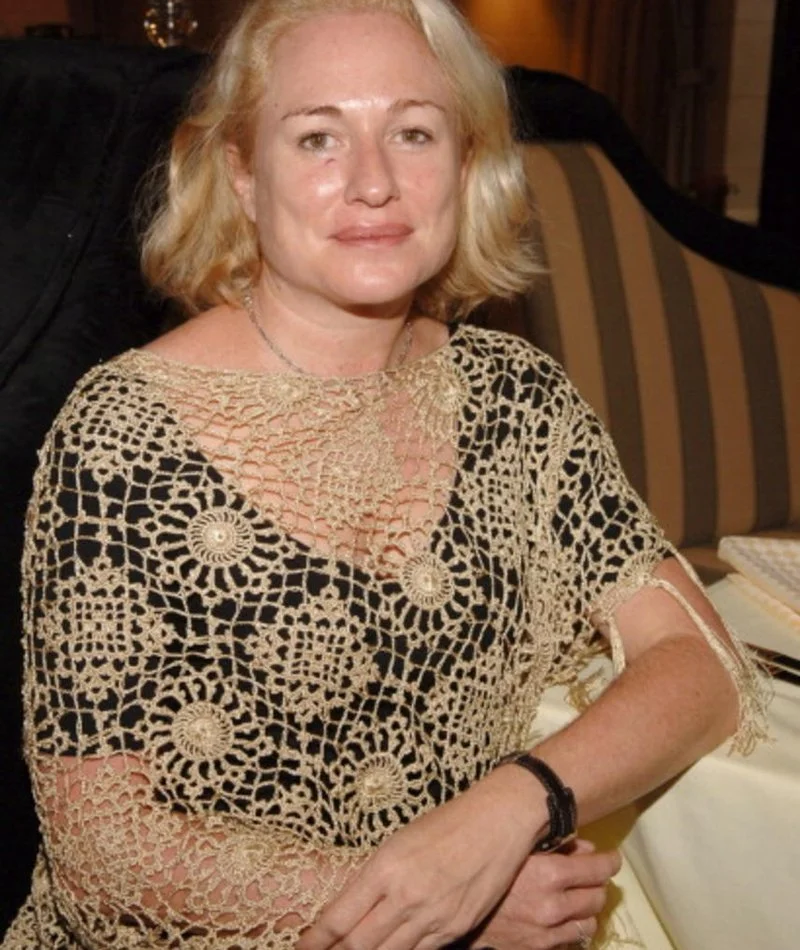
What was going on in your career before Bubble came about?
COLEMAN: Before I started Bubble, I had written a movie for HBO about the life of Katherine Graham and I was developing a TV series with some producers in Los Angeles. The thing for HBO, I was hired to do it, I did it and it was completed, but it's never been produced. It's still in development. Apparently, one of the re-writers is Joan Didion, which is kind of cool. If you're going to be re-written by anyone, Joan Didion's the one.
I went to Los Angeles and was developing this TV series. I ran into Steven and he wanted to know what I was doing. I told him and we started talking about working together again. He said that Mark Cuban and Todd Wagner had commissioned him to do six films in this new format, day-and-date release. And he said, "Why don't you write the first one?"
I was thrilled. And then he said, "I don't want to use actors, I want to use just people in the town. And I want there to be no scripted dialogue; I want it to be all improvised." So then I thought, well, what am I going to write?
He had an idea; he wanted to do a tale of jealousy that took place in a factory, a love triangle. So I said, "Well, what kind of factory?" And he said, "I'm thinking about an animal testing facility." And then we started talking about the political implications of that and we decided we didn't want that overlay of political implications.
We started brainstorming about other factories. I was researching industries in the Midwest, because I knew he wanted to film in the Midwest because it was during the re-election and Ohio specifically was such a hot swing state. I found two doll factories in Ohio and Indiana, the only two remaining doll factories in the country.
I started making some calls. I didn't tell them what I was doing, I just said I was interested in making dolls and I wanted to know if they did tours of their plant. So I went with a location manager and it was this fun research trip for two weeks, with a week in each town. It was really great; it was like working as a site-specific playwright. I fell in love with the Ohio town, because it was right on the Ohio River.
From the people I met in the town and the feeling I got from the town, just by observing the life that I had landed in the middle of, I fashioned this story. And then I presented it to Steven and he liked it. We made some adjustments and that gave us our shooting outline.
The fun thing, the great discovery, was that he wanted me on the set every day, because he wanted to be constantly incorporating the stories of the actors into the story.
So I found my job to be the best job of all, because I was there to put the non-professional actors at ease. Steven called me The Human Green Room, because they would hang out with me. I would listen to their stories and we'd share stories and we'd talk about things we'd done and I'd ask them a million questions.
Their stories were so great and so rich. So, whenever I would see Steven, on a break or whatever, I'd say, "Okay, I've got a good one. You've got to get Debbie to talk about …" whatever story they had told me that day.
So you really established give-and-take with them -- you told them stories from your life as well?
COLEMAN: Exactly. For example, the scene where Rose is taking a bath in the house she's cleaning is a story from my life. I've always wanted to put that scene in a movie because I used to take baths at parties. When I was in my 30s I went through this weird phase where I would just disappear and take a bath at a party, because my idol Zelda Fitzgerald used to do that.
I've always wanted to put that in a movie and I thought, what if she takes a bath in the house where she cleans? And so, that day Misty, the actress, was very apprehensive about wearing the nude suit and being in the bathtub. So I told her that story from my life and it put her at ease. She just thought it was so funny and it just made it more delicious for her to do it.
How did you create the characters once you had the story roughed in? And did it change once you cast the non-actors?
COLEMAN: I had a clear idea of the characters before we cast the actors. We cast the actors based on the characters I'd imagined. When Steven and I were reviewing the audition tapes, the criterion was, are these the people that I imagined? So we didn't have to make any adjustments to the story, because they were the characters.
So, Debbie just jumped out, she was Martha, and Misty was Rose. They couldn't have been more perfect. We found them, they found us.
How difficult was it for you to not write the dialogue and let the actors make it up on-camera?
COLEMAN: It was very hard for me at first, because that's what I write. I'm a playwright and dialogue is what I love to write.
I felt a shift -- Steven always talks about a writing head and a making head, which is developing a film and then actually making it. And it's true. So I got to experience that in terms of listening to their cadences and pointing out to Steven the things that really spoke of their characters. Like Misty would say, "Oh, yeah," that was one thing she said that was so much a part of that character.
We filmed in the bait and tackle shop for a long time. I would listen on the monitor through all the shooting, and I was thrilled when that woman said, "The darker the water, the darker the bait." I said, "Steven, you have to start there. It's such a great line."
So it was kind of like writing it as I heard it. It was such an honor, because it was like not making it up in my head, but listening to it and catching it. Which is what you do when you immerse yourself in a world or a culture, you start to hear certain phrases or certain intonations. That was a challenging adjustment to make.
I always thought dialogue was so important to me in writing scripts and I couldn't imagine what that would be like to relinquish the control of that. But it was thrilling. On the first day of shooting, we did the lunchroom scene, where's there's an awkward silence and then Rose says, "Do any of you all smoke?"
I got chills when I was watching that, because of the silence. That's what I love to write; in fact, in a lot of my plays the stage direction says, "There's an uncomfortable silence between them." And the fact that they just trusted that silence, and the sub-text in that line "Do any of you all smoke?" I just couldn't have written anything better than that! Just by putting them in that situation, it was amazing to see the organic response.
There was a deleted scene on the DVD, where the police detective talks to a doctor about Martha and we learn about her brain tumor.
COLEMAN: I never signed on to that. That scene was an explanation about why Martha had headaches and why she committed the murder.
Was that scene in your outline?
COLEMAN: No, not originally.
It reminded me of the scene at the end of Psycho, where the psychiatrist, played by Simon Oakland, takes us through a completely unnecessary explanation of what's wrong with "Norman."
COLEMAN: The scene was not organic to the feeling of Bubble.
How aware were the actors of the story, and the murder, as you shot it?
COLEMAN: They knew something was going to happen. We filmed in sequence, so that they would live the story. So they only knew as much of the story as they needed to know that day.
One time Debbie, who played Martha, came in and said, "I know I need to set this up, because this thing is going to happen later …" And I said, "Debbie, don't worry about that. You know as much as you need to know today. It's fine. It will all take care of itself."
And I think that was the beauty of working that way, because it allowed them to immerse themselves in the whole thing and be in the moment with it. Especially in the interrogation scene. We did that in one take. One take. We used two cameras and it was just this incredible dynamic between Debbie and Decker.
There's a lot going on in that scene for Debbie, because as her character she is denying a murder that she, as an actress, really didn't think her character did.
COLEMAN: That's the thing about Debbie. As a person, she is so in the moment, so alive in her guilelessness. She's an incredibly guileless person, loving, good, and she wants to look for the good in everyone. So I think in that moment when she saw those photos of what she'd done to Rose's neck, she truly was shocked. It made her cry, which made all of us watching it on the monitor cry.
Did the story change at all while shooting?
COLEMAN: Yes. It wasn't originally in the outline that Kyle's mom would be hired at the factory. That was an idea that came while we were shooting.
And I love that the manager of the factory introduces her as "Kyle's Mom."
COLEMAN: I also wrote in the outline that the scene in Kyle's bedroom between Rose and Kyle was written as a make-out scene. Steven and I discussed the possible awkwardness between them, and I said, "Misty is so comfortable when she talks about tattoo parlors, she loves to hang out in tattoo shops. Since Dustin has tattoos, why don't you get her to touch Kyle's tattoo and maybe that will spark some sort of seduction?"
And what happened was even better. That was one of the scenes that I could never have written that way, it was amazing, the tension between them. That tender awkwardness. It was lovely.
And Kyle's Mom was also not supposed to talk in the scene where the police tell Kyle that Rose is dead?
That was another example of the power of filming in sequence, because at that point she was so in the scene that she just said, "What? Something happened to Rose?" She just piped in. Laurie Lee, who played Kyle's Mom, definitely entered into that scene.
But then there's another scene, the scene that followed it, where she says to Martha, "She was killed; she was murdered; she was strangled last night," or whatever. And that's because I didn't hear anyone say that Rose was murdered. We kind of left that out. So I said to Steven, "I don't think anyone's said ‘murder’ or that Rose was murdered yet."
And that's why Laurie Lee emphasizes it in that take.
What was the benefit for you of having Soderbergh edit the movie while he was shooting it?
COLEMAN: It was great, because he was open to suggestions from me. Every two or three days he'd show me what he'd done, and we'd go over the story and discuss where it was going.
It was really fun, it was such a collaboration. It filled me with total confidence about directing something of my own. I really learned about the whole process of trusting the story.
Were there any other lessons you took away from the experience?
COLEMAN: Trust was the biggest one. It was also an experience about instinct: finding the doll factory, finding the story, trusting that not writing dialogue was going to be a rich experience.
But the thing I took away from Bubble was trust: trusting the process of filmmaking.
Why did you call it Bubble?
COLEMAN: That was Steven. When he said, "Let's write a film," he also said, "Let's make a movie called Bubble." And that informed my search for the story. Bubble is open to interpretation; it means a different thing to each person. But to me Bubble represents our stories, the fragility of our stories.
How did you feel about the film being part of the grand experiment of releasing a movie to theaters, pay TV and DVD all on the same day?
COLEMAN: I think the whole day-and-date release idea is an amazing idea. Why should we be forced into the business construct of a two-hour movie with movie stars? People aren't going to stop going out to movies just because they can see them at home. They'll see more movies.
I just think it's a window that opens up more opportunity for young filmmakers to experiment and not use movie stars and have a way of bringing their films to more people.
What the best advice you’ve ever received about writing?
COLEMAN: I’s funny. When I was sixteen, I took a course in my school called Global History. And my Global History teacher said that the art of letter writing was dead. I challenged him on that. He said that the art of letter writing was dead because people reported, they didn't tell stories anymore. So I took that as a challenge and that was the beginning of my writing.
What advice would you give someone who wanted to create their own outlined-but-improvised movie?
COLEMAN: I'd say listen. And trust what you hear.

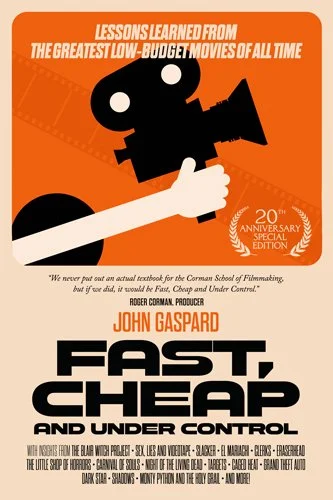
Dying to make a feature? Learn from the pros!
When Fast, Cheap & Under Control first hit shelves in 2006, it became the underground handbook for a generation of indie filmmakers. Now, two decades on, this 20th Anniversary Special Edition proves the lessons inside aren't just timeless—they're more essential than ever.
What's changed? Technology. Platforms. Distribution.
What hasn't? The grit, ingenuity, and sheer determination it takes to make a great film with nothing but vision and hustle.
Inside, you'll find:
Exclusive interviews with legends like Steven Soderbergh, Roger Corman, Jon Favreau, Henry Jaglom, Kasi Lemons, Dan O'Bannon, Bob Odenkirk and more
Over 100 images bringing the stories to life
40+ links to trailers, scenes, and supplementary material—turning this book into an interactive master class
Real-world case studies from 33 groundbreaking low-budget films—from Clerks and El Mariachi to The Blair Witch Project and sex, lies, and videotape
Field-tested lessons from the author's own four features—proof that these principles work in the real world, on set, in the edit room, and on screen
Whether you're shooting on your phone or scraping together a micro-budget, this is your master class in turning limitations into strengths.
No film school required. Just this book.
Roger Corman called it the textbook for his legendary filmmaking school. Now it's your turn to learn from the best.
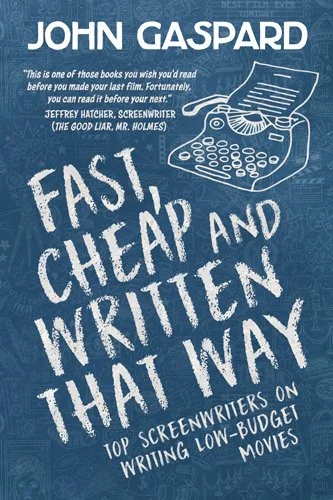
Write Your Screenplay with the Help of Top Screenwriters!
It’s like taking a Master Class in screenwriting … all in one book!
Discover the pitfalls of writing to fit a budget from screenwriters who have successfully navigated these waters already. Learn from their mistakes and improve your script with their expert advice.
"I wish I'd read this book before I made Re-Animator."
Stuart Gordon, Director, Re-Animator, Castle Freak, From Beyond
John Gaspard has directed half a dozen low-budget features, as well as written for TV, movies, novels and the stage.
The book covers (among other topics):
Academy-Award Winner Dan Futterman (“Capote”) on writing real stories
Tom DiCillio (“Living In Oblivion”) on turning a short into a feature
Kasi Lemmons (“Eve’s Bayou”) on writing for a different time period
George Romero (“Martin”) on writing horror on a budget
Rebecca Miller (“Personal Velocity”) on adapting short stories
Stuart Gordon (“Re-Animator”) on adaptations
Academy-Award Nominee Whit Stillman (“Metropolitan”) on cheap ways to make it look expensive
Miranda July (“Me and You and Everyone We Know”) on making your writing spontaneous
Alex Cox (“Repo Man”) on scaling the script to meet a budget
Joan Micklin Silver (“Hester Street”) on writing history on a budget
Bob Clark (“Children Shouldn’t Play with Dead Things”) on mixing humor and horror
Amy Holden Jones (“Love Letters”) on writing romance on a budget
Henry Jaglom (“Venice/Venice”) on mixing improvisation with scripting
L.M. Kit Carson (“Paris, Texas”) on re-writing while shooting
Academy-Award Winner Kenneth Lonergan (“You Can Count on Me”) on script editing
Roger Nygard (“Suckers”) on mixing genres
This is the book for anyone who’s serious about writing a screenplay that can get produced!