What was the genesis for “The Last Broadcast”?
Lance: Stefan and I got excited about the prospects of being able to edit on your desktop. So we got the board and started messing around and built some systems and then started making this movie almost as a lark, to see how little we could make it for. And that's when we came up with the idea and the storyline for The Last Broadcast.
Stefan: We came up with a very detailed outline and we did script out a lot of scenes. But then we decided to basically do a question-and-answer role-playing game with a lot of the people for interviews. We would give them the answers to the questions and then we would keep asking them the questions in various ways, and sometimes ask them questions that they did not have the answers to. We would give them only as much information as their character in the movie would have. And since we were shooting in video, we would just let the camera roll, and we were able to get some great performances that way.
Lance: We wrote it knowing what we had access to, which I think really helped to keep it low cost. Everyone in it are friends and family. We knew that if we cast ourselves in it that we were guaranteed to show up. And we knew that we would work cheap.
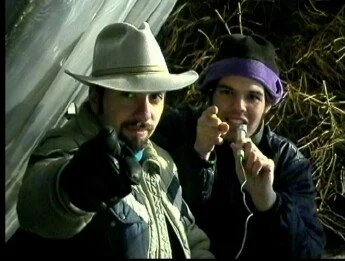
We also structured the movie so that we would be shooting and doing a lot of the sound work ourselves; a lot of the movie consists of us actually on-camera and holding mics in the scenes. So, I think it was a very conscious effort to try to work within the limitations that we had. Stefan had already made a previous film, The Game, so he was well-versed in guerilla techniques, and we applied a lot of those to the making of the movie.
Stefan: We joked that the first thing we tried to get rid of when we made this movie was film, shooting digitally. And the second thing were the actors, because you have to feed them and hope they show up.
Lance: I think the most interesting part of the process was the freedom we had: Because there were no economic constraints hanging over us, we were free to really find those moments that moved us in some way.
Stefan: I came up with characters at about the same time that we came up with who could play the character.
Lance: I think a lot of time it's the details that convince people. There were things that would happen that helped, almost accidents. Everyone brought different things at different times; like the way Tony (playing a cop) put ATF on his shirt that day.
Stefan: We call it Theater of the Minimal. The psychologist is a friend of ours who does high-end carpentry. But we brought some psychology books, just a couple little things here and there --
Lance And that birdhouse.
Stefan: Yes, the cuckoo clock birdhouse. It's amazing how little it takes to convince people. Which is something we were commenting on in the movie: What's reality, what do you believe? And I found it amazing that people believed the movie, based on just a couple little pseudo-realities within the movie. I think a lot of documentary filmmakers were perturbed by that.
Lance: Not having any money made us be more creative. I think sometimes there's a tendency to fall back on money as an answer to a problem, where we found ourselves brainstorming and trying to find ways to make things work without the money.
Stefan: Having no money and really spending no money gave us a carefree attitude that I've never had before or since making movies. We didn't have a producer breathing down our necks concerned about a budget that was spiraling out of control. It's ironic that no having money gave us that freedom.
Lance: I remember the shock when we totaled up the receipts, to see what the budget at the end. We rounded up, but it was very close, maybe within 28 cents, of $900. And that was the first time we really knew what we had spent.
Stefan: We had wanted to make a movie for no money, but we missed the mark by 900 bucks.
What might you have done differently if you had more money to work with?
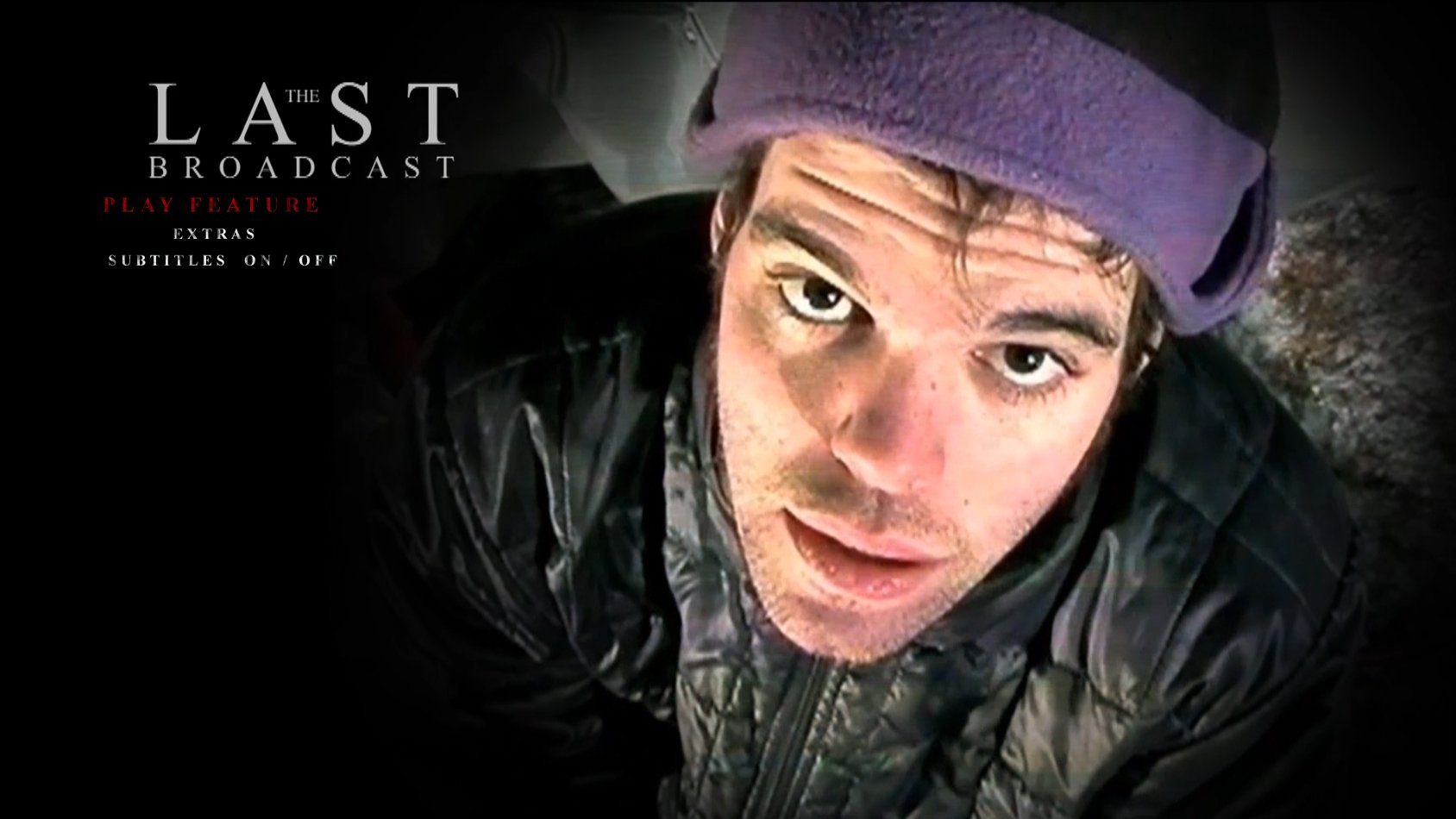
Stefan: We might have shot the end on film. That was supposed to look like film and have that Hollywood cinema look to it.
Lance: However, today if I were to pop it in and look at it, I'd feel really good about the way the ending looks, in terms of the rest of the movie it really jumps out at you in a positive way.
How long did it take to shoot?
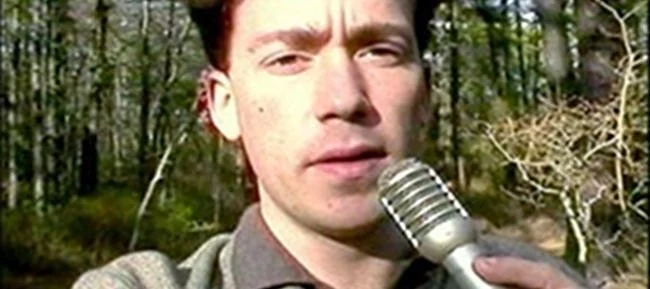
Lance: It took 27 - 28 days to shoot.
Stefan: But they were very easy days. Those weren't crazy, full days like a typical movie. The talking head would take only a few hours to shoot, so it was pretty laid back. When we shot out in the Pine Barrens, that was three days and it was pretty cold. But as movies go, it was pretty easy.
Lance: It was designed that way. For example, my dad plays the coroner, and he came by and we shot his part in about an hour and twenty minutes.
And the editing?
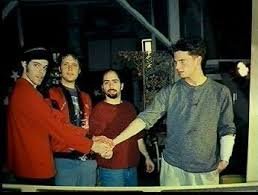
Stefan: Editing took about 8 - 9 months.
Lance: Like a lot of documentaries, the editing really brought it all together. Stefan did a really good job of pulling the story out. I think in a lot of ways it really exceeded what we thought we could do. Post was so important; the movie could have been cut in some many different ways.
Stefan: I think it surprised us even, how well it worked, in terms of making people believe it. My girlfriend makes documentaries, and she was very skeptical, saying no one was going to believe it. And then the first time it screened, much to our horror, everyone thought it was real.
Lance: The movie really takes you on this ride. The point we were trying to make with the film was that you can't necessarily believe anything that you see. And when we twisted it at the end, we really wanted it to feel like a punch, to leave you breathless. And I think in a lot of ways, the people that don't like the ending got insulted by it in some way or felt that it let the movie down. And then the people that love it, they love it for the reason that it totally pulls the rug out from under them.
That's classic about media in general; everyone wants to feel that they're really savvy about things, and then when they're caught off guard by something--especially a movie like that. That was a very bold choice on our part, to all of a sudden break that wall and go into what was, effectively, a narrative.
Stefan: The ending was one of the first things we thought of for the movie, to do this genre switch. Instead of breaking down the fourth wall, we were putting the fourth wall up. We were really excited by that idea. You have that a lot in movies and plays, were people start addressing the audience at the end. We just did the reverse. Who knows if it was successful or not, but I still love it. And that, again, is one of the advantages of making a movie with no money.
I'm amazed how filmmakers always re-invent the wheel every time they make a project, and they make the same mistakes that every filmmaker before them has made. That's the downside to the independent spirit--people are fiercely independent, 'Don't you tell me … that I'm headed right for the edge of a cliff.' We learned from our past mistakes, and we learned as much as we could from other people's mistakes.
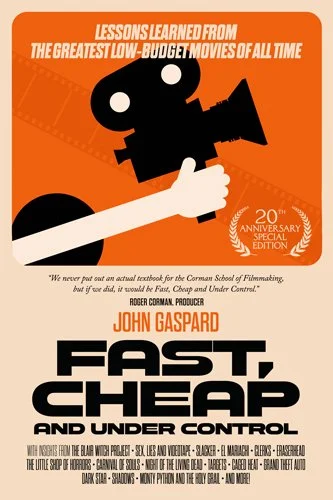
Dying to make a feature? Learn from the pros!
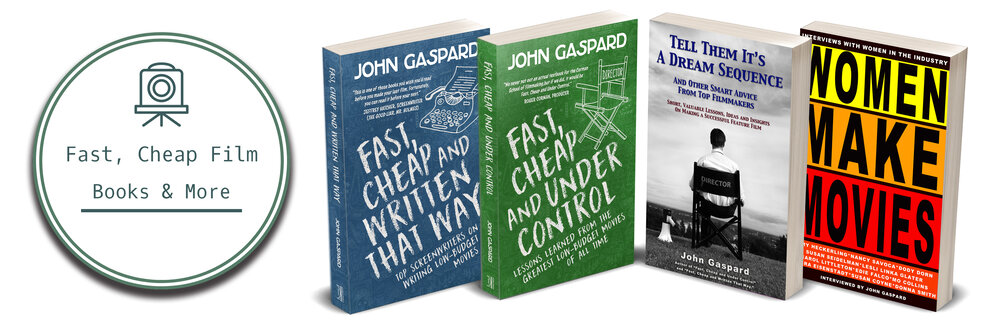
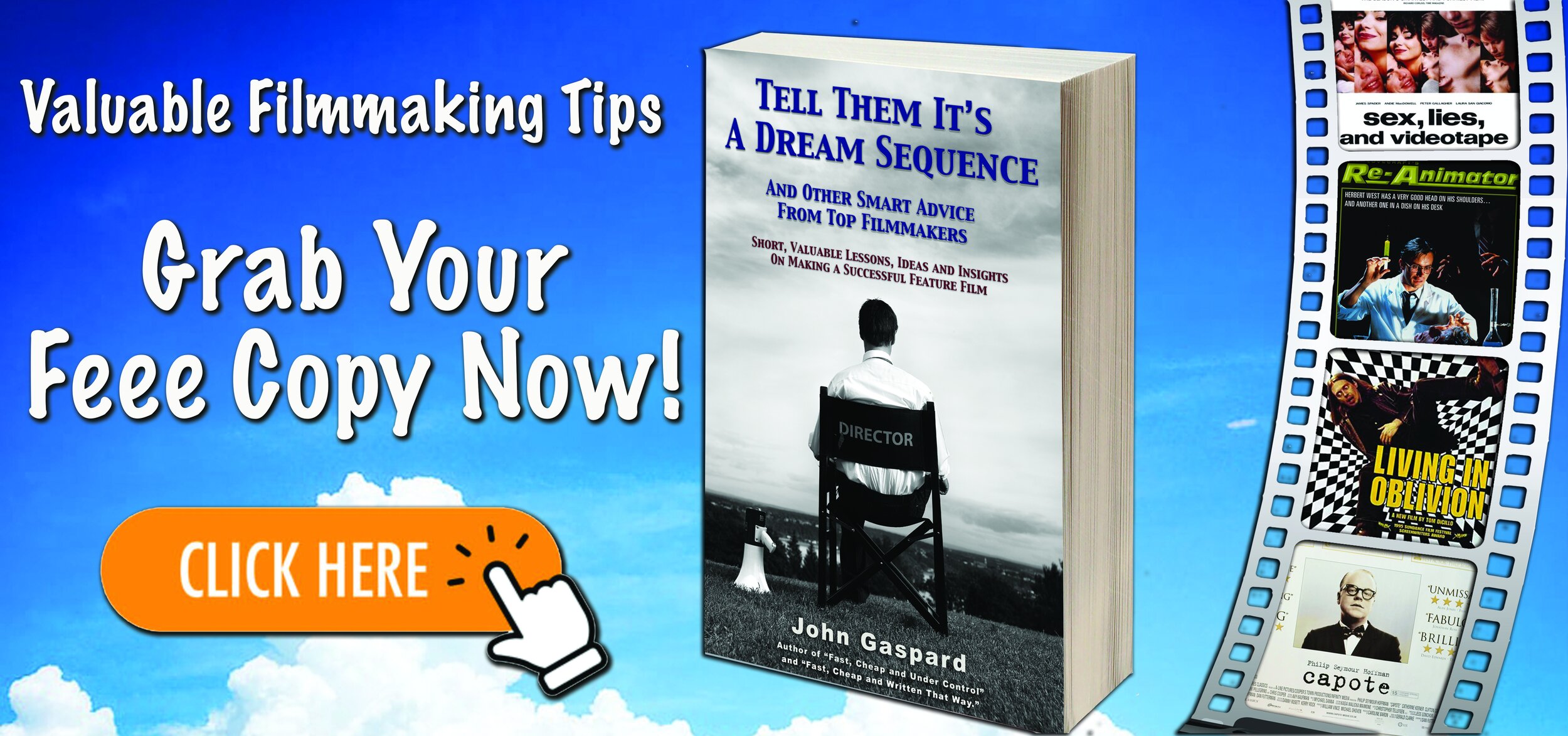
When Fast, Cheap & Under Control first hit shelves in 2006, it became the underground handbook for a generation of indie filmmakers. Now, two decades on, this 20th Anniversary Special Edition proves the lessons inside aren't just timeless—they're more essential than ever.
What's changed? Technology. Platforms. Distribution.
What hasn't? The grit, ingenuity, and sheer determination it takes to make a great film with nothing but vision and hustle.
Inside, you'll find:
Exclusive interviews with legends like Steven Soderbergh, Roger Corman, Jon Favreau, Henry Jaglom, Kasi Lemons, Dan O'Bannon, Bob Odenkirk and more
Over 100 images bringing the stories to life
40+ links to trailers, scenes, and supplementary material—turning this book into an interactive master class
Real-world case studies from 33 groundbreaking low-budget films—from Clerks and El Mariachi to The Blair Witch Project and sex, lies, and videotape
Field-tested lessons from the author's own four features—proof that these principles work in the real world, on set, in the edit room, and on screen
Whether you're shooting on your phone or scraping together a micro-budget, this is your master class in turning limitations into strengths.
No film school required. Just this book.
Roger Corman called it the textbook for his legendary filmmaking school. Now it's your turn to learn from the best.
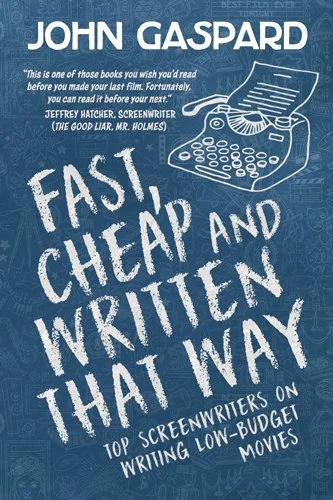
Write Your Screenplay with the Help of Top Screenwriters!
It’s like taking a Master Class in screenwriting … all in one book!
Discover the pitfalls of writing to fit a budget from screenwriters who have successfully navigated these waters already. Learn from their mistakes and improve your script with their expert advice.
"I wish I'd read this book before I made Re-Animator."
Stuart Gordon, Director, Re-Animator, Castle Freak, From Beyond
John Gaspard has directed half a dozen low-budget features, as well as written for TV, movies, novels and the stage.
The book covers (among other topics):
Academy-Award Winner Dan Futterman (“Capote”) on writing real stories
Tom DiCillio (“Living In Oblivion”) on turning a short into a feature
Kasi Lemmons (“Eve’s Bayou”) on writing for a different time period
George Romero (“Martin”) on writing horror on a budget
Rebecca Miller (“Personal Velocity”) on adapting short stories
Stuart Gordon (“Re-Animator”) on adaptations
Academy-Award Nominee Whit Stillman (“Metropolitan”) on cheap ways to make it look expensive
Miranda July (“Me and You and Everyone We Know”) on making your writing spontaneous
Alex Cox (“Repo Man”) on scaling the script to meet a budget
Joan Micklin Silver (“Hester Street”) on writing history on a budget
Bob Clark (“Children Shouldn’t Play with Dead Things”) on mixing humor and horror
Amy Holden Jones (“Love Letters”) on writing romance on a budget
Henry Jaglom (“Venice/Venice”) on mixing improvisation with scripting
L.M. Kit Carson (“Paris, Texas”) on re-writing while shooting
Academy-Award Winner Kenneth Lonergan (“You Can Count on Me”) on script editing
Roger Nygard (“Suckers”) on mixing genres
This is the book for anyone who’s serious about writing a screenplay that can get produced!