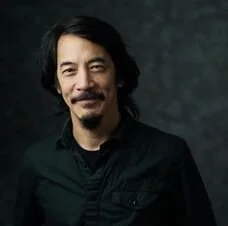
What was your filmmaking history before making Dopamine?
MARK: I'd done a couple of shorts and the first one was in Sundance in 1993. I did another one in 1996. , and shortly after that Lynn Auerbach gave me a call and asked if I had any feature-length scripts. I, of course, didn't, but I said I'll definitely start working on one.
And she kept calling every three months or so ('How's the script going?') and I finally started to get afraid that she'd stop calling and so I really sat down with my writing partner at the time and we drafted a script, and then got into the Labs in 1998, which was a transformative experience.
What was that script?
MARK: It was a very different version of Dopamine. We had a meeting with one of our advisors, Peter Hedges, who wrote one of my favorite movies, What's Eating Gilbert Grape?, and he basically sat us down and said, 'Why do you need to tell this story?'
He basically told us we'd written a clever script, but that you can't write a movie just because you want to be a screenwriter or you want to be a director. You have to have a need to tell a story. He gave us the parable of going into a dark tunnel and not being afraid about where you're going to come out. It really pushed us to go back and find the core of the story.
The genesis of the story for me was when we had our first child. It's different for guys; when a baby's first born, mothers bond immediately, but dads sort of take a while, because the kid just cries and eats and wants their mother.
But I remember the day when I fell in love with him and that chemical rush that I felt was very similar to when I fell in love with my wife. And that triggered this dialectic that I could see in a story, with one person believing that love is magical and unexplainable, and someone else who believes that it's physiological and chemical.
At the same time, every other week there seemed to be some article about how we were deconstructing our body and how we were attributing certain chemicals to this and that. Every February there's the article about why we fall in love. And they always mention Dopamine and all the chemical triggers.
That created the conflict for the two characters: one who believes that love is eternal and the other that love is conditional and physical.
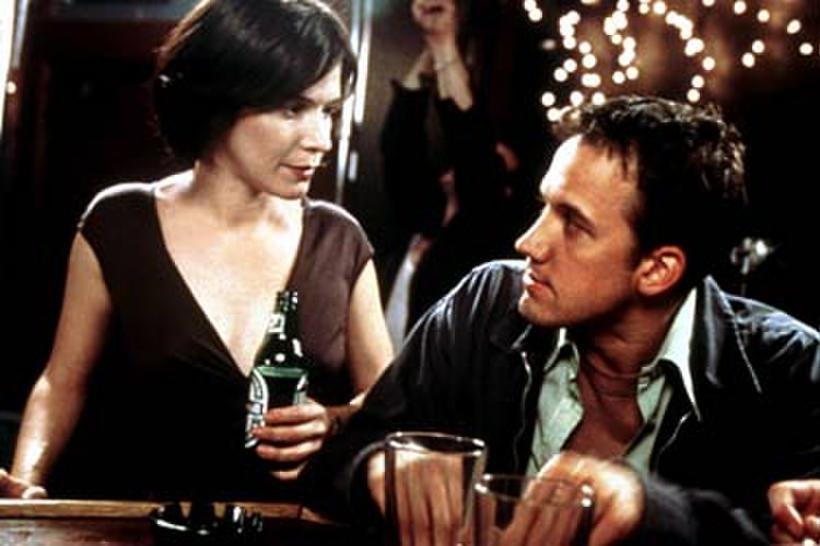
What was production like?
MARK: Once you go into production, you start getting barraged with all these questions from the script supervisor and the art department. The reality hits you: 'Oh, my god! I wrote kids into this script? I wrote animals! I wrote computer animation!' That was the cold awakening, wondering what the hell I was doing with my first feature and have all that?
We were able to pull it off by hook and by crook, favors, knowing people who had an animation studio, kids that were in school, and just really good producers who were able to pull it off.
What was your budget?
MARK: Production budget was $900,000. Then we got into Sundance and realized the stakes were a lot higher in post. I think it's one thing to get a film accepted, and then to finish it is quite different. We had to throw some money at finishing the film. It ended up being just under a million.
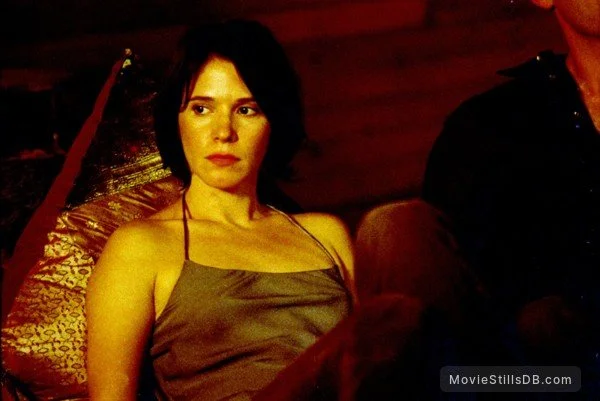
Why did you decide to shoot digital?
MARK: I think the biggest reason for me to shoot digital was being a first-time director and not having to worry about burning film while you're trying to get a performance. I was able to run master shots and let the actors find their way, and let me find my way, and then pick off our coverage shots from that. It just allowed me that freedom to help the actors find their scene and let me focus on getting the performances.
How did you cast the film?
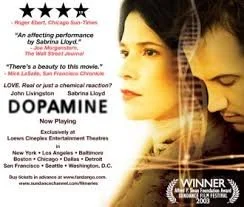
MARK: We did have the Advisory Committee at Sundance, so we called them and said, 'Do you know of any casting directors?' They recommended Gillian O'Neill. We were under the gun and we wanted to go for the Sundance Film Festival, and it was a late summer start. She said our best bet, with or budget, was to go after television actors who were off for the summer. And she was able to get the script out to Sabrina, who was very interested.
We had another actor lined up for the lead and he dropped out about a week before we started. And then she came up with John Livingston and said it was almost a blessing: he's great and looking for a good, meaty role. And he was great.
Was there time and money for rehearsal?
MARK: We had one week of rehearsal.
We started with a couple table reads, with the actors, to get a sense of how it was going to play. I spent most of the time with the leads. We did some improvs, kind of let them find the characters and play with the scenes. We were able to get onto one of our sets early, while they were building it, so we had that space to work in. We basically just had fun.
They say that 90% of directing is casting, and that definitely made my job easier. But the rehearsals let them get to know each other and get to know each other in character. And to be able to have that confidence about that character before you get on set. The set can be very distracting, very assaultive. I have the utmost respect for actors; I don' know how they do it.
What was the best decision you made on the movie?
MARK: The best decision I made was hiring the right people and let them do their job. Rob Humphreys, knowing I was a first time director, one of the things he set up for me was he would clear the set, I'd run the scene a few times. And then when we found it, he'd call the keys in and we'd run it again it and plan out our shot list. Even though we had a very specific shot list, he gave me the freedom to work with the actors and find it. And then he was able to help me plan out a spontaneous shot list.
Did you wait until after the shoot to start editing?
MARK: We were cutting as we were going. The editor was a day or two behind, because we had to send the tapes to Los Angles to get them down-converted. We saw a full assembly cut about three days after we finished shooting. It was insane.
We would shoot and I would come in at night and see the scenes. On the weekends, sometimes I would go out with Rob and some days he would just go out and grab B-roll of fog and the bay and a lot of the visual elements of the film.
What was the editing process like?
MARK: After the assemble cut was done, we realized we had to go back in and find the story, which is always disheartening. I think as a first-timer, you think, 'Well, I finished the script, and the script as it's shot is going to be great,' and then you realize that the story has to be brought out.
We ended up moving things around, opening with more of the flashback stuff between the father and the son and the mother issues, using that throughout as the voice of his conscience.
The opening scene was put into the middle of the film, which sounds really strange to script something and have the opening move to the middle of the movie, but it worked.
What did you take away from the entire experience?
MARK: It's important to be open to the storytelling process, which is completely collaborative in filmmaking.
You have to have blind faith that you're going to make it, almost a cunning naiveté. You know you're going to do it, and you don't know enough to know that it's really impossible. You have to be naïve, but you still have to be determined and almost cunning in a way to just know it's going to happen, regardless of all the things that fall in front of you, like money falling out at the last minute and actors dropping out.
You have to passionate about the material. It's got to be a story that you need to tell. A lot of artists have that drive. They don't paint because they want to; they paint because they have to. I was probably a little insane at the time, feeling I had to do this. The insanity is probably building again and I'll start another project.
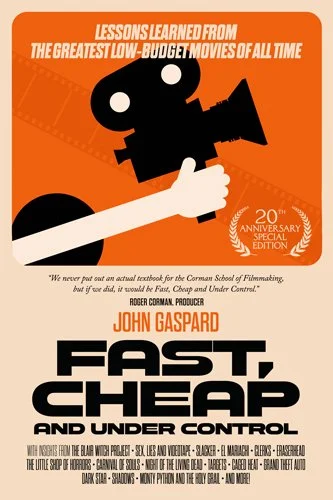
Dying to make a feature? Learn from the pros!
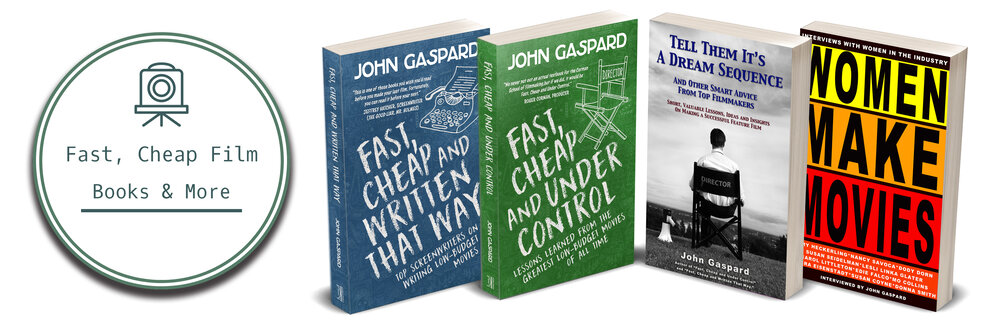
When Fast, Cheap & Under Control first hit shelves in 2006, it became the underground handbook for a generation of indie filmmakers. Now, two decades on, this 20th Anniversary Special Edition proves the lessons inside aren't just timeless—they're more essential than ever.
What's changed? Technology. Platforms. Distribution.
What hasn't? The grit, ingenuity, and sheer determination it takes to make a great film with nothing but vision and hustle.
Inside, you'll find:
Exclusive interviews with legends like Steven Soderbergh, Roger Corman, Jon Favreau, Henry Jaglom, Kasi Lemons, Dan O'Bannon, Bob Odenkirk and more
Over 100 images bringing the stories to life
40+ links to trailers, scenes, and supplementary material—turning this book into an interactive master class
Real-world case studies from 33 groundbreaking low-budget films—from Clerks and El Mariachi to The Blair Witch Project and sex, lies, and videotape
Field-tested lessons from the author's own four features—proof that these principles work in the real world, on set, in the edit room, and on screen
Whether you're shooting on your phone or scraping together a micro-budget, this is your master class in turning limitations into strengths.
No film school required. Just this book.
Roger Corman called it the textbook for his legendary filmmaking school. Now it's your turn to learn from the best.
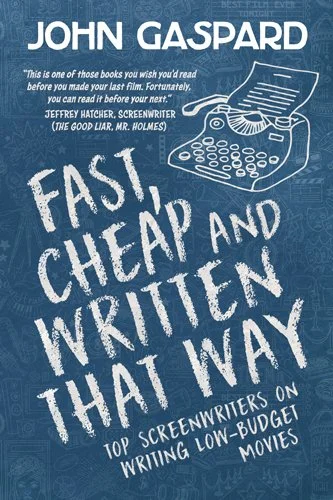
Write Your Screenplay with the Help of Top Screenwriters!
It’s like taking a Master Class in screenwriting … all in one book!
Discover the pitfalls of writing to fit a budget from screenwriters who have successfully navigated these waters already. Learn from their mistakes and improve your script with their expert advice.
"I wish I'd read this book before I made Re-Animator."
Stuart Gordon, Director, Re-Animator, Castle Freak, From Beyond
John Gaspard has directed half a dozen low-budget features, as well as written for TV, movies, novels and the stage.
The book covers (among other topics):
Academy-Award Winner Dan Futterman (“Capote”) on writing real stories
Tom DiCillio (“Living In Oblivion”) on turning a short into a feature
Kasi Lemmons (“Eve’s Bayou”) on writing for a different time period
George Romero (“Martin”) on writing horror on a budget
Rebecca Miller (“Personal Velocity”) on adapting short stories
Stuart Gordon (“Re-Animator”) on adaptations
Academy-Award Nominee Whit Stillman (“Metropolitan”) on cheap ways to make it look expensive
Miranda July (“Me and You and Everyone We Know”) on making your writing spontaneous
Alex Cox (“Repo Man”) on scaling the script to meet a budget
Joan Micklin Silver (“Hester Street”) on writing history on a budget
Bob Clark (“Children Shouldn’t Play with Dead Things”) on mixing humor and horror
Amy Holden Jones (“Love Letters”) on writing romance on a budget
Henry Jaglom (“Venice/Venice”) on mixing improvisation with scripting
L.M. Kit Carson (“Paris, Texas”) on re-writing while shooting
Academy-Award Winner Kenneth Lonergan (“You Can Count on Me”) on script editing
Roger Nygard (“Suckers”) on mixing genres
This is the book for anyone who’s serious about writing a screenplay that can get produced!