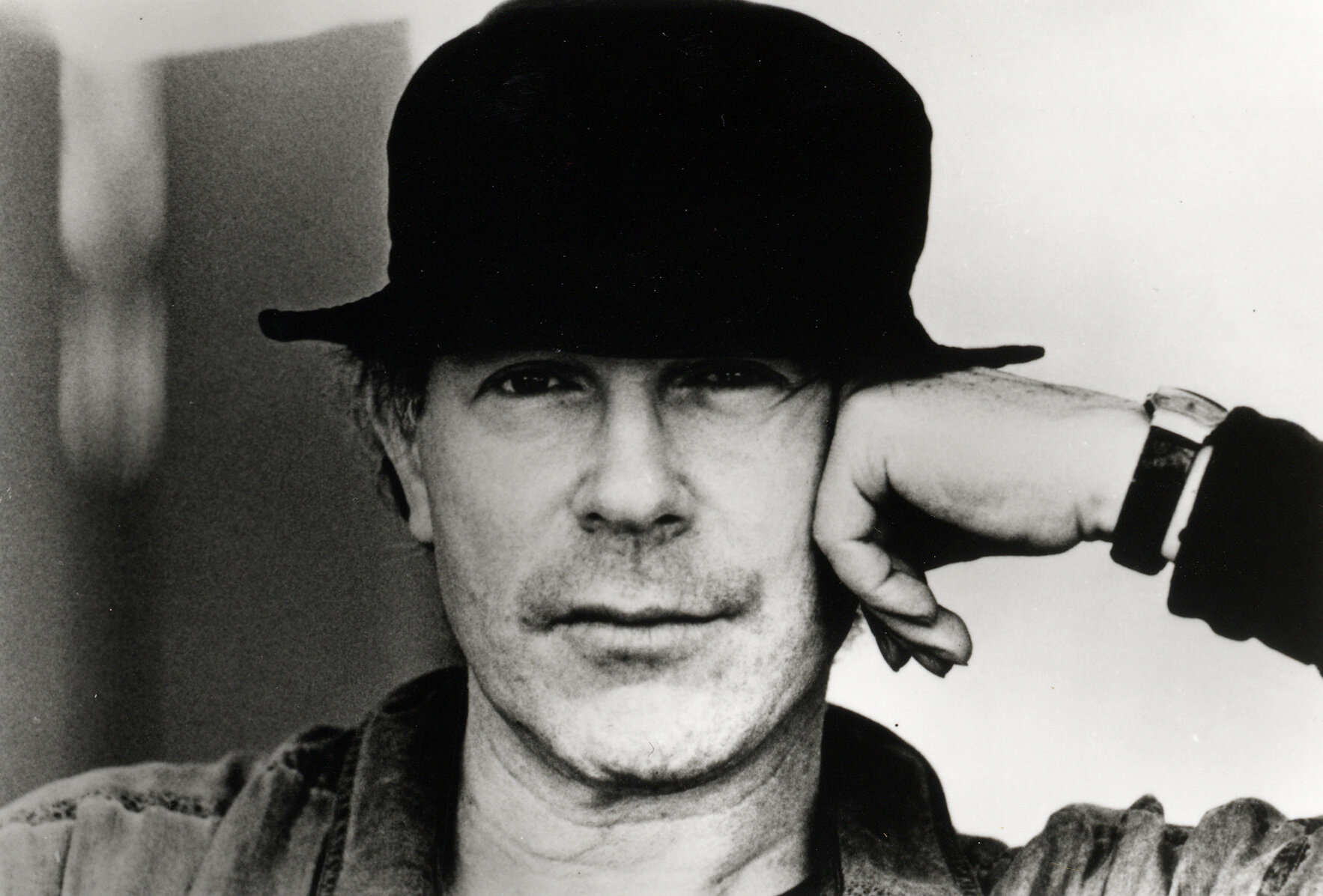
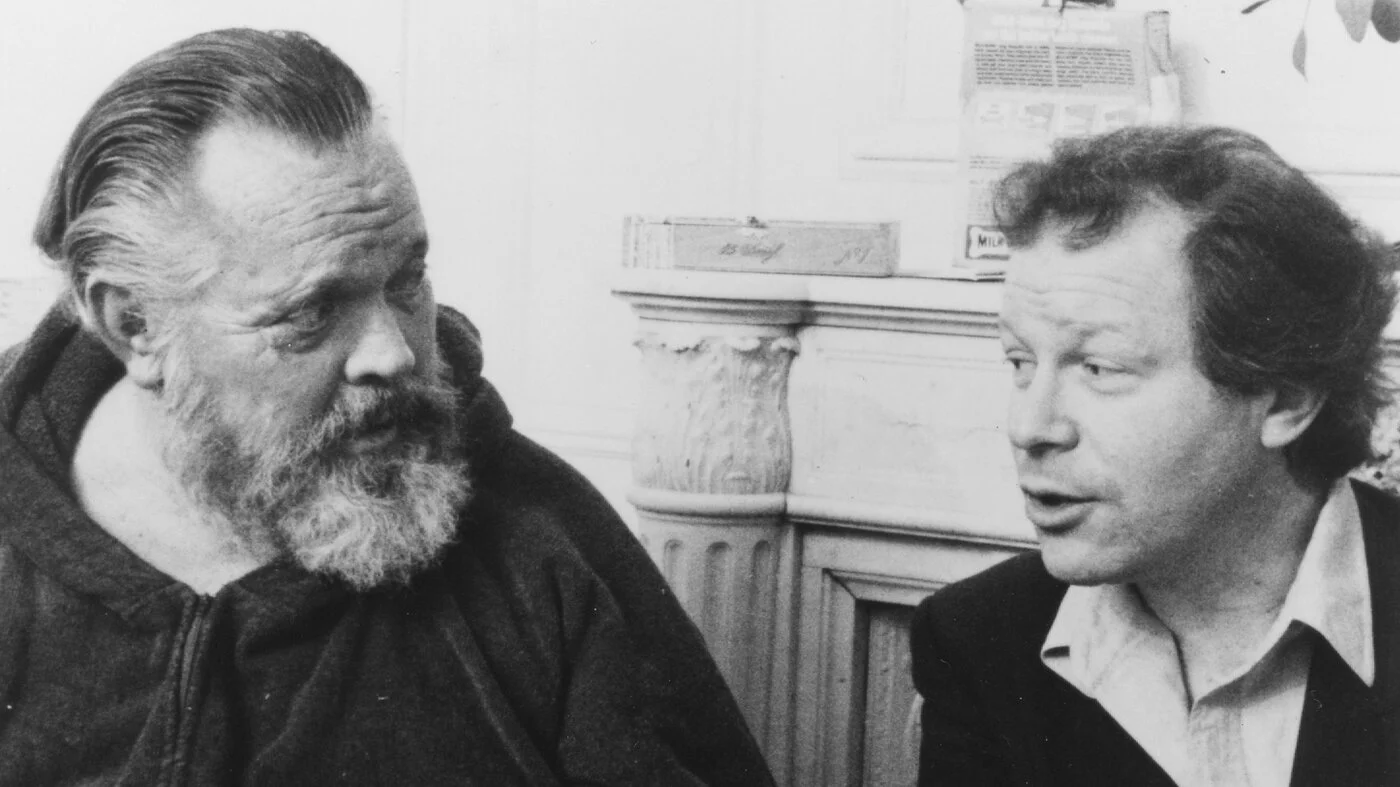
Henry Jaglom’s style of filmmaking was probably best described by his dear friend, Orson Welles, who said of Henry’s films, "You have a different way of making movies than almost anybody else.” Not to question Mr. Welles’ judgment, but that’s actually a bit of an understatement.
Jaglom’s films are at once deeply personal and completely universal. He looks at big themes, but only as they affect people individually.
In his film Venice/Venice, he examines how movies influence our perceptions of reality and romance. To bring that examination to life, he uses improvisation, bits of reality, semi-structured scenes, and on-camera interviews by a wide-array of real people, providing a larger framework for his small story. And in the process, he also delivers one of the most surprising and enlightening “twist” endings in the history of movies.
(Be aware that this interview contains spoilers about key plot points.)
When did you start using improvisation in your movies?
HENRY: To make my first movie, A Safe Place, I had to write a script to get the money from Columbia Pictures. I had written a play called A Safe Place, so I adapted it into a very funny screenplay. It was a more hip version of a Neil Simon thing. The studio loved it, everybody loved it.
It starred my two friends, Jack Nicolson and Tuesday Weld. I knew them extremely well and I'd written this wonderful scene and I'd done it on the stage and it worked beautifully. So I had them do the scene, and they're tremendous actors, but there was something missing and I didn't know what.
So I said, “Okay, let's do it again.” And I did about five takes, and I said, “This is really strange. This isn't as interesting to me as Tuesday actually is or as Jack actually is in life.”
So I said to them, “Look, just forget what I wrote. You know what has to be accomplished in this scene. Just get through that, but don't worry about my words.”
And it was magical. And I didn’t look at the script for the entire rest of that movie, to the horror of Columbia Pictures.
What did that experience teach you?
HENRY: The biggest lesson that I got was that actors are to be encouraged to delve into their own lives and into their own expression and their own language and their own memory, because they will come up with fresh and extraordinary things that you could never in a million years create.
And all you have to do is get that to happen once on film and then figure out how to put it together with the next moment. For me, that was it. I never looked at my script again. I drove the crew crazy, but I made the movie I wanted to make.
Your process is a little less conventional than most filmmakers.
HENRY: It's a lot less conventional.
But it works for you.
HENRY: I think it works great. I never thought that "conventional" was connected with something that worked and "unconventional" not. I don't think there's any relationship there.
At what point did you start using on-camera interviews as part of your process?
HENRY: That was on Someone to Love.
And why did you continue to use that technique on later films?
HENRY: A really simple reason: I found that every movie by definition tells a story of one, two, three people. In some of them you might learn about four people's stories. But it's very unusual that it's more than three people.
When I'm doing a film like Someone to Love, it's a thematic film rather than about a particular individual. The point of the film was to cover the whole range of the theme. I wanted to enlarge the canvas. I wanted to be able to make a film that doesn't just tell you the story of two or three people.
If it's about two or three people, you're always able to say to yourself, "Well, that's these particular two or three people." When you have a large tapestry of individuals, relating their specific experiences connected to that theme, it's much harder to dismiss it as just an aberrant story about one or two particular people who have this issue.
So each time I've used on-camera interviews, there's been a very central reason for it, in terms of expanding the canvas and creating a tapestry which would reverberate around the theme and give it more heft. Give it more variety and make it harder for people to just say, "Well, this is one particular story about one or two people who are going through something."
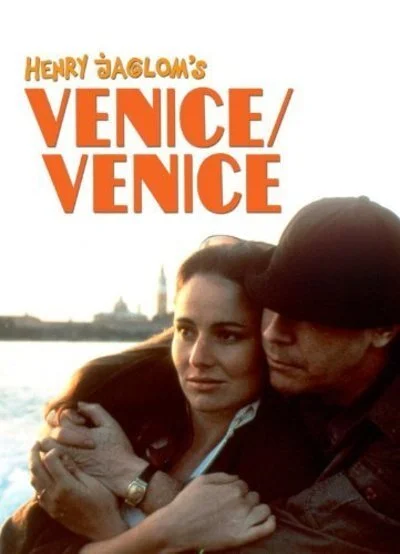
What inspired the theme of Venice/Venice?
HENRY: My movies are always in direct relationship to what's going on in my life.
I was invited to be, strangely enough, the American representative at the film festival in Venice with my film New Year's Day. It was the only film from America that was in the official competition.
Certainly, from the conventional point of view, my films are not the traditional fare that comes out. And festivals, no matter how creative and art-oriented they are, seem to like to support themselves with big, commercial, mainstream films.
In any case, I was stunned that I was invited to be the American representative. New Year's Day had gotten very good reviews in America and had a nice little run, but there was no reason to expect that anybody would take it on that kind of a level. But the Europeans really liked it and they invited it to the festival with all the hoopla that goes along with being an official invitee, representing of all things the United States.
I'm such a counter-cultural figure here, I thought it would be a really interesting opportunity to make a film about a counter-cultural figure like myself, someone who's far from the mainstream, being invited to represent his country at this oldest and most prestigious of film festivals.
So I made it a condition of accepting their nice honor that anyone who interviewed me, I could interview them at the same time. I would have a crew with me. The Festival people were all too happy to do it, they thought it was fascinating.
I brought no crew from America. My cinematographer, who's Israeli, I brought from Israel. He put together a five or six-person crew of Italians in Venice.
I had three actors come: My star, Nelly Alard, came from France. My friend, Suzanne Bertish, came from London. And against my wishes and without my economic support, Daphna Kastner, an actress who I'd used in Eating. I had told her, "I'm sorry, I can't afford to bring anyone over for this, it's all going to be shot there," so she got on a plane and came by herself anyway. So I cast her as my assistant that I could annoy and drive crazy.
And that was it. David Duchovny was there, because David was in New Year's Day. So I said to David, "Okay, I want you play a little part in this as well," and he said, "Sure."
I decided I would make it up as I went along, based upon what was happening to me, because that would give a sense of what happens to somebody who comes to the film festival.
Then I thought that the second half will take place in California. I structured that half to reflect my feelings about Venice, America, movies, real life and all of that.
And that's the part where I did the interviews in my office, and for that part I wrote a much more structured script and brought several of the characters into it who had been in the European half.
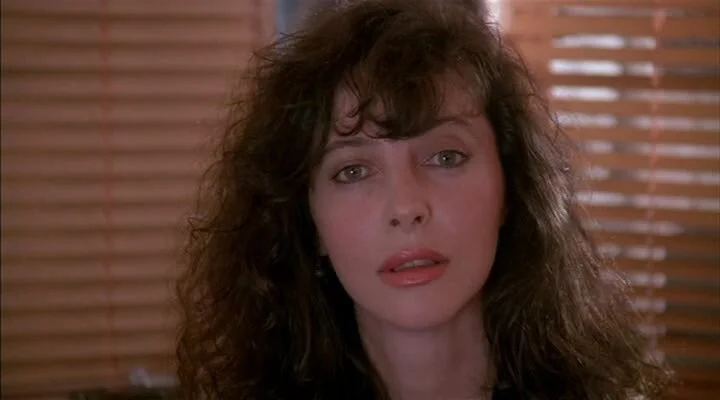
The movie has an amazing twist, where at the end we find out that the first half of the movie – in Venice, Italy – is not actually reality, but is the movie that you’re talking about making in the second half of the film. At what point did you decide to make that switch?
HENRY: As I was doing this, I realized that one of my main themes was the effect of movies on our sense of reality and on our romantic dreams, and that this whole movie was kind of a romantic dream. I'm meeting this extraordinary creature, this journalist who falls in love with me and who I fail to attract because I'm being such an asshole and she's expecting the person I am in the movies and all of that. So I thought, that really sounds like a movie.
I didn't think about it while I was shooting the movie in Italy. I just shot it the way I would have shot it anyway. I shot it for its own reality. But when I came back, I realized that the Italy segment should be the film that I'm making.
That film does reflect more profoundly, for me, my sense of what my life is like. It really captures in some way, deeply for me, my own interior sense of life. So that's why I'm very attached to it.
Did you go to Italy with any structure in mind?
HENRY: Absolutely none. Absolutely none. I didn't have a script. I decided that I would just see what happens to a person who goes to a festival. I'd been to several -- Cannes and Rotterdam and Berlin and other film festivals -- but I'd never gone to Venice. So I just decided I would go and see what it was like, with a film crew. And that's exactly how I did it.
How much backstory did you provide to the actors?
HENRY: I gave Nelly her backstory -- she's a journalist, from Paris -- but not much, because she had been in America and she had done a documentary on me for French television. So I said, "Okay, you're a journalist who's here because of an obsession with me and with what you think is this sensitive male that you've gotten from my performances in the movies you've seen." That's all I told her.
I said to Suzanne Bertish, my friend from England, a really wonderful actress, "You play an ex-girlfriend of mine who I run into there." She said, "Fine."
I said to the guy who was my escort from Germany who was arranging for distribution of foreign sales, I said "You're going to play my foreign sales rep."
I said to Daphna Kastner who showed up without my permission, "Okay, you're my assistant and I'm really going to treat you like shit." She said, "That's nothing new."
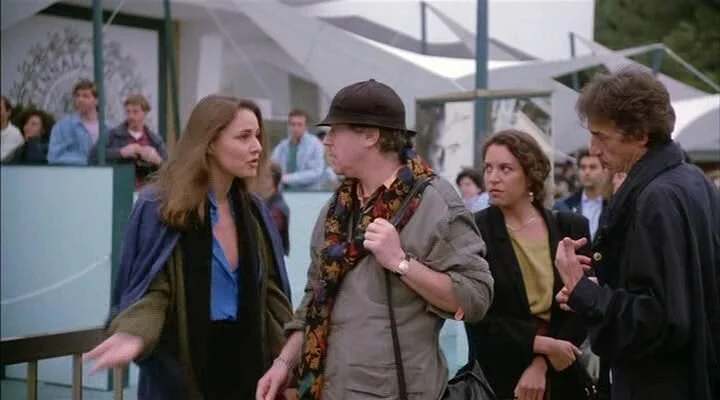
You made good use of Nelly's background in physics, particularly when she compares moviemaking and movie watching to the principals that Heisenberg developed.
HENRY: I always do this with my actors, if they have a particularly interesting bio. So I said to her, "Listen, the most important scene in this movie is going to be a scene -- and you're not going to know when it's going to take place -- but it's going to be a scene where I'm pointing out that this feels like a movie I'm making.
I said, "What I would like to do then is for you to bring in Heisenberg, because it becomes this whole metaphor for films and how we see them and seeing them affects our perception of reality and all of that." She said, "Great."
It's like in Can She Bake a Cherry Pie? and the guy with the pigeon. He throws the pigeon and the pigeon keeps coming back to him. That guy happened to have a trick pigeon. It was his pet. So I turned it into a metaphor for a guy who mistreats women and they keep coming back to him.
To me it's just a question of finding out what the actor's equipment is, what special aspects they might have handy, that might further help explicate a point in the thematic intention. That's why we used the Heisenberg Principal. It worked very nicely.
How much time was there between shooting in Venice, Italy and Venice, California?
HENRY: I think we had six or seven months.
How structured was the California segment?
HENRY: Very. The story was very structured; within the story I always encourage the actors to come up with their own dialogue.
We happened to shoot at this guy's house in Venice; he happened to be a songwriter. I didn't plan that. So I had him play the part of somebody who's trying to convince me to use his song in the movie.
The relationship with my local girlfriend, played by Melissa Leo, and her reaction to Nelly coming there, all of that was very planned.
I show them the structure, scene by scene: "In this scene, you're sitting with her, talking about this guy you're both involved with, my character. Nelly, you know me, you've come from Venice to see why I haven't followed up on the relationship. Melissa, you've learned enough from our relationship that you're ready to move on and hand me over, and you're also responding in whatever real way you respond to her."
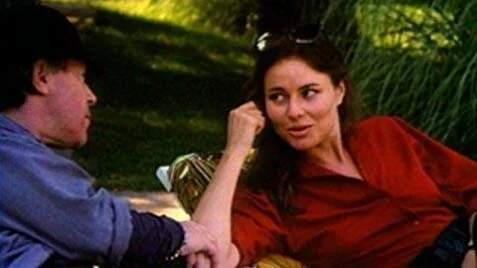
Do they know the full arc of the story or just on a scene-by-scene basis?
HENRY: The main characters know the arc of the story and they know where they are in that arc; they have to know that as good actors, I feel. But not the smaller characters, people standing around at the party. They don't know anything that they don't need to know.
The last time we spoke, we talked about how you hate rehearsals --
HENRY: I don't hate rehearsal; I'm terrified of rehearsal.
Why?
HENRY: Because the worst thing that can happen to me is a great moment that's not on film, because I know it's not going to happen again.
It might be that wonderful actors after a lot of work and takes might be able to recreate it fairly well. But I'm a great, great believer in inspiration and moment-to-moment reality. I come out of the Actors Studio, that's my background. I think that the more open and available a person is to the moment, and the less restricted he or she is, the more they're going to come up with completely fresh, surprising behavior, some of which of going to be wonderfully useable.
I just like the surprise. I also know that the surprise means that the other actor in the scene will be surprised and you will get really true behavior. And when I'm surprised by my actors, I know the audience is going to be surprised.
That's why so many people say of my films -- sometimes positively, sometimes negatively -- that they don't feel like they're watching a movie, they feel like they're almost eavesdropping on something very personal and private. For me, that's the goal, to take down that fourth wall to such a degree that they're not completely sure what's real and what isn't.
Life is not rehearsed and I don't think movies should be rehearsed.
Do you shoot the scenes more than once?
HENRY: Oh, of course! But I shoot them differently and I don't say "Use the same words," unless I need a close-up or something. I just say, "Okay, that was good. Let's do that again." If I'm not in the scene I stand behind the cameraman and whisper to him, "Go to her. Pull back. Do a two-shot." Because I'm also thinking about how I can cut the scene while it's happening.
Some scenes just happen once, but many scenes are created in the editing. I might do ten, twelve takes sometimes, but they're not the same dialogue. They're the same intentions and they have to get to the same place, but they're completely different.
Do you show rough cuts to people for feedback while you're editing?
HENRY: Oh my God, yes. I'm sort of famous for my rough cut screenings. They start when the movie's about three-quarters finished. I have 20 or 30 people come to the screening room on Sunset, and I do it at least 50 or 60 times as I'm finishing the movie.
What I do is I ask people afterwards, "What worked, what didn't work, what bothered you …?" I really listen to audiences. I like to do that, that's a big part of the process.

What advice would you give to a filmmaker who wanted to make a movie like yours?
HENRY: It's really simple: Don't do my kind of movie, do your kind of movie. Figure out what your kind of movie is, not my kind of movie. That would be my advice.
And once you've figured out what your kind of movie is, don't let anybody tell you that anything about it is wrong. Don't let anybody diminish your enthusiasm or excitement about it. And insist that you know what you're doing, even if you don't know what you're doing, because you will find out what you're doing as you go along.
Try as much as you can to tell your own particular truth on film. Insist on not letting anybody change your mind about what your truth is, what your goal is, how you should convey it. You can learn all kinds of technical things and become very proficient, but most people lose the impetus that made them want to be filmmakers to begin with, because they learn all kinds of things that people tell them you shouldn't do or you can't do.
When I was shooting my first film, I had a crew and a cameraman that came from Love Story. Love Story was a huge hit. Columbia Pictures assigned them to me because they didn't know exactly what to do with me and they were a little scared, so they assigned this very conventional crew. It was during the Vietnam War, I had long hair and white Capezio shoes and I was totally weird to them, so they showed up wearing American Flag pins in their lapels the next day. They were rather hostile toward me.
I was trying to invent my own style. And seeing Tuesday and Jack be so good at being themselves made me throw away my script. And the crew kept getting more and more irritated. But mainly they said, "It won't cut. It won't cut. It won't cut. You can't shoot that, it won't cut."
And it was driving me crazy. So at lunch I said to Orson Welles, "What am I going to do? They're driving me crazy. Everything I try that's different, they tell me it won't cut."
And he said, "Tell them it's a dream sequence." I said, "What?" He said, "Just tell them it's a dream." I said, "Why?" He said, "Never mind, just tell them that."
So after lunch, sure enough on the first shot I said, "I'd like the camera to go from here down to here." The DP said, "The camera go from here to here? How are you going to cut that? That's can't possibly cut."
I said, "It's a dream sequence."
"Oh, a dream sequence! How about this?" And he got down on his back on the floor and said, "Look, I could shoot it up against the sky …" And I said, "Great, great." And I had no problem for the rest of the movie with anything I said, because I kept saying it was a dream sequence.
I went to Orson that night and said, "What the fuck is this? I don't understand, why did this change everything?"
He said, "Most people – a crew is very much like average people, not artists, but good technicians – they think life has rules. And life has order. And life has structure. The only place in their life where they know there is no rules, no order, no structure, are in their dreams. When they dream, they know things jump around, things aren't logical, and they accept that, because that's a dream.
“So if you tell them this is a dream sequence, they are freed from all the conventional requirements or the logical, structured, technologically-adept way of doing things. And the artist in them is suddenly freed."
There's not a single movie since then that I haven't used that on somebody. Even on actors, who say, "I don't understand why this person would do that," and I say, "It's a dream sequence." "Oh! Oh, okay!"
You mentioned how people either love your films or hate them. There seems to be no middle ground. And the critics are the same way. Do you remember the headline for the review of Vencie/Venice in The Rocky Mountain News.
HENRY: Yes. "Jaglom on Jaglom. Again. Who Cares?"
And the first paragraph is something like "Henry Jaglom has made the single worst movie in the history of cinema." Not just in the 1990s or in recent memory, but in the history of cinema.
I collect those. I love them.
People who don't like your films seem to be particularly vocal about it. People (and critics) seem to take your movies personally.
HENRY: That's because my films are so personal.
People magazine said of Sitting Ducks, "If this film were a horse, you'd shoot it." On Can She Bake A Cherry Pie?, People magazine said, "Some people look forward each year to their root canal. That's how I feel about my yearly Henry Jaglom film."
To a lot of people, the airing of your emotional dirty laundry is so terrifying that they hate you. I run into men like that a lot. Women very rarely; women are very responsive to the films, and men who are artists and creative men. But there are a lot of men who just think I'm just the devil, the absolute devil.
You seem to have no problem with getting bad reviews.
HENRY: I love them. From the beginning, when I got a bad review -- a fun one, like a real attack -- I just copied them and sent them to all my friends. I thought it was just hysterical that people would get so upset about somebody else's playing with paint brushes. I've always enjoyed it.
I found, on A Safe Place, because I violated all of those rules on my first movie, the anger started right there. I remember Time magazine saying “this movie looks like he threw the pieces of the film up in the air and it landed totally at random in a mix master.”
People really expose themselves in my movies. And a lot of people don't want to see that. It's understandable. I'm never surprised by the negative reactions. I'm always surprised and delighted by the degree of openness with which so many people are willing to receive and accept the films.
And those people who do like them, they really do become a part of their lives. I get these incredible letters with very touching things about terribly sad and painful moments in these people's lives when the films were really helpful. They feel less alone, they feel less isolated, which is really the goal for me of making films like this.

Dying to make a feature? Learn from the pros!
"We never put out an actual textbook for the Corman School of Filmmaking, but if we did, it would be Fast, Cheap and Under Control."
Roger Corman, Producer
★★★★★
It’s like taking a Master Class in moviemaking…all in one book!
Jonathan Demme: The value of cameos
John Sayles: Writing to your resources
Peter Bogdanovich: Long, continuous takes
John Cassavetes: Re-Shoots
Steven Soderbergh: Rehearsals
George Romero: Casting
Kevin Smith: Skipping film school
Jon Favreau: Creating an emotional connection
Richard Linklater: Poverty breeds creativity
David Lynch: Kill your darlings
Ron Howard: Pre-production planning
John Carpenter: Going low-tech
Robert Rodriguez: Sound thinking
And more!
Write Your Screenplay with the Help of Top Screenwriters!
It’s like taking a Master Class in screenwriting … all in one book!
Discover the pitfalls of writing to fit a budget from screenwriters who have successfully navigated these waters already. Learn from their mistakes and improve your script with their expert advice.
"I wish I'd read this book before I made Re-Animator."
Stuart Gordon, Director, Re-Animator, Castle Freak, From Beyond
John Gaspard has directed half a dozen low-budget features, as well as written for TV, movies, novels and the stage.
The book covers (among other topics):
Academy-Award Winner Dan Futterman (“Capote”) on writing real stories
Tom DiCillio (“Living In Oblivion”) on turning a short into a feature
Kasi Lemmons (“Eve’s Bayou”) on writing for a different time period
George Romero (“Martin”) on writing horror on a budget
Rebecca Miller (“Personal Velocity”) on adapting short stories
Stuart Gordon (“Re-Animator”) on adaptations
Academy-Award Nominee Whit Stillman (“Metropolitan”) on cheap ways to make it look expensive
Miranda July (“Me and You and Everyone We Know”) on making your writing spontaneous
Alex Cox (“Repo Man”) on scaling the script to meet a budget
Joan Micklin Silver (“Hester Street”) on writing history on a budget
Bob Clark (“Children Shouldn’t Play with Dead Things”) on mixing humor and horror
Amy Holden Jones (“Love Letters”) on writing romance on a budget
Henry Jaglom (“Venice/Venice”) on mixing improvisation with scripting
L.M. Kit Carson (“Paris, Texas”) on re-writing while shooting
Academy-Award Winner Kenneth Lonergan (“You Can Count on Me”) on script editing
Roger Nygard (“Suckers”) on mixing genres
This is the book for anyone who’s serious about writing a screenplay that can get produced!