• THE BOOKS
  • The Occasional Film Podcast
  • The Blog
  • Podcast Appearances
  • The Movies
  • About
  • CONTACT
Menu

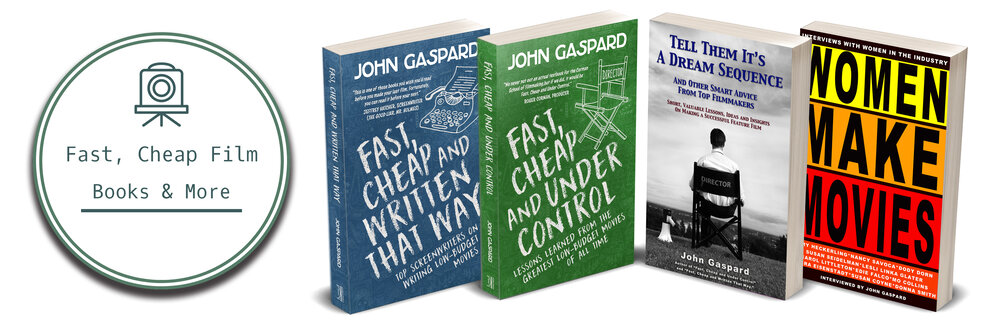
Fast, Cheap Film Books & More

  • THE BOOKS
  • The Occasional Film Podcast
  • The Blog
  • Podcast Appearances
  • The Movies
  • About
  • CONTACT

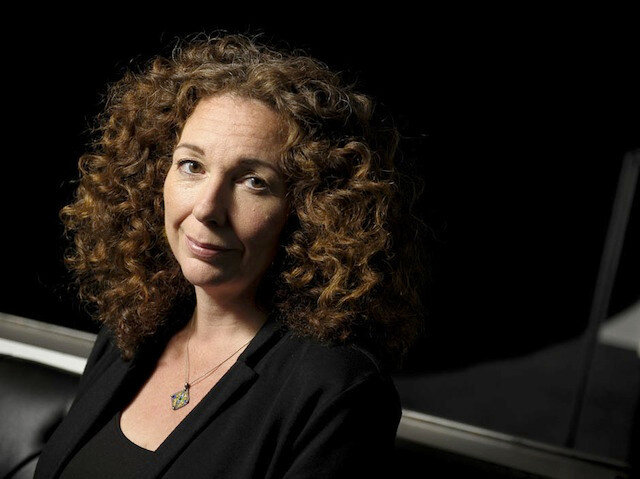
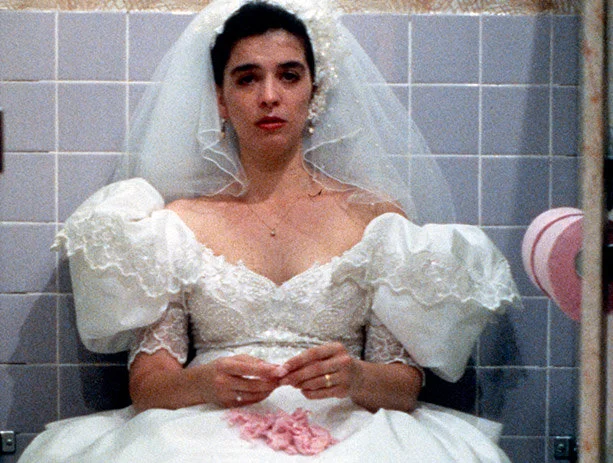
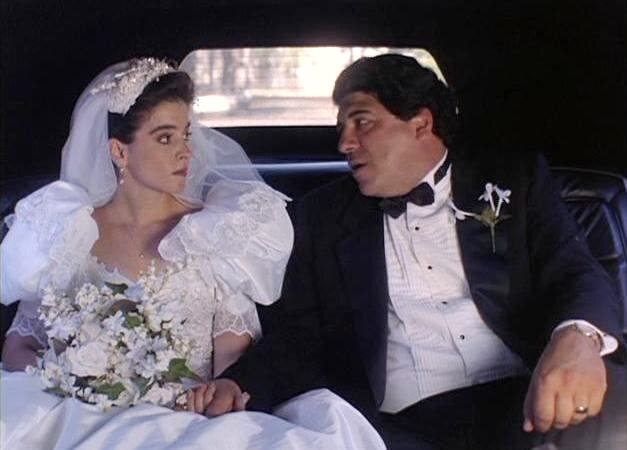
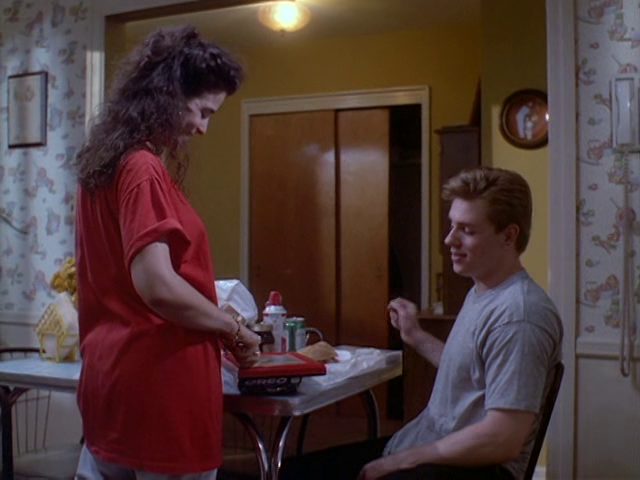
Nancy Savoca on “True Love”

November 12, 2025

How did you get interested in filmmaking

NANCY: My family says I started talking about it when I was really young, but I don't remember that. But I think it was in high school, during that last year when you can take whatever you want. I was taking things like Folk Poetry and Music Theory. And there was a History of the Movies class. That was the first time I understood what a director did. It was explained that there was actually one person who was in charge of putting all the different elements together in a film. 

And that was something that was really interesting, because I think in my teenage years I was really interested in the arts -- I loved music and I loved drawing and I loved watching actors perform. There were so many things that I loved, yet I didn't feel that I was particularly good at these things. But I was a great appreciator of good music and good performance and good photography -- I could appreciate it. 

So I realized, when I learned about filmmaking, that that's what a director does. They are the ones who say, "Oh, that's the piece of music we need to use," and "That's the take we need to print." Basically, we're there to cheerlead all these great artists and get their best work and put it all together. 

When I found out that's what it was, I was like, "Oh, sign me up! That sounds good. I can do that." I was about seventeen at the time.

So how did you make that happen?

NANCY: The thought was really scary, because I didn't have a clue on how to make that happen. I just knew that it sounded really good.

I didn't come from a background that had anything -- anything! -- to do with this business. My parents -- like most parents who have a kid who'd going to do something like this -- were horrified. They were scared for me. They just wanted me to get a good job at the post office.

There was no real plan. This was my last year in high school, so I went to the teacher and asked, "Where do I learn this?" And she said, "Well, there's NYU, but that's really expensive." And I said, "No, I can't do that." And so she said, "Well, there's Queen's College."

So I started at Queen's College and I took some courses. But they were the courses that every kid who was looking to goof off would take first, so I kept getting shut out of classes. Finally I met my husband, Rich, and he was going to NYU and he said "You should go here." So he started really helping me not be so fearful about stuff. He said, "Just do this, you'll figure it out." 

I was basically leaping into a void. There was no financial support, it wasn't coming from anywhere. So I just started doing it.

And at NYU I found, for the first time, a community of people who were doing the things that interested me.

I had gone to Queens College for two years, so when I went to NYU I was in my final two years, and film was all I did there. All I did was shoot. 

In order to enter the school, Haig Manoogian, who was running the program at that point, told me I needed to take this course called Sight and Sound. It was six of weeks of, I call it Basic Training, where you ate, slept, breathed, whatever, film. And you really couldn't do anything else, because that's all you had time to do.

The odd thing for me was that a week before I started that six weeks of basic training I got married. So here I am, this newlywed, having made a commitment to this person, and suddenly I was missing.

So Rich came looking for me and realized that I was having a really good time. As insane as it was, it was pretty amazing.

He was going to NYU for business. He used to show up just to help lug equipment around, but then he quickly realized that we were all flakey people and needed some kind of organization, which he was able to do. So he ended up doing things like production managing on student films, like mine in particular. Which was when we first started working together, which was really good. We just celebrated 28 years. But if we hadn't worked together, I don't think there's any way we could have survived, because we were coming from such different places.

We were out making our short films and the missing element always -- always! -- was how to manage time, so that we could get things done on time. No one really was teaching us that. We had a lot of enthusiasm and ideas, but we didn't have a lot of discipline. And Rich came along and he's very good at that. He'd say things like, "You know, if you shoot this first, you can actually do this all in one day if you switch the order of your locations." He actually should have been given credit as being one of our teachers, but he was our age.

How many people were in the class?

NANCY: Maybe twenty-five, twenty-eight people.

And how many were women?

NANCY: About four or five.

Talking about women in film, one of things that was sort of a blow to me, I was sitting in class one day with a teacher I really respected a lot. We were chatting about the great directors and the work they did and out of the blue (or, at least, it felt out of the blue), he said something like, "So the reason there are no women directors is that, basically, they get married and have kids." 

And I had gotten married a couple of weeks earlier. And when I made True Love, I had an 18-month old baby and was pregnant with my second child, so they do get married and have kids. Maybe.  

As a pregnant director, did you have trouble getting insurance for the production? 

NANCY: Yes we did. When we started Household Saints, Jonathan Demme was our executive producer and I think they had tried to make him the back-up director if anything happened to me. But they couldn't because at that time I wasn't union and he was DGA, so Rich was the back-up director. And all Rich kept saying to me was, "Don't fuck anything up. I don't want to be directing."

Let's back-up. What did you do when you got out of NYU?

NANCY: Right after film school was finished, we started writing True Love, that summer. I remember one of the things that sort of upset me were rules. Like people had these ideas, these rules. Like one person said to me that summer, "It's great that you're writing your first feature, but you usually have to direct two shorts to do a feature." And then somebody else said, "No, no, no, So-and-So just went out to LA. You have to get an agent and write two screenplays for other people, and then you get to direct your first feature."

And I thought, "Who made those rules? I've never heard of directors who follow these rules. Is someone making up new ones just so we can jump through hoops? This is stupid."

So Rich and I co-wrote True Love  in a couple weeks in a cabin in Vermont, which was so bizarre because we were writing about the Bronx and we were in the middle of nowhere in Vermont.

When we came out with it, basically nothing happened. We were showing it around; we didn't know. I didn't even have, at that time, the vocabulary to say this is an independent film or not an independent film. I just wanted to make this story because I hadn't seen it before. It was the old 'write what you know,' so I wrote what I knew, which was my experience, which happened to be right before we started film school: Which was that I got married, and that year that I got married, everybody in my neighborhood got married. So we went to a lot of weddings and witnessed a lot of the things that ended up in the script.

Basically it was just Rich and I writing down everything that we knew. We sent it out -- cable television was just starting up -- and we got the rejection letters. We were nobody, as they say in the Bronx.

So basically it was six years of trying this, that and the other thing. About every six to eight months we'd take the script out and polish it up. But for whatever reason, there was just nothing else I could think to do. I just knew that this was the story. Whether that was smart or not, I can't tell you. But it was six years.

During those six years we started working in film, in any capacity that we could. I started off as a production assistant for John Sayles and Maggie Renzi on Brother From Another Planet -- that was the first official film job I got after I got out of school.

For being the first person in my family -- and, for a long time, the only person in my family -- to get a college degree, I got to work for free on a movie. I think after I'd been there a couple weeks, they gave all of us who were volunteering a raise and we got five dollars a week, so we could take the subway to work, so we weren't actually out of pocket to work on the movie.

From there, what was fantastic -- and I say this to everybody who's looking to work in film -- do put yourself out there and just work on productions. Because that's where you're going to meet people. And sure enough, there's a very direct connection between the first job I ever had and my first film, which is John Sayles, who was one of our investors six years later.

Everybody's story is so different. Sometimes I hesitate, when we're in front of students or something, I say, "I'm going to tell you my story and you're going to think, 'Yeah, right, that will never happen to me.' And that's true, but you're going to have a different story."

But what does happen is that when you open yourself up and you let every single person on the planet know that you want to do this, and that you're going to do this, people start coming around out of curiosity or the people who are going to be drawn to you will start coming toward you because you're letting everyone know that you're ready to do this. And that's what I think started happening. 

But it took six years, and nobody likes to hear that. But in that time we honed our skills and we learned a lot about production so that by the time we made our movie, we had been on a lot of sets and worked in different capacities. I was a Production Coordinator, I was an Assistant Editor, for John Sayles I was at one point a Storyboard Artist, which was really fun because it was for Bruce Springsteen and I was such a fan.

So what was it that finally got True Love off the ground?

NANCY: John Sayles. 

What happened was I was sort of half-ass shooting this documentary that wasn't working. And one of my friends said, "What are you doing shooting a documentary? You have this script." And I said, "Yeah, but I need money to shoot that script and we don't have money." But it put this idea in my head and we decided to take what tiny little money we had to do the documentary and take that money -- which was basically all the savings we had at that time -- and do a ten-minute sample reel, which is sort of like a long version of a trailer.

So we put an ad in Backstage and did casting, found a crew that was mostly commercial people or people who had worked in independent films and were working a step below and wanted to step up. And since everyone was working at one level higher than normal, nobody needed to get paid, which was great, because everybody was doing it for their reel.

We shot over the course of a couple weekends, because everybody had day jobs. and then we thought, we should send this out instead of the script, because what we didn't know -- and I'm a Leo, so I think I'm great -- what we didn't know from my student films that did get good responses from people, that I could direct and I could grab an audience. And the script never shows that. It's like the difference between a map of Paris and Paris -- how can you explain? When you're writing a screenplay, you're basically being the best mapmaker you can be. But it's such a different animal to putting it on the screen.

So I knew by at least giving them a taste of what I could do with it, this material, that I could get more support.

So we shot this thing, we cut it, it looked great, the performances were great -- we got these great actors -- and we started sending it to all the people who had rejected the script, and we were universally rejected again. After spending all the money we had.

We were just depressed. And then we decided to do a screening in Manhattan and -- because, during those six years of working -- we had met so many people in the film business. So we just cast the net really wide and we invited everybody that we knew to invite everybody that they knew.

We had wine and cheese and ten minutes is painless. I don't know why, but people showed up. Diane Keaton showed up. I don't know why. But because it was New York and it was such a little closed community, for some reason, people showed up.

What happened after that was that I got a phone call from John Sayles and he said, "Look, if you want to do this movie down and dirty, guerilla style, I'll be your first investor."

We had also in those six years worked with Jonathan Demme. Kenny Utt, who was Jonathan's producer, said, "I'm going to be an investor." And he turned to Jonathan and said, "You better be an investor." And then Susan Seidelman was an investor. And so all of a sudden, something caught fire and I can't tell you what it is, and that's why when I tell this story people always roll their eyes and say, "That will never happen to me." No, it won't happen to you -- another story will happen to you.

But it can be that crazy.

So then we got all these -- we like to call them -- celebrity investors, and with a handful of celebrity investors we still needed more money, but these were names that we could use when we went to our friend who's mother's dentist wanted to invest in film. And he got to be an investor along with all these really great filmmakers.

So how did you feel on the first day of shooting True Love?

NANCY: Great. Nervous as hell. Ready to puke -- I couldn't tell if it was morning sickness. But nobody knew I was pregnant. Nobody knew because I found out two weeks before we started shooting and the one thing you don't want to tell everybody who'd investing in you on your first film is, "Oh, by the way, I'm pregnant."

I think today it might be a little easier. Or maybe not. Who knows. But I definitely knew to keep my mouth shut.

I was nervous on one level but also just like -- excited, but relieved. It was like, "Okay. Well here I am. Let's go." And it was that leap into the void of "Let's go. I don't know what's going to happen here, but I'm here. You're here. Let's go."

How did you find your cast?

NANCY: I knew exactly what I was looking for, and it was very difficult to find, interestingly enough for two reasons. One was that we didn't have the budget to go through the Screen Actors Guild. We couldn't afford to work with any sort of union, so most of the actors we were looking at were young actors who were somewhat inexperienced, but the ones who were really good had a theater background. Which was great and actually very helpful, because coincidentally they were coming in with the same background I had, which was theater acting classes.

The issue was finding experienced actors, and the problem was bigger with the older actors, because finding non-SAG actors of that age was very tricky. So we kept casting from the time that we did the ten-minute trailer until two years later, when we started shooting. We were always looking for actors. People used to make fun of me, saying, "Oh, you're still casting?"

With Annabella we were incredibly lucky, because she was one of the first people we saw from the Backstage ad we placed for the trailer. I saw her picture and said, "I hope she's good because she is right, she is who I'm looking for." And she walked in and read it and I thought, "Did she begin? Did someone tell her to start performing or is she just talking to me?" She was amazing. that started a relationship that lasted through the years and she was able to be in the film.

So she was around for two years and Ron Eldard we found I think two weeks before we started shooting. It was horrible. We could not find this guy.

And what was very interesting in True Love, because we weren't using SAG actors, all the actors we worked with -- with the exception of Annabella, who had done a TV movie -- no one had ever been in front of a camera before. And that's a big cast -- I forget how many people were in that movie, but it was a lot of people. 

And just about every other day -- sometimes it was every day -- we'd have a new actor working, and I kept wondering why things were taking so long. And then I remembered: "Oh, yeah, they've never been in front of a camera before!" And I'd have to go tell them, "You can walk from here to here, don't walk off camera, there's a light stand, don't do this, now deliver the line to his left shoulder." It was really about making people feel very comfortable so they could look like they weren't acting.

It's all about making them comfortable. Your job, especially if they're less experienced, they have to feel really good to let go and take a risk in their performance. 

Tell me about your experience at Sundance with True Love.

NANCY: It was pretty amazing but I wasn't there. I wasn't even there.

We finished editing the movie in late 1988. John Sayles said there was a festival we should look into, called the United States Film Festival in Park City. We did a temp mix on the soundtrack and sent it in and we go accepted.

The festival was the last week of January and my due date was the 27th of January, so I wasn't going to go. So one of the producers went, with my lawyer and the music supervisor.

I was at home and I started going into labor one evening. And the phone rings while I'm in labor. My husband picks it up and then he says, "Oh my God. Oh my God. I'll put Nancy on, but I'm not sure she can breath." 

So I take the phone and say, "What?" And everyone was screaming. It sounded like Beatlemania or something. Everyone was screaming. And someone was saying, "We won! We won!" And I said, "What?" And they said, "The film won!"

But I really didn't understand what had happened, because nobody could talk really, and also because I was hugging the wall and breathing. And so I said, "I have to hang up because this kid's going to be born." I hung up the phone and we went to the hospital.  

The next morning the baby was born. And the midwife said to me, "What happened to that little movie you were working on when you were pregnant?" And I turned to Rich and said, "Did we win something last night?"

We came home with my son a day later, and my house looked like a funeral. Everybody sent flowers. It was a small apartment and there were flowers everywhere. Disney sent a t-shirt for the baby that said, "My Mom is the world's greatest director." Every single major studio was acknowledging the award and the baby. 

I was flabbergasted because independent film, before that night, at Sundance, a new wave began for independent film. It was born in a different way that night. I didn't happen to be there, but I was a part of it. 

And that particular year, they changed the name from the US Film Festival to the Sundance Film Festival. I have a poster that says "True Love: Winner of the United States Film Festival," because MGM didn't realize that they had changed the name.

And that was the year that all the studio executives showed up. There had been rumblings; the year before a lot of great movies were there and they were saying, "Oh, I guess something's happening at Sundance, so we have to go." 

And that was the year that they all went. 

Dying to make a feature? Learn from the pros!

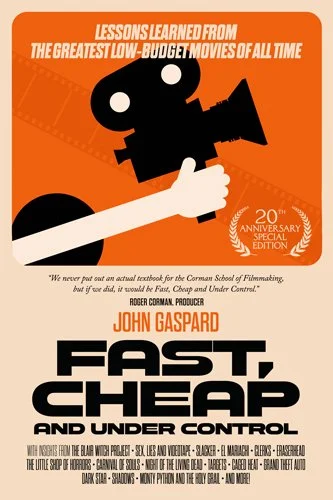
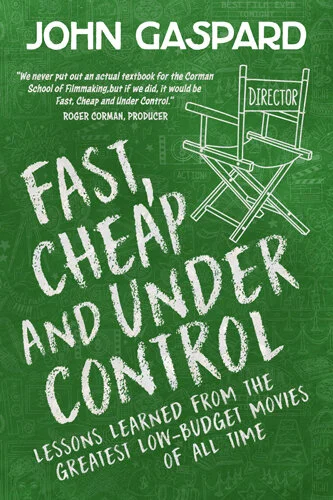
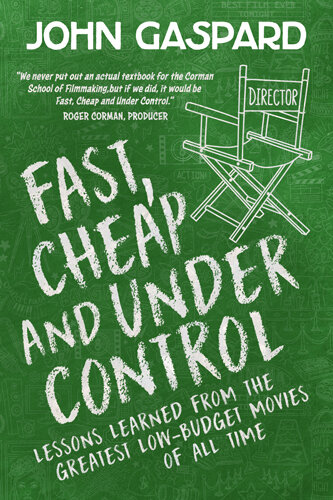
"We never put out an actual textbook for the Corman School of Filmmaking, but if we did, it would be Fast, Cheap and Under Control." 
Roger Corman, Producer

★★★★★

It’s like taking a Master Class in moviemaking…all in one book!

  • Jonathan Demme: The value of cameos

  • John Sayles: Writing to your resources

  • Peter Bogdanovich: Long, continuous takes

  • John Cassavetes: Re-Shoots

  • Steven Soderbergh: Rehearsals

  • George Romero: Casting

  • Kevin Smith: Skipping film school

  • Jon Favreau: Creating an emotional connection

  • Richard Linklater: Poverty breeds creativity

  • David Lynch: Kill your darlings

  • Ron Howard: Pre-production planning

  • John Carpenter: Going low-tech

  • Robert Rodriguez: Sound thinking

And more!

buy the book: "fast, cheap and under control"

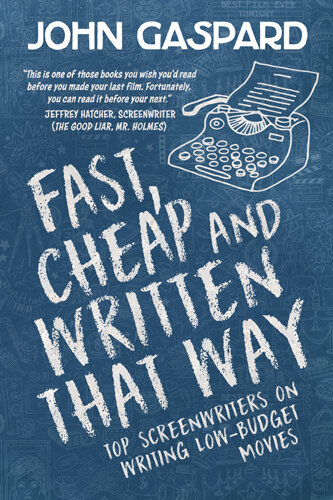
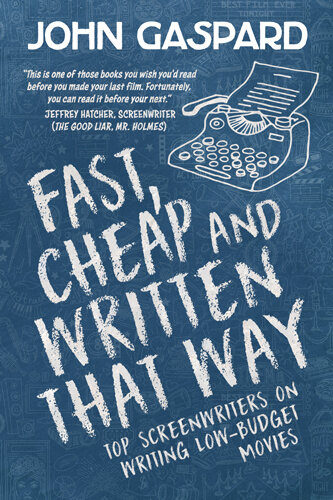
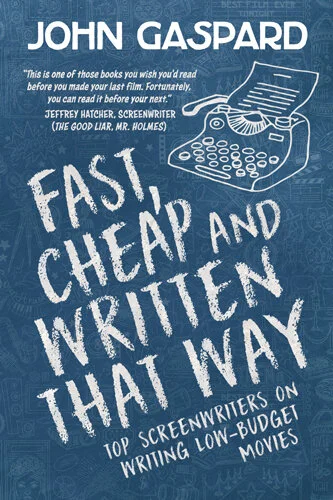
Write Your Screenplay with the Help of Top Screenwriters!

It’s like taking a Master Class in screenwriting … all in one book!

Discover the pitfalls of writing to fit a budget from screenwriters who have successfully navigated these waters already. Learn from their mistakes and improve your script with their expert advice.

"I wish I'd read this book before I made Re-Animator."
Stuart Gordon, Director, Re-Animator, Castle Freak, From Beyond

John Gaspard has directed half a dozen low-budget features, as well as written for TV, movies, novels and the stage.

The book covers (among other topics):

  • Academy-Award Winner Dan Futterman (“Capote”) on writing real stories

  • Tom DiCillio (“Living In Oblivion”) on turning a short into a feature

  • Kasi Lemmons (“Eve’s Bayou”) on writing for a different time period

  • George Romero (“Martin”) on writing horror on a budget

  • Rebecca Miller (“Personal Velocity”) on adapting short stories

  • Stuart Gordon (“Re-Animator”) on adaptations

  • Academy-Award Nominee Whit Stillman (“Metropolitan”) on cheap ways to make it look expensive

  • Miranda July (“Me and You and Everyone We Know”) on making your writing spontaneous

  • Alex Cox (“Repo Man”) on scaling the script to meet a budget

  • Joan Micklin Silver (“Hester Street”) on writing history on a budget

  • Bob Clark (“Children Shouldn’t Play with Dead Things”) on mixing humor and horror

  • Amy Holden Jones (“Love Letters”) on writing romance on a budget

  • Henry Jaglom (“Venice/Venice”) on mixing improvisation with scripting

  • L.M. Kit Carson (“Paris, Texas”) on re-writing while shooting

  • Academy-Award Winner Kenneth Lonergan (“You Can Count on Me”) on script editing

  • Roger Nygard (“Suckers”) on mixing genres

This is the book for anyone who’s serious about writing a screenplay that can get produced! 

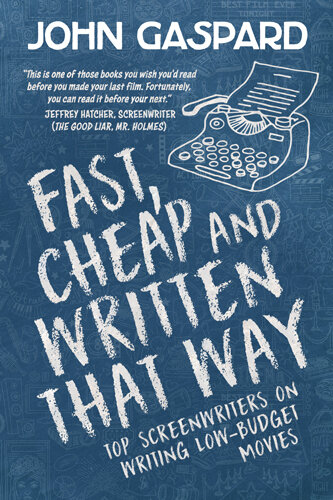
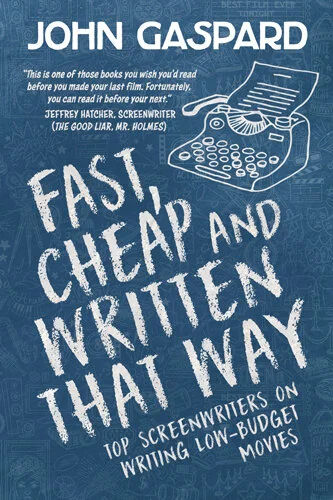
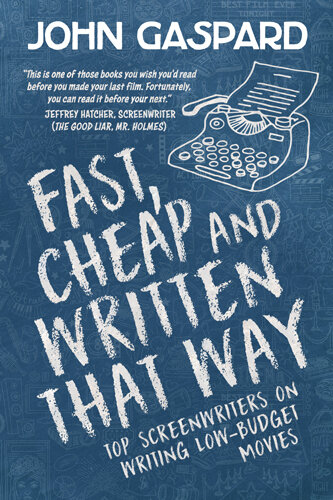
Buy the Book: “Fast, Cheap and Written That Way”
Tags Nancy Savoca, Independent Film, Low-Budget Film, Screenwriting
Comment

Dan O'Bannon on "Dark Star"

October 29, 2025

How did the script come about?

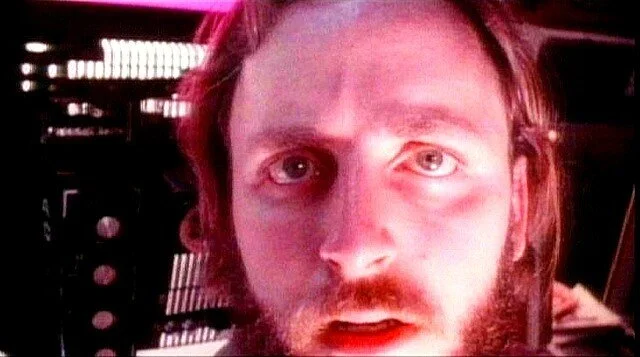
DAN O’BANNON: John (Carpenter) and I were talking and he said he was going to do this graduate film project. I was very taken with it, and I started pitching ideas back at him. First thing you know, I was helping him make that film. At first he just wanted me to act in it, and I did that. But I was very excited about working on all aspects of the thing.

By the time we got through, the thing was about 50 minutes long. And when we took it to the USC Cinema department and started talking to them about taking it to festivals, we were told it was too long -- that it should have been 20 minutes long, and then they would have taken it around to festivals. But because it was 50 minutes long, they couldn't do anything with it. John and I were pretty upset about that, because it meant nobody would see it.

What did you do then?

DAN O’BANNON: A friend of ours said he would put $10,000 of his own money into it if we could expand it into a feature, and then we could try to get it distributed. It was a tough decision, because it was pretty tight at 50 minutes. Expanding it meant we were going to have to shoot a lot of scenes that were filler, and that would lessen the tightness of the story and make it into an episodic film.

Since they weren't going to take it around to the festivals, we were pretty much stuck. We only had one option--go ahead and shoot some extra scenes. It was kind of disappointing, because that meant we had to go from the most-impressive student film ever made to one of the cheapest features. It wasn't a question of choosing between two venues; there was only one venue offered.

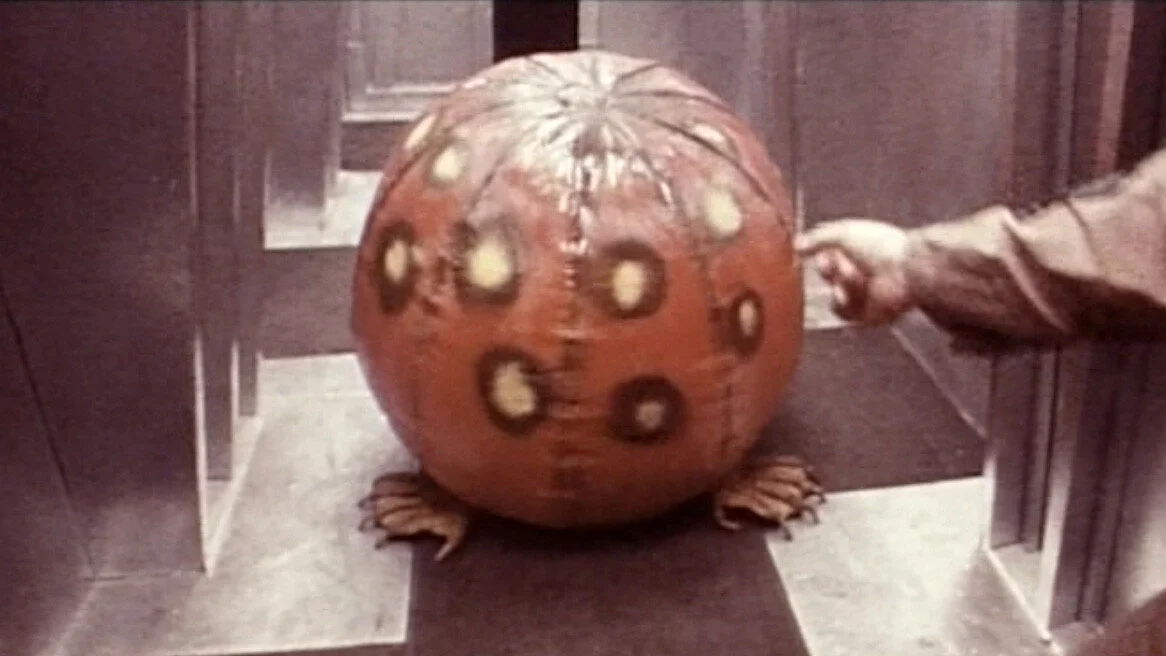
We added a lot of stuff with me in it, because I was the most reliably available as an actor. And we added a lot of slapstick stuff, like the whole subplot about me chasing the alien balloon around, up and down shafts and things. All of that was done to pad.

How did the elevator scene come about?

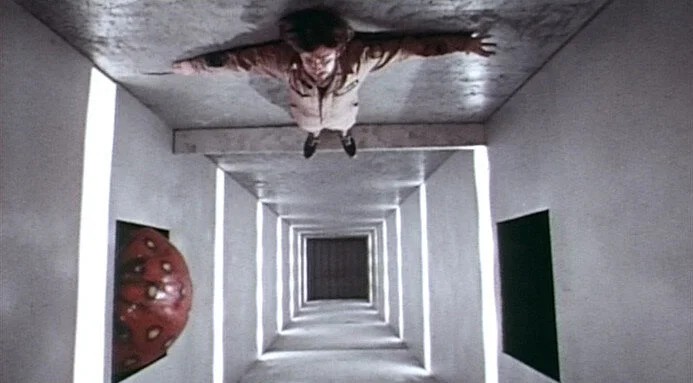
DAN O’BANNON: We were talking about that old Harold Lloyd film, where he's climbing over a building and how funny and scary it is. We had this idea that we could do this funny thing with this creature going up and down in the elevator shaft. And then we had to figure out how to shoot it.

The first thing we thought was that we'd go find an elevator shaft somewhere, but that didn't get very far before we realized--never mind practical or impractical--it was dangerous. So we finally came up with, let's just do it on its side. What the hell. At least we can do it that way, and maybe if it's funny and exciting people won't care.

I ended up having an appendectomy right after I shot that scene. I just had that board down to my butt, and I had to keep my legs up, waving around in the air. Sometimes I think that I forced some food or something into my appendix from all that stress. I was 26 years old, and you really don't think what that sort of thing is going to do to you. You just have a good idea and you start to do it. And then you find out how hard it is. Today I wouldn't be able to do it all, even if I were willing to try, which I wouldn't be.

What's the biggest lesson you took away from Dark Star?

DAN O’BANNON: I learned all the wrong lessons on Dark Star. When I finally directed a movie for real, I thought I was supposed to do everything. And I ended up making everybody mad. I was over-prepared for directing and I was mis-directed by having gone to film school, and thought that the director was supposed to be an auteur and do everything himself. When I actually tried doing that in a real movie, I found that I couldn't get anything I wanted, because they would sabotage me.

It basically took me two pictures to learn an entirely different orientation toward directing. 

What I learned was very simple: A director doesn't make a movie. Everybody else makes the movie. That means the director doesn’t have to know how to do anything. All the director has to do is be there and stand there and make creative decisions if he feels like it. 

I had to swivel around 180 degrees and stop worrying about exactly how I wanted to get everything on the screen and start worrying about how to trick 300 people into doing it for me. 

Dying to make a feature? Learn from the pros!

"We never put out an actual textbook for the Corman School of Filmmaking, but if we did, it would be Fast, Cheap and Under Control." 
Roger Corman, Producer

★★★★★

It’s like taking a Master Class in moviemaking…all in one book!

  • Jonathan Demme: The value of cameos

  • John Sayles: Writing to your resources

  • Peter Bogdanovich: Long, continuous takes

  • John Cassavetes: Re-Shoots

  • Steven Soderbergh: Rehearsals

  • George Romero: Casting

  • Kevin Smith: Skipping film school

  • Jon Favreau: Creating an emotional connection

  • Richard Linklater: Poverty breeds creativity

  • David Lynch: Kill your darlings

  • Ron Howard: Pre-production planning

  • John Carpenter: Going low-tech

  • Robert Rodriguez: Sound thinking

And more!

Buy the book: "Fast, Cheap and Under Control"

Write Your Screenplay with the Help of Top Screenwriters!

It’s like taking a Master Class in screenwriting … all in one book!

Discover the pitfalls of writing to fit a budget from screenwriters who have successfully navigated these waters already. Learn from their mistakes and improve your script with their expert advice.

"I wish I'd read this book before I made Re-Animator."
Stuart Gordon, Director, Re-Animator, Castle Freak, From Beyond

John Gaspard has directed half a dozen low-budget features, as well as written for TV, movies, novels and the stage.

The book covers (among other topics):

  • Academy-Award Winner Dan Futterman (“Capote”) on writing real stories

  • Tom DiCillio (“Living In Oblivion”) on turning a short into a feature

  • Kasi Lemmons (“Eve’s Bayou”) on writing for a different time period

  • George Romero (“Martin”) on writing horror on a budget

  • Rebecca Miller (“Personal Velocity”) on adapting short stories

  • Stuart Gordon (“Re-Animator”) on adaptations

  • Academy-Award Nominee Whit Stillman (“Metropolitan”) on cheap ways to make it look expensive

  • Miranda July (“Me and You and Everyone We Know”) on making your writing spontaneous

  • Alex Cox (“Repo Man”) on scaling the script to meet a budget

  • Joan Micklin Silver (“Hester Street”) on writing history on a budget

  • Bob Clark (“Children Shouldn’t Play with Dead Things”) on mixing humor and horror

  • Amy Holden Jones (“Love Letters”) on writing romance on a budget

  • Henry Jaglom (“Venice/Venice”) on mixing improvisation with scripting

  • L.M. Kit Carson (“Paris, Texas”) on re-writing while shooting

  • Academy-Award Winner Kenneth Lonergan (“You Can Count on Me”) on script editing

  • Roger Nygard (“Suckers”) on mixing genres

This is the book for anyone who’s serious about writing a screenplay that can get produced! 

Buy the Book: “Fast, Cheap and Written That Way”
Tags Dan O'Bannon, Dark Star, Low-Budget Film, Independent Film, Screenwriting, Film Interview
Comment

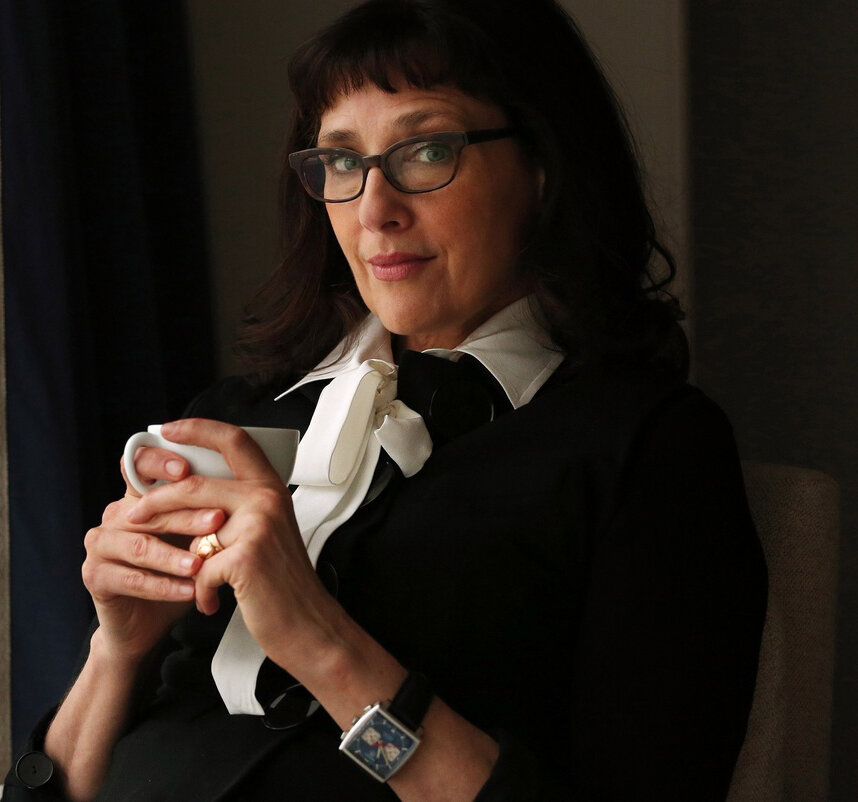
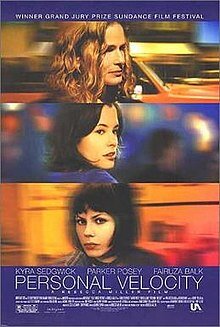
Rebecca Miller on Writing & Directing “Personal Velocity”

October 8, 2025

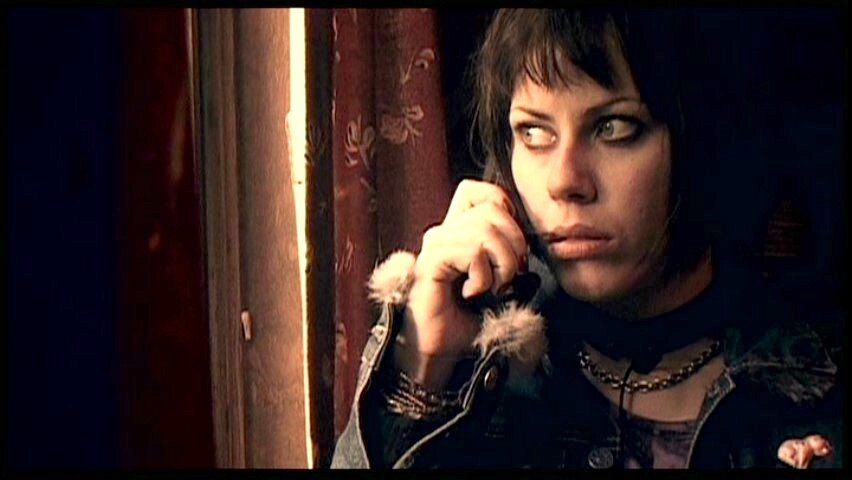
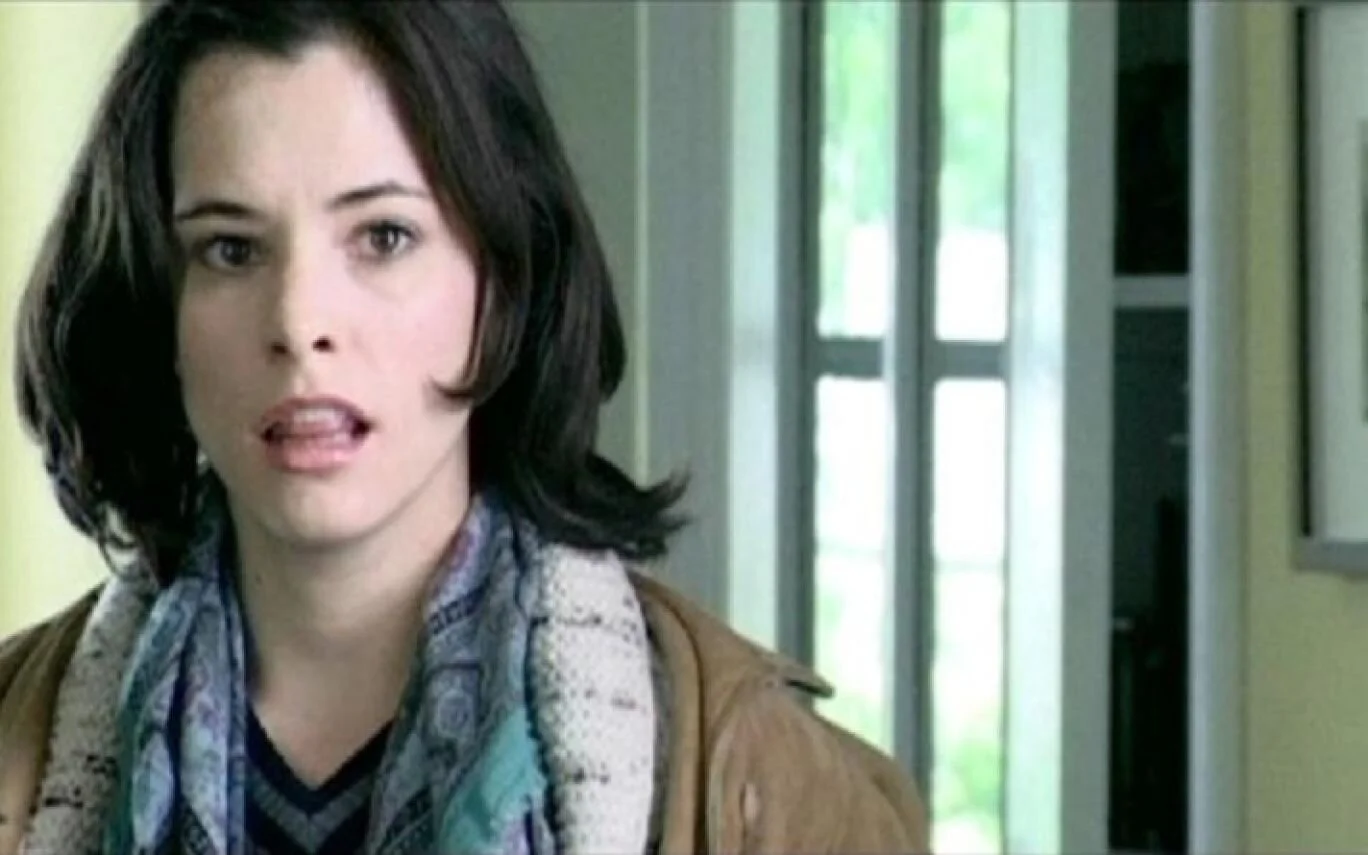
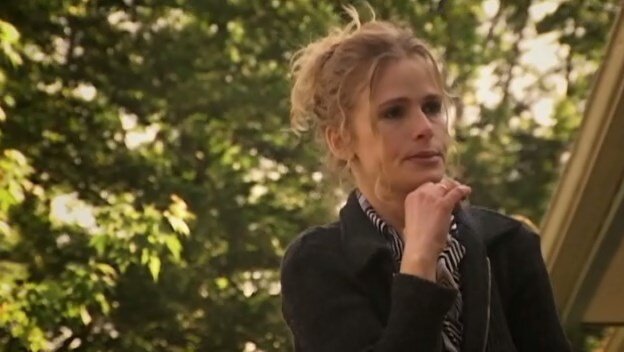
The movie Personal Velocity is actually three movies -- three individual stories about three very different women. Writer/director Rebecca Miller adapted the stories from her short story collection (also titled Personal Velocity), bringing the stories to life via a low-budget DV production.

The result is a movie as varied in its tone and emotions as the three primary characters whose stories it brings to life.

What was going on in your life before Personal Velocity?

REBECCA: I had basically given up, at least for the time being, the idea of making films, because it was so hard for me to get my films made at that point. I had made one film, called Angela, which had won the Filmmaker's Prize at Sundance. They've discontinued the Filmmaker's Prize; all the filmmakers voted on their favorite films in competition. 

Angela did well with some critics, but it didn't make money. It was a very uncommercial film. And then I had written The Ballad of Jack and Rose, which was something I would make later, and I wrote another film that collapsed in pre-production. So I had gotten to the point where I just felt like I didn't want to just wait and wait to make films. All I did all day was write these screenplays that nobody seemed to want. So I decided to write short stories.

I had a child ­– I was living in Europe at that time – so it was a perfect moment for me to do that. So I started writing these short stories and had a book of them.

My friend Gary Winick called me. He was making this series of films for the Independent Film Channel. He had come to them with this idea that he would make ten films a year for a million dollars, but what they ended up giving everybody was a $250,000 budget.

He asked did I have anything, did I want to make a film on mini-DV for that much money? None of the films that I had already written were really right for that, because I figured (and I was right about this), that you'd have to tailor a script for that medium and for that budget; you shouldn't just take one of your scripts and try and turn it into that kind of shoot.

I was sick of writing screenplays that no one was going to make, so I said, "If you want to look at the stories that I'm writing, I could maybe do something out of one of them." I gave him a few stories from the collection and he read them and he really liked them. He gave them to Caroline Kaplan, who was running InDigEnt with him, and they ended up green-lighting the film. It was also Gary's idea to use three stories and make a trilogy. When he said that my mind took off.

The thing that's great about Gary is that he really insisted that I feel completely free. At first I was sort of checking with him and saying, "I'm doing this, I'm doing that," and he was like, "Look, do whatever. The point is that we want to get filmmakers who have experience and who we believe in to feel free."

And so I wrote the script for Personal Velocity in about two months. It took me about two years to write the book. I knew what everybody in those stories was feeling and I knew the characters from top to bottom, so writing the screenplay was mostly about finding the form and the structure.

How did you decide which of the three stories to use?

REBECCA: I chose the ones that were the most dynamic in terms of action, where there was conflict that was externalized, because some of them were very interior. And also where I thought that there was a good clash. I thought there was a very good clash between Delia, which is a story about a working-class woman struggling with an abusive marriage, and Greta, which is about an upper-middle class woman struggling with the clash between her own ambition and a marriage which is feeling increasingly stultifying; finally her ambition propels her out of her own marriage. 

They both involve crisis, but of a different order. And then, class-wise, Paula is kind of a floater, because she's an artist, she's from that class. Although she doesn't really produce anything, she's in-between the two classes.

It was a little bit crazy. When Gary first read the screenplay, he said, "Well this is great, but how in God's name are you going to do this?," because there were many, many, many locations in the film, especially because Greta had so many flashbacks and so much going back and forth with the past that it was just insane. Ideally, when you make a film for $250,000 in 16 days, you're going to be in one room. We were all over the place.

The good news was that it was a kind of mosaic, so that you didn't really need the coherence from scene to scene. The coherence was something that really came with the editing, and then the whole thing was sewn together with voice-over and music. So although there were complete scenes that had a beginning, middle and end a lot of the time, there were also very tiny scenes that were very short and all pieces of a puzzle. 

How did you come up with the idea of using still images throughout the movie?

REBECCA: There were certain scenes that I wrote that the producer, Lemore Syvan, would look at and say, "We can't afford to shoot certain things." And that's where the idea of the stills came in. The stills turned out to be one of the things that distinguished the film and I think worked really nicely emotionally in the film. But the idea was born out of poverty.

Shooting MOS, without sound, is so much faster that we could just rip through those scenes. At first I thought we might shoot them as stills in the camera, but then I just decided to shoot and then pick the stills later, because it would give me more choices. 

At what point in the process did you decide to use narration?

REBECCA: I always knew I was going to. The narration was built into it. 

Early on Gary had said that he loved the way the narrator spoke in the stories and that it would be a pity to lose that. I also thought that with the three stories it would be a good way to link them together. It also gives you a lot more freedom, because we're jumping back and forth through time constantly. And the narration also carries a lot of the humor -- it's a sympathetic third voice. 

In the end there was a whole debate about whether or not to make it a male or female voice. I always knew that it was meant to be a male voice, but then there were some people who saw it and said, "You can't make it a male voice; it's about women." 

But I just ended up really liking the male voice, because I thought it differentiated itself from the other voices. Otherwise, it was just another woman's voice; it was like a soup of women's voices and I thought it was good to have the male voice. Also, I thought it was kind of optimistic to have a male voice. It seemed to be sympathetic and unjudgmental of these women while some of their struggles were against men. And it was my overriding view that it's very possible to have sympathetic males in your movies.

How did you come up with the idea of linking the three stories with the car accident and how did that decision help you?

REBECCA: That came fairly early on, because I realized that something had to unify these three stories and I liked the idea of them all happening at once. It also created a sense of mystery, so that by the time you get to Paula's story, you know that she's the person that everyone is looking for and wondering who she is. That was a device that I came up with fairly early on, because I didn't want to do an interweaving of the stories. I contemplated all sorts of things, including cutting back and forth, but I didn't really want to do that. I wanted to give each woman her complete story and to make them three portraits.

I called it Three Portraits because there was something kind of humble about calling them portraits, because mini-DV is a modest medium. We looked at a lot of other films that had been made on DV and we realized that the lens just don't work very well in wide shots, they kind of fall apart. Because of that, for the most part, there aren't that many wide shots in the film, because they tend to look really cheesy when you go wide. I ended up focusing on medium shots and close-ups and some really, really intense close-ups. 

So once you decided that the accident would link the stories, then Paula had to be the last of the three. What was your thought process on how to order the other two stories?

REBECCA: Actually, in the script Greta came first. And then, when we were cutting it, I realized that if you put Paula after Delia, Paula became unbearably sad. But if you start with Delia, and then go to Greta, where you're laughing within a few minutes, then Paula becomes lyrical instead of sad. So that's why I made that switch.

How did your background in acting help the writing process?

REBECCA: I think that acting was a very necessary step for me. I had a weird, long apprenticeship, in that I was a painter for quite a while and then at a certain point realized that I wanted to make films. I acted for about five years while I was writing my first screenplays and still painting for some of that time -- it was like a bridge. 

Without the acting I don't know that I would have been able to successfully make that leap -- when I was a painter, I was so far away from the mindset of being a filmmaker and being more sociable and being on a set where there are so many people. I just learned all sorts of things, just how it works, what a film set's like. 

One of the problems with being a director is that you never get to go on sets -- even if you go to film school, you don't usually get to be on sets when you're coming up. You learn when you get on your own set, but it was nice to just understand certain things, to have been around directors. For writing it probably helps, too. 

You're writing to shoot, and that's what's important to remember. And I really remembered it with Personal Velocity. That screenplay was really tailored, it was absolutely tailored to the medium. I don't think I even cut any scenes out; there was no waste in that thing. 

You shot what you wrote.

REBECCA: I shot what I wrote and I kept what I shot. Which is really unusual. Usually you end up realizing that there are internal repetitions that you didn't notice. But this was all done in a spirit of such economy, so I was very conscious of not wanting to shoot anything extra. 

We had no overtime, so we had to finish our days, and we had no extra days. So there was no leeway at all. If you weren't making your day, you had to start cutting scenes. There was one occasion where I did have to cut a scene, which was completely unnecessary. I think in the end I would have cut it anyway afterwards. 

How did you come up with the title?

REBECCA: Well it was really just a line that Greta's father says when everyone thought, "Oh, wow, she was such a loser and now look at her!" Everybody has their own personal velocity. He means that everybody succeeds at different rates or everybody comes into themselves at different rates. 

I thought it was a good title for everything because in a sense the whole movie is about these women and the question of being hurled through space by their own past and the accidents of fate. Like Paula and that stupid accident where she switches places with somebody and he gets killed. To what degree are we choosing our lives and to what degree is it something else? I think it's probably a cocktail of all those things, but that's what personal velocity means to me.

And speaking of the car accident, I thought that -- regardless of the budget -- it was conceived and executed beautifully. It never felt like, "We can't afford to show it." Instead, you found a way to do it in a way that was different, and better, than expected.

REBECCA: Thank you. I really love that whole sequence. It's one of these little moments -- these epiphanies -- where everything is being revealed. But you couldn't have had less: we just had two people, a shoe, and a flashing light to reflect in a puddle, and that's all we had. And the sound of a car crash. 

But the truth is, I think especially with sex and car crashes, we've all seen so much of it on the screen, so why even bother?

How do you know when a script is ready to be shot?

REBECCA: It's very hard to answer that question. 

I just made a film called The Ballad of Jack and Rose and that was a script I thought was ready and then I couldn't get the money together. Then I lived a little bit more, looked at it in a different way, wrote it a little bit more. 

Cut to nine years after I'd started writing it and by now it's really changed, because my point of view had changed so much. I'd become a parent and the script is partly about a parent, so now it was more about the parent as much as about the child. Now I feel like I waited the right amount of time, that script was finally ready. But had I gotten the money back all those years earlier, it probably would have been ready then. It just would have been a different film. 

I think that to a degree we just abandon things. I don't think anything is really ever really finished, ever really perfect. I wonder what filmmaker looks back and thinks, "Oh, yeah, that's perfect." Probably something's wrong with them if they do. 

Was there anything you learned while writing Personal Velocity that you still use today?

REBECCA: Yes: the idea of freedom. 

The whole point is to fool yourself into feeling completely free every time. And that becomes more difficult as people expect things from you. It's easier to write a screenplay when no one expects anything of you, because there's nothing to lose. As people start to expect something of you, it becomes more about fooling yourself into feeling completely free.

That was what made that experience so wonderful. But I would like to always have that, to remember that, to guard it and to cherish it. You need to feel free.

What's the best advice that you're ever received about writing?

REBECCA: The best advice I ever received was from a screenwriter named Tom Cole. He read the first screenplay I ever wrote. It was never produced as a screenplay, but I did actually cannibalize it and use a lot of stuff for other things, which often happens to your first work. 

He said, "This is a very personal screenplay, it has your own stamp on it. Don't ever let people, with their advice, sand it down and make it smooth and turn it into something that could have been written by a lot of different people."

I think that's especially good advice because screenplays have no value unless they're produced. People give you a lot of advice, and a lot of that advice is just turning things into something average. That's fine if that’s what you're wanting to do. But if you're looking to create something that's really your own, then you have to keep what's unusual about it and what's even jarring about it.

One thing I would say, especially for people who are starting out -- this is a big piece of advice that I definitely learned from my first screenplay that was never produced -- which is to allow yourself to be humble enough to boil a screenplay down to what's most important. I think when you start out, you tend to try to write about a lot of different things and put a lot of themes into your script. A lot of themes can exist in a piece, in a subterranean way, but that doesn't mean that your story can't be simple.

For example, in Personal Velocity, as many things that are going on there, there are three very simple stories: A woman is escaping from an abusive marriage. A woman is propelled out of her own marriage by her ambition. A woman nearly gets killed in an accident and then tries to make sense of that accident by rescuing a hitchhiker. They're simple stories.

When I first started out, I wrote a screenplay that was so complicated -- it had everything I had ever thought of in it. There were these two little girls in it and they were the most real people in the screenplay. And my friend Michael Rohatyn, who is the guy who composes all the music for my movies, said, "Why don't you just write a movie about those two little girls?" 

And I ended up doing that and that was Angela. And I'm so glad that I did it. It was such good advice. Sometimes you just take the fingernail off the giant and the fingernail is your story.

Dying to make a feature? Learn from the pros!

"We never put out an actual textbook for the Corman School of Filmmaking, but if we did, it would be Fast, Cheap and Under Control." 
Roger Corman, Producer

★★★★★

It’s like taking a Master Class in moviemaking…all in one book!

  • Jonathan Demme: The value of cameos

  • John Sayles: Writing to your resources

  • Peter Bogdanovich: Long, continuous takes

  • John Cassavetes: Re-Shoots

  • Steven Soderbergh: Rehearsals

  • George Romero: Casting

  • Kevin Smith: Skipping film school

  • Jon Favreau: Creating an emotional connection

  • Richard Linklater: Poverty breeds creativity

  • David Lynch: Kill your darlings

  • Ron Howard: Pre-production planning

  • John Carpenter: Going low-tech

  • Robert Rodriguez: Sound thinking

And more!

buy the book: "Fast, cheap and under control"

Write Your Screenplay with the Help of Top Screenwriters!

It’s like taking a Master Class in screenwriting … all in one book!

Discover the pitfalls of writing to fit a budget from screenwriters who have successfully navigated these waters already. Learn from their mistakes and improve your script with their expert advice.

"I wish I'd read this book before I made Re-Animator."
Stuart Gordon, Director, Re-Animator, Castle Freak, From Beyond

John Gaspard has directed half a dozen low-budget features, as well as written for TV, movies, novels and the stage.

The book covers (among other topics):

  • Academy-Award Winner Dan Futterman (“Capote”) on writing real stories

  • Tom DiCillio (“Living In Oblivion”) on turning a short into a feature

  • Kasi Lemmons (“Eve’s Bayou”) on writing for a different time period

  • George Romero (“Martin”) on writing horror on a budget

  • Rebecca Miller (“Personal Velocity”) on adapting short stories

  • Stuart Gordon (“Re-Animator”) on adaptations

  • Academy-Award Nominee Whit Stillman (“Metropolitan”) on cheap ways to make it look expensive

  • Miranda July (“Me and You and Everyone We Know”) on making your writing spontaneous

  • Alex Cox (“Repo Man”) on scaling the script to meet a budget

  • Joan Micklin Silver (“Hester Street”) on writing history on a budget

  • Bob Clark (“Children Shouldn’t Play with Dead Things”) on mixing humor and horror

  • Amy Holden Jones (“Love Letters”) on writing romance on a budget

  • Henry Jaglom (“Venice/Venice”) on mixing improvisation with scripting

  • L.M. Kit Carson (“Paris, Texas”) on re-writing while shooting

  • Academy-Award Winner Kenneth Lonergan (“You Can Count on Me”) on script editing

  • Roger Nygard (“Suckers”) on mixing genres

This is the book for anyone who’s serious about writing a screenplay that can get produced! 

Buy the Book: “Fast, Cheap and Written That Way”
Tags Rebecca Miller, Personal Velocity, Low-Budget Film, Screenwriting, Independent Film
Comment

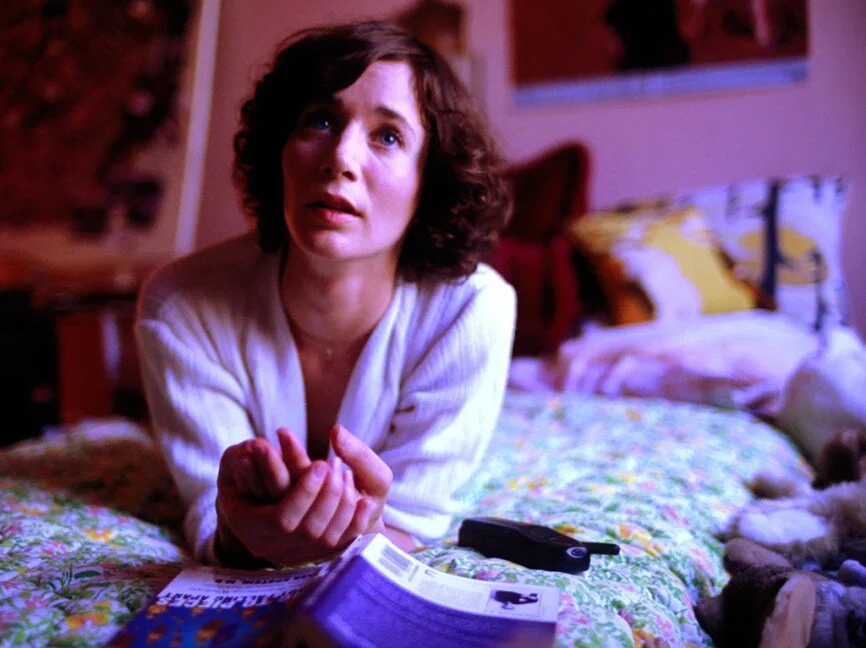
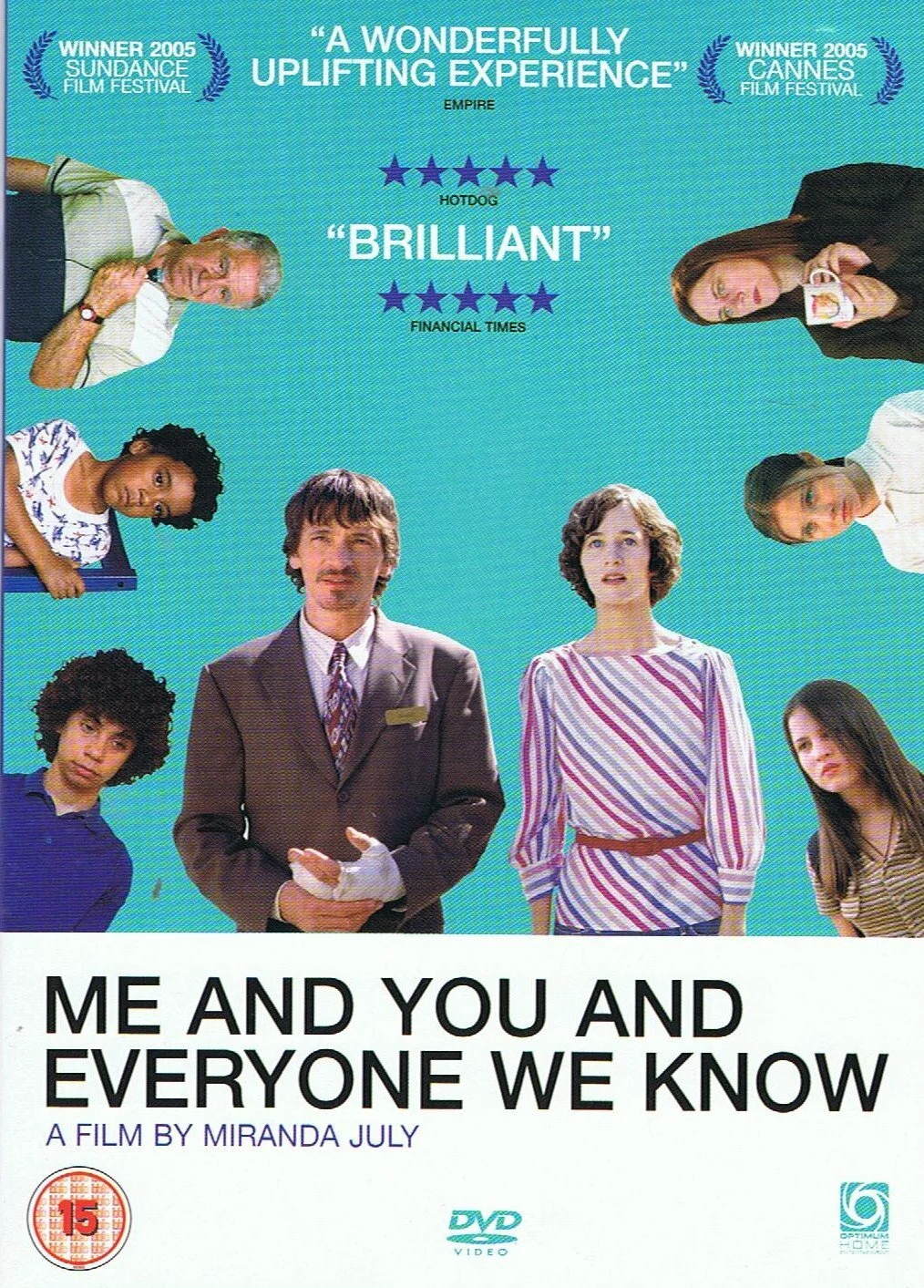
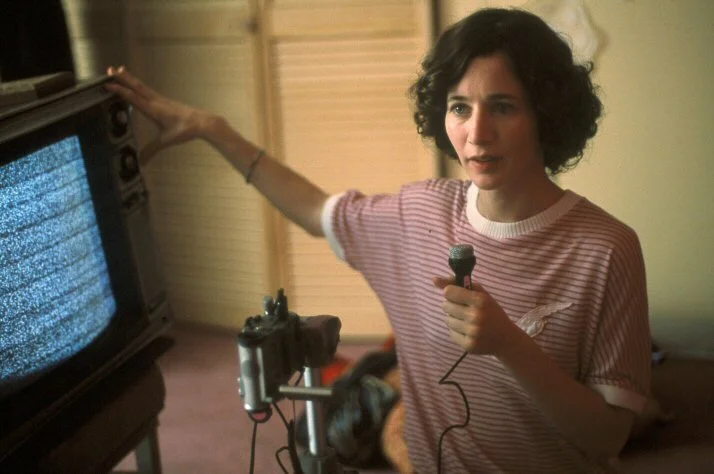
Miranda July on “Me and You and Everyone We Know”

August 27, 2025

Miranda July’s Me and You and Everyone We Know is an intricate tapestry of interlocking stories about the different ways in which people create connections in the contemporary world. But don’t let that description scare you away. This is a funny and completely engaging movie that is far more sophisticated than it may first seem.

Although July stars in the film (in addition to writing and directing), the movie is a true ensemble, where the whole is greater than the sum of its parts. With her script – her first attempt at a feature – she does an artful job of juggling multiple story lines and bringing them together in ways that seem, ultimately, inevitable but still always surprising.

What was going on in your career before you started Me and You and Everyone We Know?

MIRANDA JULY: The main thing I was doing was performing live, multimedia one-woman shows. I had a lot that were scripted and kind of dialogue heavy – I performed all the dialogue. And I had also made about six short movies, some with kids in them, and with me in almost all of them. The movies had gotten progressively longer and the live performances were feature length. 

Where did the idea for the script come from?

MIRANDA JULY: I had the idea for a while that I would eventually write a feature film and that I'd make it. I didn't really know anything about the industry, but I figured that if I'd made a half-hour movie I could make one that was an hour and a half.

The way that I write anything is pretty free-associative and magical. Usually I just start with a structure. The idea was to have these multiple story lines that converged in surprising ways. That structure gave me the freedom to write from where I was each day and add characters as I needed to.

Did you know where you were headed with the story and the characters when you started?

MIRANDA JULY: No, but I had a strong feeling, an emotional touchstone in me. That feeling was in me from the beginning and I knew when I would write a scene that would be filled with that feeling or when I would write a scene that was irrelevant to that feeling. 

For example, one day I wrote the scene that was eventually the ending -- the tapping the quarter thing -- but I wrote that probably a year before I actually finished writing the script, so it wasn't like I wrote chronologically or anything.

The feeling that you worked from to create the script -- would you consider that feeling the theme of the movie?

MIRANDA JULY: Well, a theme implies a kind of intellectual participation and for me it's important to not have my mind working in that way. When I write badly, it's because I'm thinking, "Oh, people are coming together and it's about connection." It has to come from a more unconscious or subconscious place than that for me. The themes come later, once you start talking to the press.

What is your writing process?

MIRANDA JULY: At the very beginning, I just sit down and write dialogue. Writing dialogue was very familiar to me, because I'd been doing that for performances for a long time. Then I act out the characters as I'm writing that dialogue. 

But I usually start with some really irrelevant detail, seemingly out of left field. Like, "I know she has a powder compact in this scene." So I'm starting with that, rather than starting with, "She needs to connect with this man." There's something about the irrelevance and the physicality of something like that. And often it’s humor that gets me into a scene, because I'm enjoying myself when I'm writing something funny. And in enjoying myself, just as hopefully the audience will, you kind of open up and then other stuff can come out, maybe deeper stuff.

So it's never starting with the big idea; it's always something physical or quite often something visual. For example, a little door peephole that a girl can open in the door. Sometimes I'll write a scene and I won't know until later why that little door will be opened. It seems very magical to me, like, “Oh, Richard knocks on the door because he's looking for his son,” but I actually already wrote a version with a girl opening a peephole, without any clear objective.

At what point do you start to connect these disparate scenes?

MIRANDA JULY: Pretty quickly there are characters. And characters have intentions, whether you're conscious of it or not and pretty quickly there's a set of problems. 

So then much of the scenes come out of trying to solve problems. Like, how can the audience be reminded that she's thinking about him? And that becomes the scene with the "Me" and "You" shoes. There's a certain point where there's just enough stuff where you establish problems and at that point you start solving problems.

Did you include incidents from your own life as you were creating the script?

MIRANDA JULY: Not in the way people think. Nothing in the movie happened to me. Some things happened to friends of mine. And if I did take things out of my life, they're really using very emotional things. For example, I did have a job where I had big magnets that I had to put on the sides of my car. Again, they're often physical things that end up holding a lot of power, because the door magnets leads to the job which leads to the relationship with the older man.

Did knowing that you would eventually play the lead in the film have any impact on how you wrote it?

MIRANDA JULY: I honestly didn't think about it that much as I was writing it -- it was kind of second nature that I would be in it. But I pushed to make that character a little more embarrassing than other characters. I often cringed at the things I was writing. You're already so vulnerable, so I sort of felt that this must be important if I'm cringing. So I guess she ended up being a receptacle for a lot of fear and embarrassment in the movie.

I feel that I am pretty hard on myself, except when I'm writing and creating work, so in that sense it's kind of a healing process. If I can put my most unlovable sides into it, then potentially I can heal those parts of myself.

Did you do any re-writing once you'd cast the film?

MIRANDA JULY: I had a reading early on, before I was really casting it, but I did find one actress, Natasha Slayton, who played Heather, the more dominant teen-age girl. I knew when I saw her audition for the reading that I would cast her in the movie. And seeing those lines actually said, I realized that the teenage girls were going to be pretty compelling and that my character was going to suffer for that -- or that was my fear, that I wouldn't be able to keep up with them or be as interesting. 

All the story lines are all competing and they all have to be as interesting as each other. There were actually at that point two female characters about the same age: there was my character and then there was a woman who had the romance with Richard, who worked at the make-up counter. I combined the two characters. I suddenly realized, "Oh, wait, if my character has the romance, then it's going to be a lot more interesting." That decision was made pretty late in the game. But that change stuck and it was really the last big change.

And that change all came about because you had a reading and heard the script out loud?

MIRANDA JULY: Yes, it came out of the pure fear of not being able to compete with a teenager. Which I think was a good instinct.

Did you re-shape the story at all in the editing?

MIRANDA JULY: Not dramatically. We lost one small character in the editing and there were some big chunks moved around. It all had to do with flow, so we just changed the order of a few things.

Do you think your background in live performance helped you as you refined and shaped the movie?

MIRANDA JULY: Yes. I have to say that my sense of timing is a lot of what I've got going for me. A live performance is deathly if you don't have timing, whether it's humor or something really sad. To feel like you have an audience with you and that you're moving out of things not too early, not too late -- that kind of thing turns out to be so crucial. You're imaging it when you're writing and then you're perfecting the reality of it when you're editing it.

It also helps to act it out. I acted the whole script out, every character, for my director of photography before we shot. I knew we weren't going to do storyboards and we had very little time. So I thought at least if we both know what emotionally is the core of each scene -- what we have to get -- I thought the best way to show that was to make him feel it. Of course, who knows? He may have just been humoring me during that three-day performance I subjected him to.

It took three days?

MIRANDA JULY: Yes, because we'd stop and talk about it and make sketches and then I'd move on. So, yeah. Three days.

The movie has a lot of great and original scenes, and I'm wondering where some of the ideas came from. For example, the scene where you're following the car that has the goldfish in a plastic bag on its roof. How did that scene come about?

MIRANDA JULY: That's a good screenwriting story, because originally -- the first time I wrote that scene -- it was just about the dialogue between my character and the older man. I was just writing some B-roll things that the man might see out the car window as they were talking. It was like, "A woman walking by with groceries, a kid with a goldfish in a bag," and some other things. Then later I was running some errands and I thought, "Wait, a kid with a goldfish? That is so dumb. That's so Disney. I can't believe that I wrote that. I'll have to take that out and put in something less cartoony." And I sat down to change it and I wrote that scene.

It just started taking over and instead of deleting it, the fish in the bag ended up on the car and I wrote exactly the scene that you see in the movie. And all this emotion that couldn't come out through the other characters came out through this ridiculous goldfish that I was going to delete.

It is just amazing how there is a lot of information in your "mistakes." Your mistakes are often your unconscious, trying to say, "Me, me! Look at this feeling!"

Did you have to alter the script based on the budget you raised? 

MIRANDA JULY: We were given less than a million dollars and we had a lot of locations. I now see that it was really well produced, it worked, but it was very ambitious. I remember an early draft actually had a blimp in it that fell. Luckily I cut that scene for dramatic reasons, not for budget.

 Really the goldfish / car chase scene was the only expensive scene, and it probably took a big portion of the whole budget. 

How did attending the Sundance Labs help you and the script?

MIRANDA JULY: I think the biggest way it helped was with confidence. I had all these professional writers and directors telling me that I had what it took. I'm a self-starting person, but it's easy to feel like you wouldn't belong in that industry. And it was certainly a real blessing to have the nicest people invite me in and that's what it was. 

You don't get financing or anything like that through the Lab, but I felt ready by the time I was done and had kind of a chip on my shoulder. Like, "Who's going to get the honor of financing my movie?" Not really, you're begging, but I had some pride and that was worth a lot.

In the Filmmaking Lab, they try to simulate what a shoot might be like. They actually have someone come in and cut you off at a certain time, because that happens on a real set. And so you have to make those decisions, like, "Shit, I can't get both scenes, which one can I lose?" and things like that. And it's grueling enough that it actually does sort of pre-brutalize you in a way that takes the edge off the real experience, so you're not in as much shock as you would be. 

How much did the script change as a result of your time at the Lab?

MIRANDA JULY: I don't think I made any changes based on notes that I got at the Lab. But I left the Lab with a crystal-clear sense of what wasn't working. That is to say, everyone's solutions were their solutions and I came up with other ones. 

That's the main thing, to really know what you have to fix. I had never heard of the three-act structure or all that film-writing stuff, but people were pretty respectful. They liked the script and a lot of the advisors had the attitude of, "I don't want to fuck too much with your process, because it seems to be working, but maybe you could think about this..."

Everyone's different. Some were like, "Here's what you've got to do. In the second act, she's going to run away." They'd give you these really specific notes and you're like, "Oh my god, this is a nightmare." But you learn a really great process for getting notes from producers: you learn how to distill what the problem is from the solution they're providing.

Did you learn anything working on this script that you'll take to future projects?

MIRANDA JULY: The thing that I most admire now about what I had then, writing my first screenplay, which is now something I'm trying to defend with my life, is the interior freedom. Not thinking about logistics or other movies or critics, all that stuff you think about once you've been through the mill. There are a lot of monsters you have to keep at bay. And so my job every day when I write is basically to find my way back to feeling totally free, like I could write anything at any moment. And realizing that it doesn't have to make sense, it doesn't have to be perfect, no one's looking at it, no one's judging it, no one can see into my computer right now. To me, that's the beginning and that's what you need. Once something takes root you have other issues.

If you feel like you're forcing yourself to write, then maybe it's a good time to take a walk around the neighborhood. And then the second you give up -- really give up -- that's when your insides allow you to change and have some new thoughts. 

Dying to make a feature? Learn from the pros!

"We never put out an actual textbook for the Corman School of Filmmaking, but if we did, it would be Fast, Cheap and Under Control." 
Roger Corman, Producer

★★★★★

It’s like taking a Master Class in moviemaking…all in one book!

  • Jonathan Demme: The value of cameos

  • John Sayles: Writing to your resources

  • Peter Bogdanovich: Long, continuous takes

  • John Cassavetes: Re-Shoots

  • Steven Soderbergh: Rehearsals

  • George Romero: Casting

  • Kevin Smith: Skipping film school

  • Jon Favreau: Creating an emotional connection

  • Richard Linklater: Poverty breeds creativity

  • David Lynch: Kill your darlings

  • Ron Howard: Pre-production planning

  • John Carpenter: Going low-tech

  • Robert Rodriguez: Sound thinking

And more!

buy the book: "fast, cheap and under control"

Write Your Screenplay with the Help of Top Screenwriters!

It’s like taking a Master Class in screenwriting … all in one book!

Discover the pitfalls of writing to fit a budget from screenwriters who have successfully navigated these waters already. Learn from their mistakes and improve your script with their expert advice.

"I wish I'd read this book before I made Re-Animator."
Stuart Gordon, Director, Re-Animator, Castle Freak, From Beyond

John Gaspard has directed half a dozen low-budget features, as well as written for TV, movies, novels and the stage.

The book covers (among other topics):

  • Academy-Award Winner Dan Futterman (“Capote”) on writing real stories

  • Tom DiCillio (“Living In Oblivion”) on turning a short into a feature

  • Kasi Lemmons (“Eve’s Bayou”) on writing for a different time period

  • George Romero (“Martin”) on writing horror on a budget

  • Rebecca Miller (“Personal Velocity”) on adapting short stories

  • Stuart Gordon (“Re-Animator”) on adaptations

  • Academy-Award Nominee Whit Stillman (“Metropolitan”) on cheap ways to make it look expensive

  • Miranda July (“Me and You and Everyone We Know”) on making your writing spontaneous

  • Alex Cox (“Repo Man”) on scaling the script to meet a budget

  • Joan Micklin Silver (“Hester Street”) on writing history on a budget

  • Bob Clark (“Children Shouldn’t Play with Dead Things”) on mixing humor and horror

  • Amy Holden Jones (“Love Letters”) on writing romance on a budget

  • Henry Jaglom (“Venice/Venice”) on mixing improvisation with scripting

  • L.M. Kit Carson (“Paris, Texas”) on re-writing while shooting

  • Academy-Award Winner Kenneth Lonergan (“You Can Count on Me”) on script editing

  • Roger Nygard (“Suckers”) on mixing genres

This is the book for anyone who’s serious about writing a screenplay that can get produced! 

Buy the Book: “Fast, Cheap and Written That Way”
Tags Miranda July, Independent Film, Low-Budget Film, Screenwriting
Comment

Stefan Schaefer on writing & directing "Confess"

June 18, 2025

Confess is a political story about Terell, a young man who uses video confessions first to avenge wrongs in his own life … and then moves to gathering confessions for all of society’s sins. It is a movie about the power of both film and technology, an illustration of Marsahll McLuhan's famous assertion that the medium is the message.

For me, the most important lesson to take away from Confess is writer/director Stefan Schaefer’s willingness to use a variety of resources – the Fifth Night public reading series, a workshop at The Hamptons Screenwriting Conference, mentors and friends – to shape the strongest script possible for his low-budget directing debut.

What was your filmmaking experience before starting Confess?

In 1996 I started working in film and founded a company. Our primary focus has been short documentary work for non-profits. We’ve also done some commercial work and some music videos. That gave me a lot of production experience, but I'd also studied theater and writing prior to that. So I actually came to the company with more experience in writing than production.

I wrote my first screenplay in 1995, and of course like most first-timers I thought, "Oh, this won't be so hard." I'd read a bunch of screenplays and thought I had a decent understanding of structure and how to subvert structure.

I wrote three, maybe four screenplays before Confess, and none of them have been produced and they were basically an exercise on how to create a compelling story.

How did you come up with Confess?

In about 1999, I read this article in The New York Times about these young hackers who were being hired by security firms and the government to counter-hack and protect corporate and government assets. I thought it would be an interesting documentary to pursue. I started meeting with them, and they were all really reluctant to be interviewed and to go on tape. So I thought this was a great world, but it was hard to get access to it. 

At the same time I was reading about the revolutionary impulses happening in Southern Mexico and about Subcomandante Marcos, this charismatic revolutionary figure down there. He was using the media in an interesting way, writing these weekly treatises to the newspapers in Mexico City, and he became this underground media figure and revolutionary. And I got to thinking, what could an anti-corporate, anti-establishment quasi-revolutionary movement look like in the U.S.? 

These two influences led me to the idea that one of the few viable options for voicing political dissent and undermining government and corporate agendas is via the Internet.

So I began sketching out a story about an ex-hacker who begins a series of abductions and forced confessions which, when he broadcasts video clips of them via the Internet, gives him a mythic status among those who are disaffected, disillusioned, angry at the status quo. I talked to people about it and there seemed to be interest.

When you started, were you thinking you would direct it?

No, I didn't necessarily think I would direct it. Then the more I invested in it and thought about it, and felt strongly attached to it, the more I thought I could direct it. Then, when I thought of it in that way, I thought it would probably be relatively low-budget.

More and more people at that point were beginning to do DV features. And I'd shot so much documentary stuff in digital formats that I felt very comfortable doing that.

What process did you go through writing the script?

This was a script that helped me come up with the way I write now. I gave myself deadlines that I wanted to meet; I wanted to get a first draft done in X amount of weeks. So I would try to write every morning, five days a week at least.

It doesn't have to be that way. Things have evolved; I have a kid now. Now I go to a writing space, the Brooklyn Writing Space, that's the most productive place for me to be. It's a 24-hour access carrel situation, with no Internet access. I just find that without the distraction of a phone or checking e-mails or going on-line to do research and ending up deep in some Internet tangent, it helps me focus. 

I also used an outline/step sheet structure with Confess as we did revisions. I did a lot of drafts of this script. And I would go back to the Step Sheet and try to re-organize things. 

Did you start with an outline?

Yeah, in a basic way. Now I would have made it much more detailed than I did at that point. I think this was the first project where I actually did use an outline.

How did you get into the Fifth Night reading series?

I submitted it, randomly. They had an on-line submission and I sent it in, and like most of these things you submit to, after months you think it's just fallen into an abyss. But then I got a call from Alex, who runs it, and she was enthusiastic about it. So I was lucky enough to do it.

What were some of the benefits of having that reading?

I think it was a mile marker along the way toward production. There were two or three hundred people there, so I got a lot of feedback just in terms of the script, but also working with actors even just for an afternoon and hearing their feedback helped me decide that I definitely wanted to direct it.

And it also made the relationship with the producers more concrete. They saw real potential, they saw that people were interested in it. 

It was painful; there were moments where I remember standing up in the balcony watching and I just thought, "Oh my god, some of these scenes are just deadly." I wanted to hurl myself from the balcony.

So you saw some immediate changes you wanted to make while watching the reading?

Oh, yeah. And also having people react to it, laughing where you didn't think there should be a laugh, or just noticing people not being so engaged or really being engaged. I saw a lot of potential to make cuts, where scenes dragged on too long, the point was made, or ways that I could just jump right into a scene as opposed dragging it out as I had.

You also had a workshop for the script at the Hamptons Screenwriting Conference. How did that come about?

Going to The Hamptons came out of the Fifth Night reading. They were interested in projects that involved technology and so they asked me to submit it and I guess it fit into that category. 

They gave the script to two mentors, and I spent a full afternoon with Larry Lasker (War Games, Sneakers), talking about it. He'd read it in advance and gave me feedback. He helped me a lot with the structure of it, but he also said, "Up the stakes. Have him target higher-profile people."

What was interesting was that I saw parallels in the feedback I was getting, and they came from people from different backgrounds. I figured if these people who are much more experienced are seeing similar possibilities and problems, then I have to suck it up and realize that I need to look at it again. 

This was also true when we had a rough cut put together and started showing it to people. My feeling is that if three-quarters of the people are having a problem with a scene, then you've got to look at it.

At what point did you decide to use narration in the movie?

I had it in the earlier drafts, and then when we went into production we weren't totally committed to it. And then as we saw the cut coming together, we decided that we should bring it back in. So it was something that was there early on, and then pulled out in some of the middle drafts, and now it's back in there. I'm not in love with narration as a device, but people seemed to like it in this project.

Did you do any re-writing once your cast was in place?

Minor re-writing. More of the re-writing took place in post-production than on set. 

There was one scene that I'd rehearsed a couple of times, and in the rehearsals it just didn't seem to be working so well. It was the first scene where Terell and Greg re-meet each other. The actor who played Greg, in particular, wasn't happy with the climax of the scene. So I listened to that and wrote another version and we all felt that it worked a little better. 

So that was something that we rehearsed and then the day before we shot it I gave them the changes. It wasn't in the moment of actually shooting. There is some ad libbing in the movie, but by and large it was shot the way it was written.

At what point in the process did you decide to open the movie with the flash forward of the senator's kidnapping?

That was in post. That was driven by the whole idea of editing and re-editing, and the idea that it's kind of an edited universe and that Terell is editing what people are saying to make a point. We thought that would be an underlying idea while people are watching this movie.

That was one of the first structural changes that we made in post. We screened it for a few other filmmakers and that was an idea we had after hearing their comments, and we decided we'd try it. And we liked it.

What other structural changes did you make in post?

There were some second and third act scenes that we cut, sub-plots. They worked, the actors were good and the production value was good, but for the sake of moving the story forward and wanting to move toward the climax and resolution, they just seemed extraneous. It was hard for me, but in hindsight where I have a little better perspective, I feel like we made the right choices in terms of those scenes.

We had always scheduled in a couple days to do some pick-ups and re-shoots, and so that scene with Eugene Byrd and Melissa Leo on the pier, that was something that I wrote during post-production and had them come back. 

Jonathan Stern is a pretty experienced producer and he budgeted that we would have two extra days to do some pick-ups around the city but then also maybe do some re-shoots. So we were fortunate enough to have Eugene and Melissa come back and shoot that. I think it helps the emotional arc of the story.

How did you blow up the Hummer?

Digitally. We rented a Hummer and did it just with on-set camera movement and special effects -- and not holding on it too long! One of the investors said, "Couldn't we just see a little bit more of that?" And I said, "Yeah, if you want to pony up another fifty grand."

Were there any movies that inspired Confess?

For this movie we were thinking about, in terms of the building sense of paranoia and the camera angles and the surveillance motif, The Conversation.  That's one that we returned to the most in our discussions. 

But I also looked at a lot of tech movies, to see what I wanted to do and what not to do. Movies like pI thought were interesting. Then there were movies where I didn't want to go in that direction, like Hackers.

I wanted to have the technology be central to the story, but also not date it too immediately. In writing it, and then in shooting it, I tried to be aware of that.

One movie I talked about a fair amount with my DP, even though I'm not sure anybody would talk about these two movies in the same breath, was Amores Perros, just in terms of the chaos in the city and stuff always crossing the frame. That was something I was trying to build in a little bit.

What did you learn from writing Confess that you'll take to future projects?

I find that the more I write, and the more I write in a collaborative way -- working with producers -- the less angry I get when I hear criticism. That's just the evolution of it all. You get so attached to something, and it's great to be able to step back and hear comments and not see it as an attack. 

I don't know if it came specifically out of doing this project, but I feel like the more scripts I write, the better I am at hearing people and assessing whether I'm holding onto something for emotional reasons or whether it serves the story.

I learned the value in having mentors look at it or having a staged reading of it. It's interesting, this script has opened up a lot of things for me. People like this script and I got several jobs out of it, just the screenplay.

What's the best advice you've ever received about writing?

Keep doing it, very consistently, over and over. I think I've written fourteen screenplays, and most of them will never be produced. But I learned something from every one of them. 

Confess was interesting because it was a nod in the direction of a thriller, but it also had character evolution and arcs as a central part of the story; it wasn't so plot-driven. So trying to find that balance was a challenge. And it was also fun and exciting to see what I could take from a genre film but also have it be a political movie. 

Another part of the writing process was trying not to hit people over the head with the idea, and having it be something that people could have an emotional connection to and care about the character and want to go on a journey with this person.

In the earlier drafts, Terell had a political agenda from the first moment we met him. And now in the movie he's, in some ways, apolitical at the beginning of the movie. He's acting out of anger and spite, and the Ali Larter character helps shape and harness his anger into a political agenda that he then doesn't want to be part of at a certain point.  

That's very different from what it was originally, where he was this political guy who wanted to make a statement. I'm interested in political movies, but it's always a dance not to be too on the nose.

About how many drafts to you think you went through to create that balance?

Probably about fifteen, at least.

Do you have any advice for someone starting a low-budget script?

In hindsight, I'd say that I should have done a story about four people in a farmhouse. One location. But I think it's pretty dependent on where people are and what they're familiar with. The digital formats are enabling people to do so much now. 

We shot Confess in sixteen days and we had about thirty locations and a huge cast. And that was a lot to manage as a first-time director. I guess I'd recommend scaling it back a little bit. On the other hand, I think there are plenty of cases of really inventive ways of using the technology and shooting something cheap. 

I would encourage people not to worry so much about the budget. Write the script, get your ideas down, and then you can always tweak it. You can always change the location of a scene, you can always tone down the more expensive aspects of the script. I think it's pretty common that someone imagines it will be a five million dollar movie, and then all of a sudden two years later they get $500,000 or $300,000 and they're shooting it HD or in DV. 

It works differently, but it still works.

Dying to make a feature? Learn from the pros!

"We never put out an actual textbook for the Corman School of Filmmaking, but if we did, it would be Fast, Cheap and Under Control." 
Roger Corman, Producer

★★★★★

It’s like taking a Master Class in moviemaking…all in one book!

  • Jonathan Demme: The value of cameos

  • John Sayles: Writing to your resources

  • Peter Bogdanovich: Long, continuous takes

  • John Cassavetes: Re-Shoots

  • Steven Soderbergh: Rehearsals

  • George Romero: Casting

  • Kevin Smith: Skipping film school

  • Jon Favreau: Creating an emotional connection

  • Richard Linklater: Poverty breeds creativity

  • David Lynch: Kill your darlings

  • Ron Howard: Pre-production planning

  • John Carpenter: Going low-tech

  • Robert Rodriguez: Sound thinking

And more!

Buy the book: "Fast, Cheap and Under Control"

Write Your Screenplay with the Help of Top Screenwriters!

It’s like taking a Master Class in screenwriting … all in one book!

Discover the pitfalls of writing to fit a budget from screenwriters who have successfully navigated these waters already. Learn from their mistakes and improve your script with their expert advice.

"I wish I'd read this book before I made Re-Animator."
Stuart Gordon, Director, Re-Animator, Castle Freak, From Beyond

John Gaspard has directed half a dozen low-budget features, as well as written for TV, movies, novels and the stage.

The book covers (among other topics):

  • Academy-Award Winner Dan Futterman (“Capote”) on writing real stories

  • Tom DiCillio (“Living In Oblivion”) on turning a short into a feature

  • Kasi Lemmons (“Eve’s Bayou”) on writing for a different time period

  • George Romero (“Martin”) on writing horror on a budget

  • Rebecca Miller (“Personal Velocity”) on adapting short stories

  • Stuart Gordon (“Re-Animator”) on adaptations

  • Academy-Award Nominee Whit Stillman (“Metropolitan”) on cheap ways to make it look expensive

  • Miranda July (“Me and You and Everyone We Know”) on making your writing spontaneous

  • Alex Cox (“Repo Man”) on scaling the script to meet a budget

  • Joan Micklin Silver (“Hester Street”) on writing history on a budget

  • Bob Clark (“Children Shouldn’t Play with Dead Things”) on mixing humor and horror

  • Amy Holden Jones (“Love Letters”) on writing romance on a budget

  • Henry Jaglom (“Venice/Venice”) on mixing improvisation with scripting

  • L.M. Kit Carson (“Paris, Texas”) on re-writing while shooting

  • Academy-Award Winner Kenneth Lonergan (“You Can Count on Me”) on script editing

  • Roger Nygard (“Suckers”) on mixing genres

This is the book for anyone who’s serious about writing a screenplay that can get produced! 

Buy the Book: “Fast, Cheap and Written That Way”
Tags Stefan Schaefer, Confess, Screenwriting, Directing, Low-Budget Film, Independent Film, Film Interview
Comment

Roger Nygard on “Suckers"

June 11, 2025

Suckers provides an inside look at just how much car salesman take advantage of their customers. Written by director Roger Nygard and stand-up comic (and former car salesman) Joe Yanetty, the story takes us inside four consecutive Saturdays at a Los Angeles car dealership, as Bobby Deluca (Louis Mandylor) learns the ropes from Sales Manager Reggie (Daniel Benzali).

Nygard and Yanetty based their screenplay on Yanetty's actual experiences as a car salesman, proving yet again that truth is, indeed, stranger (and often funnier) than fiction.

(Be aware that this interview contains spoilers about key plot points.)

What was going on with you before Suckers?

ROGER: I'd been jumping back and forth between narratives and documentaries. I had just finished my first documentary, Trekkies, and was looking for another narrative. I find that they both inform each other, and I've learned and brought techniques from one genre into the other. So Suckers has a very real feel, like you're right there -- almost a pseudo-documentary style in the way it was shot.

That’s true, although it doesn’t look like one of those shakey-cam, fake documentaries that have become so popular lately.

ROGER: I really can't stand that "shakey camera on purpose" style in shows like ER, because a documentary cameraman tries to hold the camera steady and he doesn't shake it on purpose. A good handheld camera provides a little movement and a little energy to the shot without being obnoxious about it.

At that time I had made three movies. My first film was a one-man show, High Strung, a one-room comedy, written by and starring Steve Odenkirk. We made that film for about $350,000. Then my second film was a two million dollar action picture, Back To Back, for a company called Overseas Film Group. Their films are primarily foreign-sales driven.

I remember seeing Back To Back. There was, to put it mildly, a lot of action.

ROGER: You've got to have five action set pieces, that's the rule for those sorts of movies. That's what's expected from the foreign buyers to make their foreign sales. We had at least five; we might have had six. But five is the minimum requirement.

The third movie was Trekkies, my first documentary, about Star Trek fans.

In doing Suckers, I was coming off of those three films, which were all very different and driving my agents crazy, because they didn't know what I was. Am I the documentary guy, am I the action guy, am I the comedy guy? So Suckers was a new thing, a sort of grisly dramatic comedy, I guess, with some action.

Where did the idea for Suckers come from?

ROGER: My friend, Joe Yannetty, had written a one-man show about his experiences selling cars. I read portions of that and he told me some of the stories, and I said, "You've got to make a movie about this. These stories are incredible." So that's where it started.

Joe and I worked together writing the script, based on his experiences, which is a process for me as a screenwriter that works best. I almost always work with a writing partner. The reason is that I grew up in Minnesota with a pretty average background. I went to college, then moved to California to seek my fortune in the film business. I never got a job as a CIA agent, never went into the Marines, never became a fireman or a cop, didn't go on the road and get arrested or sell cars. You can't write about life experiences that you haven't personally lived, unless you research them extensively or partner up with someone who has lived those experiences.

My writing style is that I tend to write with people who have had interesting life experiences, but don't necessarily have the desire or the fortitude or the persistence to bring it to the screen.

Most screenwriters hate it when someone comes up to them and says, "My life would make a great movie," but it sounds like, depending on the person, you might sit down and talk to them.

ROGER: That's how I operate. I think everybody has one good screenplay in them, based on their own life. 

Your own life is often the first and best place to start for a screenwriter, because that's what you know -- as long as you're willing to rip open your soul. You have to bare yourself to the world in order to write something that other people will be interested in reading and possibly make into a movie.

It's not easy. It's hard. You've got to write things that you wouldn't even tell your shrink. Those are the screenplays that really stand out.

So when I say that everybody has one good screenplay in them, it's if they're willing to bare their soul and write about those skeletons in the closet, those experiences.

How did you and Joe work together?

ROGER: Joe and I sat in a room and would brainstorm. The brainstorming sessions would generally follow the format of me asking Joe questions and getting him to tell stories. I would write them down or tape them until we had all these anecdotes. 

I took all the anecdotes and boiled each one down to one sentence, and put them on note cards and laid them all out on the floor. We'd look at them on the floor and start moving them around until we had an order that we liked. 

You could do the same thing in a computer -- just type slug lines and create what's known as a "beat sheet," which is a list of story beats. And you can move them around, up and down, until you have a sequence of plot points. 

How did you come up with the idea of setting the story on four consecutive Saturdays?

ROGER: That was because that's how the car business runs. Every Saturday there's a sales meeting. It's an inspirational meeting, a motivational meeting. It's a time for everybody to gauge where they are against everyone else, because there's always that competitive aspect. 

So we broke it down that way because the industry we were writing about breaks itself down monthly and weekly. Every month they start over and the cycle begins again. The framework suggested itself to us because the arena we were writing about was based on a monthly structure.

How nervous were you about setting your whole first act at that first sales meeting?

ROGER: You know, we broke a lot of structural rules with Suckers. And in hindsight, there is a lot I would do differently, having learned what I've learned since then and having seen how that experiment worked, where it worked and where it failed.

Part of the excitement of filmmaking is taking chances. Sometimes you're going to fail spectacularly. And we took a big chance structuring the first act that way. But I don't think it was the biggest chance we took.

What was the biggest chance?

ROGER: The biggest chance in the script was doing a genre shift from the second to the third act, which many people found disconcerting. Audiences are not used to -- and don't like it -- when you shift from one genre to another in a movie. 

Quentin Tarantino and Robert Rodriguez did it in From Dusk 'Til Dawn. It starts out as kind of a crime caper/road chase movie and then shifts into a monster movie, which threw a lot of people. I think that film was less successful than it might have been because people just don't like genre shifts. They want to know what the genre is from the beginning of the movie, what's the level of reality of the story, and then you have to stick to it.

If you don't stick to one genre, then you're either taking a chance or doing an art film. 

Did you consider other possible climaxes and endings?

ROGER: I wish we had considered more, but as soon as we unearthed that story, it felt right to us. Again, looking back, yeah, I think we could have finished the movie just as engagingly and kept it in the car sales realm, without having to go into the crime and drug-trafficking realm.

But then you would have lost the opportunity to have virtually all of the film's characters shoot each other simultaneously in a very small room.

ROGER: Yes, and we would have lost my favorite line of the movie: "You're so beyond fucked, you couldn't catch a bus back to fucked." 

You kind of fall in love with some things, but in the editing room you spend time killing your babies. That's the term for it. Sometimes you have to cut out the things you're in love with for the good of the whole.

What did you do at the writing stage to keep the shooting budget down?

ROGER: There are a lot of things you have to consider when writing a low-budget script, because these are key considerations when the film is made. First of all, fewer locations, and secondly, fewer characters.

Every time you have a new location, it's a company move, which is very costly. And every new character is somebody who gets a residual check when the movie is released and airing in ancillary markets.

We had a pretty large cast in Suckers. I think we had 30-odd characters, which is a lot. The majority of our budget went to pay their SAG minimum wages. That's why you see a lot of movies with three or four characters in contained locations.

A first-time or novice screenwriter will write scripts that take place all over the world with hundreds of characters and it's just not realistic unless it's a $100 million-dollar blockbuster.

The more you keep budget in mind when you're writing a script, the more likely it is that that script can be made. You don't want your creativity to be restrained, but then as you're refining and re-writing you need to consider options like combining characters. Sometimes there's no reason to have this other character -- give all those lines to one of your leads, because the more lines your lead character has, the more castable it will be.

In hindsight, what other things would you have done differently?

ROGER: Besides being more wary of doing a genre shift, I think I would have stuck to a more traditional structure for the beginning. It's really tempting to try to invent a new genre and to write something that's never been written and break all the rules, but the problem is that audiences don't want that. They have either become accustomed to -- or it's just innate in storytelling and human enjoyment of storytelling -- to like a three act structure and what you might call the conventions of screenwriting.

That's why Syd Field's book, Screenplay: The Foundations of Screenwriting and Robert McKee's book, Story: Substance, Structure, Style and The Principles of Screenwriting, are valuable, because they explore and lay out for you the conventions of screenwriting. 

And I think they're right, because if you're going to build a house, you can't invent a whole new framework and foundation. You really have to follow the fundamentals of building the foundation and framework, and then you can get creative with the cosmetic look of the house. That's where you get creative, but you have to learn the fundamentals and follow them if you want to be a successful screenwriter. 

There are art films and part of the job of an art film is to teach us about the rules by violating the rules. But don't expect to make a living being an artist. There are a lot of starving artists out there.

Have you bought a car since you made Suckers?

ROGER: Yeah, and Joe came with me. It was fun. Everything was exactly as expected. They never stop negotiating until you get up to leave. You have to get up to leave and go out the door and then they'll say, "Wait, wait!" Or they'll let you leave and then they'll call on the phone. Until they are certain you're done, they will keep negotiating with you.

What was the biggest lesson you took away from Suckers?

ROGER: The biggest one we already discussed, which is not to violate the rules so dramatically, which we did with the genre shift. That was my biggest lesson.

The corollary was to keep writing, always be writing. Like ABC from Glengarry Glen Ross -- ABC, Always Be Closing. ABW -- Always Be Writing.

The script I'm working on right now is something where I hatched the idea for it about three or four years ago, but I didn't know what to do with it. And it took three or four years of gestating within my brain before it started to form into a shape. It was an idea I told to one of my writing partners and he really sparked to it and so it moved itself to the top of the pile.

That's why you need to have a lot of ideas and a lot of projects and a lot of things going, because I think your subconscious is working on these projects at different paces. The more you've got going, the more likely one of them is going to sprout.

Were you still writing while editing?

ROGER: Editing is the final re-write of the script. You're always re-writing and moving sentences around, sometimes words and sometimes just syllables within words. You pluck and replace. You can get actors to pronounce things differently by moving their syllables around, and it's all toward getting the most expedient way to say something. Good writing is saying something as concisely as possible.

I worked for two years writing and editing promos for TNT and that was a great exercise, because it taught me to be as concise as possible. When you have a thirty-second or fifteen-second spot and you've got to tell a whole story, you're forced to think economically. 

A writer should think economically while writing a screenplay. Even though you have ninety minutes, you should treat every second of those ninety minutes just as judiciously as if you were doing a thirty-second commercial. 

Show it, don't say it, whenever you can.

Start every scene as late as possible. 

Cut out the walks. Nobody wants to watch somebody walk from one door to the other in a movie. You cut that stuff out, because there's no information there. 

If there's no information that informs the story in a shot or a line of dialogue, it has to go. Unless it's hilariously funny. That's my exception. If something's really engaging or funny, it can stay, even if it doesn't move the story forward.

What movies have inspired you?

ROGER: There are so many. Terms of Endearment I think is one of the greatest movies of all time, because it is a gut-wrenching drama and a hilarious comedy, all at once. It's so successful in both realms. It's a movie that amazes me. Real life is funny, real life involves drama and funny moments, and so I think those two coexist well when done well.

Evil Dead, Part II, which I think is the Citizen Kane of its decade because Sam Raimi invented a style of filmmaking that no one had done before. Now you see it all the time. Orson Welles invented a lot of shots and filmmaking styles that you didn't see before Citizen Kane, and so did Sam Raimi with Evil Dead, Part II.

The Hunger, similarly, introduced a new form of editing to movies. It was Tony Scott's first film and he was coming from commercials, so he was bringing that sensibility to moviemaking. He used flash forwards and flashbacks and fractured time structures, and that's where my introduction to fractured time structure in editing came from.

Dawn of the Dead was a very influential movie. George Romero is my hero; he influenced me greatly with that movie. It's so funny and such great social commentary as well as being brilliantly gory.

Any advice to screenwriters who are starting a low-budget project?

ROGER: The most important thing in any movie is that you make the audience feel something. They have to laugh or cry. Or both, preferably, like in Terms of Endearment. If the movie doesn't do that at some point, it's not going to succeed to nearly the same degree that a movie can succeed with an audience when it's done well. 

That's the most important thing: your work has to touch people in some way. And how do you know it does that? Because it has to touch you, first, when you're creating it and writing it. 

That's why if you bare your soul and write about those things in your life that make you cry when you think about them, because they're so painful or so funny or both, then you know that if you feel that way, an audience will feel that way.

Dying to make a feature? Learn from the pros!

"We never put out an actual textbook for the Corman School of Filmmaking, but if we did, it would be Fast, Cheap and Under Control." 
Roger Corman, Producer

★★★★★

It’s like taking a Master Class in moviemaking…all in one book!

  • Jonathan Demme: The value of cameos

  • John Sayles: Writing to your resources

  • Peter Bogdanovich: Long, continuous takes

  • John Cassavetes: Re-Shoots

  • Steven Soderbergh: Rehearsals

  • George Romero: Casting

  • Kevin Smith: Skipping film school

  • Jon Favreau: Creating an emotional connection

  • Richard Linklater: Poverty breeds creativity

  • David Lynch: Kill your darlings

  • Ron Howard: Pre-production planning

  • John Carpenter: Going low-tech

  • Robert Rodriguez: Sound thinking

And more!

buy the book: "Fast, Cheap and under control"

Write Your Screenplay with the Help of Top Screenwriters!

It’s like taking a Master Class in screenwriting … all in one book!

Discover the pitfalls of writing to fit a budget from screenwriters who have successfully navigated these waters already. Learn from their mistakes and improve your script with their expert advice.

"I wish I'd read this book before I made Re-Animator."
Stuart Gordon, Director, Re-Animator, Castle Freak, From Beyond

John Gaspard has directed half a dozen low-budget features, as well as written for TV, movies, novels and the stage.

The book covers (among other topics):

  • Academy-Award Winner Dan Futterman (“Capote”) on writing real stories

  • Tom DiCillio (“Living In Oblivion”) on turning a short into a feature

  • Kasi Lemmons (“Eve’s Bayou”) on writing for a different time period

  • George Romero (“Martin”) on writing horror on a budget

  • Rebecca Miller (“Personal Velocity”) on adapting short stories

  • Stuart Gordon (“Re-Animator”) on adaptations

  • Academy-Award Nominee Whit Stillman (“Metropolitan”) on cheap ways to make it look expensive

  • Miranda July (“Me and You and Everyone We Know”) on making your writing spontaneous

  • Alex Cox (“Repo Man”) on scaling the script to meet a budget

  • Joan Micklin Silver (“Hester Street”) on writing history on a budget

  • Bob Clark (“Children Shouldn’t Play with Dead Things”) on mixing humor and horror

  • Amy Holden Jones (“Love Letters”) on writing romance on a budget

  • Henry Jaglom (“Venice/Venice”) on mixing improvisation with scripting

  • L.M. Kit Carson (“Paris, Texas”) on re-writing while shooting

  • Academy-Award Winner Kenneth Lonergan (“You Can Count on Me”) on script editing

  • Roger Nygard (“Suckers”) on mixing genres

This is the book for anyone who’s serious about writing a screenplay that can get produced! 

Buy the Book: “Fast, Cheap and Written That Way”
Tags Roger Nygard, Suckers, Low-Budget Film, Independent Film, Directing, Screenwriting, Film Interview
Comment

The Making of "Patti Rocks" (An Oral History)

March 26, 2025

In 1987, the film “Patti Rocks” was produced in Minnesota. In 2004, I chatted with three of the people who instrumental in getting it made: Director and co-writer David Burton Morris; producer, DP and editor Greg Cummins, and actor and co-writer John Jenkins.

Patti Rocks is a sequel of sorts to your earlier film, Loose Ends. How did that first film come about?

DAVID BURTON MORRIS (Director, Co-Writer): I saw Memories of Underdevelopment, a Cuban Film, at the Walker Art Center, and I rushed home to my wife, Victoria, and I said, 'You know, we can make a movie really cheap. I just saw this great movie, it was black and white. If we can scrape together $20,000, we can make a movie.' 

And so we did. She wrote it. And it shot for two weeks. Loose Ends was sort of a calling card. We went to 20-25 film festivals, didn't win anything really, but Roger Ebert discovered us and Vincent Canby and Andrew Sarris and we got all these great notices.

However, it was nearly twelve years before the sequel, right?

MORRIS: We finally got enough money, in the early 80s, to do a movie called Purple Haze, and that did very well. It won Sundance, and that was our first real movie. It was 35mm, color, we had an actual shooting schedule and a budget. And that did very well. And we looked like we were on our way.  

I then, subsequently, got fired from two studio pictures and was very unhappy—we're now talking mid-80s—and I was thinking about quitting, I was thinking about getting out of the business because I was really unhappy. And I thought back to the only time I had a really good time making a movie, which was on my first film, Loose Ends. And I thought, maybe I should think about writing something for those guys and making it back in Minnesota and sort of re-creating my enthusiasm for making movies.

Hence the title in the credits, '12 years later.' A lot of people don't get that, but when it screened at Sundance they showed them both, which was nice, so that people could watch the first one and then pick up with the same two guys 12 years later.

CUMMINS (Producer, DP, Editor): When Patti Rocks came about, David had moved to Los Angeles and was working out there, doing the Hollywood thing, and he met Gwen Field. Gwen was taking her daughter to the same day care that David was taking his daughter to, and they got to know each other, and David pitched the idea of Patti Rocks to her. 

How did the script come together? I know you started with improvisations …

MORRIS: We did a lot of just riffs on sex. We had another movie in mind. And I had all these long cassette tapes filled with (Chris) Mulkey and (John) Jenkins riffing on women, and I thought, this is interesting. Somehow I got the idea of putting them in the car, driving all night to see Patti to talk her into having an abortion. I did a first draft and I'd give it to them and we'd tinker with it and do some more improvs. Jenkins lived in Chicago, so we flew there a couple times and did some more improvs, and then I'd type that up.

JOHN JENKINS (Actor, Co-Writer): It started with some general conversations about what we might do, and then we started to improv a little bit. David then took that and began to craft a plotline for this. 

Then after we had that in place, we got back together again and we spent some more time improvising the script. And so the script really came out of those improvisations that Chris and Karen (Landry) and I did. 

Then David would edit that and cut and paste and re-arrange. He might add some other dialogue on top of that, but most of it came out of those improvs. 

Where did the title come from?

MORRIS: The way I got the title was interesting. I was at the Chicago Film Festival, on a panel. I was at dinner with a group of people from the festival and this woman was sitting next to me. I said, 'What do you do?' She said, 'I sing in a band.' I said, 'What's the name of the band?' She said, 'Patti Rocks.' 

And I said, 'Oh, that's a really good title.'

How did you get the film financed?

MORRIS: I'd known Sam Grogg, because he was head of the USA Film Festival in Dallas. And he'd started a film company called Film Dallas. So I gave him the script and said, 'What do you think?' He said, 'We'll make it.' 

It was the easiest thing I've ever done. I wrote it and within a month they'd given me $400,000 to make this movie.

He had very few notes. He just said, 'They have to get out of the car midway through the movie.' I said, 'What do you want them to do? See a flying saucer?' He said, 'I don't know, you'll think of something.'

Did the script change much besides that before you shot?

MORRIS: My wife, Victoria, helped a lot on the third act. She said, 'The Patti character has got to be a strong, liberated, likeable woman.' So I took those notes and did a re-write on it, and Karen Landry brought a lot of insight into the character.

I wrote it for the summer, because Mulkey's running around in his underwear. But we couldn't get it all together, and we got the money in November, and I said, 'We're going to make the movie. We've got the money, we're going.' 

And it actually turned into a more interesting film, just because of the look of the snow and Mulkey running around in his underwear in 23 degrees below zero.

I thought, two guys in a car? How expensive can that be? But, because of the cold, it was brutal. I mean, it was just really brutal—cameras freezing and all of us crammed in, in snow parkas, in the back seat, shooting at night in the middle of the winter. It was insane.

CUMMINS: In theory, David was right, it was a very simple idea: two guys in a car. But add in the car, add in winter, add in nights …

One of the great things in the movie is how you capture just how cold a Minnesota winter can be. You can really feel it while watching the movie.

JENKINS: The weather was unbelievable, especially when we were shooting the sequence where they get out of the car. It must have been thirty below when we were shooting that scene.

CUMMINS: We shot Loose Ends in the summer, in July, and it was one of those horribly hot summers. Basically, it was heat and sweat and working really hard and rigging lights in Midway Chevy’s repair department when it was 100 degrees out.  

And then we turned to Patti Rocks and it's just the opposite. We were shooting in December, and it was the coldest December on record. We were on the camera car with 60 degree below zero wind chills.

JENKINS: We were in this trailer and we would come out; we could only shoot this stuff for four or five minutes at a time before the fear of frostbite or hypothermia would come up. Chris was in great shape and even at that it was brutal. When it came to looking cold, no sensory work was required.

CUMMINS: The camera got so cold most of the time that it was squeaking. When it dropped below 20 below, the camera ran fine but there was this high-pitched squeak every few seconds. We couldn't figure out what it was for the life of us. It would go away when we'd take the camera into the trailer, and then we'd go back to the car and it would do it again. It was just the cold.

MORRIS: The lesson from Patti Rocks was, when you get the money, make the movie, regardless of what season it is.

The film is a three-hander, but we spend so much time in the car that it also feels like a character in the story.

CUMMINS: While scouting locations, there was a car for sale. So, we stopped right there and bought the car—it was for sale on the side of the road. Without thinking about anything. How would this car rig, what does it sound like? It was the perfect car for the character, but not the perfect car to shoot in.

It was a two-door. We loaded the camera in the car, we had David and myself and the sound man all rammed in the backseat, depending on where we would rig the camera for the shot. It was long before video assist, so we had to be in the car, seeing what was going on, in order to see the performance.

Did you ever consider just using process shots, instead of shooting while driving?

CUMMINS: I didn't want to do process, I felt it would cheapen the film to do process all the time. But I don't think any of us really realized how difficult all the shots were going to be.

Before we shot the film, we knew that the car was a character in the film. The car was as important, in some ways, as Billy and Eddie. And so we planned out a myriad of placements for the camera—we could put the camera here on the front of the hood, to the right of the hood, to the left of the hood, and so on. 

And then what I did was work through that process from the beginning of the film through the end. None of the camera placements really repeat. They move and they evolve. And so the car changes with each story they tell, and it becomes more intimate. And it becomes really intimate before they arrive at Patti's apartment. 

We worked very hard to keep that part of the cinematography alive. It was very hard to do, and very confusing. We shot a lot of stuff that didn't get into the film, stories that didn't quite work as well as other stuff. Keeping track of camera placement became very complex, especially with a small crew. We had one person on continuity, who basically couldn't be in the car. How do they do their job? It's a big challenge, so continuity fell to David and myself, really.

Shooting in a car, a black car, with black upholstery, in the middle of nowhere, in the middle of the night, with minimal equipment, in the cold, was brutal. Absolutely brutal.

So not only were you shooting in the cold, in a car not designed for shooting, but you were also shooting at night …

CUMMINS: It was a road film, but when we started out, we didn't know it was going to be a nighttime road film. Which made it even more difficult.

We wanted to play it almost real time—they left in the afternoon, they got together, they had a couple of beers and they took off and night fell. In the winter, night falls around here at about 4:30 in the afternoon. And so they drove all night to get to her apartment, and they get there sometime in the middle of the night and leave the next day at dawn—it's all in one day.

Life would have been easier if they'd started with breakfast, then driven down and gotten there about four in the afternoon—that would have been wonderful.

From an acting technique point of view, how did you recreate what you had done in the improvisations while shooting?

JENKINS: It's an interesting problem, to use improv to create a script, and then to go back and play it. It's a funny thing. When you're improvising the thing, you're so involved in the problem and the words just flow out. 

But when you go back to do it again, you've forgotten a lot of that structure or the dynamic that allowed those words to flow. So you're left with a script and you know it's yours, but it's hollowed out. You've forgotten the context a little bit. 

It's almost easier to take somebody else's words and to slip on your imagination and work with that, then to go back and do your own stuff. I found that to be a little difficult.

I had to do all the actorly stuff and fill it out, sensory work and subtext to try to get back to that improv state that had been so easy. It was just odd. You would think that it would just be a piece of cake, the easiest thing to do, and I found it perplexingly difficult.

The film became somewhat controversial, due to its language. Were you aware that might be an issue while you were shooting?

CUMMINS: Oh, absolutely. We set out to do that. 

The thinking was, these are two guys and this is the way guys talk. If you put two kind of raunchy guys together, this is how they talk. There's nothing unreal about this. And essentially that's what we wanted to do: present two guys who are completely uninhibited and unobserved, talking in the way that we felt some people do. Sam Grogg felt the language was its strong point, that's what the film was about. 

MORRIS: I thought it was risky, in terms of the subject matter. I didn't know until after it was done how people would react to the language in the picture. The ratings board first gave us an X for language, and that had never happened before. I guess I was just so used to it. Not that I talk that way, but certainly I hear that. I was kind of surprised by the reaction.

JENKINS: I didn't think it would be controversial. It wasn't violent, there wasn't any hard porn. It's odd about it now, but we got in trouble for the language. You listen to HBO, and you listen to something like Deadwood, and it seems odd to me. But that was a vastly different time, in terms of what kind of language you could use in a film.

MORRIS: When I first started putting this together, I thought people are either going to love or hate this. I had no idea it was going to divide audiences. And it did. People loved the movie or hated the movie. More people loved it, thank god, than hated it.

JENKINS: That was just the way we talked, but in an exaggerated way. It seemed appropriate to these two guys and the way they would talk. It felt true to us.

MORRIS: At the very few personal appearances I made before the movie, I'd say, 'Some of you people might get uncomfortable during the first two acts of this movie. Just wait, okay?'

CUMMINS: When we screened the answer print for the first time, in California, all of a sudden Sam Grogg, who was with FilmDallas, brought five or six people into the screening room. He wanted them to see it, but we hadn't even seen the film yet. But we really couldn't turn him down, so we watched the film, and afterwards Sam says to them, 'See what you can do for a half a buck?' They were his next round of directors, and he was pressuring them to keep their budgets low.

MORRIS: We had a lot of screenings in Los Angeles before it opened up, and it was sort of a word-of-mouth hit, as far as people going to these screenings. Sean Penn, Madonna were there. I just hate watching my films with audiences. It makes me uncomfortable. So I never went to these screenings.

In addition to the language, the film also includes a sex scene. How was that handled?

JENKINS: It was difficult to do. I'm doing a love scene with my best friend's wife—my real best friend's wife. It was potentially explosive. I thought we handled that part of it well. We got to the point where both Karen and I felt comfortable to do the scene. I thought we were able to finesse it all right.

CUMMINS: There was a level of trust in the sex scene. This is Chris's wife, who's making love with John Jenkins. This is a difficult scene. It's difficult to have your wife in a nude scene, it's difficult to be in the same film with your wife in a nude scene, it's difficult to have your wife making love to your friend as a character, but he's a real-life friend. 

We created a lot of really difficult situations that we were able to get through because of that trust that we had with each other.

What did you learn while making Patti Rocks that you still use today?

JENKINS: Work with people that you know and trust. I know that's hard to do. A lot of this work is going to be like blind dates with strangers to put these things together. I was fortunate to be able to work with people I loved and trusted. If possible, for your first steps out, to do it in a way that you were protected in that way would be great. Look for that.

CUMMINS: One of the best decisions I made as producer was insisting upon getting the best people, friends who were really capable, and to stand up for them.

Film is a collaborative art, there's no question. Everybody says that. You can't really do it by yourself, you really need other people, other expertise, other views, other opinions. You need people in the process. And the closer you are to those people, the less explaining you have to do, the more intuitive working relationship you can have, the faster you're going to be able to work, the better off you're going to be.

The most important thing that I say to everybody is that you have to listen. You have to listen to other people, because they're telling you something. 

Everybody really has something to give, and it seems like too often we're not listening to those voices. 

If you can sit and hear people, and be quiet, I think you'll learn a lot. You take in a lot just by being there, rather than trying to dominate everything.

Dying to make a feature? Learn from the pros!

"We never put out an actual textbook for the Corman School of Filmmaking, but if we did, it would be Fast, Cheap and Under Control." 
Roger Corman, Producer

★★★★★

It’s like taking a Master Class in moviemaking…all in one book!

  • Jonathan Demme: The value of cameos

  • John Sayles: Writing to your resources

  • Peter Bogdanovich: Long, continuous takes

  • John Cassavetes: Re-Shoots

  • Steven Soderbergh: Rehearsals

  • George Romero: Casting

  • Kevin Smith: Skipping film school

  • Jon Favreau: Creating an emotional connection

  • Richard Linklater: Poverty breeds creativity

  • David Lynch: Kill your darlings

  • Ron Howard: Pre-production planning

  • John Carpenter: Going low-tech

  • Robert Rodriguez: Sound thinking

And more!

Buy the Book: “Fast, Cheap and Under Control”

Write Your Screenplay with the Help of Top Screenwriters!

It’s like taking a Master Class in screenwriting … all in one book!

Discover the pitfalls of writing to fit a budget from screenwriters who have successfully navigated these waters already. Learn from their mistakes and improve your script with their expert advice.

"I wish I'd read this book before I made Re-Animator."
Stuart Gordon, Director, Re-Animator, Castle Freak, From Beyond

John Gaspard has directed half a dozen low-budget features, as well as written for TV, movies, novels and the stage.

The book covers (among other topics):

  • Academy-Award Winner Dan Futterman (“Capote”) on writing real stories

  • Tom DiCillio (“Living In Oblivion”) on turning a short into a feature

  • Kasi Lemmons (“Eve’s Bayou”) on writing for a different time period

  • George Romero (“Martin”) on writing horror on a budget

  • Rebecca Miller (“Personal Velocity”) on adapting short stories

  • Stuart Gordon (“Re-Animator”) on adaptations

  • Academy-Award Nominee Whit Stillman (“Metropolitan”) on cheap ways to make it look expensive

  • Miranda July (“Me and You and Everyone We Know”) on making your writing spontaneous

  • Alex Cox (“Repo Man”) on scaling the script to meet a budget

  • Joan Micklin Silver (“Hester Street”) on writing history on a budget

  • Bob Clark (“Children Shouldn’t Play with Dead Things”) on mixing humor and horror

  • Amy Holden Jones (“Love Letters”) on writing romance on a budget

  • Henry Jaglom (“Venice/Venice”) on mixing improvisation with scripting

  • L.M. Kit Carson (“Paris, Texas”) on re-writing while shooting

  • Academy-Award Winner Kenneth Lonergan (“You Can Count on Me”) on script editing

  • Roger Nygard (“Suckers”) on mixing genres

This is the book for anyone who’s serious about writing a screenplay that can get produced! 

Buy the Book: “Fast, Cheap and Written That Way”
Tags Patti Rocks, David Burton Morris, John Jenkins, Greg Cummins, Independent Film, Film Interview, Low-Budget Film, Directing, Screenwriting
Comment

John McNaughton on writing & directing "Henry: Portrait of a Serial Killer"

February 5, 2025

The phrase “not for the squeamish” may well have been invented for John McNaughton’s Henry: Portrait of a Serial Killer. Although you’ll find it in the “horror” film section of the video store, it’s far more than a simple horror film. The film is a starkly realistic, almost documentary-style fictionalized look at a few days in the life of confessed serial killer Henry Lee Lucas.

McNaughton, who went on to direct in a number of different genres including the comic-drama Mad Dog and Glory starring Robert De Niro, Bill Murray, and Uma Thurman, drew on his roots producing documentaries to construct the film. But as he admits, it was co-writer Richard Fire’s keen understanding and use of the basics of dramatic construction that helped to make Henry: Portrait of a Serial Killer the milestone that it has become.

What was going on in your life and career before Henry: Portrait of a Serial Killer came along?

I had a long-standing dream of wanting to make a feature film, but I'd had to put that on hold because, being that I lived in Chicago and was not connected in any way to the mainstream industry, I really didn't know how I was ever going to achieve that dream.

I was working on these small documentary projects that were being distributed by a company in the South suburbs of Chicago, called MPI. I had worked in the commercial field in Chicago, but the first time I was ever on a feature film set I was the director.

Where did the idea for the story come from?

I had done this series of documentaries for MPI, called Dealers in Death, which were about American gangsters, primarily from the Prohibition era. We had scoured the archives for a lot of public domain photographs and footage, got Broderick Crawford to narrate it for us and made a little money on that project. 

I was going to produce and direct another documentary piece, based on professional wrestling, because I'd found someone who had a collection of wrestling footage from the 1950s and 1960s with Bobo Brazil and Killer Kowalski and Dick the Bruiser and Andre the Giant, from the period of wrestling before the WWF or the WWE.

MPI was owned by two brothers, Waleed and Malik Ali. I went out to meet Waleed to talk about doing these wrestling documentaries. When I got to their offices Waleed informed me that he had contacted the person who had the footage for sale. The person with the footage had quoted a price and when the Ali brothers approached him, saying, "Okay, we'll negotiate on that price," the guy realized that the brothers had money so he increased his price. The Ali brothers were not to be dealt with in that manner, so Waleed informed me, "Listen, we're not going to do business with this guy. He's a crook."

Early on in the video business -- and the brothers got in at the beginning -- the major studios weren't interested in video rights, because there just wasn't enough money involved. So they were selling off the rights to their films. A couple of companies, like Vestron and Pyramid, became wealthy for a short period of time, until the studios saw the potential in the video market and started creating their own video divisions. And then those companies went out of business.

But in the early days of video you could buy the video rights quite cheaply for low-budget horror films and since a lot of "B" horror titles hadn't been seen widely, they were very successful on video.  A "B" schlock horror film that people may not have been interested in going to the theater to see, they were more than happy to rent because they're a lot of fun.

So what was happening at this time was that those titles were becoming so popular that the rights acquisitions were becoming more and more expensive. And so Waleed had determined that it would make sense for them to fund a horror film and thereby own all rights in perpetuity, rather than just buying the video rights for a limited period of time. So he proposed to me that we should join forces and make a horror film.

I went in thinking I was going to be doing these documentaries and instead, it was the day that my dream came true, completely unexpectedly. I was kind of in shock. 

Down the hall was the office of an old friend of mine who I had grown up with, Gus Kavooras. Gus was always a collector of the strange and the arcane and the weird. I stopped in to see him and I was kind of in shock. I said, "Gus, Waleed just offered me $100,000 to make a horror movie. I have no idea what my subject will be." And he said, "Here, look at this." 

He took a videocassette off the shelf and popped it in the machine. It was a segment from the news magazine show, 20/20, and the segment was on Henry Lee Lucas and Ottis Elwood Toole, who were serial killers. The term "serial killer" was coined in 1983 by the FBI. In 1986 I had never heard the term before and this was something new to me, the idea that there were these random murderers going around. 

Most murders are committed by people previously acquainted to the victim. Husband kill wives, wives kill husbands, husbands kill wives' lovers, wives kill husbands' lovers. Most murderers are committed by people who are known by the victim. But this was a new trend in murder where there were these individuals who were just randomly murdering strangers. It was, indeed, very horrifying. There were some interviews with Henry and a lot of photographs. He was really a creepy character. And so that became the germ for the story.

Was the budget an issue while you developed the story?

The budget was written in stone. That was the mandate from Waleed, "Make me a horror film for $100,000." So the budget was always a consideration. 

How did you and co-writer Richard Fire work together?

I put together a set of 3x5 index cards delineating a scene structure, but I was not an experienced dramatist, screenwriter or otherwise. But I had the money, I had the mandate to make the picture, and we had our subject: the true story of Henry Lee Lucas. 

I had a friend, Steve Jones, and he was working as a director of animated commercials in Chicago, primarily doing Captain Crunch commercials. He was very well connected into the production community in Chicago and I was not. So I arranged with Steve to be the producer and I said to him, "I need a co-writer." 

There was a theater company in Chicago called The Organic Theater Company. The Organic was a really wild bunch of characters who had quite a bit of success in Chicago and were a really interesting theater company. One of the company members was Richard Fire, another was Tom Towles, who would play Otis. Other members of the company were Dennis Franz, Dennis Farina and Joe Mantegna. They had worked with David Mamet, they had produced Sexual Perversity in Chicago. 

They did a play called Warp that was kind of an outer space fantasy and Steve Jones had done a bunch of video projection for them and knew the group. Steve recommended Richard Fire. Richard and I met and talked about the project and I hired Richard.

What was your working process with Richard?

I would go every day to Richard's apartment and we would sit and he would type. We would knock ideas back and forth and then when we came to what we thought was something worthwhile, he would type it out.

What's so interesting about the script is that -- if you take out the violence -- it's a very traditional, well-structured story. We meet Henry, he meets his friend's sister and a romance starts and then there's a fight and then he and the sister leave together. It's almost like a classic 1950's Paddy Chayefsky television play.

I brought the exploitation elements to it and Richard brought traditional dramatic skills to it. We made a very good team, because had it been left to me it probably would have been tilted more toward pure exploitation. Whereas Richard humanized it. Paddy Chayefsky is a good example. On the DVD, Richard talks about the Aristotelian unity of time, place and action from classic dramatic writing. I think his presence certainly elevated the script.

Did you set out to make such a controversial movie?

I intended to make something very shocking. I remember, in my youth, pictures that sort of crossed the line. Back in those days there would be these incredibly lurid radio advertisements that if you listened to rock music on the radio a lot -- like most kids in my generation did -- they had these incredibly lurid campaigns for pictures like Last House on the Left and Night of the Living Dead and Texas Chainsaw Massacre. Those pictures were sort of watersheds, alongside pictures like The Wild Bunch. The Wild Bunch was incredibly shocking; up until then in a Western, if somebody got shot they fell down. There was no squib work, there was no spouting blood.

So our thought was, "Okay, we've got $100,000 and a chance to do a film and it's going to have to be a horror film, so let's make a horror film that is going to horrify." Richard Fire and I set ourselves a goal, and it was if we're charged with making a horror film, then a) Let's redefine the genre, and b) Let’s totally horrify the audience.

Like many things, the words "horror film" are like "liberal and conservative." The original meanings of the words have gotten lost. One would think that conservatives would be interested in conserving the environment, because the word comes from conservation. When you think of "horror film" now, it's a set of conventions and we meant to defy those conventions. The genre often includes monsters, creatures from outer space, ghosts, the supernatural or something beyond reality. But we didn't have a budget for any of that, so we set ourselves the goal of, "How can we most completely horrify an audience without using the traditional conventions?"

Was there any downside to ignoring the traditional conventions of the genre?

 Well, when we did the home invasion scene, it was a pretty creepy feeling after finishing that scene. A lot of the stuff -- fake blood and all that stuff -- there's a certain fun factor to doing it on the set. It's kind of silly, it's fake blood and rubber heads and all that kind of thing. But when we did that scene of the slaughter of the family it left a really strange atmosphere in the room. We did two takes. It was pretty horrific stuff and we didn't know how an audience was going to react to this.

Was the use of videotape in the home invasion scene an aesthetic choice or an economic choice?

Absolutely an aesthetic choice. The video image had an immediacy that the film image did not have, so when we had them tape that home invasion we very specifically chose to use video because it does have that immediacy and that reality. It lacks that distancing and softening that film gives. Also, having grown up watching the Vietnam war on television, even though those were 16mm film cameras, there was a quality to that hand-held footage that made it more real and more shocking.

Also I had read the book Red Dragon. In Henry Lee Lucas' case, they did not photograph or videotape their crimes. But in Red Dragon, Francis Dolarhyde worked in a film processing facility and he would go out and kill these people, photograph them, then come back and process the film. That book was a couple years old and by that time you could buy a decent home video camera, you didn't need to go through a lab. 

The use and intensity of violence, from the static images that open the movie to the crimes we ultimately see Henry and Otis commit, seems very planned and measured. Was that the case?

With violence and action, you have to keep topping yourself. If you go backwards, the audience is going to be disengaged. So the violence was doled out and increased as the story went along. 

How did you come up with the idea of opening the film on a series of tableaux of Henry’s recent crimes?

Richard and I were sitting in his apartment and we had various materials -- this was before the Internet -- and we were quite limited as to what we could come up with compared to today. But we did have that 20/20 documentary and it did have images. One of the famous images was of a young woman who was allegedly murdered by Henry. She was a Jane Doe who was never identified. She was left in a culvert somewhere and she was nude but for a pair of orange socks. And she was always referred to as Orange Socks because there was no other way to identify her. 

We were thinking, "What's our opening?" And we happened to be watching the 20/20 show and there was that photograph of Orange Socks, and Richard just went, "That's our opening." 

That was indeed our opening, although we didn't have orange socks, we used pink socks. Once we established that, we decided to do a series of them.

The audience can only take so much. You'll notice that one of the bloodless ways we had them kill people was to snap their necks, which is how he kills the woman and the young boy in the home invasion. There's no overt gore.

We were borrowing from the exploitation genre but to me the movie is a character study about people who did extremely horrific things. And there's the horror. Again, not from monsters from outer space.

In the case of stabbing Otis, he's such a heinous character that he deserves it. When we stabbed him in the eye with that rat-tail comb, you can't believe how much laughter there was on the set with that silly looking head and the blood. It was kind of fun.

Each individual can create in their imagination something more horrific than the graphic expression you may be able to come up with, especially on that kind of budget. A great way to put across scenes of great mayhem is to lead the audience up, step by step, so they can see what's about to happen. It's very clear that somebody's about to get killed. If you lead the audience, shot by shot and step by step up to the deed and make it very clear what's about to happen and then give them a couple frames and then cut away to some other thing, but continue it with the graphic sound, I think it can be much more horrific. Each individual will be left to complete the horror in their own mind, from their own library of personal horror. 

Again I have to credit Richard Fire for insisting that we make a serious drama rather than just a piece of pure exploitation. 

The visuals are very clever, like the use of the guitar case to signal that Henry has killed the hitchhiker. Or Otis' sister's suitcase, which is used for comic effect when we first see it and then has a far grimmer use at the end of the film.

We had a fair amount of time to work on that script, which you don't often get. In Hollywood they say, "Okay, the money's here, you've got this actor, let's go!" I just shot a segment for Masters of Horrorand normally they give you a seven-day prep, but since one of my days was Canadian Thanksgiving, I got a six-day prep. It's hard to iron out the details in that amount of time. 

Once you lay out your story and your script, then you start to see these connections that can be made to really strengthen that through-line, so everything connects in some way or another. If you have time, you can work on those details. If you don't, you just shoot the script and hope for the best.

Did you write with any specific actors in mind?

No. We had the Chicago theater community to draw from, which is pretty rich. A lot of young actors come to Chicago to learn their chops because there's a lot of Equity theater where you can actually make a living working in theater. Unlike Los Angeles, where most of it is non-Equity so you don't really get paid.

Chicago's a cheaper place to live, so a young actor can make their way with perhaps a bartending job or waitress job, and when they're working in theater they actually make enough money to pay their rent in the Bohemian neighborhoods of Chicago.

What was the refinement process on the script before you shot it?

The refinement process was mostly with the actors. There weren't that many people in my circle who had wide knowledge of production. Most of the experience in actual film production in Chicago was in commercials. Occasionally a movie came to town, but that was not the bread and butter of Chicago, it was commercial production. At the time Chicago was the number two market, after New York, for commercial production.

Our actors came out of theater, so the script refinement was done with the actors in rehearsal. Tom Towles came from the Organic Theater, where Richard Fire was a member and they'd known each other forever. And Tracy Arnold also came from the Organic, although Tracy was more of a new arrival, she had only been with the company for a year or two. Michael Rooker was just a lucky find.

How did you use the rehearsal process?

I've worked this way almost ever since, when I'm fortunate enough to get rehearsals. If I can get two weeks or at least ten days with them, I'll work with the actors myself for the first half of the rehearsal period. And then once we get the shape of the thing I've almost always brought the writer in, because the actors will want to make changes, like, "My character wouldn't use this word," "My character wouldn't say it this way," "I can't get my mouth around this phrase, it doesn't feel right to me."  

Once the actors take on those characters, they know them in deeper way often than the creators do. But if you just open the door and say, "Sure, go ahead, change it," you're going to have a disaster on your hands because then everything will start to change. But if you bring the writer in and if the actor tells the writer the line they'd like to change and their reasoning, then if you allow the writer to tailor the line, you still have the writer's voice but you also have the actor's notes. I think when you work that way you get roles that are like custom-tailored clothing. They're tailored to the particular actor and their personality and their needs and their interpretation.

On the first day of rehearsal, Richard told the actors, "Okay, I want you to go home and write a character bio, all the backstory, all the family history." Since Tracy and Tom were both part of the Organic Theater this was common to them, but to Michael it was sort of an affront. So Michael actually went home and, truth be told, while he was sitting on the toilet he dictated his backstory into a little portable tape recorder.

They each came back to rehearsals with these backstories and a certain amount of that information then got worked into the script for each character. It was a lesson to me that I carry because it was invaluable.

How have you used this technique since then?

Well, when you're working with Bob DeNiro, Bill Murray and Uma Thurman you don't necessarily send them home to write character bios. But you work with them in readings and discussions for four or five days. Then once you've really gotten the shape and everybody's in the same movie, then you bring the writer in and you use the writer to explain to them why things are the way they are. If they want dialogue changes, then you let the writer do it for them so that a voice is maintained rather than just throwing the doors open and letting everybody re-write your dialogue. You'll regret it if you do that.

Did you make any choices in the writing that you knew would save you money in shooting?

Well, a major one was setting it in Chicago. So far as anyone really knew, Henry Lee Lucas had never been near the city of Chicago. But there was no way we were going to go out on the road with a crew and house them and feed them.

What's the best advice you've ever received about screenwriting?

Probably, strangely enough, it was in Syd Fields' book. I had read other books on screenwriting and filmmaking that tended to take a more academic, ivory tower appraoch to the artistic principles involved. Syd Fields' book was just the nuts and bolts. 

"Know your ending" was one thing I got out of that book. I live back and forth between Chicago and Los Angeles and I love road trips. When I come out to do a project I'll drive out  and when the project is over I've drive home. It's a three-day drive and I think a lot and clear my head. It's like a chapter in my life is beginning and a chapter is ending. But I always know my destination. I know where I'm going, so I can plan my route. It's the same thing with a script. You need to know where the story's going. 

One of the principles that he laid out in his second book was the midpoint. The dramatic arc goes up and it comes down. It starts at the beginning, goes up to a peak, comes down to the ending. And the midpoint is the peak.

But most movies get in trouble in the middle. Establishing a midpoint for me was like knowing that I was going to drive from Los Angeles to Chicago, but I'm going to stop in Omaha. That was really an incredibly helpful idea, because after you leave the first act you're driving to the midpoint. You're going up. Now when I'm working on a script, once I've read it, I'll go to the last page and take the page number – let's say it's 120 pages – and I'll go look at what happened on page 60. I want to see if there's a key event that sort of divides the story in half.

In good screenplays, it may not be exactly on page 60. It may be between 58 and 63. But almost always in a good story you'll go back and find a key event that takes place that divides the story in half.

Dying to make a feature? Learn from the pros!

"We never put out an actual textbook for the Corman School of Filmmaking, but if we did, it would be Fast, Cheap and Under Control." 
Roger Corman, Producer

★★★★★

It’s like taking a Master Class in moviemaking…all in one book!

  • Jonathan Demme: The value of cameos

  • John Sayles: Writing to your resources

  • Peter Bogdanovich: Long, continuous takes

  • John Cassavetes: Re-Shoots

  • Steven Soderbergh: Rehearsals

  • George Romero: Casting

  • Kevin Smith: Skipping film school

  • Jon Favreau: Creating an emotional connection

  • Richard Linklater: Poverty breeds creativity

  • David Lynch: Kill your darlings

  • Ron Howard: Pre-production planning

  • John Carpenter: Going low-tech

  • Robert Rodriguez: Sound thinking

And more!

Buy the book: "Fast, Cheap and Under control"

Write Your Screenplay with the Help of Top Screenwriters!

It’s like taking a Master Class in screenwriting … all in one book!

Discover the pitfalls of writing to fit a budget from screenwriters who have successfully navigated these waters already. Learn from their mistakes and improve your script with their expert advice.

"I wish I'd read this book before I made Re-Animator."
Stuart Gordon, Director, Re-Animator, Castle Freak, From Beyond

John Gaspard has directed half a dozen low-budget features, as well as written for TV, movies, novels and the stage.

The book covers (among other topics):

  • Academy-Award Winner Dan Futterman (“Capote”) on writing real stories

  • Tom DiCillio (“Living In Oblivion”) on turning a short into a feature

  • Kasi Lemmons (“Eve’s Bayou”) on writing for a different time period

  • George Romero (“Martin”) on writing horror on a budget

  • Rebecca Miller (“Personal Velocity”) on adapting short stories

  • Stuart Gordon (“Re-Animator”) on adaptations

  • Academy-Award Nominee Whit Stillman (“Metropolitan”) on cheap ways to make it look expensive

  • Miranda July (“Me and You and Everyone We Know”) on making your writing spontaneous

  • Alex Cox (“Repo Man”) on scaling the script to meet a budget

  • Joan Micklin Silver (“Hester Street”) on writing history on a budget

  • Bob Clark (“Children Shouldn’t Play with Dead Things”) on mixing humor and horror

  • Amy Holden Jones (“Love Letters”) on writing romance on a budget

  • Henry Jaglom (“Venice/Venice”) on mixing improvisation with scripting

  • L.M. Kit Carson (“Paris, Texas”) on re-writing while shooting

  • Academy-Award Winner Kenneth Lonergan (“You Can Count on Me”) on script editing

  • Roger Nygard (“Suckers”) on mixing genres

This is the book for anyone who’s serious about writing a screenplay that can get produced! 

Buy the Book: “Fast, Cheap and Written That Way”
Tags John McNaughton, Henry: Portrait of a Serial Killer, Screenwriting, Directing, Low-Budget Film, Independent Film, Film Interview
Comment

Henry Jaglom on “Someone To Love"

January 22, 2025

What was the inspiration for “Someone To Love”?

HENRY: I was alone, and I didn't understand why I was alone. And I looked around at my friends and I realized that I was part of a whole generation of people that were alone and that it wasn't just a generation but that it was a function of something that was happening at that period in the 80s and the 90s. People who always assumed that they would be married and have families found themselves somehow in the middle of their lives on their own. 

So, I thought I would try to make a movie about it, but what I would do is go through my phone book and actually pick out people I knew who were alone and put them together in some central location. 

And then I was talking to Orson about it at lunch one day. He and I had lunch once or twice a week for the last eight or nine years of his life. He was very interested in it. 

And during that time, I was editing my film Always, about the end of my first marriage (which was the reason I was alone at the time of Someone to Love). Orson came one day and sat behind me in my editing room and watched the entire film of Always and smoked his big, Monte Cristo cigar. 

At the end of it he did an extraordinary thing. He was silent for a while, and I thought, 'Oh, Christ, he hates my movie.' And then he said something very quietly, so I couldn't hear him, which was not like him. So I said 'What? What?' And he said, 'I'm jealous.' 

For a crazy moment I thought he meant he was jealous because the film was so wonderful; he didn't mean that at all. 

But I tried to reassure him, I said, 'My God, you're Orson Welles, you've made a dozen of the greatest films of all time.' He said, 'No, no, Henry, I'm not jealous about that. It's a very good film, I like the film very much. I actually love the film. But I'm not jealous because of the film. I'm jealous because you, as a filmmaker, in Always reveal yourself completely, nakedly, without any masks on. You don't make yourself attractive, you show yourself warts and all. As a matter of fact, you're going to get criticized for some of the whining and the baby talk and all of that. You really allow us to see you without a mask on.' 

And Orson said, 'All my life I've hidden behind a mask. I've never been on screen without a mask. I'd like just once before I die to do that.' 

So I said, 'Well, Orson, you just heard about my film Someone to Love. I think we've got a solution here.' He said, 'What do you mean?' I said, 'It's all about my generation of people and all of us trying to figure out why we're alone in life. If I had somebody from your generation -- you -- sitting in the back of the theater as a sort of Greek chorus and telling us just as you have at lunch over these years, talking to me about life and death and love and loss and men and women and movies and theater. If you'll do that, we'll do it without masks. You'll get to appear without a mask.' 

And Orson said, 'Great.'

Then he showed up three months later, when we started shooting, with a big make-up box in his lap and was made-up like a Greek. He had a funny, weird accent and he had a big nose on. I said, 'What are you doing? Remember, the whole point of this was no masks.' He said, 'Oh, you don't like the Greek? Come back in a half hour.'

I came back and he'd put on some Arabic make-up and had an Arab accent. I said, 'Orson, you're missing the whole point. The whole point was, no masks, remember like in Always, we want to see you.' He said, 'Oh, nobody wants to see me just with this little nose.' 

I don't know how to explain it. He was goading me into tricking him (though of course you couldn't trick Orson, so it was his manipulation) into tricking him into doing the film the way he really wanted to but couldn't admit it finally. He allowed me to say, 'No Orson, no make-up, no accents, I don't want you to memorize speeches, I want you to really be you and just help me solve my dilemma but also help me solve the movie, because I don't know how to end this movie, there's no way to end it.' 

So he said, 'Oh, I'll give you an ending!'

I had a plan, a super structure, but I left it up to the individuals as to what they would say, and I certainly left it up to Orson as to what he would say and depending on that was what I would say. 

I knew what I wanted to talk about in terms of loneliness and relationships, but I was actually seeking the movie as I was in the movie. I decided I would just do it that way and then when I got back to my editing room, I would look at what I got and what everybody gave me and find a way to put it together into a narrative.

How much of your plan did you reveal to your cast?

HENRY: No one knew anything. I just told them I wanted them to be in a movie, and I wanted to be able to deal freely with the facts about their own single situation in their romantic life at this moment. I confirmed with some of them that they were in fact still single, that they weren't involved, that I didn't miss anything, and that's all I asked them to do.

And only one person ended up leaving. Kathryn Harrod left, she didn't realize it would be that personal. The truth was, she was uncomfortable, and I thought more people would be uncomfortable, but actually everybody likes to talk about themselves.

How much did you find that movie in the editing?

HENRY: One hundred percent. Actually, fifty percent in the shooting and fifty percent in the editing. But nothing in preparation. It's the kind of movie where you absolutely cannot prepare, because you don't know what people are going to say. 

Several of my movies have a mixture of a storyline -- which is a narrative, which is created by me -- and an interview structure, which is spontaneous and real and comes from the people. So, I can prepare one half of that, but I can't possibly prepare the interviews without interfering with the reality of it.

Like in Eating or in my movie coming up next, Going Shopping, or Venice/Venice, anyone one of those movies which have an interview threaded throughout. 

But in the case of Someone to Love, because the entire thing was about somebody making a film, there could be no preparation. It would be absolutely wrong for me, from my point of view, to have anybody know anything in advance of what anybody was going to say, including Orson. All I told Orson was to go over in his mind all the things he'd talked to me about over the last couple of years when we'd talked about relationships and men and women. And then he just came up with all this stuff.

It really captures Orson the way if you had had lunch with him. Everybody had this image of him as this intimidating ogre. If he had a chance to, he might put on a little bit of scary persona, but in fact he was a sweet, sweet man, and I think that's what shows in the film.

The narrative is created in the editing rather than written beforehand, and that's true of many of my movies. Orson said to me once, 'Everybody else makes movies, but first they decide what the narrative is, and out of the narrative they try to find their theme. The difference with you, Henry, is that you choose your theme first, and then you try to discover, out of your theme, the narrative.' And that's very true of my process.

I didn't set out to work this way. It's the way I like finding stories.

During the making of Someone to Love, Orson looked at me suddenly and said, 'I know what's going on. You remind me of this old Eskimo I say in a documentary about Eskimos. There was this old Eskimo, who was sitting and carving this gigantic walrus tusk. And the filmmaker goes up to the Eskimo and says, "What are you making?" And the Eskimo looks at the filmmaker, totally bewildered, and says, "I don't know; I'm just carving and trying to find out what's inside."' 

And Orson said, 'That's the way you make movies, Henry, you carve away at yourself, at me, at your friends, at the whole culture, trying to find out what's inside of all of us.' And that was as good a description of my process as I've ever heard.

I understand that you don’t like rehearsals.

HENRY: I hate rehearsal. 

What’s the benefit of not rehearsing before you shoot?

HENRY: The magic of reality. The honest surprise of what happens the first time when somebody thinks of something or you see them thinking and discovering it and saying it. And then they have to re-create it and try to pretend to be thinking and discovering it. 

You can't do this on stage, where you have to repeat everything at 7:45 at night the exact same way, but on film you just have to get it once. 

And the most truthful moments, it seems to me, are the moments that just happen and even surprise the person themselves as they're saying something, because they don't know they're going to be saying it. If you rehearse, no matter how good you are, you know you're going to be saying it. And unless you've got a Brando or a Meryl Streep or the handful of actors who are better each time, you've got human behavior which is better and truest the first time. 

God, I would die if I rehearsed and someone in rehearsal gave me a great moment, because a great moment is what you look for in film. It's all about the moment.

I was complaining about not having more time, not having more money to do something I wanted to do, and Orson said this line that I now have over my editing machine. He said, 'The enemy of art is the absence of limitations.' 

That was just about the most important thing that has ever been said to me, because if you don't have limitations you start throwing technology or money at a problem. But if you have a limitation, you have to find a creative solution, and therefore you create art. 

For me the most valuable lesson from Orson, and it happened during that movie, was make whatever happens work. It's good to have limitations, because you have to find an artistic or creative way to surmount them. And it's more fun.

Did I tell you why I started improvising in movies?

To make my first movie, A Safe Place, I had to write a script to get the money from Columbia Pictures. I had written a play called A Safe Place, so I adapted it into a very funny screenplay. It was a more hip version of a Neil Simon thing. The studio loved it, everybody loved it.

My two friends, Jack Nicolson and Tuesday Weld, two of my very closest friends, I knew them extremely well and I'd written this wonderful scene and it was really good and I'd done it on the stage and it worked beautifully. 

So I had them do the scene, and they're tremendous actors, but there was something missing and I didn't know what. So I said, 'Okay, let's do it again.' And I did about five takes, and I said, 'This is really strange. This isn't as interesting to me as Tuesday actually is or as Jack actually is in life.' 

So I said to them, 'Look, just forget what I wrote. You know what has to be accomplished in this scene. Just get through that, but don't worry about my words.' And it was magical. And I didn’t look at the script for the entire rest of that movie, to the horror of Columbia pictures, because I can't it into a poetic and abstract film from what was a very simple narrative. 

The bigger lesson that I got was that actors are to be encouraged to delve into their own lives and into their own expression and their own language and their own memory, because they will come up with fresh and extraordinary things that you could never in a million years create. 

And all you have to do is get that to happen once on film and have that moment and then figure out how to put it together with the next moment. For me, that was it. I never looked at my script again. I drove the crew crazy, but I made the movie I wanted to make.

How do you edit?

HENRY: I edit on film, on a KEM, on a flatbed. 

You’re a good candidate for non-linear editing. 

HENRY: Everybody tells me that. But what I like to do is splice myself, go back and forth over a piece of film, find things, find things that I otherwise would have missed. I don't know, maybe I've become a reactionary in this area; it seems hard to believe. 

I was the first person to have a KEM. It was because of Orson, once again, telling me on A Safe Place, after I shot the movie. Everybody was still cutting on movieolas. And he said ' There's this great thing, a flatbed KEM,' and all the editors didn't want to get it because they realized that they could be dispensable then, because you could learn how to do it yourself. 

Which is in fact what happened, and halfway through A Safe Place I let the editor go and I ended up editing it myself. And I've edited all my movies since. So maybe it's just the familiarity of that to me, and if I had the other I would need a technician, that I don't want to work with.

I guess, it's old dogs and new tricks.

You have very strong critics. Some people just seem to hate your movies.

HENRY: My movies violate a lot of the conventional rules of filmmaking, which people really resent. They really resent that, I don't know why, I didn't expect that, but I found that out starting with my first films. They see film as a narrative medium, and they don't see it as an art. They're willing to accept in music or in painting, even to some extent in theater--a sort of surrealist thing, where lights are used and sets are used, but they're not naturalistic. 

But on film, they want to know where they are. It's become such an entertainment rather than art medium, that when you defy that and make people explore certain things emotionally or violate some of the rules. 

I found, on A Safe Place, because I violated all of those rules on my first movie, because I didn't know people were going to resist it, the anger started right there. 

I remember Time magazine saying 'this movie looks like he threw the pieces of the film up in the air and it landed totally at random in a mix master.'  

But I think that those people who don't like that really hate it. They feel violated. Then they translate that as I am either amateurish or self-indulgent or all those kind of words, because I don't think they like to be taken out of their narrative convenience, out of the safety of the narrative.

We deal so much with people revealing themselves, people really expose themselves in my movies, these wonderful, brave actors. I had about 53 of them in Going Shopping, I had 38 of them in Eating. These aren’t just actors who are good actors; they're revealing and opening up very personal and frequently painful parts of themselves and exposing it. 

And a lot of people don't want to see that. It's understandable. I'm always surprised by how many do (want to see it). I'm never surprised by the negative reactions; I'm always surprised and delighted by the degree of openness with which so many people are willing to receive and accept the films. 

And those people who do like them, they really do become a part of their lives. I get these incredible letters, thousands of letters from all over the place, with very touching things about terribly sad and painful moments in these people's lives when the films were really helpful. They feel less alone, they feel less isolated, which is really the goal for me of making films like this.

Dying to make a feature? Learn from the pros!

"We never put out an actual textbook for the Corman School of Filmmaking, but if we did, it would be Fast, Cheap and Under Control." 
Roger Corman, Producer

★★★★★

It’s like taking a Master Class in moviemaking…all in one book!

  • Jonathan Demme: The value of cameos

  • John Sayles: Writing to your resources

  • Peter Bogdanovich: Long, continuous takes

  • John Cassavetes: Re-Shoots

  • Steven Soderbergh: Rehearsals

  • George Romero: Casting

  • Kevin Smith: Skipping film school

  • Jon Favreau: Creating an emotional connection

  • Richard Linklater: Poverty breeds creativity

  • David Lynch: Kill your darlings

  • Ron Howard: Pre-production planning

  • John Carpenter: Going low-tech

  • Robert Rodriguez: Sound thinking

And more!

Buy The Book: "Fast, Cheap and Under Control"

Write Your Screenplay with the Help of Top Screenwriters!

It’s like taking a Master Class in screenwriting … all in one book!

Discover the pitfalls of writing to fit a budget from screenwriters who have successfully navigated these waters already. Learn from their mistakes and improve your script with their expert advice.

"I wish I'd read this book before I made Re-Animator."
Stuart Gordon, Director, Re-Animator, Castle Freak, From Beyond

John Gaspard has directed half a dozen low-budget features, as well as written for TV, movies, novels and the stage.

The book covers (among other topics):

  • Academy-Award Winner Dan Futterman (“Capote”) on writing real stories

  • Tom DiCillio (“Living In Oblivion”) on turning a short into a feature

  • Kasi Lemmons (“Eve’s Bayou”) on writing for a different time period

  • George Romero (“Martin”) on writing horror on a budget

  • Rebecca Miller (“Personal Velocity”) on adapting short stories

  • Stuart Gordon (“Re-Animator”) on adaptations

  • Academy-Award Nominee Whit Stillman (“Metropolitan”) on cheap ways to make it look expensive

  • Miranda July (“Me and You and Everyone We Know”) on making your writing spontaneous

  • Alex Cox (“Repo Man”) on scaling the script to meet a budget

  • Joan Micklin Silver (“Hester Street”) on writing history on a budget

  • Bob Clark (“Children Shouldn’t Play with Dead Things”) on mixing humor and horror

  • Amy Holden Jones (“Love Letters”) on writing romance on a budget

  • Henry Jaglom (“Venice/Venice”) on mixing improvisation with scripting

  • L.M. Kit Carson (“Paris, Texas”) on re-writing while shooting

  • Academy-Award Winner Kenneth Lonergan (“You Can Count on Me”) on script editing

  • Roger Nygard (“Suckers”) on mixing genres

This is the book for anyone who’s serious about writing a screenplay that can get produced! 

Buy the Book: “Fast, Cheap and Written That Way”
Tags Henry Jaglom, Someone To Love, Directing, Screenwriting, Editing, Editor, Independent Film, Film Interview, Low-Budget Film
Comment

Stephen Belber on writing "Tape"

January 8, 2025

Three people in one room. 

That’s always been considered the perfect construct for a low-budget movie. However, to keep that interesting is a lot harder than it looks. 

Stephen Belber and Richard Linklater pull it off in Tape, primarily because they trusted the source material they were working with. Belber wrote from his gut when creating his characters and the ever-changing dynamic during their meeting in a slightly-seedy motel room keeps the story constantly evolving and involving.

(Be aware that this interview contains spoilers about key plot points.)

Where were you in your career before you wrote the stage version of Tape?

I was not very far along. I had just quit my day-job to work on The Laramie Project. It was the year that we were researching the murder of Matthew Shepard. I was going out to Laramie every couple of months and then coming home. So I was just starting to get paid. I had been writing plays for a long time, I'd come out of the Playwright Fellowship program at Julliard, but I was sort of adrift and not sure. 

And then Tape came along. It was not one of the big plays I was planning on writing or was working on. It was something where two old friends of mine came along and they wanted to showcase themselves as actors in the New York theater world, and they said, “Can you write us something that can really show what we can do?" 

So I really wrote it for them. Then one of the actors was dating this girl, so I added her because it got boring with two guys after awhile. So it wasn't like, "I'm going to write this big play." I was just doing it because I liked these guys and I liked their work and it was fun.

We produced it ourselves way off-off-Broadway for a very low-budget. Eventually, a Broadway producer came down to see it, because it got a nice buzz, and he wanted to option it because he was looking for something to do with Ethan Hawk. 

He was going to do Albee's Zoo Story, and he was looking to couple it, because Zoo Story had first been coupled with a Becket one-act back when Albee first wrote it. So he was looking for a young, new writer to pair up with an older writer, which happened to Albee.

So we did a reading of it with Ethan and some other actors, and then it fell through because Edward Albee didn't want that to be the play to accompany his play. He ended up writing his own. But Ethan remembered it and when InDigEnt came to him, Ethan said, "How about this? It would be fun, quick and easy to shoot."

So he brought it to Rick Linklater. And Uma Thurman had been at that first reading that Ethan had done, so she was familiar with the play. It was all very lucky.

How did you generate the idea when your two friends said "write something for us"? You weren't thinking screenplay at that point, right?

I had written maybe one screenplay, for fun, at that point. So this was really something to get gritty -- it was the antithesis of what you'd think of as a movie. It was one room, a screwed-up, fucked-up relationship. 

I was thinking of something we could do low-budget, production-wise. We got together one afternoon, we tossed around a couple ideas. It could be in a motel room, they could be brothers, what is it? And then they went away and I worked on it for a couple weeks. And they came over for a reading, just in my living room. It was very subterranean and organic that way, which was nice. 

It was a good lesson for me as a writer, because I tend to think epically and think I'm going to write the Great American Play and I over-plan it and I don't let spontaneity in the process. And this was good to remind me to write from the hip a little more and write closer to home. These are the types of guys I'd grown up with and I know these types of situations. These are 28 year-old guys and this was something I was familiar with at the time.

Once you determined the location, how did you generate the story? It sounds like it came pretty quickly, if the two actors came back in two weeks for a reading.

I don't know why. It was right around the time that Bill Clinton was debating whether or not to apologize for slavery and I was fascinated with the idea of apology: When is it gratuitous and self-serving versus when is it genuine and important? And that was a question that was valid at the time for Clinton. So I think that was on my mind, those types of questions. 

And I wanted to write about people who were very close, so I based it on myself and another guy, the repartee that you have with your close friends. But I wanted to get to something darker beneath that and what happens when those types of competitive friendships get cross-referenced with intense issues, such as date rape.

Did you outline the story?

I don't know that I did. I certainly don't have lots of notes like I have for most of my plays. I must have realized, semi-early on in thinking about it, that there was going to be a dark secret and that the one guy was taping the other. I had no idea how it was going to end, and as I said, the girl was added on.

The play used to end when Robert Sean Leonard's character leaves the first time. And the play ended with her looking at him, like "You're an idiot." But I knew there was more there and after a public reading I went back in and said, "Well, what if he comes back and makes that effort to apologize?" But when writing it, I didn't think very far ahead in terms of what happens when a friend confronts another friend. 

What was your day-to-day writing process?

I guess I'm pretty intense when I come across an idea and I don't sort of do an hour a day. My wife is French and I remember trying to describe this idea: A comedy about date rape was how I was forming it at the time. And she sort of laughed me off and said I should come up with a different idea. But I was able to keep writing. I remember starting over at one point, fairly early on and scrapping what I had when I came up with the idea that she might show up. 

I was writing by hand at that time. I like to get really into it when I'm writing and get a first draft done as soon as possible, then go back in and work on it.

And you're able to do that even if you don't know exactly where you're going?

Yeah. I had, at the time, a philosophy that when you're dealing with those types of tight friendships, where you don't know yourself where the conversation is going, that it would be truer and more genuine to write within that vein and to have a general goalpost that you were headed for, but to let the turns happen. 

If you're writing quickly enough in your mind and keeping up with your pen, let those twists and turns come at you, almost as quickly as they're coming at the characters. At least for this type of play, where it's sort of down and dirty.

Were you hearing anyone when you wrote?

Yeah, I guess I was. I always hesitate to say this, because I'm not a date rapist, but it was myself and a very close friend of mine. 

I always felt in high school that I was a step behind him. He was more popular with the girls and everything, yet at this point in life he was not sure what he wanted to do and I was really going after what I wanted. And I love the dynamic of how those friendships can shift and change over the years. 

I actually wrote a whole second act to this play that takes place ten years after the event in the motel room. Things have changed, and actually Vince is married. They live a sort of antiquated, domestic life. And John has gone on to make really, quote-unquote, important documentaries. 

He comes back again, there's another pretense for a reunion of sorts, where things that were obviously left unsettled that night in the motel room pop back up. I never ended up doing it, because it felt excessive and a little redundant. 

But I do like the idea of thirty years of friendship and the turns that it takes, because the decisions that we make at 18 reverberate and cause different decisions at 28 and those reverberate and they make up our persona at age 38.

I thought it was interesting, character-wise, that Vince is so likeable, yet isn't really that nice of a guy; John is attempting to do the right thing, yet is really not all that likeable. How do you strike that balance in creating characters?

It's so easy to make them so unlikable that the whole's thing's dismissed and people are bored. And making unlikable people likeable in context is hard; I tried it in another piece and it doesn't always work. 

I think because I was basing it on a guy that I love -- the Vince character -- I felt that he was the most unconstrued character, in a good way. He was very organic and he came out of someone with whom I do have a complicated relationship, so it just felt easy that way, to depict him with all his flaws.

But I also just got lucky in that I happened to set it up so that we were rooting for this guy. He can snort all the coke that he wants and be as much of a jerk as he wants, but we're invariably rooting for him because he is a) trying to do the right thing and, b) his second motive is that he's doing this because he's in love and he's desperately in love, from the position of an underdog. And those are just traits that if you endow a character with them, you can get a lot of mileage of them.

But you weren't consciously considering that while you wrote it, were you?

No, I don't think I was. I would like to say I was, but I just happened to hit upon that dynamic. I don't think I even knew how much his real motive was that he was in love with her. I sort of realized that while I was writing it. I had this notion that he was trying to compel his friend to do the right thing and apologize. 

But because those two motives -- the desire to have Amy love him and the desire to make his friend do the right thing -- were so imbued in the same character, it made him someone we could all relate to, because we all have mixed desires. 

I think so often when you go to playwriting school they teach you about single intention, and certainly as an actor you can't play two intentions at once, and from moment to moment that's probably true. But I love trying to create characters who have these both genuinely deeply rooted intentions. It's great. Plus, he's a fun character to play.

Ethan Hawk, when he did the reading of the play, he played John. He was more of the good guy and that was more of his reputation up to then, playing that sort of higher than thou characters. I think he realized that he could stretch himself and show another side of himself, so when the movie came around, he very much wanted to play Vince, which I totally understand.

It's not just playwriting school that teaches that; screenwriting schools do the same thing, telling you to create characters who have one goal that they're going after. But in Tape, their goals shift constantly.

Yeah, exactly, and the responses of their opposite guy affect their next motives as well. 

And it's true, in screenwriting it's even more of a problem. They want heroes, and if not, they want anti-heroes, but less often do they want highly-flawed characters who are not self-aware and who are not clear in going after their intention. 

Were there other things you learned from having a reading of the play?

I went in there thinking I had a much clearer idea of what was going on. I really did want to talk about this notion of apology and the worthiness of apology. And when I came across the idea of not just bringing Amy into the room, but keeping her around and having John come back and her not allowing him to have that apology on the grounds that he wanted to have it on, I think I started to realize that the play is actually potentially more interesting than my psuedo-politically-correct take on it. It’s also about power and it's about gender wars in terms of power. But also the Rashômon element came in, in a way I had not preconceived. 

I thought I was just into this relationship between these two guys, having them sock it out, have a battle, and suddenly it became about who owned the past, who owns memories, and who owns apologies. 

If we're basing our personas on events that have formed us in the past and someone comes in and takes the rug out from underneath that memory, the way you've solidified that memory in your mind, you have to reevaluate not just the memory but everything henceforth. It plays a real mind game. 

I don't think I was really thinking about those things until I brought John back into the room on the second go-round and realized that it's not just about right and wrong, it's about who gets to do what when, on who's grounds. And also that memories are pliable. They're not set in stone.

When you were adapting it into a film script, was there ever any talk of "opening it up"?

There was briefly talk about it. That would be the first instinct for any filmmaker. 

That's the great thing about Linklater. We talked a little bit about opening it up, but his inclination was definitely not to, that it was going to be more interesting to keep it enclosed. The problem was how do you not repeat the theatrically that comes when you try to film a play, because so often it doesn't work. 

Because the DV cameras allowed you to go into a motel room or a soundstage that really felt like a motel room, he was going to be able to capture a cinematic way of telling the story. So, only very briefly did we talk about doing some exterior stuff, which made me delighted, because I was worried that they were going to ask me to write stuff that didn't fit this play. 

You did lose some of the timing that you get in the theatrical version, because you have two cameras that you're trying to edit together. The theater piece runs an hour ten, and this ran an hour twenty-five. They added fifteen minutes because there wasn't the overlap that you get in live theater. 

The trade-off for me, which was exquisite, was the sense of intimacy and a whole other layer of my writing, which is the silences between the words. We got to look into these guys' eyes and chart their reactions. 

So the reactions were not as quick as in the theater -- boom, boom, boom -- but we got to see them process the other person's line and then come up with a response, all within the veil of 'hey, buddy-buddy,' the quick cut down repartee that guys have. But we were able to even see within that and it became, for me, more interesting that way. 

You can get that in theater, but film, and especially a DV camera, can get in there in a way that an audience member, who's free to choose where to look in the theater, could never get that close. So, for me, it was a great lesson.

And to watch it with a crowd in a movie theater was a great learning experience. We're taught as screenwriters that audiences don't care about dialogue, that it's all about the visuals. But I felt that it was a nice synthesis of both, of them yearning for dialogue that they don't usually get in film. They were ready to listen to these people talk and with it they were getting the unspoken subtext very intently and clearly. 

In terms of losing text, there wasn't much. There's one long speech that Uma Thurman has that is not as long in the film, where she finally goes after John. That was the only thing that Rick Linklater cut, and we talked about it. It wasn't just him saying, 'I'm cutting this.' He explained what he thought and it made sense. It just felt very overly-written. It's about twice as long in the play and it's much more intense. But it's probably not realistic that she could come up with that in the moment.

In the film you can see, if you watch closely, it's cut off. They filmed the whole speech and so she didn't really land it in the way she might have, but she does a great job. I just think she did a great job in the movie, capturing the essence of that character.

What I love about the movie is that it raises more questions than it answers. Most movies aren't willing to do that.

Well, that's the golden rule, to tie it up and provide those answers. And even in playwriting, I think, it's a very fine line. Audiences will feel ripped off if you're intentionally ambiguous for the sake of it. If ambiguity serves a purpose, at the risk of sounding pretentious, it's to turn it around and challenge them to ask themselves, “What would I do in that situation? What have I done in past situations? And what have I done about those things?” That does seem to serve a purpose, and if nothing else the movie does poke it back at you. It's so pointed at a particular generation were the words "date rape" just became a phrase.

My wife translated it into French and there is no expression for date rape there in that country yet. And it's relatively new to America. So I think the people who respond to this movie are people who have grown up with those words.

So, in terms of adaptation, it sounds like you basically handed Linklater the script to the play and said "Have at it."

Yeah, he was great that way. It was the opposite of what you expect the Hollywood machine to do to your work. 

Basically, the put it in screenplay form. Robert Sean Leonard's character was originally Jewish; he makes a crack about being Jewish, but we didn't think we could pass off him as that. We also changed his name. There were also one or two cultural references which we thought would potentially date the film, so we cut a couple lines. One about David Hasselhoff.

Ethan improvised a dance bit that was from his high school days that he wanted to get in there. He put the word “fag” in at one point, which I was hesitant to do because I don't like it, but it was fine because guys like that say that word in that context.

Were you involved in the rehearsal process?

Yeah, again, I was really lucky. I was out of town, working on The Laramie Project. When I came back into town, they had rehearsed for about two days. They spent two weeks in a friend's apartment, just going through it. I came toward the end of the first week and it was amazing. It was like a theatrical experience. Ethan has a great theatrical background and Rick studied theater in college. 

They started with real, genuine table work, which is what you do the first two days of any play, sitting around and talking about intention and motive and all that stuff around a dining room table. I couldn't believe that they were doing it exactly the way I would want it to be done. It was lovely.

And when they started shooting, I showed up whenever I wanted to, it was great. They built the set on a soundstage and the set had a retractable roof, so when they wanted to get certain shots they could light it. But for the most part inside the room was a sound guy and Rick, holding one camera, and the DP holding a camera, and the actors and me. It was really nice.

So you didn't have to make any changes to fit the budget?

No. The film was shot so cheap. They rented a car, so that when you opened the motel room door you could see a parked car, that was the big luxury. And that wasn't even in the script.

Rick's company completely knows how to produce at that level when they need to, and InDigEnt was scrappy and just starting out. They hadn't yet had the success that they would have. So everyone was pitching in and calling in favors. It was sort of corny but nice.

When you finished the stage version, how did you know when the script was done?

We did this first reading where it ended abruptly and I felt it was too abrupt. I knew there was more. I was so interested in the female character and I was writing out of my element so much, so I remember calling up a lot of female friends and asking what they would do in that situation. I was really clueless about the feelings that the character would be going through.

I knew it wasn't finished after that first reading, but I didn't know if I should write a whole other act or add another twenty minutes. I remember it was my first case of real theatrical soul-searching, because I knew I had something that I really liked for once. There was a nice feeling in the room and the dialogue was rolling and the characters were knowable. 

So I went off for a while and I worked on that, and we did another reading, again in my living room. And that one felt like there was a nice resolution. I guess I just knew that it was finished.

Again, I don't trust myself, because subsequently we did it in a larger venue in New York. I wrote monologues and a prologue, as well as an epilogue that took place ten years later, with all the characters speaking to us from the future. We actually produced that in New York and most of the people who knew both productions said you don't need it and it ruins this nice little thing you have. I was, as a playwright, thinking I should be writing epic, three-act plays that deal with the world and time passing, but it did feel like this moment had come to a close where the play ends now.

In terms of going back and re-writing, I actually felt like I hit that one pretty smoothly. Once I got a take on the female character, that she was not necessarily going to play their games, that she was going to not cede the power to them, regardless of what happened. I don't think it's changed much since then. 

Little tiny things have changed, because the initial actress really was very helpful in charting it when we were first doing it. But in terms of structure, I never went back and excessively re-wrote it or changed it structurally. Of course, there wasn't that much structure to change.

Do you ever put a script in a drawer for a while?

Oh, absolutely. I have about twenty-five things in a drawer right now. 

I think if I had put Tape in a drawer at that point I would never have gone back, because it's not the heftiest play. But I know that it hit a chord with people, because it was compact. I always complain when I see plays that are successful that they aren't as deep and profound as they should be, but that's not what audiences necessarily want or connect to. It has a tightness that is very satisfying and a compactness -- at an hour twenty, it definitely had that.

Did you learn anything from this process that you've taken to other projects?

Yes. I think letting a degree of spontaneity into my writing, which was something that I had excised at Julliard. Learning to let spontaneity back in and knowing that that makes for better writing.

I learned that there is a market and an audience out there for dialogue-heavy films and character-driven films and that this fast give-and-take actually can work. Everyone says it's so theatrical that it doesn't work, but if you put it out there, an audience will follow it. It's not particularly complex. It's not Tom Stoppard. But we're used to it and we can be conditioned, as filmgoers, to follow and like it. Dialogue that's fun and appropriate to the contemporary world is something that audiences will respond to.

And I learned that drama doesn't come from just visuals. Drama comes from classic dramatic structure and shifts in emotions. 

I'm writing more and more studio stuff now and I literally do cling to that idea – and I'm sure that I'll get killed for it – but I cling to the idea that you can infuse that into even these big things that I'm trying to work on. 

Do you have any advice to writers working on a low-budget script?

They'll tell you not to worry about budget when you're writing, but I think if you really are intent on doing that, you can do both at the same time. You can find low-budget ways to tell the stories you want to tell.

In theater, the best things are the plays with no set. So you have to remind yourself that “I want to tell this story. I want to tell it the way I want to tell it,” but to know that if it's a period piece that takes place over forty years in five thousand locations, it's a problem. You can probably tell the same story in a different way. 

What’s the best advice on writing you've ever received?

Write strong. There's so much prettiness and cleverness that we all strive for, but you should write for the heart more, which is different than saying write about what you know. Write to the gut.

With Tape, I guess I am most proud of the fact that it feels guttural, it feels like it's coming from a very true place. I'm sure people think there are too many plot twists and stuff, but basically these are people who are talking from their gut. And especially when it gets heated, they're talking on instinct and they're talking in the moment and there's nothing “writerly” about it at its best moments. 

And it's something that's so easy to forget, the better writer you become – because you do want to show that you're a good writer – is how to click back into that, write from the gut, write strong. At least in moments, to know that you can find that, access that, no matter what the situation, we can, as human beings, relate to it. Because that's why we all go to movies and theater: to see human beings. 

So if we just write to the human moments, those moments of human drama, that will pay off, because people connect to it.

Dying to make a feature? Learn from the pros!

"We never put out an actual textbook for the Corman School of Filmmaking, but if we did, it would be Fast, Cheap and Under Control." 
Roger Corman, Producer

★★★★★

It’s like taking a Master Class in moviemaking…all in one book!

  • Jonathan Demme: The value of cameos

  • John Sayles: Writing to your resources

  • Peter Bogdanovich: Long, continuous takes

  • John Cassavetes: Re-Shoots

  • Steven Soderbergh: Rehearsals

  • George Romero: Casting

  • Kevin Smith: Skipping film school

  • Jon Favreau: Creating an emotional connection

  • Richard Linklater: Poverty breeds creativity

  • David Lynch: Kill your darlings

  • Ron Howard: Pre-production planning

  • John Carpenter: Going low-tech

  • Robert Rodriguez: Sound thinking

And more!

Buy the book: "Fast, Cheap and Under Control"

Write Your Screenplay with the Help of Top Screenwriters!

It’s like taking a Master Class in screenwriting … all in one book!

Discover the pitfalls of writing to fit a budget from screenwriters who have successfully navigated these waters already. Learn from their mistakes and improve your script with their expert advice.

"I wish I'd read this book before I made Re-Animator."
Stuart Gordon, Director, Re-Animator, Castle Freak, From Beyond

John Gaspard has directed half a dozen low-budget features, as well as written for TV, movies, novels and the stage.

The book covers (among other topics):

  • Academy-Award Winner Dan Futterman (“Capote”) on writing real stories

  • Tom DiCillio (“Living In Oblivion”) on turning a short into a feature

  • Kasi Lemmons (“Eve’s Bayou”) on writing for a different time period

  • George Romero (“Martin”) on writing horror on a budget

  • Rebecca Miller (“Personal Velocity”) on adapting short stories

  • Stuart Gordon (“Re-Animator”) on adaptations

  • Academy-Award Nominee Whit Stillman (“Metropolitan”) on cheap ways to make it look expensive

  • Miranda July (“Me and You and Everyone We Know”) on making your writing spontaneous

  • Alex Cox (“Repo Man”) on scaling the script to meet a budget

  • Joan Micklin Silver (“Hester Street”) on writing history on a budget

  • Bob Clark (“Children Shouldn’t Play with Dead Things”) on mixing humor and horror

  • Amy Holden Jones (“Love Letters”) on writing romance on a budget

  • Henry Jaglom (“Venice/Venice”) on mixing improvisation with scripting

  • L.M. Kit Carson (“Paris, Texas”) on re-writing while shooting

  • Academy-Award Winner Kenneth Lonergan (“You Can Count on Me”) on script editing

  • Roger Nygard (“Suckers”) on mixing genres

This is the book for anyone who’s serious about writing a screenplay that can get produced! 

Buy the Book: “Fast, Cheap and Written That Way”
Tags Stephen Belber, Tape, Screenwriting, Independent Film, Low-Budget Film, Film Interview
Comment

Richard Glatzer on writing/directing “Grief”

December 18, 2024

There’s a well-worn adage that says you should “write what you know.” That’s what the late Richard Glatzer did when he decided to make his first feature film. He took his experiences as a writer/producer of the TV show Divorce Court, and combined it with the loss he had recently suffered after the death of his partner.

The subsequent film – filled with such indie stalwarts as Craig Chester, Illeana Douglas, Alexis Arquette, Paul Bartel and Mary Woronov – is really a quintessential independent film: Funny, sad, personal and in its own way, universal. 

What was going on in your career before you wrote Grief?

RICHARD: I had sold some scripts to Disney and had written afternoon specials for ABC -- one of which actually got produced -- but mostly I found that I was making some money as a writer and getting very frustrated at never seeing any of my words come to life.  I basically had given up on the idea of doing anything in Hollywood; I was doing a nightclub one night a week and just goofing off, after having produced Divorce Court for a couple years.

Producer Ruth Charney suggested that we work on a movie together. I said I had no interest in doing anything unless it was a movie that we could make on as little money as anyone could make a movie. Otherwise it wasn’t going to get done. I had enough experience trying to get things done through more conventional channels. So, I thought if I conceive of a movie that’s basically one location, and think of it as an independent, independent, independent film, then maybe we can actually do it.

She suggested that I do something inspired by my experiences working on Divorce Court. I thought about it and thought I didn’t want to do some Soap Dish-y thing; that I wanted it to have other stuff going on. A lot of the film is autobiographical, and I had been dealing with my lover dying at the time I was working on that show. And I thought that would make it more interesting then if it were just some sort of satire of Divorce Court.

So then the idea of it began to take shape. To me, that became more interesting, if you limited it to one location. To conceive of a film from the outset as ultra-low budget is the way to do it.  You don’t start with a bigger idea and then whittle it down.

Let’s back up. How did you get into producing Divorce Court?

RICHARD: I sold these two scripts to Disney, when there was a different group of people in charge there. And then one of them ended up as the producer-story editor for Divorce Court. I was still living in New York at the time and thinking about going to LA. I spoke to the guy who had been the head of the studio and he said I should talk to this woman who’s over at Divorce Court and see if she can get me some work there.  And I thought, “Oh my god -- Divorce Court.” 

But it ended up being more regular employment and more fun than anything else I ever worked on. I thought I’d be there for a week and it ended up being five years. I ended up producing the thing.

Once you had the idea, how long did it take to write Grief?

RICHARD: I wrote it quickly; it was the easiest script I’ve written. I usually don’t keep journals, but I happened to write down in a little notebook the day that Ruth suggested thinking about this. It was the end of October in ‘91, and I had a draft of the script by early January ‘92; and I hadn’t even started thinking about it at the end of October, ‘91. So it was pretty fast.

How did you go about funding the movie?

RICHARD: I had about $20,000 saved and we raised another $20,000 from people who were willing to put up $5,000 investments -- none of which was easy. 

I think the gay content helped a little bit, that people felt that it was some sort of community function or something. But it also, obviously, limited the film in terms of people thinking they were ever going to see a lot of money coming back. Ruth put up $5,000. It was mostly little bits and pieces, mostly from friends.

We raised $40,000, and at the same time we were doing that, I put together my cast just by going to Sundance and seeing Craig Chester in Swoon and meeting people at parties or wherever.  

That’s where I met Illeana Douglas. Just as I was leaving -- I hadn’t even spoken to her, really -- and I got my coat and was on the way out the door, it suddenly clicked that she was perfect for Leslie. I just went up to her and said, “Hey, you wouldn’t by any chance do some low-budget, independent fag film, would you?”

And she said, “I bet you’re the kind of guy who loves Edgar Ulmer movies.” And I was a big Edgar Ulmer fan, so within a day or two she said, “I’ll do your movie,” as soon as I got her the script.

So I assembled the cast and felt like I had this really great group of people. We’d all been hoping to get more money than $40,000, but there was nothing coming. 

Did you write the script with particular actors in mind? 

RICHARD: No. Alexis Arquette and Jackie Beat I knew from this club I was doing; they both performed there. I was thinking of them as I was writing the script; not from the outset, but as I was writing it, I started to realize that I was hearing Jackie Beat saying these lines. 

So by the time I finished the script I definitely had them in mind for those two roles. But it wasn’t like from the beginning I was going to write a role for Jackie Beat or write a role for Alexis.  

How long did you shoot?

RICHARD: We shot for ten days. It was ten days for the bulk of the shooting and then we did an extra half day in the courtroom.  That was our big production value, which of course we made look like shit by deteriorating it. We shot it on film and it looked really good and then we went and shot it off a monitor.

At the time we didn’t know how it was going to work. And I thought if I shoot it on film, I have the option to use it on film and if I shoot it on video, then I’m stuck with video. It was basically a half day; we were out of there at three, three thirty. 

Did the script change much during shooting?

RICHARD: It was an ongoing process; I was always scrutinizing it and always fiddling with it. Then working with the actors was really helpful. 

We did have a week of rehearsal and that was really great and crucial, especially for doing a movie that fast -- and one like this, which was so character and performance oriented. I felt that was the highest value of the film, the quality group of people I put together and I wanted to make sure that the parts really came alive.

Did you change the script after the week of rehearsal?

RICHARD: There was a lot of re-writing in rehearsal and throughout the whole process -- in the editing room as well. The finished movie is maybe 75% of what was in the original script, but there are little things tweaked here and there.  

This was especially true of emotional stuff; you’d see it and think, "Wait a minute, there’s not enough here, it’s not sounding right." So I would scribble things down on slips of paper and hand them to them. Later I had to get a continuity script together for TV stations and I was like, “Oh my God, where did I put that scene?”

It’s not really like I threw the script out, it’s not that. It’s basically about three-fourths of what was in the script. It’s trying to make all of it right. It was just constantly fiddling with it.  

And I felt really good about that, because I think everyone’s hesitation about a writer-director is that you’re going to think that every word is sacrosanct. I felt like I was very able to put the writing behind me and just listen to it and watch it and see if it was working or not.

My actors were a really smart group of people, so I could trust them, if they said “Wait a minute” about their character.  Most of the time they were right and that was really good, because it was a great sounding board. Actors are always like that, but I think some actors are better able to see what’s missing or know when something’s not sounding right than other actors are. I credit them with a lot of that.

Then also, in the editing room, I thought, “Oh, everything’s fine,” and then you’d put it together and realize, “Wait a minute, there’s a beat missing here,” or you’ve got to move this thing before that thing or it doesn’t pay off. Just all that kind of stuff.   

So you were re-writing even while you were editing?

RICHARD: I shot the bulk of the movie in ten and a half days, but six months down the line -- after I had a rough cut of the movie -- I realized that there were some important emotional beats that were missing. So we went back and shot an extra day’s worth of stuff. 

These were pretty crucial scenes. There are other scenes they replaced. All the stuff that was taking place near the stage -- because we couldn’t have access to our original location again.  

The big scene where Jackie Beat talks about being fat and the scene where Illeana asks Craig to marry her, that was done somewhere else and we just made it look like it was part of the sound stage in that same building. 

There were things that were replaced by those scenes, but those new scenes were really crucial.

The Love Judge scenes were very funny. Did you ever intend to include more of them?

RICHARD: I wish I’d had money to really do the whole shooting of The Love Judge, rather than just do scenes from the episodes -- to actually see the judge carrying on, to see the actors have the scripts re-written under their noses, and all that kind of stuff. I thought that could have really been fun. 

But it just seemed like then we’d have to rent real video cameras and real lights and all that stuff that we didn’t have a budget for. That was the closest we could get to it.  

Since you lost your original set for the re-shoots, how did you come up with the idea to set the scenes backstage at the show?

RICHARD: It was just a way for us to make up for not being able to re-shoot in the original location. I don’t know if I would have even tried that if we’d had access to the original location. So it turned out to be a blessing that we didn’t have access to it, because it let us fake it. And all that set was, was a stage at this place called Lace, which is a performance art theater/gallery downtown. There was nothing there, it was this black, empty space. So we made it work.

Do you think there were any advantages to not having a larger budget?

RICHARD: I set out to make a movie in one location for financial reasons. I think the whole idea of grieving and the fact that Mark’s dealing with the death of his boyfriend, to me is so much more interesting indirectly and seen only in the office. 

I think if we’d had money to go shoot Mark crying at home, or something -- just because we maybe had the money, and you’d think, “Oh, we have to cover that” -- to me the movie gained its identity and meaning from giving him that sense of privacy and from being limited to the office. That was a budgetary limitation that ended up working in the movie’s favor.

Of course, it probably would have been distributed wider and seen as a more mainstream movie if we’d had more locations -- a lot of running around and all that stuff.

Did you write the scenes from The Love Judge for an existing set?

RICHARD: No. My producer, Yoram Mandel, made phone calls to see what he could get cheap. The people liked him over the phone; he explained how there was no money in this film, and they said “We’ll let you have the set for $500,” which by LA standards for a day is great. The only thing they said was that we had to go with their schedule and I never knew from one day to the next when it would be available.  

So we only had two days notice to get up there. I had Tim Roth and a couple other people who were going to do cameos in those scenes and they couldn’t because of the last-minute scheduling.  But I was thrilled that Paul Bartel and Mary Woronov were willing to do it.

How long did it take to finish the movie?

RICHARD: It took forever to post it. We didn’t have enough money; the $40,000 was to shoot it, but we didn’t have anything left to do any of the post. We were trying to raise money and trying to find freebie stuff. There was this UCLA student who had this KEM deck at home and she was synching dailies for us. She let us in there to cut some stuff.  

It’s so frustrating when you’ve got this in the can and you want to work on it and you can’t. It took us about a year to edit the thing, getting a few bucks here, a few bucks there and begging favors everywhere.  There was a post house near me, an editing facility that would let us go in there for free. They were sympathetic and trying to help us out.

And really the only reason it ever got finished was because Mark Finch, who was the head of the Gay & Lesbian Film Festival in San Francisco, saw a rough cut of the film and loved it and said he would give us the closing night if we could finish. So then it was this panic to finish it.

I put up more money -- fool that I was -- in order to finish it. No one was coming up with any money. I made him a personal guarantee that I was going to get the film done and we had two or three months and there was no money and so I finally just put the money up.

Did that festival help?

RICHARD: It was a partial success story.  It was a huge hit there and it was like a dream come true to be there. It’s a 1,500 seat theater and that town’s just insane. These people go there and they have these wild opinions -- they either love it or they hate it -- and luckily with me they loved it. They just decided very early on that they loved this movie and they were screaming and carrying on throughout the whole movie.  

Then we got a great review in Variety and all of a sudden all these festivals wanted the film and there was this big Hollywood producer who had to meet with me and who loved the film. It just felt like, oh, now everything’s happening.  

Festival-wise, the film did really, really well. It played everywhere. St. Petersburg, New Zealand, Jerusalem, just every corner of the globe I could think of, it’s been.

Most of the time I went with it; a lot of these people can’t afford to fly you all around. But I went to Australia with it and I went to Berlin with it and I went to Italy and London a whole bunch of times. I could have gone to Hong Kong if I wanted to pay half my airfare, but I said no. I also could have gone to Jerusalem and I stupidly didn’t. It was right when it was with all these Italian festivals and I would have had a day here and a day there and it just seemed like, what’s the point?

I traveled with the film for about a year and a half, which was fun.

How was your Sundance experience?

RICHARD: Not very good. The film had been to Toronto and to Vancouver and to the Gay & Lesbian Festival in San Francisco and in Los Angeles. Most Sundance films are pretty new to the public, so by the time the film got there, it was sort of considered old news. I heard that in the first half audiences were pretty good, but by the time the second half happened, it was all these Hollywoody people. And they’d literally walk out during the opening credits.  

I’ve talked to a lot of people who have had similar experiences. And then we didn’t win any prizes and however stupid that is, you still want it. And you have to keep reminding yourself that Sundance prizes don’t really mean a hell of a lot. It’s usually the audience award that seems to indicate something about any commercial success. But nothing else seems to indicate anything.

I guess for my film, Sundance wasn’t that important. I’ve seen my film with audiences, like in Germany where the film was not subtitled, where they loved the film. Or in Toronto, where the film went over really, really well. 

And then I was there at Sundance and it felt like a total bomb. The audience, those Hollywood people, were completely inattentive and didn’t get it and didn’t give a shit and it just felt really bad. 

That’s not the festival’s fault, but that’s who’s going there these days. And they go there wanting the new Tarantino or something. My film is very quiet and you have to pay some attention and stick with it. And I definitely don’t think Sundance is the place for a film where you have to stick with it. Because they just don’t; they get up and they leave after five minutes. So that wasn’t fun.

What have been the positive effects of writing and shooting Grief?

RICHARD: Creatively, it’s the most gratifying thing I’ve ever done. No question. And financially, not. If I had it to over again, I would absolutely do it.  

It’s been an amazing thing to me, just really amazing to think how many thousands of people have seen this thing around the world and that it’s really moved some people and really gotten to some people and that I’ve gotten to meet so many people, filmmakers, through this. 

I really feel that there’s this great community of independent filmmakers, which is so unlike the Hollywood community and which has a real integrity to it. I’m just amazed how open filmmakers are. I’ve met so many people -- and I hope I’m this way, too -- who really are encouraging with other independent filmmakers. There’s no sense of competition, there’s only support. That’s been fantastic.

What were the downsides?

RICHARD: The financial, really.  Because of the financial thing, at times I’ll get down. I’ll see a film like Go Fish, which I really enjoyed, but which to me was like, that film, there was such a hoopla over it, such a huge amount of money given to them and such huge distribution for it. And I would think, “Is my movie not as good as Go Fish and why can’t my movie get that kind of release?”  

And I get resentful -- not toward Rose, who’s great, and not because of the film, because I really enjoyed the film -- but because of that sense that the marketing thing, that this is the first hip lesbian movie and so it’s going to get this big send-off and my movie’s just not.  

I’ve always fought with myself not to be resentful over -- especially over films I like -- but still there is such a freaky quality to what’s hot and what’s not. It doesn’t have anything to do with the reviews, because my film was really well reviewed. It doesn’t have anything to do with anything but how we can market this film and we can’t market that film or somebody at one of the distribution companies suddenly gets really worked up over something or whatever.

It’s hard to be satisfied. At one point I would have been satisfied just to finish the film, because I thought we’d never get the money to finish the film and I thought, “Oh, if I can only finish it -- it doesn’t matter if it’s distributed, if only I can finish it.”  

Then you get it finished and then you see it received well, and then you’re like, “Oh, well now I want more and I want more and I want more.” And then you think of all the films, independent films, that never get finished or never get out there or get to two festivals and then they disappear. I was so much luckier than that. 

Mostly, I’m really grateful for the whole thing and feel like -- absolutely -- if I had it to do over again, I would do it over again, because it was a really great experience.

One last question: Am I nuts, or is the actor who plays The Love Judge doing an impression of Lionel Barrymore?

RICHARD: Yes, the Love Judge is doing Lionel Barrymore. You’re the only person who’s ever figured that out. 

The actor, Mickey Cottrell (the clean freak in My Own Private Idaho) loves to do shtick. That morning, when we were at the location of the courtroom scene and he’s getting dressed, he said, “You know, I do a really mean Lionel Barrymore.” I said, “Let me hear it.” And he did his Lionel Barrymore. And I said, “That’s perfect, just do that.”  

It was perfect, it was just what I wanted -- a curmudgeonly character. But no one else has picked up on it. That’s so funny. 

Dying to make a feature? Learn from the pros!

"We never put out an actual textbook for the Corman School of Filmmaking, but if we did, it would be Fast, Cheap and Under Control." 
Roger Corman, Producer

★★★★★

It’s like taking a Master Class in moviemaking…all in one book!

  • Jonathan Demme: The value of cameos

  • John Sayles: Writing to your resources

  • Peter Bogdanovich: Long, continuous takes

  • John Cassavetes: Re-Shoots

  • Steven Soderbergh: Rehearsals

  • George Romero: Casting

  • Kevin Smith: Skipping film school

  • Jon Favreau: Creating an emotional connection

  • Richard Linklater: Poverty breeds creativity

  • David Lynch: Kill your darlings

  • Ron Howard: Pre-production planning

  • John Carpenter: Going low-tech

  • Robert Rodriguez: Sound thinking

And more!

buy the book: "fast, cheap and under control"

Write Your Screenplay with the Help of Top Screenwriters!

It’s like taking a Master Class in screenwriting … all in one book!

Discover the pitfalls of writing to fit a budget from screenwriters who have successfully navigated these waters already. Learn from their mistakes and improve your script with their expert advice.

"I wish I'd read this book before I made Re-Animator."
Stuart Gordon, Director, Re-Animator, Castle Freak, From Beyond

John Gaspard has directed half a dozen low-budget features, as well as written for TV, movies, novels and the stage.

The book covers (among other topics):

  • Academy-Award Winner Dan Futterman (“Capote”) on writing real stories

  • Tom DiCillio (“Living In Oblivion”) on turning a short into a feature

  • Kasi Lemmons (“Eve’s Bayou”) on writing for a different time period

  • George Romero (“Martin”) on writing horror on a budget

  • Rebecca Miller (“Personal Velocity”) on adapting short stories

  • Stuart Gordon (“Re-Animator”) on adaptations

  • Academy-Award Nominee Whit Stillman (“Metropolitan”) on cheap ways to make it look expensive

  • Miranda July (“Me and You and Everyone We Know”) on making your writing spontaneous

  • Alex Cox (“Repo Man”) on scaling the script to meet a budget

  • Joan Micklin Silver (“Hester Street”) on writing history on a budget

  • Bob Clark (“Children Shouldn’t Play with Dead Things”) on mixing humor and horror

  • Amy Holden Jones (“Love Letters”) on writing romance on a budget

  • Henry Jaglom (“Venice/Venice”) on mixing improvisation with scripting

  • L.M. Kit Carson (“Paris, Texas”) on re-writing while shooting

  • Academy-Award Winner Kenneth Lonergan (“You Can Count on Me”) on script editing

  • Roger Nygard (“Suckers”) on mixing genres

This is the book for anyone who’s serious about writing a screenplay that can get produced! 

Buy the Book: “Fast, Cheap and Written That Way”
Tags Richard Glatzer, Grief, Low-Budget Film, Independent Film, Directing, Film Interview, Screenwriting
Comment

Dylan Kidd  on writing & directing "Roger Dodger"

November 27, 2024

Roger Dodger is an example of how – sometimes – all the pieces just fall into place. Writer-Director Dylan Kidd recognized that he’d created a great character when he came up with Roger Swanson. 

Actor Campbell Scott obviously agreed and stepped up to the challenge, bringing an amazing cast – Isabella Rossellini, Jennifer Beals, Ben Shenkman, and Elizabeth Berkley – along with him. Roger Dodger proves that it’s always a good idea to carry your best script with you wherever you go, because you just never know who you’re going to run into.

Where were you in your career before Roger Dodger happened?

Nowhere, really. I had gone to NYU film school and graduated in 1991 and then most of the 90s was spent struggling to get any kind of entry into the industry. I loaded cameras for a couple of years; I worked in real estate for a couple of years. I made a short film in 1996, which was the first directing I had done since school, and that was a nice little thing to get my confidence up a little bit. I spent a couple years doing training videos for hair salons, industrial films, you name it. So really Roger Dodger was a very dramatic beginning to my career.

What the value of all those jobs when it came time to do your first feature?

At the time I was absolutely thrilled to have the work, and I still feel that any time you are -- and this is more from a directing standpoint than from a screenwriting standpoint -- any time I was on a set, calling "action" and "cut," it was an opportunity to learn. And it's always good to shoot and go into the editing room and slap your forehead and think, "I should have gotten that!" It's all part of the training.

And in terms of screenwriting, it's all just fuel for the fire. In the case of helping the script for Roger Dodger, I was just getting more angry and frustrated at not being able to break in, so I ended up putting all that anger into the mouth of the main character. 

In my case, it was a long struggle, but absolutely worth it. I don't know how to do anything else, so for me there was no option. 

How many scripts had you written before Roger Dodger?

I had written two other feature scripts and then one that had been sort of abandoned. So I guess, two and a half. 

One screenplay was based on my experiences in real estate. Although it was nice to get it out of my system, I think I was aware when it was done that the script really wasn't good enough to show anybody. 

The other one was a horror movie, an attempt to do something in a genre. It was fine, but wasn't anything that I was that excited about. Roger Dodger was the first time that when I finished a script, I was like, "Okay, I want to make this movie." 

What was it about the script that made you feel that this was the one?

Probably the quality of the writing, but also the fact that this was the first time that I felt like I had a character that an actor would want to play. For me, a big thing about writing something that could be done for no money was trying to write a role that was so good that we could attract a name actor to work for what turned out to be peanuts. 

That was a big part of my strategy: write something that somebody would walk through broken glass to play. Most of your expense in a movie is the above-the-line costs. It's difficult but possible to make a movie for a low-budget. What's really hard is getting someone that anyone's ever heard of into that movie.

Every time an actor wins an award for stepping outside of their comfort zone, like Halle Berry for Monster's Ball or Charlize Theron for Monster, I think it sends a message to other actors that sometimes you need to take a chance. If you're making $12 million a picture, you don't need the money. So why not take two weeks, go shoot a little indie, and maybe you'll get a statue? That was my theory, anyway.

Where did the idea for the story come from?

The real estate script I had written was big in scope and so, apart from the fact that I didn't think it was that strong, even if someone did fall in love with it, it was still a big movie. So the idea of Roger Dodger was to give myself the assignment of writing something that could be done for no money. That lent itself to a series of conversations and monologues. 

It started with the idea of a guy who feels like he can tell everyone else what they're thinking. It was based on a friend of mine, who in college had this strange ability to go up to strangers and take their psychology apart in minute detail. It struck me as disturbing but also very compelling.

I started with Roger. It ended up being a buddy movie, but his nephew didn't come in until later drafts. You go through a certain amount of time thinking, "Well, maybe this guy is compelling enough, maybe people will sit and watch a train wreck for an hour and a half." 

And then there was a point where I realized there has to be some foil, a character who we want to protect has to enter the movie. There has to be a reason for people to hang on and keep watching.

Did you have a theme in mind when you started?

I was interested in how somebody's work could bleed into their personal life. I feel that New York is very much a place where you can be so ambitious in your career that you end up translating those techniques into your personal life. 

I liked the idea of a guy who works in advertising and actually ends up bringing that kind of rhetoric into the singles arena. The idea that he's literally trying to sell himself as a product, by creating insecurity in other people.

But the nephew didn't show up in early drafts?

I think I had one breakthrough draft, which was the first time when the nephew, Nick, came in, where it felt like this was the structure of the movie. After that there were endless tweakings.

Campbell Scott was very helpful, too. We were lucky enough to be able to rehearse quite a bit before we shot and Campbell helped me cut a lot of dialog. Because as wordy as the film is, the script was even more so. 

Usually actors are begging for more lines, so if an actor is saying, "I think we can cut the scene here," their instincts are usually pretty right on. They're not going to tell you to cut a line unless there's a real reason for it. And Campbell is also a writer and a director, so he had a really strong sense.

Probably the most important draft of the script was created two weeks before shooting, going into rehearsal and realizing that a ten-page monologue was finished at page seven; that we didn't need to keep ranting for another three pages. We probably would have figured that out in editing, but it was great to not actually have to go shoot all that.

How did you come up with the title?

I honestly can't remember. I think I remembered hearing that as a nickname for Roger Staubach and I like titles that have an alliterative quality and stick in your head a little bit. 

I also thought of this character as somebody who is dodging a bit. This is a guy that the audience is sort of chasing through the movie. And so our visual approach was that this was a guy who always had a cloud of cigarette smoke or something obscuring him. You could never really get this guy to sit still. 

What is your writing process?

I used to hate writing, because I didn't feel I was any good at it. It was so hard, and it takes you a while to realize that it's hard for everybody. If you spend the first two weeks of a project staring at a page, you learn to forgive yourself a little bit and realize that that's part of the process. 

I seem to work best in the morning. Roger Dodger was written while I had a job, so I was mainly writing at night. But now, I feel like my best hours are probably 8:30 to noon. I have a really hard time being at the keyboard for more than three hours, at least in the beginning. 

To me, the hardest part by far is the beginning. That's the easiest time to get discouraged and give up. But I have an almost religious faith, based on the scripts I've written, where there is some point where you break through. 

So for me, the first couple of months is a lot of not writing: thinking, obsessing, thinking this is a disaster that is never going to happen. Then something clicks and you start to write and you realize that all that worrying was really part of the process.

But I've never been somebody who can get up and put in a nine-to-five day writing. I just can't do it. At the very end, when you're racing to the finish line, then I probably could. But up until that point, if I put in three to four hours, I consider that a good day.

You're the first person I've talked to who has used the words "faith" and "forgive" to describe the process of writing.

And I'm an atheist! 

I remember reading a great quote that Stephen Gaghan said about writing Syriana. He was describing what he goes through when he writes a script and at the end he talked about self-loathing and not being able to get out of bed. 

The beginning is hard. You're trying to make order out of chaos, and chaos doesn't want to be ordered. If you can just get through that hard part, the first draft, then I think you'll be rewarded for your perseverance.

Do you follow a three-act structure in your scripts?

I guess so, but without really thinking about it. I read the Syd Field book when I was at NYU, but I think, for me, things work internally. I can't even remember thinking about the act breaks when I wrote Roger Dodger. I just had the sense that we were at this stage of the story and this is what should happen. 

If you go to 5,000 movies in your life, then without even knowing it that structure is going to be in there when you're writing. I don't think it's a front brain thing; it just ends up being in there.

I feel like the last thing you want to do in a first draft is to be thinking about what page is the act break. I'm the exact opposite of someone who knows the ending before they begin. For me, the first draft is the “spill it” draft. And after that you can look at it and think, "Well, I have a 70-page first act, that probably can't work. 

But your first time through is when your unconscious is really trying to tell you what the movie wants to be. For me it's important to follow your bliss in that first draft, even if it ends up at 180 pages or you hate everything but ten percent of it. At least you've got that ten percent, which is ten more than a lot of people have.

So you don't subscribe to the "the first act needs to end on page 30" philosophy?

The first draft, because there was no Nick character, I think there was a point where I read a draft and I literally started to get fatigued around page 25.

Once I realized that we needed Nick, the original plan was to introduce him very early in the movie so you had some sense that it wasn't just going to be about Roger. Campbell's performance was so great that we decided to roll the dice and I said "I think we can hang with this guy for about 20 minutes." Then we have the kid show up in the office, and a few minutes to get to know the kid and see how they relate, and then the movie can kick in.

There's something to be said for trying to fit it into a structure that people who read scripts for a living recognize. But for me it's always been a little more organic than having file cards and saying, "By page 40 I need to be here." But everyone's different.

Although it's a buddy movie, it is all from Roger's point of view. Do you think that's a function of the character of Nick essentially being a late addition in the scripting process?

Part of what we discovered was that Roger is controlling the tempo of the movie and the subject matter of what's being talked about, but in some weird way, Nick comes in at a moment when we're really starting to figure out something about Roger. 

Even if the movie isn't told through Nick's point of view, there's some way that we're linked to Nick, in that we're sitting there listening to this guy go on and on, and there's an interesting split that happens. We're aware that, as responsible people watching the movie, we feel that this kid should get away from this guy, but he doesn't. 

So the more that Nick buys into everything that's being told to him and the more we realize that, "Wait, this is the last guy you want to be asking for advice," there's something interesting that happens. 

It's the classic Hitchcock situation, where you've told the audience that there's a bomb under the table -- you told the audience, "here's who Roger is." And then you introduce someone who doesn't know what we know. It creates suspense, because you want him to get away but you also want him to somehow redeem Roger.

That's absolutely right. And somehow we thought that would work better if you were introduced to Nick early, because we thought if you set up that collision course, people are really going to be on the edge of their seats. And then we discovered that it was actually better to have the first 20 minutes be all about Roger and then you have the kid show up. 

Under the guise of a talky, chamber piece, we're actually using every trick in the book to keep people in their seats -- it's a buddy movie, it's a Hitchcock movie, it's a sex movie. We were shameless in what we were doing. It's hard to have people just sitting and talking without there being serious subtext.

Were you writing to a particular budget?

No, but having a background in production was definitely a help. I had the understanding that if you could tell the movie in one night there would be only one wardrobe change. 

There are basic rules that are pretty commonsensical, like don't have a car chase, don't make it a period piece, keep your locations to a minimum. 

Also, a big thing for us was that we knew we were going to shoot with two cameras and that allows you to really burn through scenes more quickly. Basically, the whole second act of the movie is four people sitting at a banquette, having this extended conversation. We were able to shoot that entire thing in a day and a half because we were rolling two cameras.

There's a scene where Roger takes the kid out into the street; it's the first time where he's instructing the kid. It's a long, extended scene and even when it was written it was intended to be shot in one take. That was a 12-page scene that we shot in half a day. If you have two sequences like that, that's twenty percent of your movie that's shot in three days. 

Did knowing that you were writing for a small budget cramp your creativity in any way?

Not really. This was one of those movies that felt like it wanted to be tighter. There were earlier drafts that took place over a longer span of time and it just felt like it wanted to be as tight as possible. 

So there's nothing in the movie that I feel we would have done differently if we'd had more money, except for the luxury of being able to shoot more. But if somebody had said, "We love it, here's 2 million dollars," I wouldn't have written in some dream sequence of Roger when he was young. It just felt like it is what it is, that we were dropped into the middle of this guy's meltdown, and we hang on just to make sure that the kid's going to get out of there okay.

Did you write with specific actors in mind?

I didn't and I still don't. I have a hard time doing that, because I don't want to get too attached. I didn't have anybody in mind, so when we stumbled upon Campbell in this really crazy way, it was nice not to have some presupposed notion of it has to be this guy or that guy.

How did you get Campbell Scott?

My producer partner and I got to a stage where we realized, "we're not going to get this movie made in the standard fashion." It's like that New York thing, where nobody ever finds an apartment by actually going through the real estate listings. It's always somebody you know; there's always some backdoor.

So, really in a fit of insanity, thinking if I don't make this movie I'm going to go crazy, I started carrying the script with me every day. I thought, "Well, I live in New York, maybe I'll run into somebody." And that's how it happened -- two weeks after starting that routine of not leaving the house without the script, I walked into a café and there was Campbell.

I didn't realize that most people will not accept an unsolicited screenplay, because it opens you up to all kinds of potential litigation. But I was so clueless at that point.

Any advice to someone who wants to try the same thing when they spot the perfect actor or actress for their script?

The only advice that I have is to be really polite and make sure that you really do have a killer part to offer.

I'm not necessarily somebody who stalks people or is really aggressive or goes up to people, but I was so sure that this was a great role for somebody, I really believed. I might not have believed that the movie was going to work, but I knew this was a lot of meaty dialog for someone to perform. So I really believed that I wasn't wasting his time. If I wasn't sure, I would not have gone up to him. 

If you get to the stage where you feel like you have this great gift that you can give somebody, then it allows you to feel like you're not just disturbing this guy's lunch.

Did you do any re-writing to fit the cast?

Nothing to fit the cast. We were lucky. Basically every actor in the movie was our first choice, so there wasn't a whole lot of "Oh, this person can't handle this type of thing," or "This person is really good at this – we should add more." 

Fairly late in the game we added the epilogue where Roger goes back and sees Nick in Ohio. That was something that came from doing a reading. We did a reading where we found Jesse Eisenberg, who played Nick, and he was so good at the reading that we got really excited because we thought, okay, we actually have someone who can play this role. 

That reading was a huge epiphany, because we realized there was an actor who exists on planet Earth who could play this role. It really lit a fire under us, because we thought Jesse would grow a beard in a year and his voice is going to drop, or whatever, so we've got to move. 

It was sort of our "That's our Hitler!" moment from The Producers.

The other thing we learned from the reading was this huge sense of when the movie ended. The original ending had Roger putting Nick into a cab to the airport and you could just feel the air go out of the room, because the audience cared so much about Nick, because Jesse was so good. They wanted to know if he was going to be okay.

So it was combining that sense of wanting the narrative pleasure of following through and also, just for me, I really wanted to stick Roger in a cafeteria full of kids. I don't know why, it's such a guilty pleasure for me. The movie starts with Roger having lunch in this restaurant with all these adults and then by the end of the movie he's actually found his peer group.

So I think it was a combination of sensing that the audience would feel ripped off if the movie cut to black at that point and also having this visual of Campbell Scott bopping above all these other heads in the cafeteria.

Do you show drafts to friends or use readings to gauge how you're progressing?

I like readings. I'm not a fan of too much feedback. I'm stubborn that way. I like feedback, but for me the whole point of a reading is to sit in the room and you just know -- you just know if something's dead or if something's working. 

I do have people that I turn to and that I care about what they think. But my feeling is that, unless the comments match something I already felt in my gut anyway, or if every person has the same comment, then I know I have an issue. I generally have found that putting too much stock in feedback can get confusing, because people are going to have a hundred different opinions.

Is there anything in the movie that people tried to talk you out of that you're glad you stuck to your guns on?

I tend to be the opposite. I tend to be the guy that cuts too quickly. I loved when the Coen brothers released their Director's Cut of Blood Simple, and it was like eight minutes shorter or whatever. That would be me.

My experience has been that if I have a gut feeling, if I know something isn't working, I don't need to be told to take it out. And someone says it isn't working for them, but some gut things says I want to keep it in, I guess the reward I get for writing the script and putting myself through this is that I get to say, "No, I don't want to lose that." 

There has to be something in the script that gets you juiced, otherwise it's dead on arrival. I think you have to fight for that, even if you're not going to be the one directing it.

Did knowing that you were going to direct it change the way you wrote the script?

I don't think so. But I think that's probably why I say I don't enjoy writing. It's mainly because I love directing and I think of myself as a director. 

So the writing is this very necessary part, but it's not the fun part. For me it's less about hating writing and more about getting impatient, because I want to get to the point where I can go and start collaborating with others.

What is the most fun part?

I really like editing, which is very much like writing. It's just more fun, because you get very tangible results very quickly. 

For me, I enjoy the entire process, but I probably add the most value in the editing room. I think I'm fine as a director on the set, but I'm not some Ridley Scott genius who always knows where to put the camera, and I'm not John Cassavetes, where I would say the right thing to the actors. 

But the editing room is a place where my tenacity pays off, because I just keep working the footage and refuse to stop tweaking. I just find it really enjoyable, not walking away until a scene is as absolutely good as it can be.

There's a shot right near the end of the movie where Roger is sitting alone on his couch, smoking and thinking, and the smoke disappears in front of him, like a cloud of fog lifting. Was that in the script or a happy accident?

That's the one effect that was completely scripted. 

There was a deliberate structure, where the first image of Roger was of him expelling a plume of smoke. Then, we really labored over that last shot of him smoking. It's the only dolly shot in the film. Our poor cinematographer had to light it in a certain way, so that the smoke would read. 

I don't know if anybody even gets it, but I still get a kick out of it when I see it. "Oh, look, he's coming out of the fog." It was even written in the script that way, something like, "Roger exhales and then the smoke lifts … 

Although you created Roger, I'm sure there was a point where Campbell took him over and knew him better than you did. Do you remember when that point was?

Probably by lunch on the first day. 

I had a really interesting thing happen with Campbell. I think good film actors work really small. There's a great interview with John Travolta where he says he always has to remind directors that they might not see what he's doing on the set, but they'll see it on the screen. These guys are working at a level where the camera can almost read their minds.

My initial concept for Roger had been much more manic. But Campbell brought this total James Bond sophistication to it, where he's saying these horrible things but it's going down so smoothly. That was a total surprise to me and I had a panicked reaction. We talked and he said it's going to be fine. And I thought, I've cast this guy and he's great. Maybe this is not what I had in mind, but maybe that's the whole point. 

Since then I've learned that that moment of surprise is the very best feeling you can experience on the set. If you don't feel surprised, you're in trouble. The whole point is that you write a script and then the actors turn it into something so much better and richer and different than you ever thought. 

It wasn't until the end of the shoot that I realized how right Campbell's choice had been. The only way people would stand this guy was if he was kind of suave about it. If he had done what I had pictured in my head, the movie would have been a disaster. So that was a great lesson. 

I think I imagined the character as constantly pushing people away and what Campbell was doing was more of a push/pull thing, where he reels you in and then pushes you away. That's so much more interesting than what I had in mind. 

I don't think I'll ever make a movie that turned out so much better than I imagined. I thought the script was good, but the actors added so much. 

You were quoted once as saying you wanted every character in this movie, even if they only had one line, to be so well-drawn that they were worthy of their own movie. How do you go about doing that?

I think that's something that's easy to say, but in the end it comes down to the actors. It's very easy to say that you want people to feel that you could go off with any character, but unless it's Jennifer Beals who's riding off in that cab, maybe you're not really going to give a shit and you'll say, "I'll let her ride away."

I think it was more about just wanting to instill in the actors some sense that everyone is important, that there are no supporting characters. But I do believe that it's the responsibility of the writer to love every character equally. Once you start writing a character who is only there in order to fulfill some piece of plot machinery, then nobody is going to care about that person. 

I have this clear memory of being about twelve years old and going to a James Bond movie. There was a scene in the movie where the main henchman gets in a fight with an extra character in the movie -- some Secret Service guy we'd never seen. And it ends up being a really long fight. I remembered being so thrilled that this guy, who you'd think would be dispatched immediately, gets a nice scene. 

I always enjoy it when characters come in and you make a snap judgment about them and then they surprise you, either by claiming more of your attention than you thought or just being richer than you thought. 

It's our job to remind audiences that every character has something going on and everyone has a story to tell. It sound pretentious, but that's where our heads were at when we made the movie.

What did you learn writing Roger Dodger that you still use today on higher-budget projects?

The main thing that I learned from that script was that it was the first time ever when I was writing something that I thought, "This is good, this is working." 

My other scripts had been okay, competent, but the hair on the back of my neck didn't stand up. For me, the most important thing now is trying to make sure that I get as close as I can to that feeling. I never want to settle for, "Oh, this is okay." You want people to read it and get genuinely excited about it and want to shoot it.

You’ve got to get to a place where you are genuinely pumped with what you're doing. As hard as it is, you can't give up on a script until you've gotten to that place.

What's the best advice you've ever gotten about writing?

I have to say it was that Stephen Gaghan quote I mentioned earlier. That was the first time that it really hit home for me that it's hard for everybody and that 90 percent of writing might just be staring into space or reading a book and feeling like you're procrastinating.

Writing is so hard that I only want to do it if I'm absolutely dying to tell that story. My advice would be, particularly in the beginning, the only thing that is going to make your script jump off the page for a reader who's read a hundred scripts that day – the only thing that's going to make a difference – is that there's something about it that's getting you up each morning. Even if it's the least commercial idea in the world, I have to believe that somehow that passion translates to the page.

My experience with Roger Dodger was that I had written two other scripts that I thought were good, and then it wasn't until I wrote Roger Dodger that I realized that there's a difference between just "good" and "holy shit this is good." The industry is tough enough and competitive enough that if you're going to go out to somebody, whether it's an agent or an actor or you're going to submit it to a studio, it has to have that holy shit feeling.

Dying to make a feature? Learn from the pros!

"We never put out an actual textbook for the Corman School of Filmmaking, but if we did, it would be Fast, Cheap and Under Control." 
Roger Corman, Producer

★★★★★

It’s like taking a Master Class in moviemaking…all in one book!

  • Jonathan Demme: The value of cameos

  • John Sayles: Writing to your resources

  • Peter Bogdanovich: Long, continuous takes

  • John Cassavetes: Re-Shoots

  • Steven Soderbergh: Rehearsals

  • George Romero: Casting

  • Kevin Smith: Skipping film school

  • Jon Favreau: Creating an emotional connection

  • Richard Linklater: Poverty breeds creativity

  • David Lynch: Kill your darlings

  • Ron Howard: Pre-production planning

  • John Carpenter: Going low-tech

  • Robert Rodriguez: Sound thinking

And more!

Buy the book: "Fast, Cheap and Under Control"

Write Your Screenplay with the Help of Top Screenwriters!

It’s like taking a Master Class in screenwriting … all in one book!

Discover the pitfalls of writing to fit a budget from screenwriters who have successfully navigated these waters already. Learn from their mistakes and improve your script with their expert advice.

"I wish I'd read this book before I made Re-Animator."
Stuart Gordon, Director, Re-Animator, Castle Freak, From Beyond

John Gaspard has directed half a dozen low-budget features, as well as written for TV, movies, novels and the stage.

The book covers (among other topics):

  • Academy-Award Winner Dan Futterman (“Capote”) on writing real stories

  • Tom DiCillio (“Living In Oblivion”) on turning a short into a feature

  • Kasi Lemmons (“Eve’s Bayou”) on writing for a different time period

  • George Romero (“Martin”) on writing horror on a budget

  • Rebecca Miller (“Personal Velocity”) on adapting short stories

  • Stuart Gordon (“Re-Animator”) on adaptations

  • Academy-Award Nominee Whit Stillman (“Metropolitan”) on cheap ways to make it look expensive

  • Miranda July (“Me and You and Everyone We Know”) on making your writing spontaneous

  • Alex Cox (“Repo Man”) on scaling the script to meet a budget

  • Joan Micklin Silver (“Hester Street”) on writing history on a budget

  • Bob Clark (“Children Shouldn’t Play with Dead Things”) on mixing humor and horror

  • Amy Holden Jones (“Love Letters”) on writing romance on a budget

  • Henry Jaglom (“Venice/Venice”) on mixing improvisation with scripting

  • L.M. Kit Carson (“Paris, Texas”) on re-writing while shooting

  • Academy-Award Winner Kenneth Lonergan (“You Can Count on Me”) on script editing

  • Roger Nygard (“Suckers”) on mixing genres

This is the book for anyone who’s serious about writing a screenplay that can get produced! 
Buy the Book: “Fast, Cheap and Written That Way”
Tags Dylan Kidd, Roger Dodger, Directing, Screenwriting, Low-Budget Film, Independent Film, Film Interview
Comment

Latest Posts

Featured
Dec 3, 2025
Director Stuart Gordon on "Re-Animator"
Dec 3, 2025
Dec 3, 2025
Nov 26, 2025
Magician and Filmmaker Lance Burton on his low-budget feature debut, “Billy Topit: Master Magician.”
Nov 26, 2025
Nov 26, 2025
Nov 19, 2025
Tom DiCillo on writing/directing “Living In Oblivion”
Nov 19, 2025
Nov 19, 2025
Nov 12, 2025
Nancy Savoca on “True Love”
Nov 12, 2025
Nov 12, 2025
Nov 5, 2025
Jon Favreau on "Swingers"
Nov 5, 2025
Nov 5, 2025
Oct 29, 2025
Dan O'Bannon on "Dark Star"
Oct 29, 2025
Oct 29, 2025
Oct 22, 2025
Actress/Writer Susan Coyne on “Slings & Arrows"
Oct 22, 2025
Oct 22, 2025
Oct 15, 2025
Mo Collins on “MadTV” and more …
Oct 15, 2025
Oct 15, 2025
Oct 8, 2025
Rebecca Miller on Writing & Directing “Personal Velocity”
Oct 8, 2025
Oct 8, 2025
Oct 1, 2025
Amy Heckerling on “Fast Times at Ridgemont High” and “Clueless”
Oct 1, 2025
Oct 1, 2025
Featured
stuart-gordon-main.jpg
Dec 3, 2025
Director Stuart Gordon on "Re-Animator"
Dec 3, 2025
Dec 3, 2025
lance-2-scaled.jpeg
Nov 26, 2025
Magician and Filmmaker Lance Burton on his low-budget feature debut, “Billy Topit: Master Magician.”
Nov 26, 2025
Nov 26, 2025
Tom DiCillo 1.png
Nov 19, 2025
Tom DiCillo on writing/directing “Living In Oblivion”
Nov 19, 2025
Nov 19, 2025
nancy20savoca.jpg
Nov 12, 2025
Nancy Savoca on “True Love”
Nov 12, 2025
Nov 12, 2025
2048x2730-jon-favreau-chef-wil-43-jpg-56b3847c.jpg
Nov 5, 2025
Jon Favreau on "Swingers"
Nov 5, 2025
Nov 5, 2025
Dark Star 06.jpg
Oct 29, 2025
Dan O'Bannon on "Dark Star"
Oct 29, 2025
Oct 29, 2025
Susan Coyne.jpeg
Oct 22, 2025
Actress/Writer Susan Coyne on “Slings & Arrows"
Oct 22, 2025
Oct 22, 2025
mo-collins.jpg
Oct 15, 2025
Mo Collins on “MadTV” and more …
Oct 15, 2025
Oct 15, 2025
image.jpg
Oct 8, 2025
Rebecca Miller on Writing & Directing “Personal Velocity”
Oct 8, 2025
Oct 8, 2025
Amy Heckerling.jpg
Oct 1, 2025
Amy Heckerling on “Fast Times at Ridgemont High” and “Clueless”
Oct 1, 2025
Oct 1, 2025

Powered by Squarespace