How did the script come about?
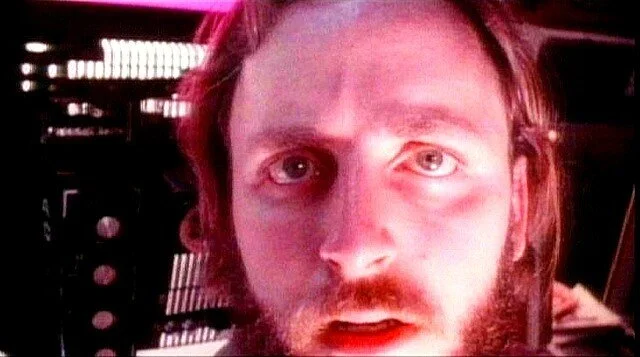
DAN O’BANNON: John (Carpenter) and I were talking and he said he was going to do this graduate film project. I was very taken with it, and I started pitching ideas back at him. First thing you know, I was helping him make that film. At first he just wanted me to act in it, and I did that. But I was very excited about working on all aspects of the thing.
By the time we got through, the thing was about 50 minutes long. And when we took it to the USC Cinema department and started talking to them about taking it to festivals, we were told it was too long -- that it should have been 20 minutes long, and then they would have taken it around to festivals. But because it was 50 minutes long, they couldn't do anything with it. John and I were pretty upset about that, because it meant nobody would see it.
What did you do then?
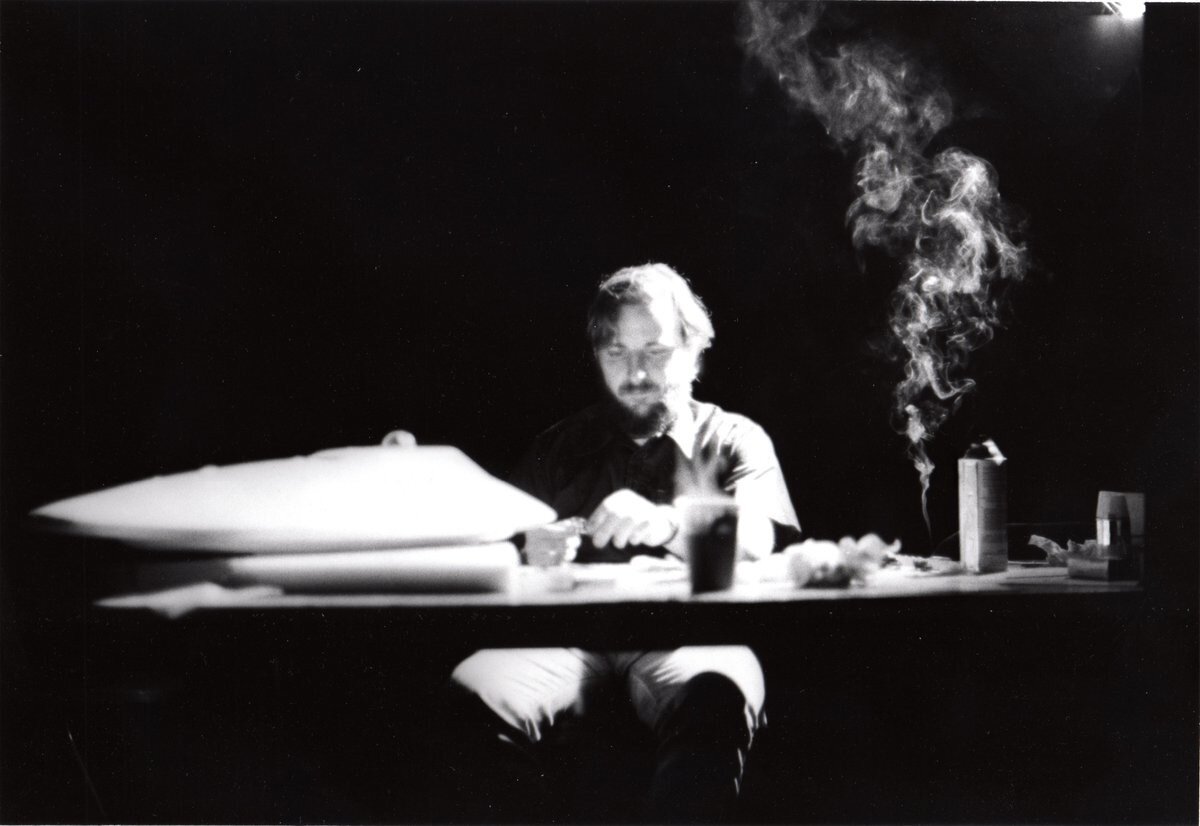
DAN O’BANNON: A friend of ours said he would put $10,000 of his own money into it if we could expand it into a feature, and then we could try to get it distributed. It was a tough decision, because it was pretty tight at 50 minutes. Expanding it meant we were going to have to shoot a lot of scenes that were filler, and that would lessen the tightness of the story and make it into an episodic film.
Since they weren't going to take it around to the festivals, we were pretty much stuck. We only had one option--go ahead and shoot some extra scenes. It was kind of disappointing, because that meant we had to go from the most-impressive student film ever made to one of the cheapest features. It wasn't a question of choosing between two venues; there was only one venue offered.
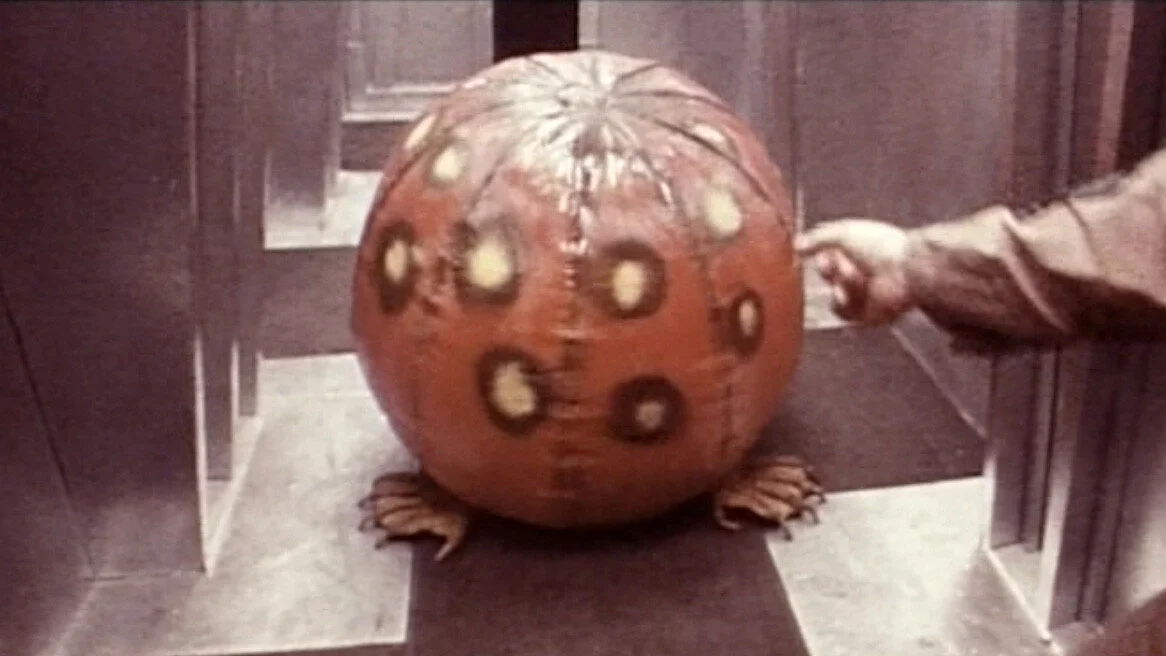
We added a lot of stuff with me in it, because I was the most reliably available as an actor. And we added a lot of slapstick stuff, like the whole subplot about me chasing the alien balloon around, up and down shafts and things. All of that was done to pad.
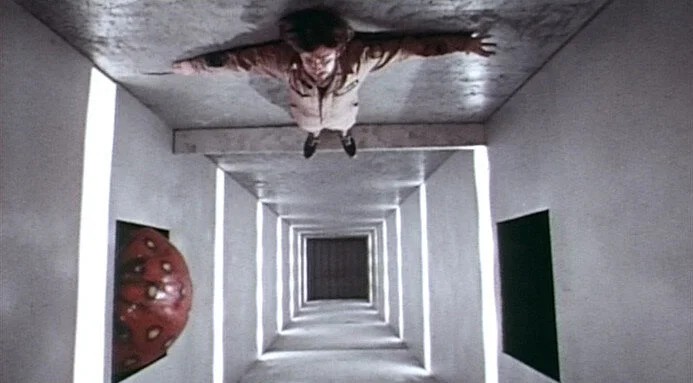
How did the elevator scene come about?
DAN O’BANNON: We were talking about that old Harold Lloyd film, where he's climbing over a building and how funny and scary it is. We had this idea that we could do this funny thing with this creature going up and down in the elevator shaft. And then we had to figure out how to shoot it.
The first thing we thought was that we'd go find an elevator shaft somewhere, but that didn't get very far before we realized--never mind practical or impractical--it was dangerous. So we finally came up with, let's just do it on its side. What the hell. At least we can do it that way, and maybe if it's funny and exciting people won't care.
I ended up having an appendectomy right after I shot that scene. I just had that board down to my butt, and I had to keep my legs up, waving around in the air. Sometimes I think that I forced some food or something into my appendix from all that stress. I was 26 years old, and you really don't think what that sort of thing is going to do to you. You just have a good idea and you start to do it. And then you find out how hard it is. Today I wouldn't be able to do it all, even if I were willing to try, which I wouldn't be.
What's the biggest lesson you took away from Dark Star?
DAN O’BANNON: I learned all the wrong lessons on Dark Star. When I finally directed a movie for real, I thought I was supposed to do everything. And I ended up making everybody mad. I was over-prepared for directing and I was mis-directed by having gone to film school, and thought that the director was supposed to be an auteur and do everything himself. When I actually tried doing that in a real movie, I found that I couldn't get anything I wanted, because they would sabotage me.
It basically took me two pictures to learn an entirely different orientation toward directing.
What I learned was very simple: A director doesn't make a movie. Everybody else makes the movie. That means the director doesn’t have to know how to do anything. All the director has to do is be there and stand there and make creative decisions if he feels like it.
I had to swivel around 180 degrees and stop worrying about exactly how I wanted to get everything on the screen and start worrying about how to trick 300 people into doing it for me.


Dying to make a feature? Learn from the pros!
"We never put out an actual textbook for the Corman School of Filmmaking, but if we did, it would be Fast, Cheap and Under Control."
Roger Corman, Producer
★★★★★
It’s like taking a Master Class in moviemaking…all in one book!
Jonathan Demme: The value of cameos
John Sayles: Writing to your resources
Peter Bogdanovich: Long, continuous takes
John Cassavetes: Re-Shoots
Steven Soderbergh: Rehearsals
George Romero: Casting
Kevin Smith: Skipping film school
Jon Favreau: Creating an emotional connection
Richard Linklater: Poverty breeds creativity
David Lynch: Kill your darlings
Ron Howard: Pre-production planning
John Carpenter: Going low-tech
Robert Rodriguez: Sound thinking
And more!
Write Your Screenplay with the Help of Top Screenwriters!
It’s like taking a Master Class in screenwriting … all in one book!
Discover the pitfalls of writing to fit a budget from screenwriters who have successfully navigated these waters already. Learn from their mistakes and improve your script with their expert advice.
"I wish I'd read this book before I made Re-Animator."
Stuart Gordon, Director, Re-Animator, Castle Freak, From Beyond
John Gaspard has directed half a dozen low-budget features, as well as written for TV, movies, novels and the stage.
The book covers (among other topics):
Academy-Award Winner Dan Futterman (“Capote”) on writing real stories
Tom DiCillio (“Living In Oblivion”) on turning a short into a feature
Kasi Lemmons (“Eve’s Bayou”) on writing for a different time period
George Romero (“Martin”) on writing horror on a budget
Rebecca Miller (“Personal Velocity”) on adapting short stories
Stuart Gordon (“Re-Animator”) on adaptations
Academy-Award Nominee Whit Stillman (“Metropolitan”) on cheap ways to make it look expensive
Miranda July (“Me and You and Everyone We Know”) on making your writing spontaneous
Alex Cox (“Repo Man”) on scaling the script to meet a budget
Joan Micklin Silver (“Hester Street”) on writing history on a budget
Bob Clark (“Children Shouldn’t Play with Dead Things”) on mixing humor and horror
Amy Holden Jones (“Love Letters”) on writing romance on a budget
Henry Jaglom (“Venice/Venice”) on mixing improvisation with scripting
L.M. Kit Carson (“Paris, Texas”) on re-writing while shooting
Academy-Award Winner Kenneth Lonergan (“You Can Count on Me”) on script editing
Roger Nygard (“Suckers”) on mixing genres
This is the book for anyone who’s serious about writing a screenplay that can get produced!