• THE BOOKS
  • The Occasional Film Podcast
  • The Blog
  • Podcast Appearances
  • The Movies
  • About
  • CONTACT
Menu

Fast, Cheap Film Books & More

  • THE BOOKS
  • The Occasional Film Podcast
  • The Blog
  • Podcast Appearances
  • The Movies
  • About
  • CONTACT

Actress/Writer Susan Coyne on “Slings & Arrows"

October 22, 2025

How did Slings & Arrows come about?

SUSAN COYNE: Well, I hadn't really set out to be a writer. But, I hit my late thirties, and I had two children and I couldn't travel across the country in the same way. And, famously, the parts thin out a bit as you get older. So I sort of hit my mid-life crisis and thought, "I'm just going to sit down and start writing," without really knowing where it was going to lead me. And then I got hooked up with somebody who said, "You know, I have a friend who works at Stratford and loves hearing your stories. Would you like to come up with a proposal for a TV series about Stratford?"

So I said, "Sure. I can do that." And then I came up with the premise for the series, basically, although at that time it was a half-hour comedy. We shopped it around and we got wonderful producers, Rhombus Media, involved and they put me together with Mark McKinney of Kids in the Hall, which was really kind of brilliant. 

That was an interesting choice.

SUSAN COYNE: He was not the first person you'd think of pairing us with, but it was really great because Mark is so smart and really thinks outside the box constantly. He's worked a little bit in theater and so he knew something of this world as well. He said right away, "This isn't a half-hour, this is an hour, because there's too much good material here."

I think that was one of the most important things that happened, because we thought, “We're doing Shakespeare, we don't want this to be just punch lines and then cut to a commercial. We want to be brave about this and tackle what it's like to do these big plays.”

I'd never seen something like this done very well. I'd often seen actors made fun of, and it's easy. It's easy to satirize actors. I think we do it to a degree in the show. It's also easy to sentimentalize. But between those two extremes I've never seen anybody try to really show what it's like, and that in some ways it certainly matters to the people who do it and it might even mean something to those of us who watch. It might have some value, it might have some weight to it, it might not be a silly thing to do with your life. And that these people might have some passion that has some dignity to it.

Even as I say that I'm always cautious not to give it more weight than it's worth, but I think that when theater works well, everybody recognizes that there's something very powerful about it, transforming and ineffable and not silly at all. It's rare, but when you see it, there's nothing like it. You feel a little bit wrung out afterwards and your heart's beating faster and you feel chemically altered in some way. 

It's that we wanted to get at: What is that thing that happens and how do people achieve that? We wanted to show people the kinds of conversations that go on in rehearsals as well as how terrifying it is and the ridiculous things we do to get ourselves where we have to be. All of that.

I always think that when there's a great deal of passion, then there's got to be some kind of dramatic or comic story. Or both. 

How did Bob Martin get involved?

SUSAN COYNE: Bob was invited to join Mark and I after we had been wrestling with the series for a couple of years (in the midst of doing other projects- in my case, co-founding a theatre company and writing my first book).  Neither Mark nor I had written a TV series before, but Bob had.  His experience was the key to making us into a fully functioning writing team. 

When you started the project, did you think it would only be for one season?

SUSAN COYNE: Exactly. Mark and I worked for a couple of years, because we were both doing other things. And it took a long time to figure out how this was going to go. We had six episodes in mind, we knew the play was Hamlet, we came up with the idea of the ghost and that our character was going to be a sort of Hamlet figure who was haunted almost in the same way that I was haunted by my theater school teachers. The ones who said those wonderful things and those terrible things, and you're always trying to prove something to them even if they're dead.

It turns out that three is a good number for a writing team, because we could always gang up on the other person and persuade them. The three-legged writing team is quite stable, actually. If you can't quite see something, one of the other two can explain it to you. And also Bob had real experience writing television in a way that Mark and I didn't. And he also has an amazing comic sensibility and a really delightful wit. 

So when that came together the work started to go faster and we decided that six episodes would be really satisfying to tackle Hamlet. And that really was the plan until we finished it and watched it. The network said, would you like to go another year? And we looked at each other and I said, "Well, I think we should do a trilogy. If we're going to another one we should do three and we should do youth, middle-age and old age." That made sense to us and felt like it would be a satisfying arc.

We had the idea that, each season, we wanted to watch our characters through the filter of the play -- not in the way that you could draw straight lines between the stories and the play, but in a sort of general way being influenced by Shakespearean themes.

One of my favorite scenes in the series -- and one that really lays Shakespeare out and explains what's he's doing -- is the scene in the first season when the director, Geoffrey, explains to the actress playing Ophelia exactly what her "nonsense rhymes" actually mean. Did you find that there were scenes you created based on things you'd actually experienced?

SUSAN COYNE: There were. But some of them are so disguised that they take on a difference resonance. For example, Geoffrey reminds me of a director I worked with early on who directed me in The Glass Menagerie. He was a refugee from the Second World War, a Holocaust survivor. His family perished, and he escaped to Winnipeg. He talked to me about how theater had saved his life, and it meant so much to me, the way he talked about it. It was a life force for him.

I guess there's an element where I've worked with really great directors for whom theater has saved their life. And that passion for its humanity -- for the idea of theater being a place where we can be very human with each other -- is something that I've retained, and I always aspire to in the theater. The idea that it's about people communicating; there's no tricks, there's no cinema, it's just us. We're all in the same room breathing together, and if it all works out, we'll all end up having the same heart-rate at the end of the show. 

Were you saddled with handling the female point of view on the show and the female characters or was that shared?

SUSAN COYNE: Oh it was definitely shared. Martha Burns, who plays Ellen, is one of my closest friends. We've known each other a long time, we grew up in Winnipeg together, so I loved coming up with storylines for her, like Ellen getting audited. But we all wrote the Ellen character and we all wrote the Anna character.

I loved aspects of Anna, but the boys, actually, I think loved Anna even more. They loved putting her in these terrible situations. The scene where she had to have sex, Mark wanted it to be really explicit and hardcore, and I finally said, "Look, guys, it's me playing the part. So let's just re-think this, shall we?"

And that's when Bob said, "Well, we could do it in the dark." I said "That sounds very good."

Do you have any special or favorite moments from the series?

SUSAN COYNE: I loved everything to do with Bill Hutt in the third season. I was in a production of Lear with him, at Stratford in the young company, and he is a hero of mine. He's gone now, and his Lear was never filmed. So to get the little bit that we get of him, doing the great speeches, that I feel proudest of, actually. 

That is the most important thing to me about the series: that we got him. We always wanted him; we wanted him in the second season and he wasn't available. But we got him in the third season. And then within 18 months he had died. So it was amazing. He was such a wonderful guy and he threw himself into it. I loved that.

Other than that, there was a tiny moment, backstage in the second season, between Geoffrey and Ellen, where they're watching Romeo and Juliet. And Ellen says, "I hate this play." I must say, watching Romeo and Juliet as a middle-aged person, you watch it and you think, "I hate this play." I mean, I love it of course, but you're in such a different headspace from the first time you played it, you can't help thinking, "What, are you nuts?"

What did you take away from the Slings & Arrows experience?

SUSAN COYNE: I learned a lot from working with two other people whose sensibilities were similar to mine, but who also pushed me ways into places I otherwise never would have gone. Although we fought a lot at the beginning, we got into a place where it was much easier to say, "Here's a sketch of the scene, but you should write it because you have that voice down better." It became very respectful -- and although there were still fights, they were good fights; not pulling in different directions, but creative fights -- where you just knew that the other person, it was just their thing and they could write it better. And you knew that when it came time to take over another scene, they would say, "You should have a go at that."

I think that's hard to replicate, when you have developed a working relationship like that with people.

As for the acting, that was more intimidating. Film is socially so different from theater. You don't have an audience; the only person who's actually watching your performance is the director, because everyone else is watching other things, like how your scarf is tied. So I found that a bit intimidating. 

But there was a very collegial feeling, and we had so many theater actors coming onto the set, and so it felt much more about the work than it usually does. That was very freeing for me, because I've always felt that I'm very uptight on the set and never felt very free. And so to be with this wonderful team, on a series that you created yourself, playing this lovely character was wonderful. I adored playing Anna.

Dying to make a feature? Learn from the pros!

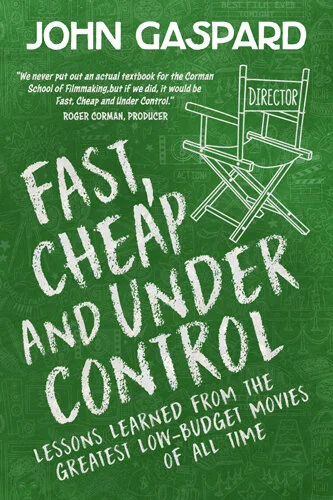
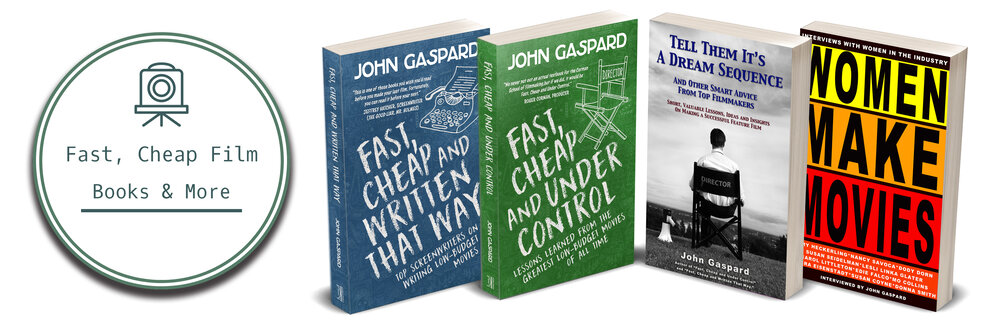
"We never put out an actual textbook for the Corman School of Filmmaking, but if we did, it would be Fast, Cheap and Under Control." 
Roger Corman, Producer

★★★★★

It’s like taking a Master Class in moviemaking…all in one book!

  • Jonathan Demme: The value of cameos

  • John Sayles: Writing to your resources

  • Peter Bogdanovich: Long, continuous takes

  • John Cassavetes: Re-Shoots

  • Steven Soderbergh: Rehearsals

  • George Romero: Casting

  • Kevin Smith: Skipping film school

  • Jon Favreau: Creating an emotional connection

  • Richard Linklater: Poverty breeds creativity

  • David Lynch: Kill your darlings

  • Ron Howard: Pre-production planning

  • John Carpenter: Going low-tech

  • Robert Rodriguez: Sound thinking

buy the book: "fast, cheap and under control"

Write Your Screenplay with the Help of Top Screenwriters!

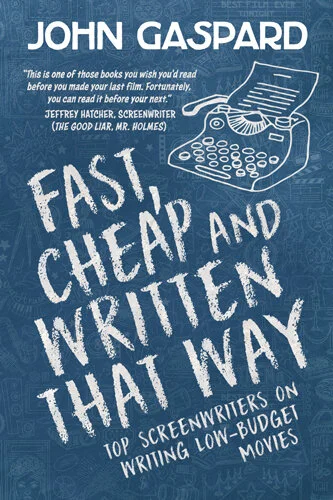
It’s like taking a Master Class in screenwriting … all in one book!

Discover the pitfalls of writing to fit a budget from screenwriters who have successfully navigated these waters already. Learn from their mistakes and improve your script with their expert advice.

"I wish I'd read this book before I made Re-Animator."
Stuart Gordon, Director, Re-Animator, Castle Freak, From Beyond

John Gaspard has directed half a dozen low-budget features, as well as written for TV, movies, novels and the stage.

The book covers (among other topics):

  • Academy-Award Winner Dan Futterman (“Capote”) on writing real stories

  • Tom DiCillio (“Living In Oblivion”) on turning a short into a feature

  • Kasi Lemmons (“Eve’s Bayou”) on writing for a different time period

  • George Romero (“Martin”) on writing horror on a budget

  • Rebecca Miller (“Personal Velocity”) on adapting short stories

  • Stuart Gordon (“Re-Animator”) on adaptations

  • Academy-Award Nominee Whit Stillman (“Metropolitan”) on cheap ways to make it look expensive

  • Miranda July (“Me and You and Everyone We Know”) on making your writing spontaneous

  • Alex Cox (“Repo Man”) on scaling the script to meet a budget

  • Joan Micklin Silver (“Hester Street”) on writing history on a budget

  • Bob Clark (“Children Shouldn’t Play with Dead Things”) on mixing humor and horror

  • Amy Holden Jones (“Love Letters”) on writing romance on a budget

  • Henry Jaglom (“Venice/Venice”) on mixing improvisation with scripting

  • L.M. Kit Carson (“Paris, Texas”) on re-writing while shooting

  • Academy-Award Winner Kenneth Lonergan (“You Can Count on Me”) on script editing

  • Roger Nygard (“Suckers”) on mixing genres

This is the book for anyone who’s serious about writing a screenplay that can get produced! 

Buy the Book: “Fast, Cheap and Written That Way”
Tags Susan Coyne, Slings & Arrows, TV Directing, Film Interview
Comment

Lesli Linka Glatter on “Twin Peaks,” “The West Wing” and more …

August 20, 2025

You didn't start out with a strong desire to be a filmmaker, right?

LESLI: No. But I was always a storyteller, just in a different medium. I've always wanted to tell stories and communicate in some sort of deep way, but it wasn't in film. That came later.

How did you start out as a dancer and then become a director? 

LESLI: I'm always fascinated by everyone's story and how they got into film, because no one seems to have the same story.

I was a modern dance choreographer -- I was a dancer and then a choreographer. Back when the American government actually sponsored the arts -- which is so long ago that most people who remember it are rolling on their walkers or breathing on oxygen -- I was sent to Asia to teach and choreograph and perform throughout the Far East.

I had spent five years in Europe -- in Paris and in London -- and I based out of New York. The I got this grant and went to Asia, studying classical Japanese theater and dance and teaching modern dance.

By chance, in a coffee shop, I met an older man who was in his late seventies when I first met him, and he became like my mentor or my Japanese father. I met him completely by chance -- which is one of the themes I keep getting pulled to in terms of storytelling -- and he turned out to be head of cultural affairs for the country. He spoke twelve languages, had been a Buddhist monk, had been the top foreign war correspondent, just an amazing man.

Eventually he told me a series of six stories. What they had in common was that they all happened on different Christmas Eves (even though he was Buddhist and not Christian), all during different wars, and all about human connection. When he told me these stories, I knew I had to pass them on and I knew it wasn't dance.

If I hadn't have met this old, Japanese guy in a coffee shop in Tokyo, I would never have become a film director.

You weren't kidding when you used the phrase, "by chance."

LESLI: Of course, I didn't immediately go out and direct. I thought, "Well, maybe it's a theater piece," because I had directed theater. Then I ended up meeting a filmmaker in Japan, named George Miller, who directed Road Warrior. Other than Australia, Japan was one of the first places that released Road Warrior. So if you were living in Japan, at that time, if you were a Westerner, you kind of ran into most of the Westerners around at some point.

I told George about my story and he said, "I think you have a film here." And I though, "Hmm, that's interesting."

Eventually I moved back to America and I ended up in Los Angeles. I was on the faculty of the California Institute of the Arts and these stories kept haunting me. Then I met someone who told me about the directing workshop for women at the American Film Institute (AFI), so I applied to that program. I got the application and realized that I was totally unqualified. It was set up for women in the film business who hadn't directed.

Well, I wasn't in the film business, I didn't know anybody in the film business. But I thought, "You know what? I'm going to apply anyway. The worst-case scenario is that it makes me put my ideas down on paper and make it really clear for me." 

So I did that and I got in. That year they let in a couple of women who were not film makers -- one theater director and myself as a choreographer.

What was your next step after your AFI experience?

LESLI: I had a very fortuitous situation. You make these little films for no money. And I didn't have parents who have money. I had no connections to the film business, so it wasn't like I could look to family and say, "Look, I need to make a film, could you help me out here?" I've always had to work to make a living. And I say that only because there are people who definitely don't have to. I've been surprised at how many people there are.

We'd sent the film off to all these festivals and to be considered for an Academy Award, which was like a dream you couldn't even imagine. But it actually got nominated. Even now I don't know how that happened. But it was one of three films that got nominated in the short film category. So all of a sudden I'm getting calls from agents. 

How did that feel?

LESLI: It was wild! It felt very surrealistic.

Actually, the very first job I did after my short film, my first professional job, was for a TV series that Steven Spielberg had, called Amazing Stories. That was like my film school. It was an extraordinary opportunity and he was beyond generous. I apprenticed with him and with Clint Eastwood. I followed him around on a couple of projects and it really taught me a lot about the process. 

So you were learning on Steven Spielberg's set?

LESLI: Yes. At AFI I had worked on about ten of the other women's films before I directed my own short film, because I didn't come from a film background I felt that I needed to understand what the process was. I mean, I looked at credits when I first started directing and I didn't know what a Key Grip did. I didn't know anything about film. So I did any job I could on the other women's films before I directed my film. I was the last one to shoot. And I very purposefully did that. Again, I think it comes from being a dancer, where you just can't cheat. So I felt like I needed to understand what the process was, as much as I could being a beginner.

When your film is nominated, you're kind of out there for that brief little period. You're an asparagus and it's asparagus season, but you know pretty soon it's going to be carrot season and nobody will want to hear about asparaguses anymore. That's just the reality.

But during that time I got a call from Spielberg and I thought it was one of my friends playing a joke. So I hung up. Thank goodness he called me back. So I went in and met with him. He said he was starting this show, Amazing Stories, and he asked if I wanted to direct one. And I was like, "Oh my God, of course, yes. That would be incredible. But I would like to apprentice with you before I do it." So that's what I did. And it was the best film school I could have imagined.

I did my first episode (I ended up doing three of them), which was my first day of shooting on a professional set. 

What did you shoot the first day?

LESLI: It was two hundred guys, in World War II, storming a beach in Italy. I think I had nine cameras and three Eyemos. That was my first day on a professional set.

How did you feel?

LESLI: I was terrified. I had a dream a couple of nights before, a stress dream, that you can't even imagine. It was one of those horrible things: You walk on the set and it's a crew you don't know and they're shooting a film you've never read, and the set was floor to ceiling pea-green sofas. It had nothing to do with the story I'd prepped. I was totally panicked.

I told Steven about it and he said, "You know, I have a dream like that before I start everything." And I thought, "Wow. Here's one of the great filmmakers of our time who's saying he has that fear too." He was great at saying and doing things like that.

Anyway, it was terrifying. All I could do to make myself feel better was to be as prepared as I could be. That's how I felt comfortable, because I felt I could do it by knowing what I wanted -- by having seen the film in my head. In the beginning, that was my security blanket.

So you made it through Amazing Stories. What happened next?

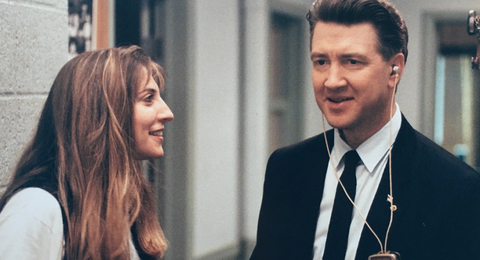
LESLI: The next big step for me, in terms of creative process, was working on David Lynch's TV series, Twin Peaks. I directed four episodes and that was another huge turning point for me.

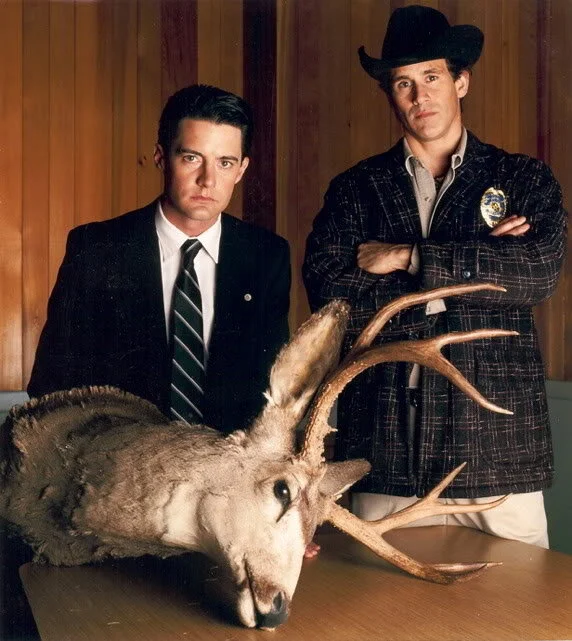
There was a scene in the pilot for the show in which Michael Ontkean is talking to Kyle Macachlan. It's in a bank, in a room where you look at your safety deposit box. In the middle of the scene, on this table, is this moose head. They play the whole scene in this room and no one ever refers to the moose head. The scene is incredible.

So, when I got to know David, I went up to him and said, "How did you ever get the idea to put the moose head on the table?" He looked at me like I was kind of crazy, and he said, "It was there." And I said, "What do you mean it was there?" He said, "The set decorator was going to hang it on the wall," and David said to the decorator, "Leave the moose head."

Something just cracked open in my brain: "Be sure you're open to the moment. Be sure you see the moose head on the table. Don't try to control things so much that you're not open to what's happening in the moment."

That was a great lesson and a huge turning point for me.

From Steven I learned, "Do your homework and never pretend you know what you don't, because someone is going to be there who knows and you're going to get caught." Which was all about planning and control.

And from David I learned, "Yes, do all of that, but be sure you're open to the moment."

I have definitely had difficult people to deal with, people that I wouldn't work with again. But more often than not I've had really good experiences.

I think in general the crew wants you to be good. I don't think that they want you to be bad. I think they want to know that you're someone who has done their homework. As a director, we can't do it without the whole crew. It's a team sport. We need everyone.

I think when you go on the set, I don't think a crew immediately respects a guy just because he's a guy or disrespects a woman because she's a woman. I think they want some to know what they're doing. If you do, they'll be great. And if you're nice, they'll even be better.

If you do simple things, like at night go to the truck and thank everybody. Just common, human traits. I think if you treat people with respect and challenge them to do great work and thank them for the work that they do, they're going to be really great.

Have I met people who are really difficult and undermining? Absolutely. Absolutely. But I think part of the job is figuring out how to deal with them.

I tried to narrow down just one of the shows you've worked on. And since I'm such an Aaron Sorkin fan --

LESLI: Oh my God, so am I.

Then I hope you'll indulge me and talk about your experiences on both The West Wing and Studio 60.

LESLI: I think the reason The West Wing was amazing to do, on a directorial level, was because the producing director on the show -- Tommy Schlamme, a fantastic director and a wonderful person -- encouraged directors to come in and make it their movie.

There are many people who work in TV who want it to look like everybody else's show. But I really think the best shows do what Tommy did. To say to filmmakers, "Come in and make it your movie." And that's what he did.

That's very evident on that show. They're all different.

LESLI: They're all different. As a director, you were encouraged to do what you wanted to do. If you wanted to put five scenes together and do it as one shot, you could. It was great.

It was very intimidating the first time I got Aaron's script and I looked at the first scene I was going to be directing on my first day. It was a seven-page scene, with about ten or eleven characters, and the only stage direction was "He enters."

I just thought, "Oh my God." I had to read it about ten times to figure out what the scene was about: What's the subtext, what's the text, what's really going on underneath here.

It was thrilling and terrifying and exhilarating and amazing.

What is your preparation process like in a case like that? You get the script and then what?

LESLI: The first thing I do in any prep process is I start breaking the script down in terms of what is the theme? What is this really about? Once I figure out the theme, I start to figure out how I'm going to deal with it visually. But until I really know what it's about in a deep way, I can't even begin to figure that out.

How long does that take?

LESLI: That's ongoing. The first couple of days I focus on the script as much as I can. You're going to have to deal with production stuff no matter what. You have to start the casting process and have a concept meeting about if there have to be huge sets built. A lot of The West Wing episodes I did were really big, so there were tons of locations, so there was a lot of scouting. Plus, half of the show shoots in Washington, DC, so there were all sorts of production issues and decisions.  

Usually what I would do in terms of actual shot lists is that I would come in on the weekend. And I still do that, even though I'd love to have my weekends to myself. I find that during the week, with a TV pre-production schedule, I don't have time to do that. So, the weekends are my creative time.

If it takes place on a set, I'll go to the set. I'll walk around, I'll imagine the scene, I'll figure out the angles, I'll see the scene.

In the case of The West Wing, how much rehearsal time did you get with the actors?

LESLI: You only get it on the set. That was a show where they would rehearse a lot. This is unusual in TV. You'd get probably an hour. That is considered a long rehearsal. It's not like doing a film.

But then, these actors know the characters. So, you have to direct them in the scene, but they're not figuring out who their characters are. They're figuring what their behavior is. So that is a different process.

During post, how involved were you in the editing?

LESLI: Very involved. You have a certain amount of time, per the contract with the Directors Guild, to go in and edit. I didn't have my cuts changed very much. Ultimately, the final cut is Aaron's and Tommy's. When the buck stopped, it stopped with them. But they were respectful. I think they want you to come in having done it well, so that they don't have to re-do it.

This may be an ignorant question, but how do you get the show to the exact length required by the network?

LESLI: It's a bloody drag. A lot of the times, the scripts are too long. And if you have a story that's really great, some things are just going to have to go. I think it's horrible, but that's how it is. They're not going to change the time because of you, so you have to conform to what it has to be. It's really unfortunate.

At what point can you tell that you're going to be in trouble, length-wise?

LESLI: I can tell now by reading the script. I can read it and go, "Ah, this is way too long. We're going to be ten minutes over." Also, you don't have that much time to shoot.

One of the good things about directing TV is that you learn very clearly what the dollar scene is and what the five-cent scene is. You have to know what your important scene of the day is; if you're going to divide the day up, that's where you're going to want to spend the bulk of your time. And the scenes that aren't important you need to move through quickly. So, you have to find a way to shoot them that's going to tell the story. But if you have a very emotional scene that's the turning point of your story, that's where you want to be spending your time. It's not all equal. Directing TV really teaches you how to do that. Because you have to.

Let me ask about Studio 60, where one of the episodes you did (Nevada Day: Part One) was the first half of a two-part episode, where you didn't do the second half. How does that work?

LESLI: That's an interesting one. I've done that quite a bit and I've usually done it with directors that I know pretty well. I did that before with Chris Misiano on The West Wing as well. Chris and I know each other well and we're really good friends and connected. We talked a lot about the story together.

That was not so much the case on Studio 60. Scripts were coming in late and the second half of the script hadn't been written altogether. So we didn't have the luxury of that.

I knew what the ending was going to be, I knew where the story was going, it just hadn't been written yet.

What advice would you give to someone who's thinking about pursuing a directing career?

LESLI: Be sure you really want to do this. Follow your dreams. And listen -- but don't listen -- to how difficult it is. I think you have to put blinders on just proceed.

I think what's exciting about the time we're in right now is that people can pick up a camera and do it. I would advise doing that.

I think the Internet is amazing. I think the fact that you can get a camera and shoot 24p and do it for pennies with your friends -- I would say, absolutely, go for it. Go make your movie. If you want to direct, go direct.

Dying to make a feature? Learn from the pros!

"We never put out an actual textbook for the Corman School of Filmmaking, but if we did, it would be Fast, Cheap and Under Control." 
Roger Corman, Producer

★★★★★

It’s like taking a Master Class in moviemaking…all in one book!

  • Jonathan Demme: The value of cameos

  • John Sayles: Writing to your resources

  • Peter Bogdanovich: Long, continuous takes

  • John Cassavetes: Re-Shoots

  • Steven Soderbergh: Rehearsals

  • George Romero: Casting

  • Kevin Smith: Skipping film school

  • Jon Favreau: Creating an emotional connection

  • Richard Linklater: Poverty breeds creativity

  • David Lynch: Kill your darlings

  • Ron Howard: Pre-production planning

  • John Carpenter: Going low-tech

  • Robert Rodriguez: Sound thinking

And more!

buy the book: "fast, cheap and under control"

Write Your Screenplay with the Help of Top Screenwriters!

It’s like taking a Master Class in screenwriting … all in one book!

Discover the pitfalls of writing to fit a budget from screenwriters who have successfully navigated these waters already. Learn from their mistakes and improve your script with their expert advice.

"I wish I'd read this book before I made Re-Animator."
Stuart Gordon, Director, Re-Animator, Castle Freak, From Beyond

John Gaspard has directed half a dozen low-budget features, as well as written for TV, movies, novels and the stage.

The book covers (among other topics):

  • Academy-Award Winner Dan Futterman (“Capote”) on writing real stories

  • Tom DiCillio (“Living In Oblivion”) on turning a short into a feature

  • Kasi Lemmons (“Eve’s Bayou”) on writing for a different time period

  • George Romero (“Martin”) on writing horror on a budget

  • Rebecca Miller (“Personal Velocity”) on adapting short stories

  • Stuart Gordon (“Re-Animator”) on adaptations

  • Academy-Award Nominee Whit Stillman (“Metropolitan”) on cheap ways to make it look expensive

  • Miranda July (“Me and You and Everyone We Know”) on making your writing spontaneous

  • Alex Cox (“Repo Man”) on scaling the script to meet a budget

  • Joan Micklin Silver (“Hester Street”) on writing history on a budget

  • Bob Clark (“Children Shouldn’t Play with Dead Things”) on mixing humor and horror

  • Amy Holden Jones (“Love Letters”) on writing romance on a budget

  • Henry Jaglom (“Venice/Venice”) on mixing improvisation with scripting

  • L.M. Kit Carson (“Paris, Texas”) on re-writing while shooting

  • Academy-Award Winner Kenneth Lonergan (“You Can Count on Me”) on script editing

  • Roger Nygard (“Suckers”) on mixing genres

This is the book for anyone who’s serious about writing a screenplay that can get produced! 

Buy the Book: “Fast, Cheap and Written That Way”
Tags Lesli Linka Glatter, Twin Peaks, The West Wing, David Lynch, Aaron Sorkin, TV Directing, Directing
Comment

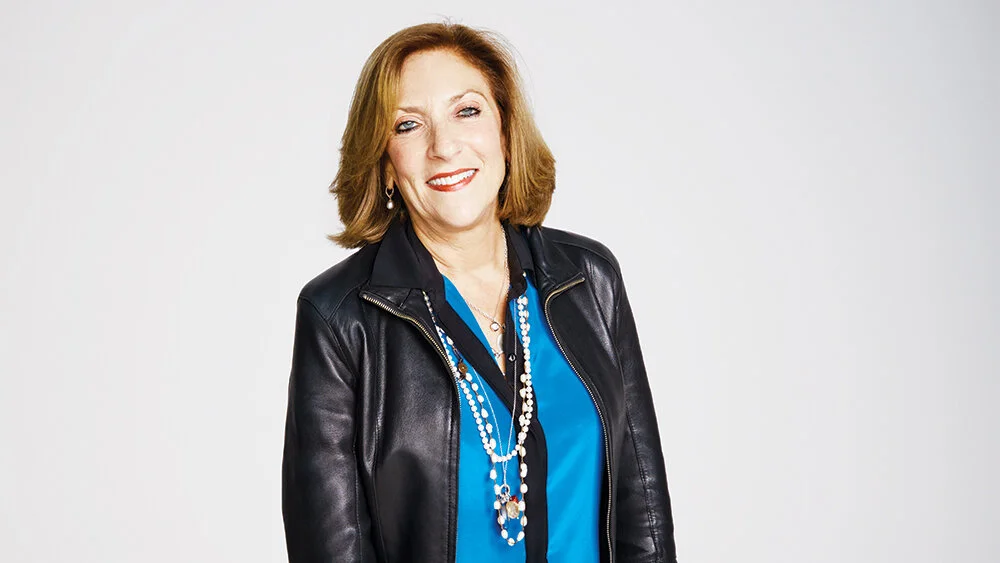
Actress/Writer Susan Coyne on “Slings & Arrows"

January 1, 2025

How did Slings & Arrows come about?

SUSAN COYNE: Well, I hadn't really set out to be a writer. But, I hit my late thirties, and I had two children and I couldn't travel across the country in the same way. And, famously, the parts thin out a bit as you get older. So I sort of hit my mid-life crisis and thought, "I'm just going to sit down and start writing," without really knowing where it was going to lead me. And then I got hooked up with somebody who said, "You know, I have a friend who works at Stratford and loves hearing your stories. Would you like to come up with a proposal for a TV series about Stratford?"

So I said, "Sure. I can do that." And then I came up with the premise for the series, basically, although at that time it was a half-hour comedy. We shopped it around and we got wonderful producers, Rhombus Media, involved and they put me together with Mark McKinney of Kids in the Hall, which was really kind of brilliant. 

That was an interesting choice.

SUSAN COYNE: He was not the first person you'd think of pairing us with, but it was really great because Mark is so smart and really thinks outside the box constantly. He's worked a little bit in theater and so he knew something of this world as well. He said right away, "This isn't a half-hour, this is an hour, because there's too much good material here."

I think that was one of the most important things that happened, because we thought, “We're doing Shakespeare, we don't want this to be just punch lines and then cut to a commercial. We want to be brave about this and tackle what it's like to do these big plays.”

I'd never seen something like this done very well. I'd often seen actors made fun of, and it's easy. It's easy to satirize actors. I think we do it to a degree in the show. It's also easy to sentimentalize. But between those two extremes I've never seen anybody try to really show what it's like, and that in some ways it certainly matters to the people who do it and it might even mean something to those of us who watch. It might have some value, it might have some weight to it, it might not be a silly thing to do with your life. And that these people might have some passion that has some dignity to it.

Even as I say that I'm always cautious not to give it more weight than it's worth, but I think that when theater works well, everybody recognizes that there's something very powerful about it, transforming and ineffable and not silly at all. It's rare, but when you see it, there's nothing like it. You feel a little bit wrung out afterwards and your heart's beating faster and you feel chemically altered in some way. 

It's that we wanted to get at: What is that thing that happens and how do people achieve that? We wanted to show people the kinds of conversations that go on in rehearsals as well as how terrifying it is and the ridiculous things we do to get ourselves where we have to be. All of that.

I always think that when there's a great deal of passion, then there's got to be some kind of dramatic or comic story. Or both. 

How did Bob Martin get involved?

SUSAN COYNE: Bob was invited to join Mark and I after we had been wrestling with the series for a couple of years (in the midst of doing other projects- in my case, co-founding a theatre company and writing my first book).  Neither Mark nor I had written a TV series before, but Bob had.  His experience was the key to making us into a fully functioning writing team. 

When you started the project, did you think it would only be for one season?

SUSAN COYNE: Exactly. Mark and I worked for a couple of years, because we were both doing other things. And it took a long time to figure out how this was going to go. We had six episodes in mind, we knew the play was Hamlet, we came up with the idea of the ghost and that our character was going to be a sort of Hamlet figure who was haunted almost in the same way that I was haunted by my theater school teachers. The ones who said those wonderful things and those terrible things, and you're always trying to prove something to them even if they're dead.

It turns out that three is a good number for a writing team, because we could always gang up on the other person and persuade them. The three-legged writing team is quite stable, actually. If you can't quite see something, one of the other two can explain it to you. And also Bob had real experience writing television in a way that Mark and I didn't. And he also has an amazing comic sensibility and a really delightful wit. 

So when that came together the work started to go faster and we decided that six episodes would be really satisfying to tackle Hamlet. And that really was the plan until we finished it and watched it. The network said, would you like to go another year? And we looked at each other and I said, "Well, I think we should do a trilogy. If we're going to another one we should do three and we should do youth, middle-age and old age." That made sense to us and felt like it would be a satisfying arc.

We had the idea that, each season, we wanted to watch our characters through the filter of the play -- not in the way that you could draw straight lines between the stories and the play, but in a sort of general way being influenced by Shakespearean themes.

One of my favorite scenes in the series -- and one that really lays Shakespeare out and explains what's he's doing -- is the scene in the first season when the director, Geoffrey, explains to the actress playing Ophelia exactly what her "nonsense rhymes" actually mean. Did you find that there were scenes you created based on things you'd actually experienced?

SUSAN COYNE: There were. But some of them are so disguised that they take on a difference resonance. For example, Geoffrey reminds me of a director I worked with early on who directed me in The Glass Menagerie. He was a refugee from the Second World War, a Holocaust survivor. His family perished, and he escaped to Winnipeg. He talked to me about how theater had saved his life, and it meant so much to me, the way he talked about it. It was a life force for him.

I guess there's an element where I've worked with really great directors for whom theater has saved their life. And that passion for its humanity -- for the idea of theater being a place where we can be very human with each other -- is something that I've retained, and I always aspire to in the theater. The idea that it's about people communicating; there's no tricks, there's no cinema, it's just us. We're all in the same room breathing together, and if it all works out, we'll all end up having the same heart-rate at the end of the show. 

Were you saddled with handling the female point of view on the show and the female characters or was that shared?

SUSAN COYNE: Oh it was definitely shared. Martha Burns, who plays Ellen, is one of my closest friends. We've known each other a long time, we grew up in Winnipeg together, so I loved coming up with storylines for her, like Ellen getting audited. But we all wrote the Ellen character and we all wrote the Anna character.

I loved aspects of Anna, but the boys, actually, I think loved Anna even more. They loved putting her in these terrible situations. The scene where she had to have sex, Mark wanted it to be really explicit and hardcore, and I finally said, "Look, guys, it's me playing the part. So let's just re-think this, shall we?"

And that's when Bob said, "Well, we could do it in the dark." I said "That sounds very good."

Do you have any special or favorite moments from the series?

SUSAN COYNE: I loved everything to do with Bill Hutt in the third season. I was in a production of Lear with him, at Stratford in the young company, and he is a hero of mine. He's gone now, and his Lear was never filmed. So to get the little bit that we get of him, doing the great speeches, that I feel proudest of, actually. 

That is the most important thing to me about the series: that we got him. We always wanted him; we wanted him in the second season and he wasn't available. But we got him in the third season. And then within 18 months he had died. So it was amazing. He was such a wonderful guy and he threw himself into it. I loved that.

Other than that, there was a tiny moment, backstage in the second season, between Geoffrey and Ellen, where they're watching Romeo and Juliet. And Ellen says, "I hate this play." I must say, watching Romeo and Juliet as a middle-aged person, you watch it and you think, "I hate this play." I mean, I love it of course, but you're in such a different headspace from the first time you played it, you can't help thinking, "What, are you nuts?"

What did you take away from the Slings & Arrows experience?

SUSAN COYNE: I learned a lot from working with two other people whose sensibilities were similar to mine, but who also pushed me ways into places I otherwise never would have gone. Although we fought a lot at the beginning, we got into a place where it was much easier to say, "Here's a sketch of the scene, but you should write it because you have that voice down better." It became very respectful -- and although there were still fights, they were good fights; not pulling in different directions, but creative fights -- where you just knew that the other person, it was just their thing and they could write it better. And you knew that when it came time to take over another scene, they would say, "You should have a go at that."

I think that's hard to replicate, when you have developed a working relationship like that with people.

As for the acting, that was more intimidating. Film is socially so different from theater. You don't have an audience; the only person who's actually watching your performance is the director, because everyone else is watching other things, like how your scarf is tied. So I found that a bit intimidating. 

But there was a very collegial feeling, and we had so many theater actors coming onto the set, and so it felt much more about the work than it usually does. That was very freeing for me, because I've always felt that I'm very uptight on the set and never felt very free. And so to be with this wonderful team, on a series that you created yourself, playing this lovely character was wonderful. I adored playing Anna.

Dying to make a feature? Learn from the pros!

"We never put out an actual textbook for the Corman School of Filmmaking, but if we did, it would be Fast, Cheap and Under Control." 
Roger Corman, Producer

★★★★★

It’s like taking a Master Class in moviemaking…all in one book!

  • Jonathan Demme: The value of cameos

  • John Sayles: Writing to your resources

  • Peter Bogdanovich: Long, continuous takes

  • John Cassavetes: Re-Shoots

  • Steven Soderbergh: Rehearsals

  • George Romero: Casting

  • Kevin Smith: Skipping film school

  • Jon Favreau: Creating an emotional connection

  • Richard Linklater: Poverty breeds creativity

  • David Lynch: Kill your darlings

  • Ron Howard: Pre-production planning

  • John Carpenter: Going low-tech

  • Robert Rodriguez: Sound thinking

buy the book: "fast, cheap and under control"

Write Your Screenplay with the Help of Top Screenwriters!

It’s like taking a Master Class in screenwriting … all in one book!

Discover the pitfalls of writing to fit a budget from screenwriters who have successfully navigated these waters already. Learn from their mistakes and improve your script with their expert advice.

"I wish I'd read this book before I made Re-Animator."
Stuart Gordon, Director, Re-Animator, Castle Freak, From Beyond

John Gaspard has directed half a dozen low-budget features, as well as written for TV, movies, novels and the stage.

The book covers (among other topics):

  • Academy-Award Winner Dan Futterman (“Capote”) on writing real stories

  • Tom DiCillio (“Living In Oblivion”) on turning a short into a feature

  • Kasi Lemmons (“Eve’s Bayou”) on writing for a different time period

  • George Romero (“Martin”) on writing horror on a budget

  • Rebecca Miller (“Personal Velocity”) on adapting short stories

  • Stuart Gordon (“Re-Animator”) on adaptations

  • Academy-Award Nominee Whit Stillman (“Metropolitan”) on cheap ways to make it look expensive

  • Miranda July (“Me and You and Everyone We Know”) on making your writing spontaneous

  • Alex Cox (“Repo Man”) on scaling the script to meet a budget

  • Joan Micklin Silver (“Hester Street”) on writing history on a budget

  • Bob Clark (“Children Shouldn’t Play with Dead Things”) on mixing humor and horror

  • Amy Holden Jones (“Love Letters”) on writing romance on a budget

  • Henry Jaglom (“Venice/Venice”) on mixing improvisation with scripting

  • L.M. Kit Carson (“Paris, Texas”) on re-writing while shooting

  • Academy-Award Winner Kenneth Lonergan (“You Can Count on Me”) on script editing

  • Roger Nygard (“Suckers”) on mixing genres

This is the book for anyone who’s serious about writing a screenplay that can get produced! 
Buy the Book: “Fast, Cheap and Written That Way”
Tags Susan Coyne, Slings & Arrows, TV Directing, Film Interview
Comment

Latest Posts

Featured
Dec 3, 2025
Director Stuart Gordon on "Re-Animator"
Dec 3, 2025
Dec 3, 2025
Nov 26, 2025
Magician and Filmmaker Lance Burton on his low-budget feature debut, “Billy Topit: Master Magician.”
Nov 26, 2025
Nov 26, 2025
Nov 19, 2025
Tom DiCillo on writing/directing “Living In Oblivion”
Nov 19, 2025
Nov 19, 2025
Nov 12, 2025
Nancy Savoca on “True Love”
Nov 12, 2025
Nov 12, 2025
Nov 5, 2025
Jon Favreau on "Swingers"
Nov 5, 2025
Nov 5, 2025
Oct 29, 2025
Dan O'Bannon on "Dark Star"
Oct 29, 2025
Oct 29, 2025
Oct 22, 2025
Actress/Writer Susan Coyne on “Slings & Arrows"
Oct 22, 2025
Oct 22, 2025
Oct 15, 2025
Mo Collins on “MadTV” and more …
Oct 15, 2025
Oct 15, 2025
Oct 8, 2025
Rebecca Miller on Writing & Directing “Personal Velocity”
Oct 8, 2025
Oct 8, 2025
Oct 1, 2025
Amy Heckerling on “Fast Times at Ridgemont High” and “Clueless”
Oct 1, 2025
Oct 1, 2025
Featured
stuart-gordon-main.jpg
Dec 3, 2025
Director Stuart Gordon on "Re-Animator"
Dec 3, 2025
Dec 3, 2025
lance-2-scaled.jpeg
Nov 26, 2025
Magician and Filmmaker Lance Burton on his low-budget feature debut, “Billy Topit: Master Magician.”
Nov 26, 2025
Nov 26, 2025
Tom DiCillo 1.png
Nov 19, 2025
Tom DiCillo on writing/directing “Living In Oblivion”
Nov 19, 2025
Nov 19, 2025
nancy20savoca.jpg
Nov 12, 2025
Nancy Savoca on “True Love”
Nov 12, 2025
Nov 12, 2025
2048x2730-jon-favreau-chef-wil-43-jpg-56b3847c.jpg
Nov 5, 2025
Jon Favreau on "Swingers"
Nov 5, 2025
Nov 5, 2025
Dark Star 06.jpg
Oct 29, 2025
Dan O'Bannon on "Dark Star"
Oct 29, 2025
Oct 29, 2025
Susan Coyne.jpeg
Oct 22, 2025
Actress/Writer Susan Coyne on “Slings & Arrows"
Oct 22, 2025
Oct 22, 2025
mo-collins.jpg
Oct 15, 2025
Mo Collins on “MadTV” and more …
Oct 15, 2025
Oct 15, 2025
image.jpg
Oct 8, 2025
Rebecca Miller on Writing & Directing “Personal Velocity”
Oct 8, 2025
Oct 8, 2025
Amy Heckerling.jpg
Oct 1, 2025
Amy Heckerling on “Fast Times at Ridgemont High” and “Clueless”
Oct 1, 2025
Oct 1, 2025

Powered by Squarespace