After you'd written Swingers, why did you decide to try to make the film and not just sell the script?
JON: By keeping the script, you maintain control over every aspect of the movie.
Creativity, you're giving up final cut usually right off the bat. When you're making it yourself, it's up to you and only you what ends up in the movie and what compromises you want to make creatively. So, for some nominal fee, they're really getting a lot of leverage over you, both creatively and financially.
A lot of changes were asked of me: changing certain characters to women, making the characters more likeable, changing things that interfered of what my vision for the piece was.
In defense of those people, they're used to developing scripts, they're looking for clues in the material, they don't know what the overall vision of the piece is, so the best thing to do is to not take any of that upfront money.
Was Swingers based on reality?
JON: It wasn't a true story, but it was definitely based on people and places and inspired by events that I had experienced.
When you write from that, you're incorporating a lot of things that are very real and well understood by you. And the script inherits a certain sincerity and a certain subconscious vision that you might not even be aware of when you're doing your first script, if it's a personal one. It becomes much more difficult later on to do that.
But if you stick to things that you know and understand and people that you know, it allows a very true voice and you tend to come off as a better writer than really are, because you're incorporating so much of reality into your piece.
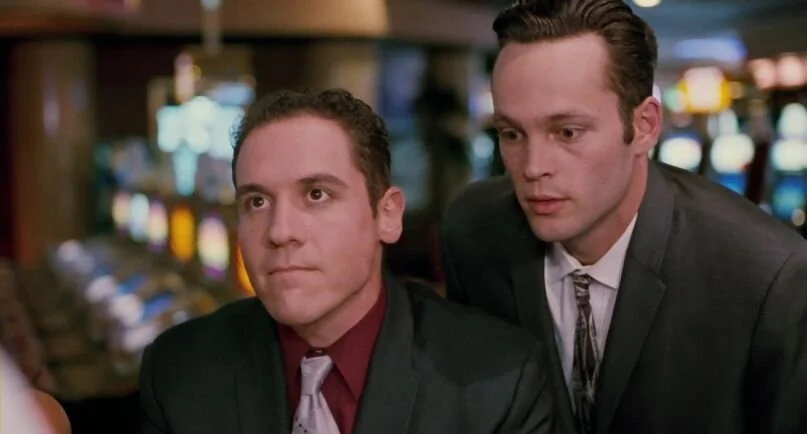
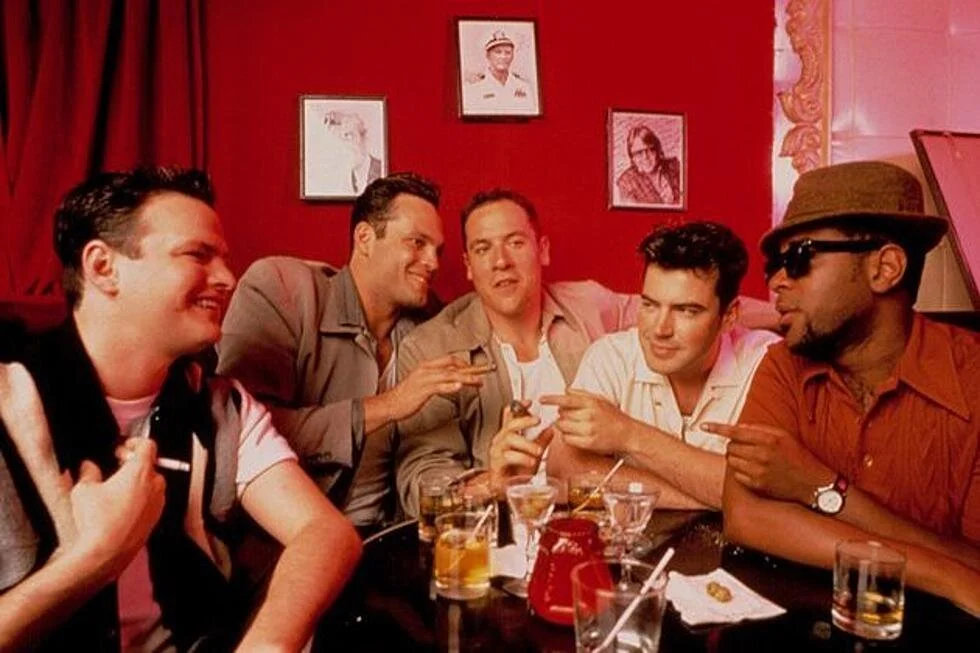
Did you write it for you and Vince Vaughn?
JON: I wrote things that I knew that they could do well. But at that time, Vince had not really played a character like the persona that was presented in Swingers, even though it was based very closely on him. The characters that he had played never really played into his rapid-fire delivery or his sense of humor. He was always playing it much more straight as an actor. I don't think he saw himself as a comic actor as much as a good-looking, leading man type.
So I was tapping into something I knew he could do, from knowing him so well, but I didn't really know whether or not he could deliver, because he hadn't done it before. It's good to have those touchstones.
What really got us there was that we had done so many staged readings of it, to try and raise money, that it served as almost a rehearsal period. So that by the time we got to the set, where we didn't have a lot of time and we were shooting a lot of pages a day, we had already gone through the material so much and had chemistry from our relationship in our personal life, and that certainly made things easier. There was no learning curve in the relationship by two actors that are cast opposite each other. Everybody already had a level of familiarity that helped to keep the process a little more streamlined.

When did you realize how much fun audiences would have with the phone message scene?
JON: Not on the set. The crew was not very entertained by it. We shot all the apartment stuff in a day and a half, so about a quarter of the movie was shot in a day and a half on paper. So that was one of those things that was crammed into a very crowded day at that location.
And there were concerns. Doug Liman (the director) was concerned that it was too many messages. But I felt pretty strongly about it, having read it in front of audiences live, at staged readings.
It wasn't until the whole movie was cut together and the significance of that moment, where it fell in the story, it was definitely a pivotal point in the film. And because you were so emotionally involved in that moment in the movie, the audience was engaged with the film. And had they not been engaged with the character, that scene would not have been as funny or as poignant. It was because of the work that had been done by everybody involved up until then that it was funny.
Now I think people enjoy it alone, because they remember the movie. But had that just been done as a sketch, it might have been a clever thing, but I don't think it would have had the impact that it does in the context of the film.
It all goes to emotion. If you're emotionally engaged, everything is going to be funnier, more satisfying, scarier, everything. It's that emotional connection that you feel with these guys. And the reason you feel that is because the story was so personal and sincere, and that's a very hard thing to maintain as you do bigger and bigger movies.
It's the one thing that you really have going for you in a small movie, that you're doing something that's so really and usually so personal that you have a level of emotional engagement that you will not get in a high-budget, high-concept movie.

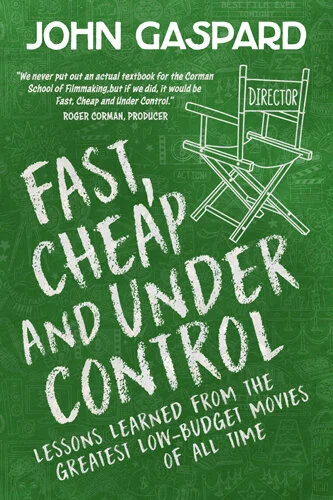
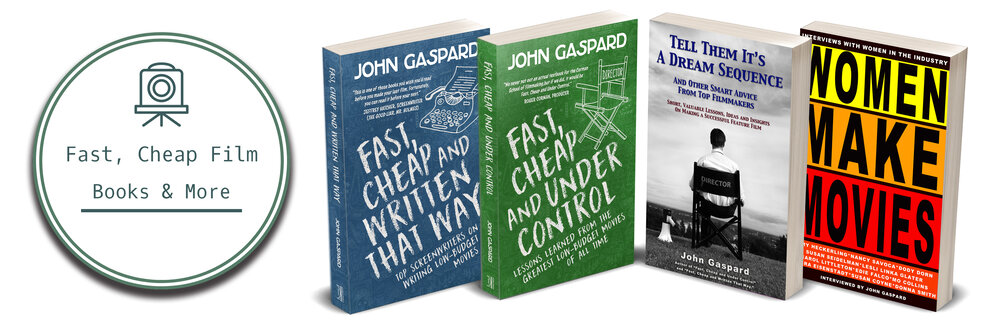
Dying to make a feature? Learn from the pros!
"We never put out an actual textbook for the Corman School of Filmmaking, but if we did, it would be Fast, Cheap and Under Control."
Roger Corman, Producer
★★★★★
It’s like taking a Master Class in moviemaking…all in one book!
Jonathan Demme: The value of cameos
John Sayles: Writing to your resources
Peter Bogdanovich: Long, continuous takes
John Cassavetes: Re-Shoots
Steven Soderbergh: Rehearsals
George Romero: Casting
Kevin Smith: Skipping film school
Jon Favreau: Creating an emotional connection
Richard Linklater: Poverty breeds creativity
David Lynch: Kill your darlings
Ron Howard: Pre-production planning
John Carpenter: Going low-tech
Robert Rodriguez: Sound thinking
And more!
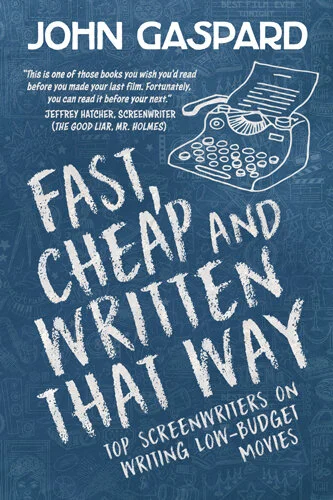
Write Your Screenplay with the Help of Top Screenwriters!
It’s like taking a Master Class in screenwriting … all in one book!
Discover the pitfalls of writing to fit a budget from screenwriters who have successfully navigated these waters already. Learn from their mistakes and improve your script with their expert advice.
"I wish I'd read this book before I made Re-Animator."
Stuart Gordon, Director, Re-Animator, Castle Freak, From Beyond
John Gaspard has directed half a dozen low-budget features, as well as written for TV, movies, novels and the stage.
The book covers (among other topics):
Academy-Award Winner Dan Futterman (“Capote”) on writing real stories
Tom DiCillio (“Living In Oblivion”) on turning a short into a feature
Kasi Lemmons (“Eve’s Bayou”) on writing for a different time period
George Romero (“Martin”) on writing horror on a budget
Rebecca Miller (“Personal Velocity”) on adapting short stories
Stuart Gordon (“Re-Animator”) on adaptations
Academy-Award Nominee Whit Stillman (“Metropolitan”) on cheap ways to make it look expensive
Miranda July (“Me and You and Everyone We Know”) on making your writing spontaneous
Alex Cox (“Repo Man”) on scaling the script to meet a budget
Joan Micklin Silver (“Hester Street”) on writing history on a budget
Bob Clark (“Children Shouldn’t Play with Dead Things”) on mixing humor and horror
Amy Holden Jones (“Love Letters”) on writing romance on a budget
Henry Jaglom (“Venice/Venice”) on mixing improvisation with scripting
L.M. Kit Carson (“Paris, Texas”) on re-writing while shooting
Academy-Award Winner Kenneth Lonergan (“You Can Count on Me”) on script editing
Roger Nygard (“Suckers”) on mixing genres
This is the book for anyone who’s serious about writing a screenplay that can get produced!