
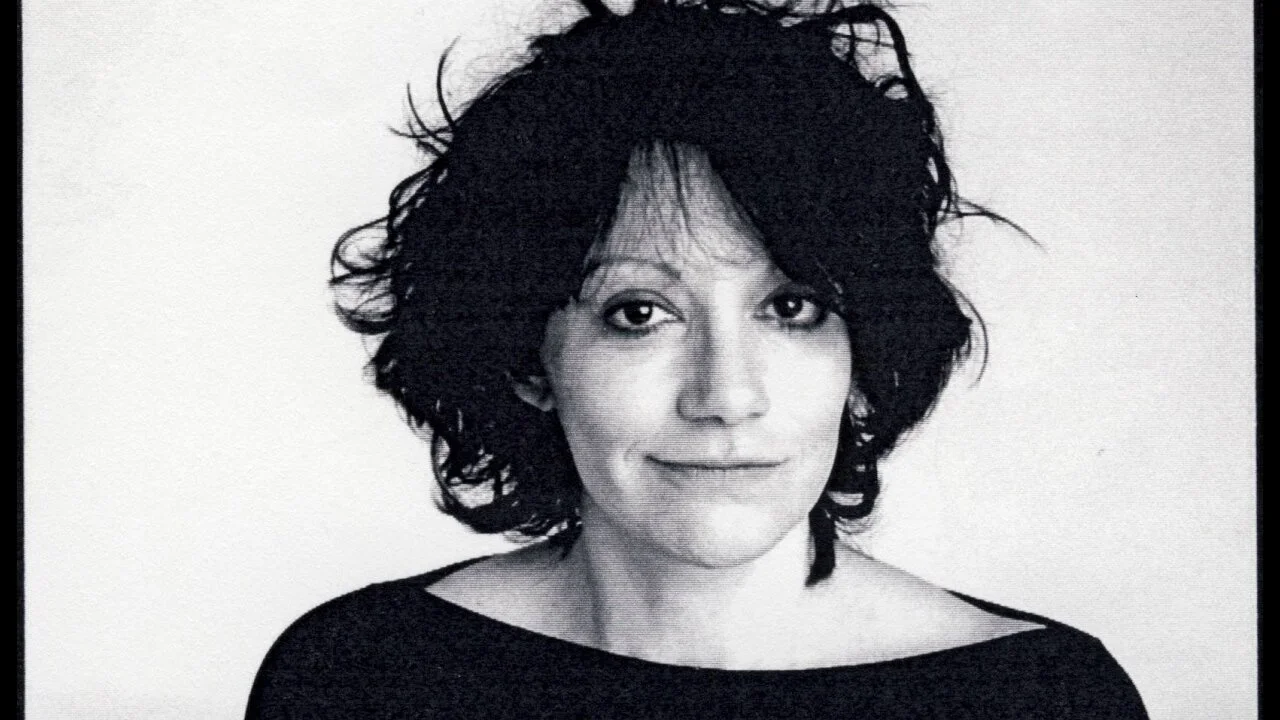
What was it that got you into filmmaking?
AMY: I’ve always loved movies, as a kid, forever. I’m watching one right now.
What are you watching?
AMY: Bye Bye Birdie.
When you first started wanting to make movies, what path was available to you?
AMY: I didn’t realize that there was a path. Then when I felt like I can’t NOT do this, I have to do it, there were film schools. But there were only a couple, a handful of them. There was UCLA, USC, the School of Visual Arts and NYU. And I had my heart set on NYU.
Why NYU?
AMY: Well, first of all, I couldn’t afford to pay tuition and pay to live somewhere. So that took care of California. The School of Visual Arts was a vocational school really, and I wanted to go to a university.
NYU was less connected to the show biz community than the California schools, but there was a gritty artiness to the movies they were trying to make and I appreciated that. It was a better fit for me, I was happy there.
What did you do after film school?
AMY: Well, I took my little movies and, even though they had won awards, I didn’t feel like I was going to go to a company making movies and say, “Look at this,” and then they would make my movies. So I said, “I need something better to show people.” At the time, there were fewer people involved in the industry and it was much tougher.
Now, with all the equipment people have, you can make a feature for no money and use that as a calling card.
So I felt like I need a better calling card, so I went to The American Film Institute, where we could make much slicker, more professional-looking movies and have more access to the industry.
How tough was it to get into AFI then?
AMY: Everybody at NYU tried and only my cameraman and I got in.
What did you do at AFI?
AMY: Associates make videos, which I was not so happy with – I was a film lover. There was a big difference between what videos looked like and what films looked like.
And then your second year you can make a short film. So I made a short film and showed it to the studios. Actually, I had a screening at AFI and we sent invitations to agents and who ever you knew who knew somebody. And one of the people was David Gersch, from The Gersch Agency. He was a kid whose father had an agency.
So he showed it to some people, and I had a meeting at Warner Brothers. Then I pitched them something and they liked it, so then I was writing.
The thing that I wrote went into turnaround at Warner Brothers when they got new executives, and then it was at Universal, but it never got made there. Then it was at MGM and they were going to make it, when David Begelman was there, but then there was an actors’ strike. In the interim, they found a similar project with big stars attached, so they said that it was an act of god that they couldn’t do mine, force majeure.
It was an act of god that there was another similar script?
AMY: That’s what they said. So we had worked all this time for nothing.
So what was your next move?
AMY: A guy I knew showed me a script. It was Fast Times At Ridgemont High. It was Art Linson. At Universal, I had an office next to him. He had shown me other scripts to see what I thought and we’d talk about stuff. And I thought that was what he was doing with this script, wanting to know what I thought of it.
And what did you think of it?
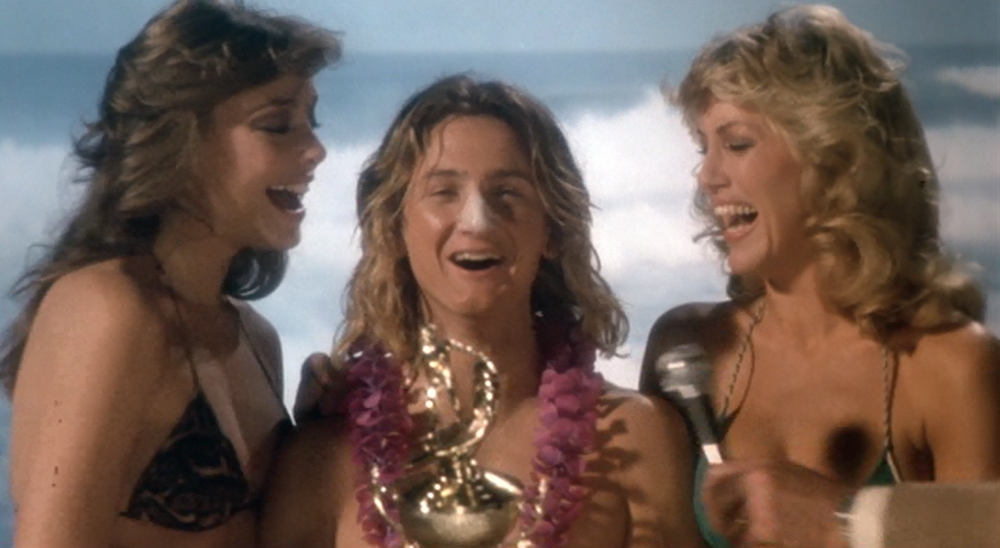
AMY: I thought that these kids – a couple of them have jobs at a strip of stores on the street in a small town and others didn’t have jobs – and I said, “What if you put it all in a mall?” Because the mall was like the soda shop of the 1980s. And then you’d have the people working there and the people coming there and you could have more people work – because I think kids should work.
So he said, “That’s great. What else?” And I said, “There’s all these funny things that different people do and then there’s this wacky guy Spicoli. Why don’t you give these things to him to do?”
How did you get the job directing Fast Times?
AMY: They called and said “Do you want to direct it?” I was thrilled – I really wanted to direct. And then I met Cameron (Crowe), who I loved. And then we were doing it. We started working on the script and he was awesome. He’s Cameron Crowe. He’s amazing.
Tell me how you went about casting the movie, because it’s brilliantly cast.
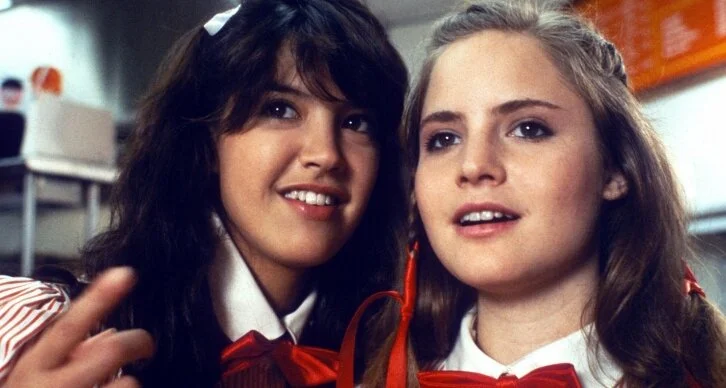
AMY: Well, thank you. One thing that always annoyed me about high school movies – although as I watch Bye, Bye Birdie it doesn’t seem to annoy me – was that I always felt that they were grown-ups dressed in high-top sneakers and that makes you a teenager.
I wanted to have real kids because the point of Fast Times was that things were too fast, they were too young for things that were happening. So they had to really look young. They couldn’t look like little grown-ups. They had to be children.
But then as we were going through the casting process, first of all you’re limited because they have to be over eighteen. And Art Linson said something pretty brilliant to me: “You won’t be unhappy if you just go with the talent. So if somebody looks ten years old and they’re eighteen, that’s great, but if they’re not talented, you’re not going to be happy. And if somebody is a genius actor – like Sean Penn and Forest Whitaker – you will be happy.” So I did what he said.
That movie was shot in 35 days, without a very long pre-production period and not a very long post. I mean, that was a cheap movie. It was a $5 million dollar, 35-day movie.
What was it like for you on your first day on the set?
AMY: It was terrifying because I had to shoot a car driving by and I didn’t know how big it should be. I knew where the camera should be, I just didn’t know how big the car should be, how fast it should go, how long I should follow it for. But then I shot that and we were just shooting. You know, like everything, the first step’s the hardest, even if the first step is nothing.
So what happened career-wise after Fast Times came out?
AMY: I had a lot of meetings with everybody who had a “virgin” script.
Was there something in particular you wanted to do?
AMY: I didn’t get to do something I wanted because I still felt like I had to do what they wanted – as far as scripts they wanted to make – otherwise it would take forever and it would never happen. But I definitely didn’t want to do another “girl loses her virginity” movie. There’s tons of those.
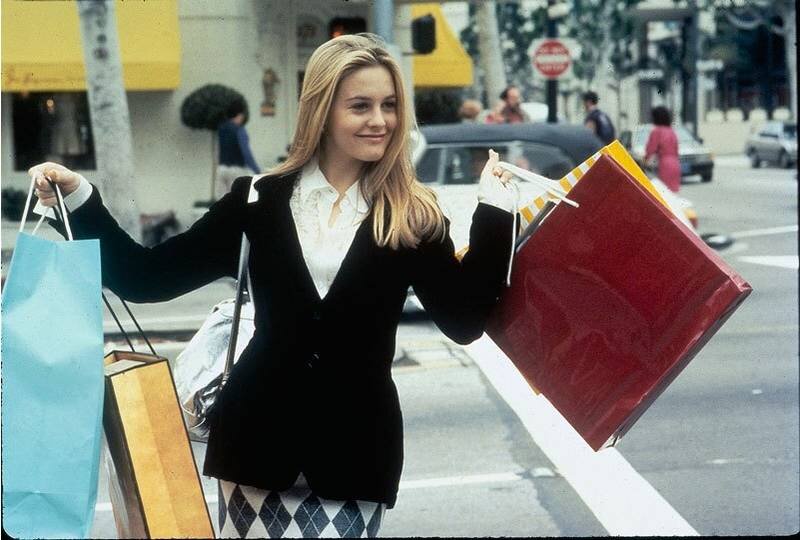
What led you to write Clueless?
I had written a movie called Rat Race, which was based on a French movie, Mon oncle d'Amérique. It was developed at Disney and they kept giving me notes that weren’t related to the story and I was miserable. And then, ultimately when they passed on it, they said “This is too smart.”
So I got depressed. And then I said, “You want stupid? I’ll show you fucking stupid like you’ve never seen.” Now ultimately that isn’t what I did, but it was a reaction.
I wound up going into Fox and they said writers keep coming in wanting to do movies about nerds, but that they wanted something about the in crowd. I said, “Okay, if I can make them idiots.” And they said, “We don’t care – we just want something about the in crowd.”
And then I thought, I want to do something about a really, really happy person. Someone who is the opposite of what I am. So I made this girl where if you yell at her, she just thinks it’s silly and she never gets hurt. And she’s always happy, no matter what’s happening. And then I thought, I wonder where she would fit? And then I remembered (Jane Austen’s) Emma and I re-read Emma. And I did a pilot and they said, “Nah.”
So I got a new agent and he read it and said, “This should be a movie.” And so he sold it as a movie.
How had you changed as a director between Fast Times and Clueless?
That’s so hard to say, because you’re not the same person on any level. The only thing I can tell you with assurance is how my face has changed.
Dying to make a feature? Learn from the pros!
"We never put out an actual textbook for the Corman School of Filmmaking, but if we did, it would be Fast, Cheap and Under Control."
Roger Corman, Producer
★★★★★
It’s like taking a Master Class in moviemaking…all in one book!
Jonathan Demme: The value of cameos
John Sayles: Writing to your resources
Peter Bogdanovich: Long, continuous takes
John Cassavetes: Re-Shoots
Steven Soderbergh: Rehearsals
George Romero: Casting
Kevin Smith: Skipping film school
Jon Favreau: Creating an emotional connection
Richard Linklater: Poverty breeds creativity
David Lynch: Kill your darlings
Ron Howard: Pre-production planning
John Carpenter: Going low-tech
Robert Rodriguez: Sound thinking
And more!
Write Your Screenplay with the Help of Top Screenwriters!
It’s like taking a Master Class in screenwriting … all in one book!
Discover the pitfalls of writing to fit a budget from screenwriters who have successfully navigated these waters already. Learn from their mistakes and improve your script with their expert advice.
"I wish I'd read this book before I made Re-Animator."
Stuart Gordon, Director, Re-Animator, Castle Freak, From Beyond
John Gaspard has directed half a dozen low-budget features, as well as written for TV, movies, novels and the stage.
The book covers (among other topics):
Academy-Award Winner Dan Futterman (“Capote”) on writing real stories
Tom DiCillio (“Living In Oblivion”) on turning a short into a feature
Kasi Lemmons (“Eve’s Bayou”) on writing for a different time period
George Romero (“Martin”) on writing horror on a budget
Rebecca Miller (“Personal Velocity”) on adapting short stories
Stuart Gordon (“Re-Animator”) on adaptations
Academy-Award Nominee Whit Stillman (“Metropolitan”) on cheap ways to make it look expensive
Miranda July (“Me and You and Everyone We Know”) on making your writing spontaneous
Alex Cox (“Repo Man”) on scaling the script to meet a budget
Joan Micklin Silver (“Hester Street”) on writing history on a budget
Bob Clark (“Children Shouldn’t Play with Dead Things”) on mixing humor and horror
Amy Holden Jones (“Love Letters”) on writing romance on a budget
Henry Jaglom (“Venice/Venice”) on mixing improvisation with scripting
L.M. Kit Carson (“Paris, Texas”) on re-writing while shooting
Academy-Award Winner Kenneth Lonergan (“You Can Count on Me”) on script editing
Roger Nygard (“Suckers”) on mixing genres
This is the book for anyone who’s serious about writing a screenplay that can get produced!