
Where did the idea for What Happened Was… come from?
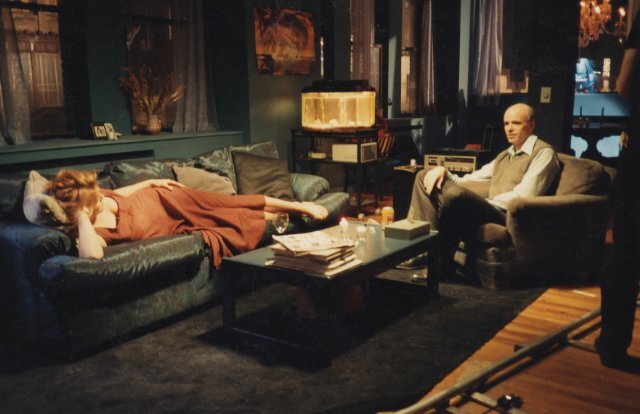
TOM: I had never written a play. I'd written a lot of movies. So, when I originally wrote What Happened Was…, I was going to do it at the theater, but the intention was to do it as a film. I always thought of it as a screenplay, and because I'd never acted in something I'd directed, I thought, 'Well, if I do it on stage for a while, in front of an audience, I'll find out what the thing's about.' And, because I was acting in it, I wanted to make sure that we'd worked out all the acting parts before we shot it.
We did it for six weeks as a play. We rehearsed for a month and a half. And then, on the last night of performance in the theater, we took out all the chairs, and we shot the script in the theater -- I'd made the theater look like an apartment. Then, for the next six months after that, before we shot the film, we rehearsed pretty regularly. We rehearsed for eight or nine months before we shot, a couple times a week.
Most of the people on the crew, and the producers and everybody involved, had seen the play at least once, maybe sometimes more. And they were all involved in the shooting of the video of the play, and then involved in the rehearsals as we went along, so that by the time we shot, everybody in the crew knew the whole story. They knew what the scenes were about, where the camera moves were. We pre-shot the thing two or three times before we actually shot it on film.
That’s a lot of rehearsal.
TOM: My general rule is that either you rehearse a lot or you don't rehearse at all. If you rehearse the middle, you end up not being authentic and kind of looking like you are.
When I finally shot the film, they would say, 'It's your close-up, Tom,' and I'd say, 'Okay,' and I'd just sit there and just talk. It wasn't like I was acting; I'd done it so often and what was going on seemed so real to me. I didn't have to worry about learning the words or learning the blocking or doing any of those things that you have to worry about when you're doing a film. It completely went away. It was just me, just being there. So it felt very real to me.
So not only did you come to the film well-rehearsed, you also were pretty well-versed in filmmaking as well by that point, right?
TOM: I'd made movies for 20 years before I made that film. I'd written scores for films, I'd produced films, I had directed TV, I'd directed plays, I'd been in -- at that point -- probably 30 movies and I'd edited a lot. I knew exactly where the cut points were.
I think I have some small amount of talent and I worked really hard for a very long time getting ready to make that movie. When I shot it, I knew exactly what it was going to look like and how it was going to feel, because we'd shot it already on video. So I was not too surprised when I cut it.
The movie is relatively simple when you first look at it, but it's actually got a lot of sophisticated stuff. The camera moves are all perfectly timed to counts. By the time we shot the film, everybody in the crew knew the count on every dolly move, on everything. It was very choreographed.
I took sounds from later in the film and placed them earlier in the film, underneath things. A lot of her story you've already heard by the time she tells it.
What was your budget?
TOM: The budget was $131,000.
We shot it for $47,000, and then the processing and the editing and all the equipment and music rights and answer prints and inter-negative came to about $130,000. Of which I've never recovered a dime. I don't even get residuals. I made a bad deal. But it's okay; I loved making the movie and I never thought anybody would ever see.

What was bad about the deal?
TOM: When you sell a film to a distributor, there's a certain aspect of the agreement that's called the assumption agreement. It's where the distributor agrees to assume certain costs involved in the distribution of the film, one of which is the residuals for the actors. Otherwise, if I sell you the film for $75,000 and I pay the crew and I pay everybody back, and then you go out and sell the film everywhere, the more money you make selling the film, the more money the actors have to get paid as residuals. And, unless the distributor assumes that expense, I end up losing money in the end making the film.
And when we made the agreement, I didn't know that and it was left out of the agreement, or somehow it didn't get signed, so I was left with the bill for the residuals. So besides not making any money, I lost some money on the film, paying myself.
I'd done this for a long time and I'd dealt with producers for a long time, and read contracts for a long time. But distribution's the creepiest part of making a movie, and there are so many ways you can get fucked in distribution. I had someone representing me, it wasn't just me, I had somebody who'd sold a lot of movies and they screwed up a little.

When it came time to distribute, I know you weren’t happy with the original video box cover.
TOM: I had nothing to do with that. (Karen Sillas) took those pictures without letting me know that she had taken them, and I was not thrilled, to say the least. Because anybody buying the movie based on that picture is not going to like the movie; and all the people who would like the movie wouldn't get it because of that picture. It's stupid marketing.
Would you have made the movie differently if you’d had a larger budget?
TOM: You make the movie because you want to make the movie and make it as best you can with what you have. I'm cool making movies for whatever I have.
I mean, if I had money, I'd use a crane shot, but if I don't, I don't. That part of moviemaking doesn't interest me a whole lot, the toys and doing fancy stuff. I'm a very visual person, but it's all related to the drama and not to showing off. The things that interest me are very simple human interactions.
There’s one moment in the film that really jumps out at you: a couple of cuts when your character, apparently, accidentally touches her in passing. It’s a striking moment, because suddenly this very languid movie does several cuts right in a row.
TOM: There are very few cuts in the film, so when you put a cut in like that, it's very powerful. I knew that was the case and I shot it with that intention of possibly cutting it in.
There's a moment when you're sitting down in a chair, from standing, at which point it's impossible for you to stand back up again. And I find that kind of moment very dramatic.
What happened in that moment was I reached out to her with the intention to reassure her, because she seemed really nervous. And at that moment, she turned and I inadvertently touched her, not on her butt, but close, without meaning to, because I'd already started the motion and by the time she turned, it was too late to stop. When we did the play, we rehearsed that moment over and over and over again, for days, the timing of it. Because if I touch her too soon, there's no way that she can bend over; and if she bends over, and then I touch her butt, it looks stupid. It has to be perfect.
Have you ever locked your keys in the car and as you slammed the car door you see the keys on the dashboard but your arm keeps going because the signal hasn't gotten there yet? That's the moment I was trying to create. It happens all the time in life.
I knew the wide shot wouldn't get it, and if I covered the whole thing close you wouldn't get it, so I decided to do this wide shot into an insert, to create this jarring, embarrassing moment. It took a lot, a lot of work, rehearsing for months to get it to seem real. And we would do that for hours on end, I'd reach and she'd turn, trying to make it seem believable. It's very difficult to do that and not make it look phony.
Tell me about the process of casting the movie and finding Karen Sillas.
TOM: Most people who read the script and who are friends of mine, well-known actors who will remain unmentioned, thought the script was stupid. Most of the people I really wanted to do it wouldn't do it and she was the only person who was any good who wanted to do it, basically. I'd written it for my wife who was busy and unavailable, and then I gave it to all these other people who said, 'I like you, but this script is about nothing.'
I'd written scripts for many years before I wrote that script, and I've sold a number of scripts to Hollywood, and I wrote for TV and I was a relatively skilled screenwriter, but I never felt I was really writing a reality that was familiar to me, that I felt was fun or interesting to look at.
So when I wrote it, I really tried to not worry about what people traditionally worry about when they write a script. And when I gave it to people, if they didn't like it, fuck 'em, I don't care. I just liked it so much and thought it was so funny and had so much fun writing it, that I thought that eventually someone is going to get this. And if they don't, I don't care.
Almost not a word of it changed after our first rehearsal. I mean, even typographical errors that were in the script that I felt obliged to continue to say. Because that's just the way I am.
How did audiences react to it when you did it as a play?
TOM: People were very uncomfortable, because we were pretty good at acting it. Part of the problem, during the play, was that people got so uncomfortable -- because it was like being on a first date that was not going well -- that people really didn't want to be there. And part of what I would try to do during the play, and in the movie, was to not make people so uncomfortable that they didn't want to watch. I wanted it to be funny and make the characters engaging enough and compelling enough that you'd stay with the story even though it was painfully awkward.
There were times when I was doing the play when I could tell that the audience couldn't wait for it to be over, because they couldn't stand how awkward it was for the two of us. They just wanted me to leave and let this poor woman go to bed.
One of the great lessons I learned doing it was that the story of a movie does not have to depend on the story of the script. What I mean is, there were nights when we would do the play when I could tell that the audience hated me. And there were other nights when I did the play when I could tell that the audience thought, 'Oh, this poor guy. He's being manipulated by this woman, who has invited him into her apartment on her birthday and is setting him up to be disappointed.'
And other nights, again, people would go, 'This smarmy, condescending, asshole guy is just playing with her like a bug.' And it would change, night to night, and the story would be very different. I learned a lot doing the play in front of people, because that's something I wanted to have in the movie. At times you think, 'God, this guy is such a jerk,' and other times you think, 'God, why doesn't she give him a break?'
The narrative of that script can hold a lot of different interpretations and different stories, without giving away that he's the bad guy and she's good. It's really both all the time, which is what life's like.

What did you take away from making What Happened Was…?
TOM: The thing I learned making the film is that you have a huge advantage when you have no money, because when you have no money you have all the time in the world. The more money you have, the less time you have to make a film, because you've got to move or you're wasting money.
So, if you're smart and you're talented and skillful and you manage your time well, you can actually do a whole lot better movie with very little money than you can with tons. Because once tons of money gets involved, you have millions of people trying to put their finger in the pie and tell you what to do and rush you along. And I never had that.
I wrote this at the pace I wanted to, I shot it when I felt like it, and I edited it for as long as I wanted.
Movies don't have to cost a lot.


Dying to make a feature? Learn from the pros!
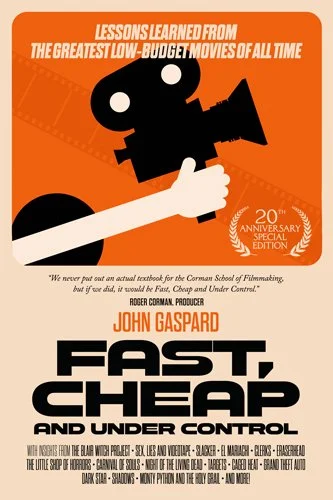
When Fast, Cheap & Under Control first hit shelves in 2006, it became the underground handbook for a generation of indie filmmakers. Now, two decades on, this 20th Anniversary Special Edition proves the lessons inside aren't just timeless—they're more essential than ever.
What's changed? Technology. Platforms. Distribution.
What hasn't? The grit, ingenuity, and sheer determination it takes to make a great film with nothing but vision and hustle.
Inside, you'll find:
Exclusive interviews with legends like Steven Soderbergh, Roger Corman, Jon Favreau, Henry Jaglom, Kasi Lemons, Dan O'Bannon, Bob Odenkirk and more
Over 100 images bringing the stories to life
40+ links to trailers, scenes, and supplementary material—turning this book into an interactive master class
Real-world case studies from 33 groundbreaking low-budget films—from Clerks and El Mariachi to The Blair Witch Project and sex, lies, and videotape
Field-tested lessons from the author's own four features—proof that these principles work in the real world, on set, in the edit room, and on screen
Whether you're shooting on your phone or scraping together a micro-budget, this is your master class in turning limitations into strengths.
No film school required. Just this book.
Roger Corman called it the textbook for his legendary filmmaking school. Now it's your turn to learn from the best.

Write Your Screenplay with the Help of Top Screenwriters!
It’s like taking a Master Class in screenwriting … all in one book!
Discover the pitfalls of writing to fit a budget from screenwriters who have successfully navigated these waters already. Learn from their mistakes and improve your script with their expert advice.
"I wish I'd read this book before I made Re-Animator."
Stuart Gordon, Director, Re-Animator, Castle Freak, From Beyond
John Gaspard has directed half a dozen low-budget features, as well as written for TV, movies, novels and the stage.
The book covers (among other topics):
Academy-Award Winner Dan Futterman (“Capote”) on writing real stories
Tom DiCillio (“Living In Oblivion”) on turning a short into a feature
Kasi Lemmons (“Eve’s Bayou”) on writing for a different time period
George Romero (“Martin”) on writing horror on a budget
Rebecca Miller (“Personal Velocity”) on adapting short stories
Stuart Gordon (“Re-Animator”) on adaptations
Academy-Award Nominee Whit Stillman (“Metropolitan”) on cheap ways to make it look expensive
Miranda July (“Me and You and Everyone We Know”) on making your writing spontaneous
Alex Cox (“Repo Man”) on scaling the script to meet a budget
Joan Micklin Silver (“Hester Street”) on writing history on a budget
Bob Clark (“Children Shouldn’t Play with Dead Things”) on mixing humor and horror
Amy Holden Jones (“Love Letters”) on writing romance on a budget
Henry Jaglom (“Venice/Venice”) on mixing improvisation with scripting
L.M. Kit Carson (“Paris, Texas”) on re-writing while shooting
Academy-Award Winner Kenneth Lonergan (“You Can Count on Me”) on script editing
Roger Nygard (“Suckers”) on mixing genres
This is the book for anyone who’s serious about writing a screenplay that can get produced!