• THE BOOKS
  • The Occasional Film Podcast
  • The Blog
  • Podcast Appearances
  • The Movies
  • About
  • CONTACT
Menu

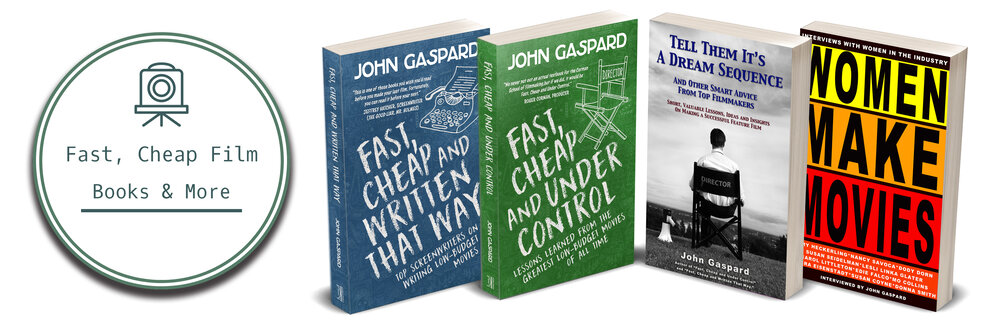
Fast, Cheap Film Books & More

  • THE BOOKS
  • The Occasional Film Podcast
  • The Blog
  • Podcast Appearances
  • The Movies
  • About
  • CONTACT

L.M. Kit Carson on “David Holzman’s Diary"

August 13, 2025

How did you first connect with Jim McBride?

KIT: Jim and I met because we were both fans of a book by Walker Percy, called The Moviegoer. I was a student at the time, and he was sort of a student at the time in New York. We were put together by some friends of ours, because they knew that we both loved this book. In fact, we tried to make the movie of this book three or four times.

And then Jim and I put together a deal to do a book for the Museum of Modern Art. Willard Van Dyke, who was the head of the film department at the time, gave us his blessing to do a book on Cinema Verité. I had discovered in my senior year at NYU, trying to do a paper on Cinema Verité, that there was nothing, there were maybe two articles in some film quarterly magazine, about Cinema Verité. So I told this to Jim and we went and met with Willard and said 'There needs to be a book on Cinema Verité.' And he said, 'Great. Do it.' He took one look at us and thought we were nuts, but nuts in the right way.

I had worked at Drew Associates previous to this, as an assistant, assistant editor. Drew Associates was where Cinema Verité was founded in this country. So I knew about all these guys: the Maysles brothers worked there, Pennebaker and Leacock worked there at the time. And it was just an accident of fate that I had stumbled into this hot spot. 

We set about doing this book for the Museum of Modern Art, called The Truth on Film, and we did interviews with Pennebaker and Leacock and all the people at Drew Associates, and halfway through the book, Jim said to me, 'There is no truth on film. Once you put the camera there, everything changes.'

I've been fortunate in my life to work in party with geniuses, like Wim Wenders and Jim McBride.
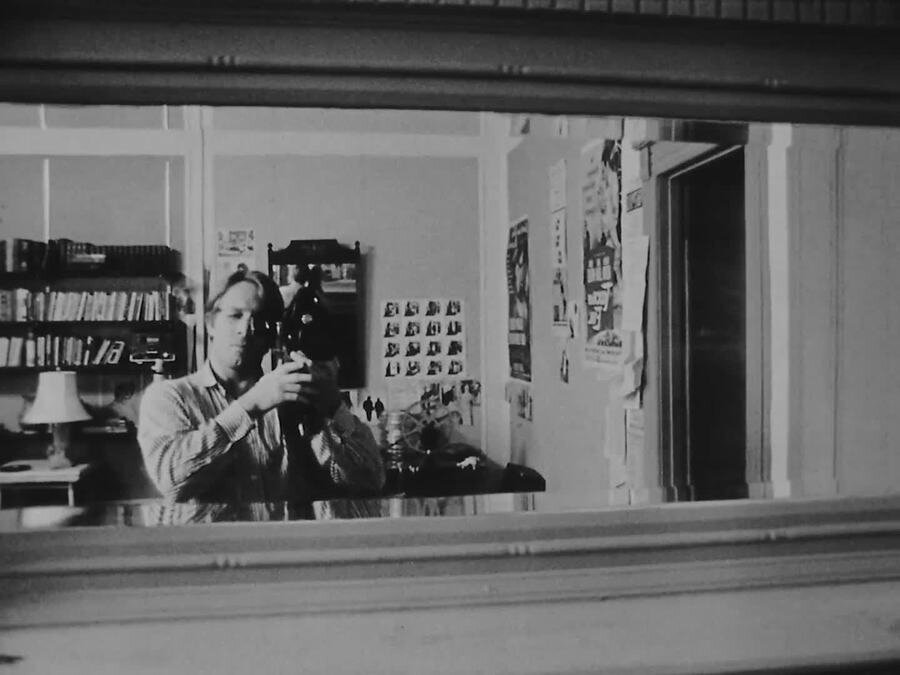
How did David Holzman’s Diary come about?

KIT: Jim had conceived of this idea to do a film called David Holzman's Diary, which was, at the time he introduced it to me, a 12-page outline on David Holtzman, this guys who starts the movie by saying 'My life is all fucked up and I'm about to be drafted and I figure it's time for me to try to figure what's going on. And if I shoot everyday and look at the rushes of everyday, I can find the plot again, because I've lost the plot.

Now Jim had actually shot this film before, with Bob Lesser as David. Jim's car had been broken into and his camera equipment had been stolen and the film had been stolen. So all of a sudden, two events happen: Jim says there's no Cinema Verité and then Jim says come have dinner, I want you to audition for me, to play David Holzman, because I've shot the film and now I've lost it.

I did that, I auditioned, because he had this outline that you could improvise from. And he said, 'You're it. You can do it."

The interesting thing is that at the time I was also studying the roots of the English novel. And the roots of the English novel are these fake diaries, like Robinson Crusoe and Pamela. It was the first way they figured out to do long-form fiction, was to make diaries out of it. So that also informed what we were attempting to do, because a diary is something that feels like it's real time, but you know, if you think about it for two seconds, 'Oh, yeah, he's edited this together.' So it's not really happening in front of you. It's been examined and purposed, structurally, to be this way.
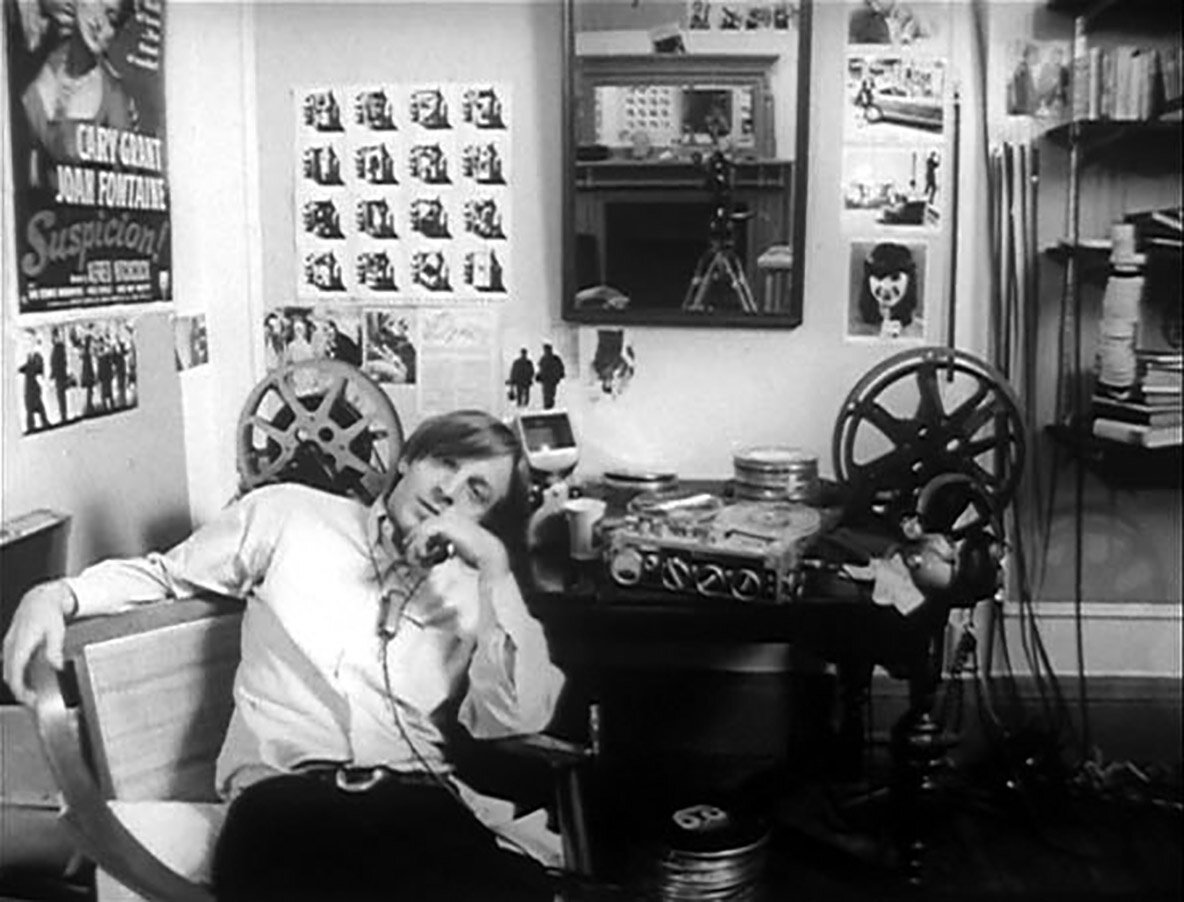
What was the shoot like?

KIT: On my Easter break from college in Texas, I came to New York. And since I didn't know how to do it any other way, I just became the character. I lived in the editing room, I slept in the closet, and I lost my girlfriend who at the time thought I was nuts -- just like Penny in the movie thinks I'm nuts. So it worked.

It was a set of genius decisions on McBride's part. We improvised as we went forward.

We did several days of improvising through the scenes, between McBride and myself, until he felt that we got the shape of the scene. And then when we would shoot, I told Jim that I was not going to rehearse. 'Just turn the camera on and I'm going to do it.' Because I didn't want to filter the improvisation any further. If I had rehearsed it before we turned the camera on, it would have turned it into self-conscious thought. And I wanted to keep it raw.

We were satisfied that we had the shape of the scene, built off of the 12-page outline. We knew the beginning, middle and end. But I said to Jim, 'I want to surprise you.' I had no idea what I was saying when I said that, but the idea was to keep that instant alive, the instant when anything can happen.

I like the idea of not filtering the moment, not knowing how I'm going to do.

So we shot maybe two or three takes each time. 

I came back from Texas and Jim had put the film together, sort of, and he had Thelma Schoonmaker come in and take a look, because Thelma was everybody's pal at that time. What Jim had done was take the worst takes of the two or three that we had made, because he felt that was more truthful to the character. And Thelma said, 'Fine, that may be more true, but it's horrible, so you have to use the best takes. Otherwise it's really painful if you don't use the best takes.'  

I understand his thought, that the bad takes make it seem more like a documentary. But Thelma talked him into using the best takes. 
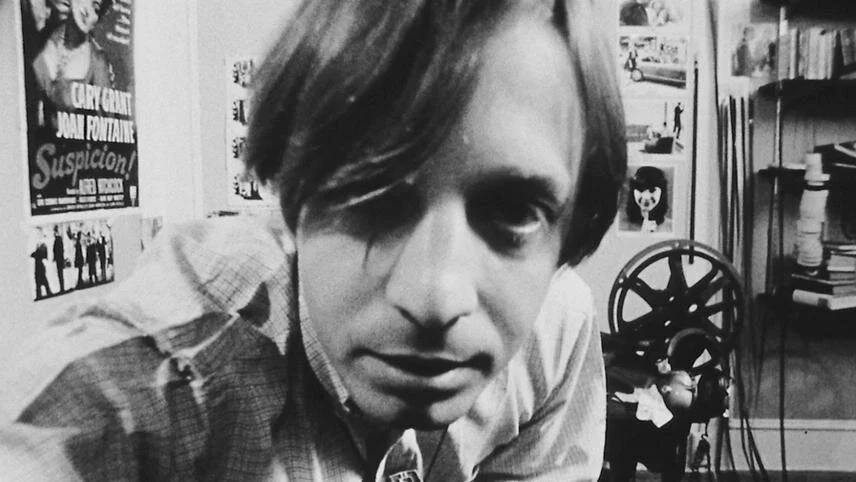
What was the film’s budget?

KIT: The budget for the film was the advance, the $2,500 bucks that Willard Van Dyke had given us from the Museum of Modern Art, to do the book The Truth on Film. Willard was a little upset, until the film began to get all this notice at film festivals. At that point Willard acknowledged that the film worked and proposed that the Museum of Modern Art was now going to add it to its collection. So, he didn't get a book, but he got a movie.
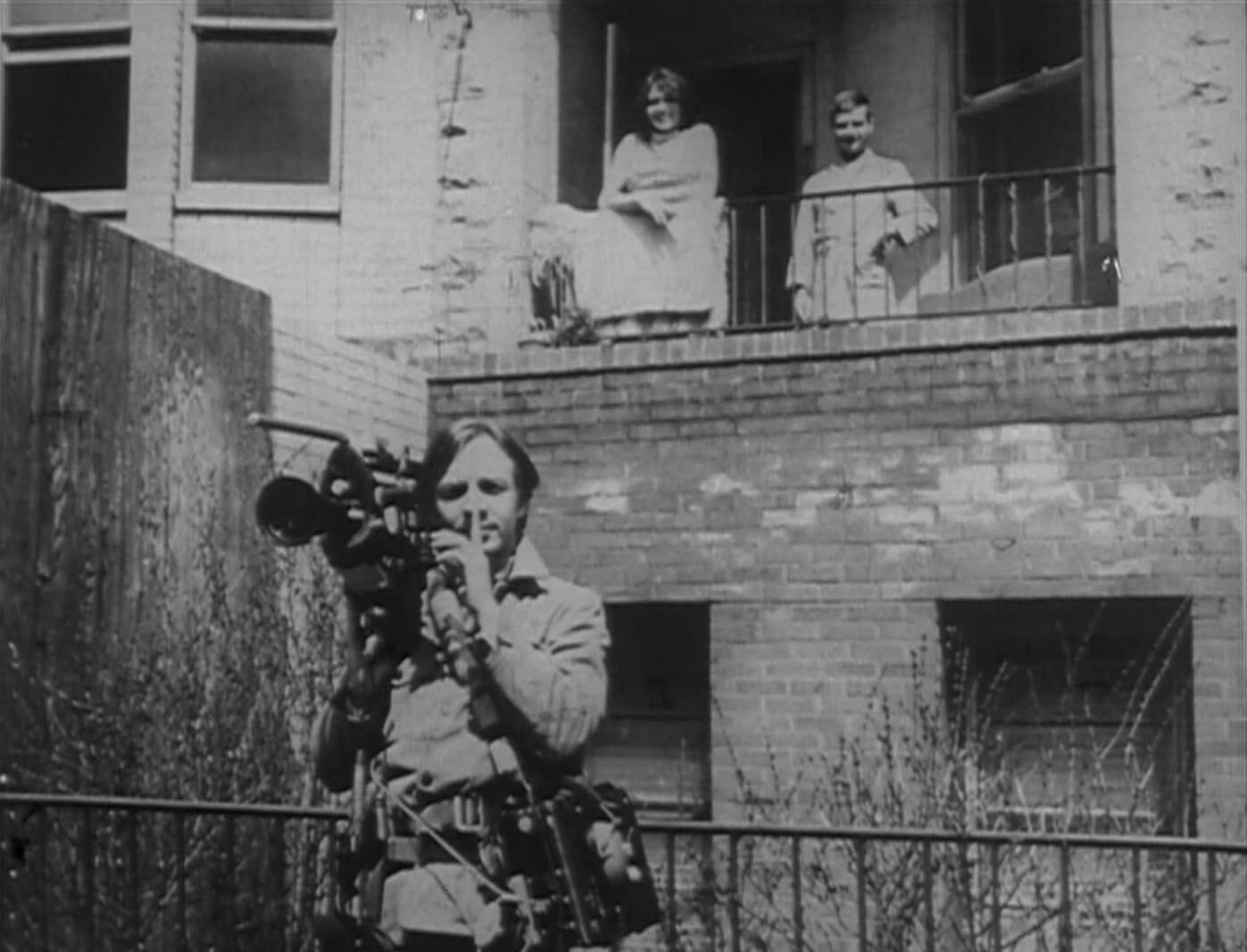
What lessons did you take away from the experience?

KIT: The lesson I took away is that there is a lot of depth of thought required; you can't just do it off the top of your head. Jim had this brilliant idea. It came out of six months of experience interviewing a dozen documentary filmmaker to conclude that, 'No, wait a minute, this is not true. Therefore, let's expose it.' That was all Jim's energy. But it came from spending all that time thinking about it.

And from my angle, it came from studying the roots of the English novels, studying what documentary IS, so that you say, 'Oh, I know. It's an act of fiction.' It looks real, and you propose it stylistically as 'this happened, just now,' but it's actually been edited and pieced together.

What you try to achieve when you create any fiction is truth, a fictional truth that has the right ending.

With the movies I've made since that time, I've always tried to stay in touch with the job of telling the truth in your own way in this particular story. 

This movie was not an accident and it didn't happen easily. The fact that Jim had the film stolen out of the trunk of his car and that it was a bad version of this film, all that's part of the actual doingness.

I learned the truth of exposure in David Holzman’s Diary. And I've kept that as part of my story-telling muscle.

It was also shaped by what McBride did, by having Pepe, our friend have that scene where he said, 'Stop, turn off the camera, it's no longer a moral decision, it's an aesthetic decision.' 

He invented that scene with Pepe, and it was Pepe's true reaction to the footage that he'd seen. This is fake, it's not real.
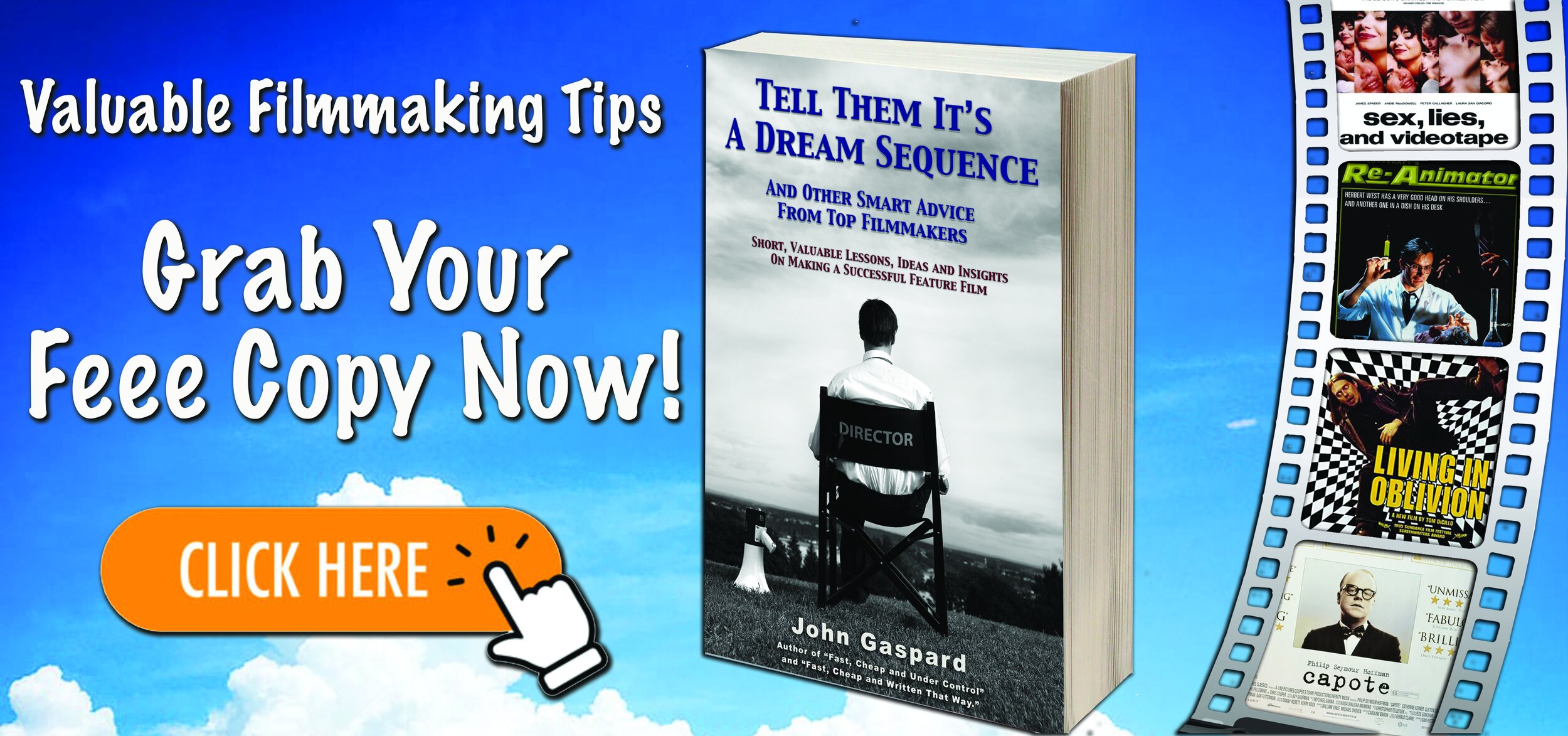

Dying to make a feature? Learn from the pros!

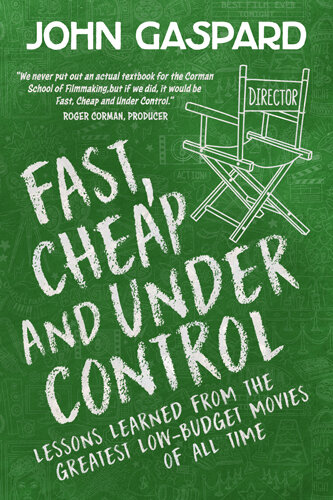
"We never put out an actual textbook for the Corman School of Filmmaking, but if we did, it would be Fast, Cheap and Under Control." 
Roger Corman, Producer

★★★★★

It’s like taking a Master Class in moviemaking…all in one book!

  • Jonathan Demme: The value of cameos

  • John Sayles: Writing to your resources

  • Peter Bogdanovich: Long, continuous takes

  • John Cassavetes: Re-Shoots

  • Steven Soderbergh: Rehearsals

  • George Romero: Casting

  • Kevin Smith: Skipping film school

  • Jon Favreau: Creating an emotional connection

  • Richard Linklater: Poverty breeds creativity

  • David Lynch: Kill your darlings

  • Ron Howard: Pre-production planning

  • John Carpenter: Going low-tech

  • Robert Rodriguez: Sound thinking

And more!
buy the book: "fast, cheap and under control"

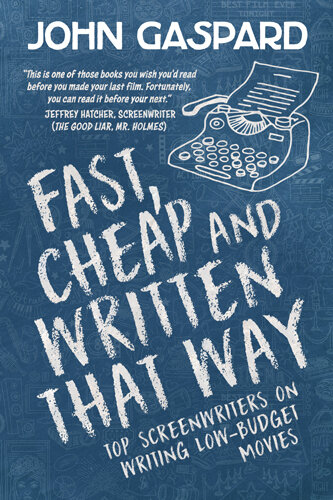
Write Your Screenplay with the Help of Top Screenwriters!

It’s like taking a Master Class in screenwriting … all in one book!

Discover the pitfalls of writing to fit a budget from screenwriters who have successfully navigated these waters already. Learn from their mistakes and improve your script with their expert advice.

"I wish I'd read this book before I made Re-Animator."
Stuart Gordon, Director, Re-Animator, Castle Freak, From Beyond

John Gaspard has directed half a dozen low-budget features, as well as written for TV, movies, novels and the stage.

The book covers (among other topics):

  • Academy-Award Winner Dan Futterman (“Capote”) on writing real stories

  • Tom DiCillio (“Living In Oblivion”) on turning a short into a feature

  • Kasi Lemmons (“Eve’s Bayou”) on writing for a different time period

  • George Romero (“Martin”) on writing horror on a budget

  • Rebecca Miller (“Personal Velocity”) on adapting short stories

  • Stuart Gordon (“Re-Animator”) on adaptations

  • Academy-Award Nominee Whit Stillman (“Metropolitan”) on cheap ways to make it look expensive

  • Miranda July (“Me and You and Everyone We Know”) on making your writing spontaneous

  • Alex Cox (“Repo Man”) on scaling the script to meet a budget

  • Joan Micklin Silver (“Hester Street”) on writing history on a budget

  • Bob Clark (“Children Shouldn’t Play with Dead Things”) on mixing humor and horror

  • Amy Holden Jones (“Love Letters”) on writing romance on a budget

  • Henry Jaglom (“Venice/Venice”) on mixing improvisation with scripting

  • L.M. Kit Carson (“Paris, Texas”) on re-writing while shooting

  • Academy-Award Winner Kenneth Lonergan (“You Can Count on Me”) on script editing

  • Roger Nygard (“Suckers”) on mixing genres

This is the book for anyone who’s serious about writing a screenplay that can get produced! 

Buy the Book: “Fast, Cheap and Written That Way”
Tags L.M. Kit Carson, David Holzman's Diary, Jim McBride, Independent Film, Film Interview, Low-Budget Film

Jim McBride on “David Holzman’s Diary

December 25, 2024

Do you think David Holzman’s Diary was the first fake documentary?

JIM: There was a film by Stanton Kaye. It was just a year or two before mine. It was called Georg. It wasn't a very famous film. It was a guy, standing in front of the camera, and it was very political. I don't remember too much about it. He blew himself up at the end, in front of the camera.

What was your inspiration for David Holzman’s Diary?

JIM: It was a combination of things. Michael Powel's Peeping Tom had a big impression on me. I saw it when it was banned in the United States; maybe it was banned everywhere, I don't know. On my first visit to California, a guy I knew got a hold of a print of it and showed it at midnight at a movie theater that no longer exists here. I was just knocked out by it. The whole idea of self-examination. 

Then, in addition to that, I was very interested in Cinema Verite. Kit Carson and I were going to write something for the Museum of Modern Art about Cinema Verite, and we interviewed all these filmmakers--like the Maysles brothers, Ricky Leacock, Pennebaker, even Andy Warhol--who were making films that purportedly were for the first time entering into real life and finding out the truth. 

People were really passionate about this idea that you could find the truth with this new, light-weight equipment and faster film stocks and synch sound--all the stuff that was very new in the sixties. So at that time I was very passionately interested in all of that, and at the same time I felt there was something wrong here. 

Did you set out with the goal of fooling the audience?

JIM: That certainly wasn't the idea. One wanted to make a movie that would be believable. Yes, on one level you wanted people to believe that it was real and to affected by it, but on the other hand, I didn't set out with the intention of fooling people. But just as with any film you make, you want people to suspend their disbelief, you want people to believe it.

I know that this film is an important film to a lot of people, and always, constantly surprised when people come up to me and say, 'I saw your film when I was in college.'  My own experience with the film is that it's never had any kind of commercial release, it's never shown in theater. It really only has a life at film festivals and colleges. So I'm always surprised that more than seven people have seen it.

I know that at a lot of early showings people walked out, but I think that was more from being bored than being fooled.

I guess a lot of people did believe it, but I think the more common reaction is to be caught up in it as it's going along, and then maybe be surprised when you see the credits at the end, but then feel that, 'Oh, that makes sense. It was worth the trip that it took me on.'

What was the process for making the movie?

JIM: This was actually the second go-round. In 1966 I was working at a company that sold land in Florida. And it did it through films. I was serving an apprenticeship there, learning to shoot, learning to edit, stuff like that. I got this idea for what was later to become David Holzman's Diary, and they let me borrow their equipment on weekends. 

We shot a bunch of stuff, all most all of it improvised--and not very well, I should add--and then as we were shooting, I got fired. So I packed it all up into a box and put it in the trunk of my car, and I went around looking for a cutting room that someone would lend me so I could put these pieces together. And when I finally did locate a cutting room a couple of weeks later, I went to the car and opened it up and discovered that someone had stolen the film. 

In those days, 16mm was associated with porn, so my guess is that's why somebody took it. They must have been terribly disappointed. And I was terribly disappointed myself, but as time went by, I was kind of relieved, because it really sucked. 

But somehow the experience of doing it made me realize how I should have done it differently.

Then, about a year later, I hooked up with these two guys, quite separately: Kit Carson and Michael Wadleigh, who was a cinematographer. It was actually Michael who encouraged me to try it again. 

I had been working with him as a soundman; he was a Verite cameraman and we did a lot of work and went to some interesting places. He was a very talented cinematographer. He sort of organized it all in a way: We'd do a job during the week, and then we'd keep the equipment over the weekend and turn it in on Monday morning. But over the weekend we would shoot stuff for David Holzman's Diary. We used short ends from jobs we'd been working on, and we'd actually send the stuff through the lab with stuff from the companies we were working for. So really it didn't cost anything and we did it in a gradual way, accumulated footage.

For those parts of the film that took place in his apartment--we really did it all in one long weekend, I think--we spent several days beforehand with just a tape recorder in a room. I would give him a sense of what I wanted to have happen in a given scene, and then he would put it into his own words, and then we'd listen to the tape and I'd say 'I like this, I don't like that, change this.' 

Later on in life we became collaborators on various screenplays, but this was our first collaboration.

It's a lot simpler when it's just one person talking into a microphone than two or three actors trying to do something dramatic together. It was very much controlled improvisation, and by the time we actually went to shoot the scene--although it wasn't written down--we all knew exactly what was going to happen. Because we didn't have a lot of film to fuck around with, so we had to get it on the first or second take. So it was pretty carefully rehearsed.

What’s the story behind the woman in the Thunderbird?

JIM: That pretty much happened, just as you see it on the screen, except that Kit choked and it was Michael Wadleigh who was asking most of the questions.  

We never bothered to get a release from her, of course. I didn't have any equipment of my own, but I had a friend who had a movie projector, so we would often go over to his house to screen dailies, without sound. 

A few weeks later, this friend who owned the projector called me up and said, 'I had this amazing experience last night. I met the woman, who was in your movie. I was walking along Broadway at two o'clock in the morning, and she pulled up in that Thunderbird and she threw open the passenger side door and patted on the seat. I recognized her and I hopped in.' So he went home with her and slept with her. And he said to me, 'I don't know if I slept with a man or a woman.'

Now cut to a couple years later than that, and we actually have a legitimate company that's interested in distributing the film. But, of course, they want releases on everything. So some guy from the company went out and found her and got a release from her. It turned out she was a transsexual who lived in the neighborhood, and she was happy to be on film and happy to sign a release.

Because we had no commercial ambitions for the film, we never worried about releases. So we felt quite comfortable filming on the streets. And I think some of the best material in the film, such as people sitting on benches and other kind of neighborhood stuff, that if we were making a film that we imaged would be released in theaters, we could never have shot that stuff, because there would be no way to get everybody's permission.

What was the best decision you made on the film?

JIM: It's hard to think of everything being intentional. Stuff kind of evolves. I guess having the idea was the best thing I ever did. The actual enacting of it I have to share blame or the credit with my collaborators, Michael and Kit. It really was a group effort in many ways.

I've actually written a script for a sequel to David Holzman's Diary, that I've been trying to raise money for. One of the producers was telling me recently that she felt there wasn't enough of David in the story. I was trying to take Pepe's advice and keep him off the screen. And she said, 'No, no, he's so charming, you have to get more of him on the screen.'

Dying to make a feature? Learn from the pros!

"We never put out an actual textbook for the Corman School of Filmmaking, but if we did, it would be Fast, Cheap and Under Control." 
Roger Corman, Producer

★★★★★

It’s like taking a Master Class in moviemaking…all in one book!

  • Jonathan Demme: The value of cameos

  • John Sayles: Writing to your resources

  • Peter Bogdanovich: Long, continuous takes

  • John Cassavetes: Re-Shoots

  • Steven Soderbergh: Rehearsals

  • George Romero: Casting

  • Kevin Smith: Skipping film school

  • Jon Favreau: Creating an emotional connection

  • Richard Linklater: Poverty breeds creativity

  • David Lynch: Kill your darlings

  • Ron Howard: Pre-production planning

  • John Carpenter: Going low-tech

  • Robert Rodriguez: Sound thinking

And more!

Buy the Book: "Fast, Cheap and Under Control"

Write Your Screenplay with the Help of Top Screenwriters!

It’s like taking a Master Class in screenwriting … all in one book!

Discover the pitfalls of writing to fit a budget from screenwriters who have successfully navigated these waters already. Learn from their mistakes and improve your script with their expert advice.

"I wish I'd read this book before I made Re-Animator."
Stuart Gordon, Director, Re-Animator, Castle Freak, From Beyond

John Gaspard has directed half a dozen low-budget features, as well as written for TV, movies, novels and the stage.

The book covers (among other topics):

  • Academy-Award Winner Dan Futterman (“Capote”) on writing real stories

  • Tom DiCillio (“Living In Oblivion”) on turning a short into a feature

  • Kasi Lemmons (“Eve’s Bayou”) on writing for a different time period

  • George Romero (“Martin”) on writing horror on a budget

  • Rebecca Miller (“Personal Velocity”) on adapting short stories

  • Stuart Gordon (“Re-Animator”) on adaptations

  • Academy-Award Nominee Whit Stillman (“Metropolitan”) on cheap ways to make it look expensive

  • Miranda July (“Me and You and Everyone We Know”) on making your writing spontaneous

  • Alex Cox (“Repo Man”) on scaling the script to meet a budget

  • Joan Micklin Silver (“Hester Street”) on writing history on a budget

  • Bob Clark (“Children Shouldn’t Play with Dead Things”) on mixing humor and horror

  • Amy Holden Jones (“Love Letters”) on writing romance on a budget

  • Henry Jaglom (“Venice/Venice”) on mixing improvisation with scripting

  • L.M. Kit Carson (“Paris, Texas”) on re-writing while shooting

  • Academy-Award Winner Kenneth Lonergan (“You Can Count on Me”) on script editing

  • Roger Nygard (“Suckers”) on mixing genres

This is the book for anyone who’s serious about writing a screenplay that can get produced! 

Buy the Book: “Fast, Cheap and Written That Way”
Tags Jim McBride, David Holzman's Diary, Independent Film, Directing, Low-Budget Film, Film Interview
Comment

Latest Posts

Featured
Dec 3, 2025
Director Stuart Gordon on "Re-Animator"
Dec 3, 2025
Dec 3, 2025
Nov 26, 2025
Magician and Filmmaker Lance Burton on his low-budget feature debut, “Billy Topit: Master Magician.”
Nov 26, 2025
Nov 26, 2025
Nov 19, 2025
Tom DiCillo on writing/directing “Living In Oblivion”
Nov 19, 2025
Nov 19, 2025
Nov 12, 2025
Nancy Savoca on “True Love”
Nov 12, 2025
Nov 12, 2025
Nov 5, 2025
Jon Favreau on "Swingers"
Nov 5, 2025
Nov 5, 2025
Oct 29, 2025
Dan O'Bannon on "Dark Star"
Oct 29, 2025
Oct 29, 2025
Oct 22, 2025
Actress/Writer Susan Coyne on “Slings & Arrows"
Oct 22, 2025
Oct 22, 2025
Oct 15, 2025
Mo Collins on “MadTV” and more …
Oct 15, 2025
Oct 15, 2025
Oct 8, 2025
Rebecca Miller on Writing & Directing “Personal Velocity”
Oct 8, 2025
Oct 8, 2025
Oct 1, 2025
Amy Heckerling on “Fast Times at Ridgemont High” and “Clueless”
Oct 1, 2025
Oct 1, 2025
Featured
stuart-gordon-main.jpg
Dec 3, 2025
Director Stuart Gordon on "Re-Animator"
Dec 3, 2025
Dec 3, 2025
lance-2-scaled.jpeg
Nov 26, 2025
Magician and Filmmaker Lance Burton on his low-budget feature debut, “Billy Topit: Master Magician.”
Nov 26, 2025
Nov 26, 2025
Tom DiCillo 1.png
Nov 19, 2025
Tom DiCillo on writing/directing “Living In Oblivion”
Nov 19, 2025
Nov 19, 2025
nancy20savoca.jpg
Nov 12, 2025
Nancy Savoca on “True Love”
Nov 12, 2025
Nov 12, 2025
2048x2730-jon-favreau-chef-wil-43-jpg-56b3847c.jpg
Nov 5, 2025
Jon Favreau on "Swingers"
Nov 5, 2025
Nov 5, 2025
Dark Star 06.jpg
Oct 29, 2025
Dan O'Bannon on "Dark Star"
Oct 29, 2025
Oct 29, 2025
Susan Coyne.jpeg
Oct 22, 2025
Actress/Writer Susan Coyne on “Slings & Arrows"
Oct 22, 2025
Oct 22, 2025
mo-collins.jpg
Oct 15, 2025
Mo Collins on “MadTV” and more …
Oct 15, 2025
Oct 15, 2025
image.jpg
Oct 8, 2025
Rebecca Miller on Writing & Directing “Personal Velocity”
Oct 8, 2025
Oct 8, 2025
Amy Heckerling.jpg
Oct 1, 2025
Amy Heckerling on “Fast Times at Ridgemont High” and “Clueless”
Oct 1, 2025
Oct 1, 2025

Powered by Squarespace