
What was your filmmaking background before making "The Meaning of Life"?
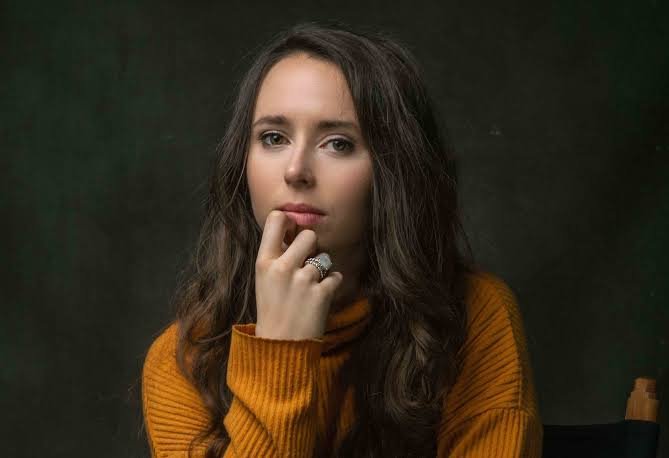
Cat: I grew up in the arts. I was a painter from a young age, and studied art in Amsterdam, Berlin and Spain throughout high school. At this time, I was also acting and pursued that once I moved to Toronto, Canada. I was always interested in storytelling – directing, acting, writing and so I began dabbling behind the camera.
In University, I got lucky with a part time job at Walt Disney Studios Motion Pictures Canada as a publicity assistant, working on all of the Marvel movies. Shortly after this, I began working more and more behind the camera, joined the Director’s Guild of Canada and started directing professionally as a full-time job a year or two later.
Where did the idea come from and what was the process for getting the script ready to shoot?
Cat: The movie originated from two things -- One is the title of the movie. What is the meaning of life? I feel like we all question it and there are only metaphysical answers in my opinion. I wanted to explore why some people get a short life, why some get a long life, and what do we make of the time we have here.
The second inspiration is music and art as a therapy to heal. Music therapy is an integrative therapy used with medical treatment that has great results, backed by science. In the movie, Finn is a musician who gets a temporary job as a therapeutic clown at a hospital playing music for sick kids, and primarily for a 9-year-old leukemia patient named Sophia.
Also drawing from personal experiences, I struggle with an autoimmune disease, and I haven’t had any luck with medical treatments, but arts therapy has actually helped the most.
As you know, the process is long and complex, but first and foremost, we needed a hospital to shoot in or this movie wasn’t going to happen. We ended up getting very lucky with our associate producer that made this happen. We got to use a shutdown hospital for a very reasonable price. I can’t tell you how lucky this was. You can’t get a hospital set for less than $3000 per day.
What was your casting process and did you change the script to match your final cast?
Cat: I wanted a musician to play this role, since the lead character was one. I was aware of the risk, in that I may get a good musician, but a bad actor and it’s a lead character that has to carry the entire movie. My partner in life and in biz, Russ De Jong (Director of Photography/ Executive Producer) had worked with tons of artist, everyone from Shawn Mendez to the Weeknd. We started thinking of who would fit the role best. We landed on Sony-signed, Juno nominated pop singer Tyler Shaw.
Tyler was about to go on tour with Selena Gomez and was very busy, but we got lucky and had him for 10 short days of filming a feature film. We actually did not even get to audition Tyler. I did a skype read with him while in New York. I was freaking out, but deep down believed he was capable.
For the rest of the casting, we needed a strong cast around Tyler since he was not primarily an actor. We had one of the best child actors around – Sadie Munroe who plays 9-year-old leukemia patient Sophia Hill, and we also had Sergio Di Zio (Flashpoint) who plays her father. These two actors are just brilliant. Our company North Film Co. casted half of the characters, while a well-respected Canadian Casting Agency called Parasyn Casting did the other half which includes Sergio and Sadie.
Sadie wasn’t the original look I was going for. She is an adorable red-haired girl with freckles, but I pictured someone else. However, Sadie’s audition was so emotional and compelling that I cast a different mom to make Sadie work.
What type of camera(s) did you use and what did you love (and hate) about it?
Cat: We used the Red Dragon 6k with ultra prime lenses. I love the cinematography. My partner/DP Russ De Jong is brilliant, and I have no complaints. Lots of people love Alexa, we love Red.
Did the movie change much in the editing, and if so, why did you make the changes?
Cat: Funny story, it was originally a short film that was 20 minutes. In the editing room, due to my directing, we had a lot of drawn-out moments and it ended up being a 40 minute film! I brought up the idea of a feature and Russ turned it down, but then changed his mind. We decided to go back to filming to finish it as a feature, but due to Tyler’s schedule among other actors, we had to finish on a certain date, and I basically had to write the feature portion over a weekend. The entire movie was shot in 10 days on 10-hour days.
Can you talk about your distribution plan for recouping costs?
Cat: We have had quite a few offers in Los Angeles and here in Canada. We have not signed anything, as we are deciding the best deal for us. This was a low budget movie, and more than making money back, we just want a picture deal for another movie if we sign any agreements. However, I will say I’ve learned that this movie has a big audience, and it is easier to sell than a thriller per say.
What was the smartest thing you did during production? The dumbest?
Cat: The smartest decision was to make the decision to finish it as a feature film. As well, make a movie with a positive message – these movies have a big audience.
And, finally, what did you learn from making this feature that you will take to other projects?
Cat: I learnt that anything is possible; you just need to discover how to use your resources properly.
Another major lesson I learnt as a first-time feature director is that there were moments that were pivotal in the movie that I could have made stronger. We shot this move in 10 days, on 10-hour days, and most people after watching this movie are shocked at that fact in terms of the quality overall… Because we move at such a fast pace, and I wasn’t allowed to do any reshoots, it was a challenge for me.
But when you have limited time and a limited budget, you don’t have these luxuries, and they are good habits to have. You need to do as much prep work as possible, and in the moment, know exactly what you need to cover to get your story and don’t waste time on shots or takes that you don’t really need.
This just comes with experience.


Dying to make a feature? Learn from the pros!
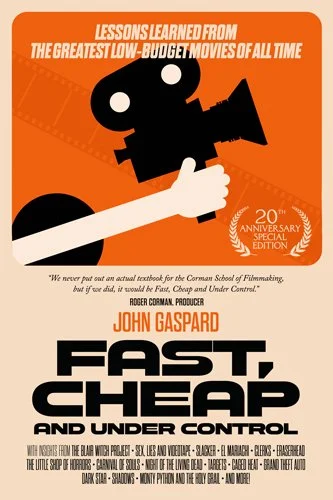
When Fast, Cheap & Under Control first hit shelves in 2006, it became the underground handbook for a generation of indie filmmakers. Now, two decades on, this 20th Anniversary Special Edition proves the lessons inside aren't just timeless—they're more essential than ever.
What's changed? Technology. Platforms. Distribution.
What hasn't? The grit, ingenuity, and sheer determination it takes to make a great film with nothing but vision and hustle.
Inside, you'll find:
Exclusive interviews with legends like Steven Soderbergh, Roger Corman, Jon Favreau, Henry Jaglom, Kasi Lemons, Dan O'Bannon, Bob Odenkirk and more
Over 100 images bringing the stories to life
40+ links to trailers, scenes, and supplementary material—turning this book into an interactive master class
Real-world case studies from 33 groundbreaking low-budget films—from Clerks and El Mariachi to The Blair Witch Project and sex, lies, and videotape
Field-tested lessons from the author's own four features—proof that these principles work in the real world, on set, in the edit room, and on screen
Whether you're shooting on your phone or scraping together a micro-budget, this is your master class in turning limitations into strengths.
No film school required. Just this book.
Roger Corman called it the textbook for his legendary filmmaking school. Now it's your turn to learn from the best.

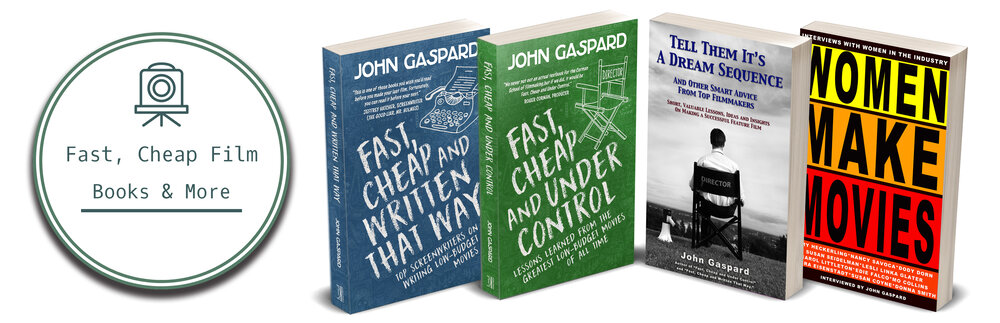
Write Your Screenplay with the Help of Top Screenwriters!
It’s like taking a Master Class in screenwriting … all in one book!
Discover the pitfalls of writing to fit a budget from screenwriters who have successfully navigated these waters already. Learn from their mistakes and improve your script with their expert advice.
"I wish I'd read this book before I made Re-Animator."
Stuart Gordon, Director, Re-Animator, Castle Freak, From Beyond
John Gaspard has directed half a dozen low-budget features, as well as written for TV, movies, novels and the stage.
The book covers (among other topics):
Academy-Award Winner Dan Futterman (“Capote”) on writing real stories
Tom DiCillio (“Living In Oblivion”) on turning a short into a feature
Kasi Lemmons (“Eve’s Bayou”) on writing for a different time period
George Romero (“Martin”) on writing horror on a budget
Rebecca Miller (“Personal Velocity”) on adapting short stories
Stuart Gordon (“Re-Animator”) on adaptations
Academy-Award Nominee Whit Stillman (“Metropolitan”) on cheap ways to make it look expensive
Miranda July (“Me and You and Everyone We Know”) on making your writing spontaneous
Alex Cox (“Repo Man”) on scaling the script to meet a budget
Joan Micklin Silver (“Hester Street”) on writing history on a budget
Bob Clark (“Children Shouldn’t Play with Dead Things”) on mixing humor and horror
Amy Holden Jones (“Love Letters”) on writing romance on a budget
Henry Jaglom (“Venice/Venice”) on mixing improvisation with scripting
L.M. Kit Carson (“Paris, Texas”) on re-writing while shooting
Academy-Award Winner Kenneth Lonergan (“You Can Count on Me”) on script editing
Roger Nygard (“Suckers”) on mixing genres
This is the book for anyone who’s serious about writing a screenplay that can get produced!